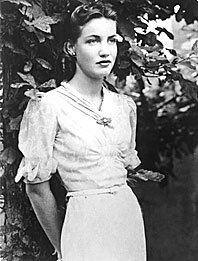
When autumn riptides break free and sculpt a deranged shoreline out of the beaches of East Hampton, I often recall one of my last conversations with Little Edie Beale. I imagine seeing her again, the prisoner of Grey Gardens, freed by the postseason to appear in her black net bathing suit, perhaps perform an antic little dance, then streak down from the dunes trailing a long silk scarf and plunge into the embrace of waves. I loved her spirit.
The musical Grey Gardens, which opens this week on Broadway, has triggered even more memories of when I first met the Beale ladies and went on to write the first story about them for this magazine, “The Secret of Grey Gardens.” It was the summer of 1971. My family had rented a place across the street from what my then-7-year-old daughter called the Witch House. One Sunday, she found a litter of baby rabbits left in a box in our driveway and begged to take them over there, since it was already home to dozens of cats. This was how I described our visit at the time:
We ducked under the ropes of bittersweet hanging from a pair of twisted catalpa trees and skittered past a 1937 Cadillac brooding in the tangled grasses to find ourselves at the tippy porch steps of Grey Gardens. A hand-lettered sign hung from the door: Do Not Trespass, Police on the Place. Cats crouched all around in the overgrown grass, rattling in their throats, mean and wild. There was no turning back.
“Mother?”
We whirled at the sound of the tremulous voice. A middle-aged woman was coming through the catalpa trees, dressed for church but most oddly: a sweater wrapped around her head and her skirt on upside down. Her face was oddly young, as if suspended in time, faintly freckled and innocent, but painted with thick dark lipstick and heavy eyeliner. It struck me that she looked strangely familiar … like … like who?
“Are you looking for Mother, too?” she asked, more unnerved than we.
My little girl held out the box of bunnies.
“Did you think we care for animals here?” My daughter nodded solemnly. “You see! Children sense it.” The woman clapped her hands in delight. “The old people don’t like us. They think I’m crazy. The Bouviers don’t like me at all, Mother says. But the children understand … “
My little girl said it must be fun to live in a house where you never have to clean up.
“Oh, Mother thinks it’s artistic this way, like a Frank Lloyd Wright house. Don’t you love the overgrown Louisiana Bayou look?”
My daughter asked if there really were police on the place.
“Not really, but there are boys who come over at night sometimes and try to club the cats to death.” I suggested the boys might just be prankish.
“Oh no, they’re dangerous. I can tell what’s inside a person right away. Mother and I can see behind the masks; we’re artists, it’s the artist’s eye. Jackie has it, too.”
“Jackie?”
“I’m Jacqueline Bouvier’s first cousin. Mother is her aunt. Did you know that?”
“No, we didn’t.”
“Oh yes, we’re all descended from fourteenth-century French kings. Did you like the Kennedys?”
Now it clicked. The woman before me was a version of Jackie Kennedy coming back from church on a Greek island, but this was Little Edie in the summer of her 54th year.
“You … resemble your cousin,” I stammered.
My daughter wanted to know if she knew President Kennedy well. “Jack never liked society girls, he only dated showgirls,” she said. “I tried to show him I’d broken with society. I was a dancer. But Jack never gave me a tumble. Then I met Joe Jr. at a Princeton dance, and, oh my!” She swooned. “Joe was the most wonderful person in the world. There will never be another man like him … ”
From then on, I was invited into the private world of the Beale ladies, two outcasts of a wealthy and famously dysfunctional branch of the Kennedy dynasty—the Bouvier-Beales—who were being hounded by county health officials threatening to evict them. When Little Edie led me through the decaying house that summer, it was a chilling version of Jackie’s famous White House tour. The wood floors of this once-proud mansion were lumped and crusty with old cat feces; the roof punctured with raccoon holes. Mother remained upstairs, summoning the services of her daughter by banging her cane on the floor and calling out in full operatic tremolo: “EeeDIE! Where is my champagne cocktail?”
Little Edie would then perform her secret act of subversion, spooning out cat food and shaping it into a proper mound, garnished with a twist of lemon. She winked at me. “Mother’s pâté.”
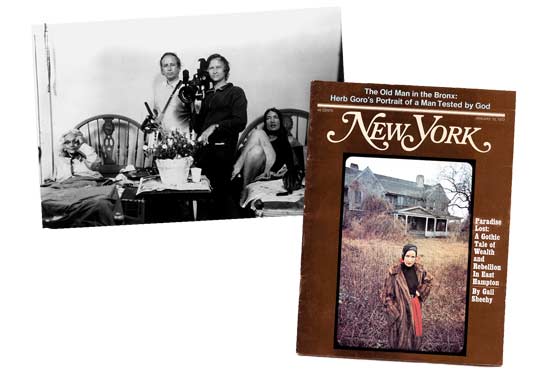
After her death in 2002, Little Edie left a diary, letters, poetry, and stunning photographs, which were recently shared with me by Eva Beale, the wife of Little Edie’s nephew, Bouvier Beale Jr., the executor of her estate. Eva Beale is at work on a coffee-table book about the family story that will include much of this material.
The first act of Doug Wright’s musical casts Little Edie as the dreamy “It” girl of East Hampton in 1941, preparing for her fictional engagement party to Joe Kennedy Jr. It’s a re-creation of Grey Gardens in all its glory, with Mother singing racist show tunes and the butler twirling a silver tray while a knobby-kneed Jackie is entertained by her reactionary grandfather, Major Bouvier. The second act leaps over 30 years to find two dotty divas locked in a devouring bond amid the decay of their estate. What had broken Little Edie’s dream? How did she lose all her hair? How did she wind up such a captive of her mother?
Little Edie’s papers fill in the blanks between the two acts; they are their own drama of maternal psychological seduction. The diary, written in 1928–29, when Little Edie was a preadolescent, is the family Rosetta stone. It is meant for an audience, as if preserving her story for future publication when she became famous.
The seeds of this tortured tale go back to the Jazz Age, when the Bouvier clan first discovered, beyond “dressy” Southampton, the “simple” summer resort of East Hampton. Major Bouvier, Big Edie’s father, used his first wife’s fortune to buy Lasata, the family estate by the sea where his progeny could jump their horses over topiary hedges. Little Edie, born in 1917 and the eldest of ten grandchildren, was the family beauty, “surpassing even the dark charm of Jacqueline,” according to their cousin John H. Davis, a professor who wrote a book about the Bouviers.
One of three siblings, Little Edie was her mother’s crown jewel. Dressed in velvet coats and lace-trimmed socks, she was attached to Mother’s hand at all times, accompanying her to ladies’ luncheons in East Hampton and on the East Side. And the attachment became even more intense when Mother took her out of Spence. The official reason was some vague respiratory illness, to which Edie refers in her diary only perfunctorily: “I’m so mad, I’m missing the fair” or “Oh, I’m sick again, I have to have a chest X-ray.”
Mother kept the child out of school for two years—Little Edie’s 11th and 12th years—and brought her daughter to the theater or movies almost every day. A frustrated singer herself, Mother ensured the girl would be as starstruck as she was. And despite the excuse that Little Edie was “too weak” to return to school, she was perfectly well enough to go on a shopping trip to Paris.
“I can’t really tell you if I am pretty or what kind of girl I am but … I have long hair, blonde, getting darker, deep blue eyes, a pug nose and a rather decided mouth,” Little Edie wrote. “I am by no means fat, but I have a good body and big feet.” One line offers a poignant window into the determination behind her blithe spirit. “I only mark the hours that shine.”
Mother wanted her to be an authoress, she records. Her earliest dream was to become an actress—”but how?” Eva Beale, who is at pains to emphasize what a loving family it was in the early days, says, “I think it was a safe haven for her always to be with her mother. They had such a wonderful bond that nobody could break through.”
Including all of her boyfriends. In a revealing entry, she is racked with guilt for feeling love for a boy: “There are lots of 11-year-old children who think they know the meaning of love, when they honestly haven’t any idea,” she writes. “I have two great loves in my life. First, I love my mother, which will always go on, never be forgotten or forsaken. Most children think that mother love is a thing taken for granted, isn’t it? Second, my buzzing love for a boy, no mere crush, but a true, steady love.”
She signs off by swearing her love for Mother will supersede all others. Her letters to Mother always end “With ladles and ladles of kisses, loves & hugs—your ever precious, ever loving and ever darling and kissable Edes.”
Little Edie dated Howard Hughes and likely had proposals from Joe Kennedy Jr. and J. Paul Getty, says Eva Beale, but always she sent her suitors away. In a final act of negation, she tore out the faces of her boyfriends from the photographs she saved, so only her image remained, solitary and sad.
Her first chance to separate from her mother came in 1934, when she entered Miss Porter’s, the famous finishing school in Farmington, Connecticut. At 17, she modeled for Macy’s. But her father, Phelan Beale, was violently opposed to his daughter’s being on public display in any way. Phelan worked for his father-in-law, the imperious Major Bouvier, in his Wall Street law firm Bouvier, Caffey and Beale, and he was desperate to preserve their status in the Park Avenue Social Register, which wasn’t easy, given Big Edie’s behavior. She had always shocked the stiffs at the Maidstone Club by singing operettas and spouting Christian Science and shunning garden parties in favor of what she called “the artistic life.”
Although Edie’s father congratulated himself for not going under in 1929, he did gradually run out of money. In a sober letter written in 1934, shortly before he divorced her, Phelan directed Big Edie to hide the truth from their daughter. “She will think we’re at the poorhouse,” he wrote, sounding suicidally depressed. “It will rob all her joy.”
In the early seventies, Edie Beale would invite me to meet her at the beach (away from Mother) to hear about her many aborted attempts to escape. I ran away from home three times. First to Palm Beach; everyone thought I’d eloped with Bruce Cabot, the movie actor—I didn’t even know him! I never did anything but flirt—you know, the southern belle. My father brought me back. He’d always thought my mother was crazy because she was an artist. Then I went into interpretive dancing and ran away to New York.”
She moved into the Barbizon Hotel for proper ladies on the East Side. “On the sly, a friend sent me to Max Gordon [the famous Broadway producer],” she told me. “The minute he saw me, he said, ‘You’re a musical comedienne.’ I said, ‘That’s funny, I did Shakespearean tragedy at Spence.’ Max Gordon said the two were very close. I was all set to audition for the Theatre Guild that summer. I modeled for Bach¬rach while I was waiting for the summer to audition. Someone squealed to my father. Do you know, he marched up Madison Avenue and saw my picture and put his fist right through Mr. Bachrach’s window!”
“I have two great loves in my life. First, I love my mother. Second, my buzzing love for a boy.”
She continued to dream of becoming famous for something other than being Jackie’s cousin. But the Gordian knot that had always tied her to her mother appears to have locked for good in Little Edie’s mid-thirties.
Scandalized by Big Edie’s theatrics and running out of money, Phelan had divorced her by telegram, from Mexico, ran off with a young thing, and left his ex-wife in the 28-room house a block from the sea. Major Bouvier constantly wrote to his daughter telling her to quit going to the club and to sell Grey Gardens. Mother refused. When she showed up at her son’s wedding dressed like an opera star, Major Bouvier cut her out of his will. Big Edie slumped into depression and blew up with weight. Later, she could no longer afford to send her daughter grocery money in New York, and Little Edie lacked any capacity to support herself.
“Did you ever go for the audition?” I asked, desperate for the end of the story.
“Oh, no. Mother got the cats. That’s when she brought me down from New York to take care of them.”
There may have been a final fit of rebellion shortly after Little Edie moved back to Grey Gardens, as later described to me by John Davis. Little Edie’s hair had begun to fall out in her twenties; the family now ascribes it to a stress-borne illness; hence the constant head-coverings. But cousin John told me about a summer afternoon when he watched Little Edie climb a catalpa tree outside Grey Gardens. She took out a lighter. He begged her not to do it.
She set her hair ablaze. And in that act of self-immolation, she sealed her fate as a prisoner of the love of her mother.
The resolution of the two discards was to become defiant iconoclasts. If they couldn’t have a public audience, they would live out the musical in their heads and use each other as their audience. Little Edie amused herself by writing poetry, drawing genius” dress designs, creating scrapbooks, and occasionally sneaking off to a party where she would dance by herself, flying her scarves, like an Isadora Duncan possessed. “They were very brave,” says Eva Beale. “They sold off their Tiffany pieces item by item.”
Passed over by history, the ladies of Grey Gardens were left to the wreck of their lives until, sweet revenge! In the sixties, they were suddenly being indulged by a nervous White House. Secret Service cars were posted outside. As Davis recalls in his book, the Kennedy inauguration gave Little Edie a chance for her own theatrics. She reminded Joe Kennedy Sr. that she was once almost engaged to his firstborn son. And if Joe’s plane hadn’t gone down while he was bombing Nazis, “she probably would have married him, and he would have become President instead of Jack and she would have become First Lady instead of Jackie!”
After my story, it was in fact Jacqueline Kennedy Onassis who came to their rescue with a $25,000 check for a cleanup, on the condition the town would let them stay. In 1975, the Maysles brothers persuaded the Beales to vamp for the film that would become a cult classic (hard as it may be to fathom, the house as seen in the documentary was actually tidier than when I’d visited it). The ladies hoped to get money from the deal, says Eva, though they never saw a penny. It did, however, make them famous.
When Big Edie died two years later, no one believed that Little Edie could survive their folie à deux by herself. But her optimism was only part delusional. It also helped her to live another quarter-century on her own. She held out against selling Grey Gardens as a teardown, until, in 1979, Sally Quinn and Ben Bradlee promised to restore it and paid $220,000.
Little Edie called to tell me she was ready to move back to New York, at last. Her exhilaration made her sound 19 again. A brief splash singing in Manhattan cabarets delighted her, no matter how the critics mocked it. She later moved to Bal Harbour, Florida, and swam every day until close to her death at the age of 84.
Had the two prisoners of Grey Gardens not been born in a prefeminist era, I believe they could have become stars. Certainly, that’s what Little Edie had in mind when she titled the childhood composition book in which she wrote poetry: Edith Beale, Celebrated Poet, Author and Artist.

BACKSTORY
Another piece of Little Edie memorabilia that Eva Beale showed me for her upcoming book was a 1980 letter that Little Edie wrote to her nephew Bouvier Beale Jr., giving her account of the financial problems that contributed to their degrading lifestyle. “When Grandfather died, he left $65,000 in trust. Jack B [Black Jack Bouvier, Big Edie’s brother] had only one objective—to grab the Beale trust fund to invest for his daughters [Jackie and Lee] and he did … He was supposed to take care of Mother. Why only $300 a month, when Jack B was a Wall St. specialist, a broker’s broker?” Big Edie summed it up thusly: “‘Eccentric’ ” is a lack of money.”
See Also
• Sheehy’s The Secret of Grey Gardens
• Emily Nussbaum reviews Grey Gardens
• Before the Maysles