
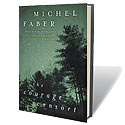
Michel Faber has a striking talent for addressing lurid themes without resorting to the clichés of genre. This happy modulation is what made his 900-plus-page historical bodice-ripper, The Crimson Petal and the White, more than just faux-Victorian erotica. The Courage Consort is a comparatively modest affair: three novellas, two of them set in contemporary Europe. Yet the lurid everywhere darkens the mundane. In the title story, a musician is tormented by imagined terrors and suicidal ideas (antidepressants notwithstanding). Siân, the heroine of the second tale (“The Hundred Ninety-Nine Steps”), suffers recurring nightmares of having her throat slashed. An archaeologist excavating skeletons in Yorkshire, Siân meets a handsome doctor, and the ensuing moral and romantic squabbles frustrate every expectation all the way up to the slightly pat ending. Faber’s third story, “The Fahrenheit Twins,” is a fable about two children (Tainto’lilith and Marko’cain) left mostly to fend for themselves on an island near the North Pole by their German anthropologist parents. It’s a fascinating experiment that doesn’t quite breathe, not just because the primal Jungian-biblical symbolism is overdetermined, but also because elsewhere in the collection, Faber is making (and winning) an entirely different argument: that more than enough horror, strife, and transcendence can be found in the real world.
The Courage Consort
By Michel Faber, Harcourt. 232 Pages. $23.