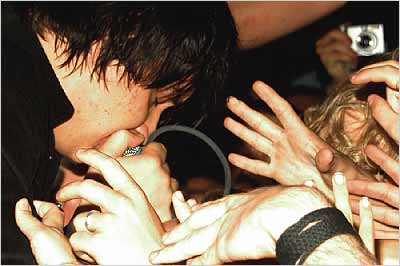
Hiding behind a pair of big aviator shades and clutching the mike stand, Julian Casablancas can hardly tell if he’s singing or not, the monitors are so murky, and lead guitarist Nick Valensi feels like the bass is some kind of malignant force swallowing all the music; rhythm guitarist Albert Hammond Jr. is exchanging worried looks with bassist Nikolai Fraiture, and even the unflappable drummer Fab Moretti seems to lose the beat for a moment. For the five guys onstage, the performance seems to be spinning out of control. And damned if those aren’t the boys from Franz Ferdinand standing right out front witnessing this debacle.
Fifteen yards out from the edge of the stage, the drunk girl with the bleached-out Jane Fonda–in–Klute shag thinks the performance is absolutely brilliant. She waited in line for 26 hours in subfreezing weather to be one of the lucky 800 or so packed into London University’s student union to hear the band preview their new album, First Impressions of Earth. Actually, no matter what the monitors might sound like onstage, it’s a pretty tight performance, a testament to hundreds of hours of rehearsal the Strokes have put in over the last couple of months.
The Strokes first broke in the U.K., and they remain huge here, which may be one reason London gets to hear them perform the new tunes before the hometown crowd in New York does. When the band play the opening chords of “Last Nite,” that instant classic from their 2001 debut, Is This It?, the drunk girl starts screaming like it’s 1964, and I feel my scalp tingling, find myself grinning idiotically. It’s exhilarating, hearing the band perform the song in this tiny venue that’s about the size of the Mercury Lounge in New York, where I heard them in December 2000, when all their fans could fit in one medium-size room and it felt as if maybe we were experiencing a Lazarus moment in the history of rock and roll, the way a lucky few hard-core fans in Seattle might have felt hearing “Smells Like Teen Spirit” for the first time. For many Strokes fans, though, “Last Nite” really evokes the fall of the following year. As if she’s reading my mind, the drunk girl turns to me as the song ends. “I was in New York then,” she shouts. “You know, September 11th.” And then she hugs me—because she’d already learned I was a writer from New York—and spills her vodka-cranberry all over me.
In retrospect, it seems strange to me that an album of edgy, urban, hyperhip garage rock would have become the soundtrack of our post-traumatic distress. Released days after September 11, Is This It could have easily vanished without a trace, as many contemporary pop-cultural offerings did that fall. Instead, the Strokes’ debut album became part of the fabric of that autumn of “missing” posters and anthrax scares, when the air downtown smelled like oven cleaner, and the friend with whom you used to play tennis every week was officially missing. You’d think, in that environment, we would have all had an appetite for the familiar offerings of classic-rock radio, though, in a sense, listening to the Strokes was like listening to an underground, highly selective classic-rock station playing tunes with which you knew you were familiar but that you couldn’t quite identify. The Strokes’ sound seemed both brilliantly distinctive and hugely derivative. You couldn’t necessarily point to any one riff or vocal phrase and say, that’s the Velvet Underground, or Blondie, or the Cars, or Nirvana, or even Tom Petty. Singer Casablancas, who writes all the band’s material, seemed to have digested his influences a little more thoroughly than, say, Oasis’s Noel Gallagher.
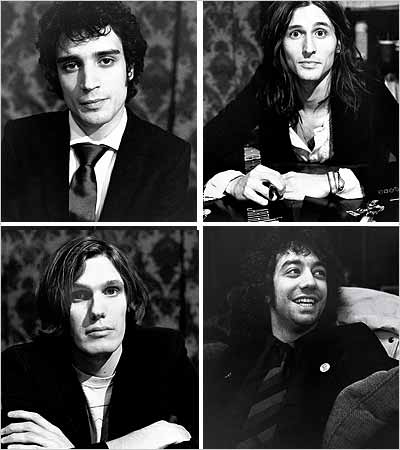
But it was almost impossible not to feel a sense of déjà vu while listening to the Strokes. Even visually, the band seemed like a mix-and-match visual compendium of classic-rock iconography: guitarist Nick Valensi looking like a more handsome version of Dylan beneath his Keith Richards–’65 wardrobe; Afroed Albert Hammond Jr. channeling Hendrix and Mike Bloomfield; mustached drummer Fab Moretti making a fine Freddie Mercury; Nikolai Fraiture kind of Brian Jonesy; and heavy-lidded Casablancas, with his baby-suckled-on-absinthe face, looking plausibly like a young Rimbaud, which is to say, like a lead singer.
And, of course, they were a New York band—finally, after all these years—which seemed important, too, at that moment of uncharacteristic civic pride and outside sympathy. All city boys, with the exception of L.A.-born Hammond. Edgy and dark as they were—it’s always 3 a.m. in Casablancas’s voice—the Strokes were also reassuringly retro.
To many of us, anyway. Some music geeks grumbled that the band were mere copycat stylists, and certain guardians of the counterculture, abetted by rival bands, questioned whether the Strokes could claim to have any street cred, given their private-school educations and privileged backgrounds (Julian’s father, John Casablancas, founded the eponymous modeling school; Albert Hammond Sr. writes huge pop songs, like Jefferson Starship’s “Nothing’s Gonna Stop Us Now,” which he did with Dianne Warren). On balance, though, the rock press greeted them as the saviors of edgy guitar rock, and the band managed to reach an audience large enough to certify them as a phenomenon, but not quite so large as to alienate their core audience of urban hipsters.
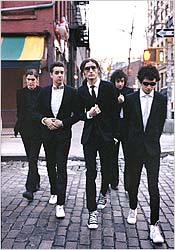
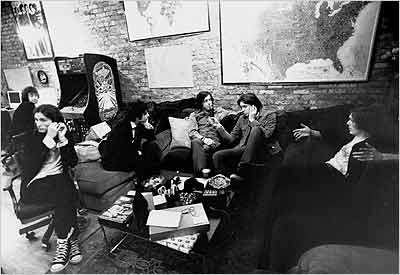
As the first album gained momentum and world tours followed, the Strokes presented themselves as an enviable social unit, real friends just out of their teens, living the dream of adulthood postponed. Like the seventies bands they took their cues from, their musical skills were unpolished; they were really just mastering their instruments, together, in public, and that was no small part of the appeal. Though Julian had an uneasy relationship with the limelight—you can see evidence of it in photos, where he is often shuffled off to the side or the back, not preening in front—the band was utterly reliant on him, artistically and emotionally. Gifted and driven, he also displayed a strong penchant for willfully destructive behavior. Periodically, this would burst out into the open, but you had a feeling that the band was dealing with his black moods and impetuousness on a more regular basis. Almost from the very start, the Strokes gave their fans plenty of reasons to wonder if they were in it for the long haul, or if, at any moment, Julian might yank the cord and bring the whole band crashing down around him.
Two weeks earlier, at Wiz Kid Management, the Strokes’ East Village headquarters, “Sugar, We’re Going Down” is playing on the big TV screen—that ridiculous Fall Out Boy video where the guy grows antlers. It’s the night before they head off on the first leg of their world tour.
“When did music get so bad?” asks the normally upbeat Moretti, sprawled on a couch with his bandmates between photo shoots.
A willowy brunette named Juliet appears, holding a clipboard, announcing an 8 a.m. pickup time to JFK. Only later will I learn that this is Julian Casablancas’s wife.
“Simple Plan is the worst band,” says Hammond, as the next video rolls. He holds his hand over the mouthpiece of his cell phone: “I’d rather put shit in my mouth than listen to them.” Then he returns to his phone conversation: “Hey, Mom, I love you, see you later.”
Casablancas glowers at the screen with his jaded baby face. When asked who was the last great band, he frowns and says nothing. Just when it seems he’s forgotten the question or decided to ignore it, he says, “Nirvana.”
Of the five, Nikolai Fraiture is the least talkative, and it’s often hard to figure out what he thinks. He still hits the clubs in New York, as aggressively as ever, to hear new music, identifying an Australian band called You Am I as one of his new favorites, as well as the Arcade Fire, with whom they shared a bill on their recent Brazilian tour. It was Nikolai who was responsible for the let-there-be-light moment in the creation myth of the Strokes, when, circa age 13, he arrived at his friend and Lycée Française classmate Julian Casablancas’s Upper East Side apartment with a Velvet Underground record his older brother had given him.
“I don’t listen to much music,” Casablancas tells me later. “Most of the time I stick with the important artists, and I don’t want to waste my time with anything less.” Among the chosen few: Bob Marley, the Doors, and naturally, the Velvet Underground.
The next day over a pizza at Mezzogiorno in Soho, Nick Valensi, the youngest, tallest, and most relentlessly sincere member of the band, says, “I’m happy to listen to anything. I like music. Nowadays I like Queens of the Stone Age and System of a Down. I’m of the opinion that now is a great time for music. I really respect Norah Jones for what she does—God, I’m such a fag.” He rolls his eyes as if anticipating his bandmates’ reactions to this kind of talk. “I even like My Chemical Romance.” Looking very Carnaby Street mod in a tight velvet coat and a long silk scarf, he ventures a theory: “The reason people liked the first record, maybe, was because it was kind of New Wave, kind of retro, and no one was doing that music then—the Ramones, Talking Heads, Blondie, the Cars. That music never went out of style, but no one was playing it. We were filling some kind of void in music.”
Since Is This It, of course, bands like the Hives (the Swedish Strokes), the Vines (the Australian Strokes), the Killers (the Mormon Strokes), and a dozen more have made the neo–New Wave sound almost ubiquitous. In 2003, the Strokes themselves released Room on Fire—which Rolling Stone called the most eagerly anticipated follow-up since Nirvana’s In Utero. Though not quite a dud, Room on Fire failed to live up to the band’s mystique. To devoted fans, it sounded like a slightly lesser version of Is This It, which is to say good but not great. Detractors, meanwhile, seized on it as evidence of the Strokes’ inherently limited musical vision.
First Impressions of Earth is an altogether more ambitious and impressive album. It’s still 3 a.m. in Casablancas’s voice, but it no longer sounds as if he’s drunk and shouting at you from the sidewalk through a tenement intercom. The production is cleaner, less garagey. The songs don’t sound quite as interchangeable—I still have trouble telling many of the songs on Room on Fire apart—and the band, especially Valensi, reveal previously unsuspected flashes of virtuosity. By almost any measure, it’s their best album. The propulsive rhythmic energy and the instant melodic appeal of the best songs provide a taut counterpoint to the wounded sneer of Casablancas’s lyrics, which are as disillusioned, doomy, and sarcastic as ever. Five years after their arrival seemed to presage a New York rock-and-roll renaissance, First Impressions of Earth confirms the fact that the Strokes are still the only local band capable of conquering the world.
Early buzz is strong. Jon Pareles gave it high marks in the Times last week. “Juicebox” became the band’s first Billboard No. 1 single, shortly after its release in December. And the authority I trust the most, my 11-year-old son, summed it up this way: “Definitely better than Room on Fire, at least as good as Is This It—maybe even better.”
Talking about the album, the Strokes themselves sound cautious and self-critical. Even as the crowd in London went nuts over their performance, they stood backstage enveloped in an evil mood. “That was awful,” said Hammond, crouching with the others in a stairwell between the stage and the downstairs dressing room immediately after finishing the set.
“Get me to Heathrow immediately,” said Casablancas.
“Are they even applauding?” asked Moretti. “I don’t hear anything.”
While the audience stomped and screamed for more, the guys were convinced they’d bombed. Throughout the few days I was with them in London, their angst was almost unbearable. Before the show, in the dressing room, I thought I was going to have a contact anxiety attack or possibly puke from the collective tension. Now, after the show, nobody was any more relaxed. I thought this was supposed to be the fun part.
“Fuck it, I’m going out,” Hammond said, grimly determined to plow through the encore.
They may look jaded in their photos, but they take their jobs very seriously, and at that moment, they seemed convinced that no one was going to like their new album.
“The best artists,” Casablancas says, “are the ones that work the hardest, and if you work hard enough, you’ll eventually experience the happy accidents that are art. I learned that from my stepfather.” We are sitting in a ramen shop in the East Village, Julian’s neighborhood, a few days after Thanksgiving. He’s wearing a T-shirt that says JUST ONE MORE AND THEN I GOTTA GO under a tan Levi’s cord jacket. Bob Marley’s “Exodus” is playing on the speakers. In an hour, he will head off for rehearsal. Casablancas doesn’t look like a type A personality; in fact, he always looks, and sounds, as if he’s just woken up from a nap or he’s about to pass out. A work ethic is not something one associates with rock and roll, let alone a band this languidly stylish, but by many accounts, Julian is a grind.
In the early days, the Strokes worked the scene, hitting the bars and clubs of the Lower East Side after eight hours of rehearsal to hand out flyers and schmooze the scenesters. “They have an almost military sense of discipline,” says manager Ryan Gentles, who was a booker at the Mercury Lounge when he came across the Strokes and decided to sign on (he’s often referred to as “the sixth Stroke”). While the band spread the word and established themselves on the club circuit, Julian spent hours writing songs—words and music, guitar solos and bridges, everything meticulously worked out—and still does.
“People in our camp are making me feel bad,” says Julian, “about doing it the way I want to do it.”
“Julian eats, breathes, sleeps, and shits music,” Valensi says. “We’ll show up at the studio at noon, and he’ll be there in the studio till four in the morning. He doesn’t stop. Long after everyone else has gone home, he’s still like remixing stuff, trying out different things. He’s like an android. I get to the point where I can’t listen to music anymore and I have to stop, but Julian doesn’t. His ear is so sharp. He’s the one with the ear for detail in this band. Creatively, he is a force to be reckoned with. He’s difficult to work with, and a lot of times he has difficulty communicating, but he’s so creative.”
Certainly Casablancas has some kind of hellhound on his trail. He didn’t have much use for his teachers at the Dwight School, where he landed after leaving the Lycée, or for anything they tried to teach him. He credits his stepfather, Ghanaian-born artist Sam Adoquei, for giving form and shape to his angsty teenage dreams. Although he carries around a name made semi-famous by his father—with whom he says relations have warmed, after years of friction—it is Adoquei whom he can’t stop talking about. “He’s an amazing guy. He taught me everything about art and philosophy. He taught me that the best artists were the ones that worked the hardest.” Adoquei also gave him a copy of the Best of the Doors, yet another touchstone for the Strokes.
After lunch, Casablancas brings me by Adoquei’s Union Square studio to meet him. They hug each other warmly and Julian introduces us. I am immediately disarmed by Adoquei’s beatific smile and his serene aspect, and Julian seems to shed years in his presence, becoming shy and talkative and smiley. He shows me some of his favorite paintings—nudes, still lifes, and portraits, including a large crucifixion-like image depicting the death of Martin Luther King Jr. The figure in the backward baseball cap cradling King’s head is clearly Julian. Julian is effusive in his praise and keeps trying to get the prices, but Adoquei fends him off fondly. “Your money’s no good, mon.”
Whether it’s his stepfather or his friends, Julian exerts a certain pull over those around him. At Dwight, Fab and Nick say, he always stood out. “He had this fantasy right from the start of who he wanted to be,” says Fab.
“He seemed really cool,” Nick says. “But also shy and grouchy.” Inspired in part by Nirvana and Pearl Jam and by Nikolai’s Velvet Underground album, Julian was determined to form a band. Valensi was already an accomplished guitarist, and Julian convinced Fraiture to take up the bass. Looking around for another guitarist, Julian happened to get a call from Hammond, whom he’d known when both attended Institut Le Rosey, a boarding school in Switzerland. Hammond had just arrived in New York to attend film school. And, as it turned out, he could play a little guitar.
The five of them seem to be incredibly tight and to enjoy operating as a gang. The first time I saw them offstage was at an NME cover shoot in November, where they were all dressed in Santa hats and reindeer antlers and joshing around like slightly self-conscious schoolboys posing for the poster for the class play. Only Nikolai seemed somewhat removed from the spirit of things, in street clothes and a long scarf. Two things struck me: the boyish, Beatles-like camaraderie and the fact that the coolest and most sartorially self-conscious band in America didn’t mind posing in Santa suits.
For all the warmth and team spirit, though, the paradox of the Strokes is that they are a democracy under a dictator. When you hang out with them, it quickly becomes apparent that Julian usually keeps the others waiting, the last to appear in the hotel lobby for the after-party or the photo shoot, the last to get in the van or the limo. He’s a curious combination of diffident and supercilious, sounding tongue-tied and loquacious within the same sentence. He tells me he wants more input from the band, but he seems afraid to give up control. Though he has always shared songwriting royalties with the band, he has tended to dominate the creative process. For the Room on Fire sessions, it was said that he was loosening up, though it wasn’t entirely clear if that was true. Now everyone agrees that First Impressions is their most collaborative effort to date.
“I used to wait until everything was done and walk in with kind of a finished product,” he says. “I used to do more on my own, and now I’d bring the songs in less finished and let them brew a little bit. Let them simmer and let the other guys think about them. Because we had more time. We had this deadline with Room on Fire, and there wasn’t as much time. There was a certain amount of pressure, a sense that we had to get another album out before people forgot about us.”
The more I hear about the tour schedule, the party protocols, and the onslaught of fame that followed the release of Is This It, the more amazed I am that Room on Fire got recorded at all. All the usual vices were tried on for size: Substances were abused, public misbehavior was duly reported. “We were hitting it pretty hard,” admits Moretti. Julian punched out a music exec in Paris and then, back in New York, he tried to kiss reporter Neil Strauss, according to Strauss’s notorious Rolling Stone cover story—which the band hated. The story, however accurate or distorted it may have been, presented a seemingly convincing portrait of Julian as a kind of booze-fueled Jekyll and Hyde. There was a brief period in 2002 when it was still possible for New Yorkers to observe the boys behaving this way in their pre-fame native habitat. Watch Julian crawl out of an East Village dive just before dawn! See strong, silent Nikolai hurl a garbage can at a car! Which is no less than we expect of our rock stars. For a bright, shining moment, it seemed like they had created the kind of downtown music scene that we’d all been looking for since Television was playing CBGB.
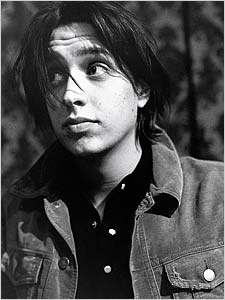
Then, within less than a year of each other, they all settled down with girlfriends and pretty much left the party behind. As if they didn’t realize that sex and drugs were the whole point of rock stardom, let alone of that period known as one’s twenties, they’ve shacked up and sobered up by their mid-twenties. Albert hooked up with Catherine Pierce of the alt-country duo the Pierces, whom he pursued for more than a year after seeing her onstage at the Mercury Lounge with her sister. Nick fell in love with Amanda de Cadenet, an English actress and photographer who was formerly married to John Taylor of Duran Duran. Nikolai recently married his longtime girlfriend, Illy, with whom he had a daughter last year. And, as all readers of Us Weekly know, Fab has been going out with Drew Barrymore for the past three and a half years. Tristan never raved about Isolde the way these guys talk about their women. “She’s so beautiful,” Fab says of Barrymore, “she must have the gardens of Babylon inside of her.” And he gets so excited when she calls one night that he insists on putting me on the phone just to share the love.
Finally, in the summer of 2004, Internet chat rooms started buzzing with the rumor that Julian was engaged to Juliet, who had worked for the band for several years; they were married in February 2005.
When I joined the band at the Metropolitan hotel in London last month, I found one wife and two girlfriends in residence, along with two kids. Juliet had just returned to New York, and Drew was doing reshoots in L.A. Drinking absinthe with Fab until six in the morning was my only glimpse of the Dionysian touring life. “Dude,” he said the next afternoon when we ran into each other. “I passed out with my cheek on my bed, kneeling on the floor—my knees are, like, fucking aching.” And the famed bar at the Metropolitan, known for late-night post-concert binges, seemed similarly played out.
Domestic tranquillity is anathema to rock-and-roll mythology, if not necessarily to rock-and-roll reality; hearing the Rolling Stones play in the late seventies, you might have questioned the value of a full-on program of drugs and debauchery, in terms of the musical product, and the Strokes seem to have understood the pitfalls of this far earlier and less painfully than the average gang of guitar slingers. “If I were 13, I would not want to hear this,” Nick says about how they’ve all settled down. “But I’m tired of bars, I’m tired of these drunks and cokeheads. I’m trying to live responsibly. Do I want to live out this rock-and-roll cliché, or do I want to be a healthy, morally responsible person? Being healthy is not easy when you’re in a band, but that’s who I am. I’m not going to act like Sid Vicious.”
In Julian’s case, that realization appears to have had an especially dramatic effect on his life. After Room on Fire, he quit drinking, which radically altered the internal dynamic of the band, though it’s hard for any of them to talk about. When you discuss what the last few years have been like, the question of his drinking is the elephant in the room. By Julian’s own account, he first got drunk when he was 10 and later had run-ins at school. By the time he was in the Strokes, the drinking was out of control.
“Julian’s become a lot more communicative since he quit drinking,” Fab tells me one night over Heinekens in the Wiz Kid offices. The subject keeps coming up with the others, albeit timidly. “Julian quitting drinking had a big effect on the dynamic of the band,” Nick says at one point. “Instead of the four of us excluding Julian and getting together and venting and airing our concerns, he’s a part of it now. He’s a lot more approachable and communicative. He’s letting us know what’s on his mind.” Albert, who was the last to join the band and admits to still feeling insecure about his role in it, doesn’t want to go near the subject. “He’s my best friend, and it’s great to see him happy and being aware of everything,” he says.
I hate them all
I hate them all.
I hate myself for hating them
So I’ll drink some more.
I love them all.
I’ll drink even more.
I’ll hate them even more than I did before.
—“On the Other Side”
My last night in London, I’m supposed to have dinner with Julian at nine. So I skip the Franz Ferdinand concert to which Hammond and Moretti have invited me. “Dude, did you see that sunset?” Fab asks when he spots me in the lobby of the Metropolitan on his way to the concert. “It set like it was the last time on Earth. Like, ‘Good-bye, humans.’ ”
Moretti is temperamentally the opposite of Casablancas, the joker, the glass-half-full guy—the warm emotional heart of the band. He keeps the beat, Ringo to Julian’s manic-depressive Lennon. One imagines he’s gotten them through some rough spots. Last night we pledged undying friendship and talked for hours about music and books and our girlfriends. Trying to recall what he said, I can barely read the few notes I managed to scrawl out: “We were playing a show in Indio, California. Ryan [Gentles, the Strokes’ manager] introduced me to Drew. I came down to the lawn, and I was really intimidated. She was talking about Stephen Hawking. She said, ‘Do you like Prodigy?’ And I said, ‘They scare me.’ And she said, ‘Well then, look at me.’ My God, I love her.” At one point, Fab started quoting from Vonnegut’s Welcome to the Monkey House. Watching him leave now for the concert, I can’t help wishing I could join him.
Waiting in my room, I get periodic calls to stand by for my meeting with Casablancas. At 11:30 p.m., after watching a TV movie about Michael Jackson that portrays him as a Christ-like figure, I order room service from the Nobu downstairs. When he finally calls my room, it’s 2 a.m. “You wanna meet downstairs?” he asks. “Or we could have breakfast tomorrow.”
“I’m tired of bars, I’m tired of these drunks and cokeheads,” says Nick. “I’m trying to live responsibly.”
Let’s not and say we did is what I want to tell him. I’m too fucking old to be waiting around on some egomaniacal 27-year-old who’s flexing his self-importance after studying Chapter Two of Rockstar 101, by Mick Jagger. And come to think of it, Jagger was only twenty minutes late when I met him for a profile in the mid-eighties.
At least now I won’t feel awkward asking Casablancas about his drinking; if I’d had to bring it up at ten over a pleasant dinner with a couple of glasses of Burgundy inside me, I might have felt bad. Now I’m almost relishing the prospect of making him uncomfortable. So much for my theory, developed over the course of the previous week, that all the shit I have read about his erratic and imperious behavior was largely attributable to all that drinking he used to do.
And, indeed, after he sits down in the lobby of the Metropolitan at ten past two, he seems taken aback by the question of his drinking, even after I put a positive spin on it and tell him how the other guys in the band all say he’s much easier to work with now, that it’s the best thing that’s happened in the history of the band. “Yeah, whatever,” he responds. “If they say so.” He looks like he’ll have something to say to the guys tomorrow when he sees them, and I feel bad for them in advance because I like them and I can see that they live with a tyrant.
“I didn’t feel so mentally altered,” he ventures. Yeah, yeah. He tries to stare me down, and normally he could, but it’s not working because I’m in such a bad mood I can stare right back until finally he blinks. After a long silence, he amends his last statement. “The problem was that it was taking away from my time. Now I’ve got so much time, I have all these songs popping out.” And after another long pause: “I’d lash out when I was drinking. I said things I shouldn’t say. I’d say everything that was on my mind.” Another long pause. “I drank a lot since I was 14. I couldn’t really take it any further. I reached that turning point somewhere in the darkness.”
After that he seems to register my poisonous mood and apologizes for being late. He starts talking to fill the silence. “I’ve been doing interviews all day,” he says. “The British press can be so annoying. They jerk you off with one hand and smack you with the other.” (The British press has always loved his debauched rock-star ways; in naming Julian to its “Cool List,” the NME remarked that “nobody holds a half drunk bottle of Heineken quite so stylishly.”)
“It’s like an inner struggle for me, between saying I don’t give a shit and trying to make it work. You want to do the right thing, but I’m sick of people thinking I’m difficult.”
I suggest that making people wait five hours probably doesn’t predispose them to be sympathetic.“I’m really sorry, I fell asleep,” he says. “It’s just been a bad day. I’m a little bit sad. People in our camp are making me feel bad about doing it the way I want to do it. They want me to do cheesy things. I feel like I’ve given up a lot of my fantasies, just in terms of how we do things. I just want to do things differently, and to a lot of people that’s annoying. I like weird stuff. I always hoped if we had a big success it would be on our own terms.” He’s chewing on his thumbnail, looking seriously depressed.
I tell him I have no idea what he’s talking about.
“It’s like holding a fish, putting your finger on the stuff that really matters. You hear the great ones and just try to understand them.” He looks out over the lobby, opens and closes his mouth as if despairing of getting it right.
“Like music videos,” he says finally. “They really hurt the song. It’s like the movie and the book—when you hear the song, you think about the video, which is good for selling it but not how I want to think of the experience of music. It would be better to have your own idea of the song.” He seems to reconsider. “It’s fine,” he says, in a forget-everything-I-just-said tone. “It’s okay, it’s totally cool. I feel slightly confused about certain things. Practical and tactical things. When you try to make everyone happy … in the end you’ve got to make yourself happy.”
I feel like I’m trying to decipher the lyrics to one of his songs, which are suggestive and elusive. In “Juicebox,” the current single, the words go
Everybody sees me,
But it’s not that easy,
Standing in the light field,
Standing in the light field,
Why don’t you come over here?
We’ve got a city to love.
When he sings it behind the bass, drums, and two guitars, loose expressions like these create their own argument, but right now, without any booze or melody or the other Strokes, it makes for awfully cryptic conversation. I tell him he’s going to have to be more specific.
“My opinion is that huge iconic success seems to damage people. Some people got damaged by drugs. Some got destroyed by being on top of the world. I saw this TV movie about Michael Jackson tonight,” he says. “What do you think? Do you think he’s guilty? I don’t know. He’s got enough evil forces working around that you’ve got to wonder.”
I think it’s interesting and weird that he identifies with Michael Jackson.“I think,” he says, “I will always be desperate to figure these things out.”
At this point he goes off the record. Two hours later, it’s 5:30 in the morning. I’m exhausted, but Julian seems refreshed, and in the putrid predawn light of the hotel lobby, he looks serene and youthful. As we take the elevator up to our rooms, Julian says he feels better, having divested himself of a litany of doubts and complaints and fears; everything will probably be fine, he says. It was like listening to a stranger talk about his marriage for a few hours—ultimately the details aren’t that important, but you can’t help hoping they work it out and stay together in the end.
When we get to my floor, Julian surprises me by giving me a hug. “Later, man,” he says, and the doors close between us.