After cycling through the design talent of pretty much every other country in Northern Europe, New York has now fallen for Holland—specifically, its furniture, ceramics, and fashion designers, who are churning out innovative works at hyperspeed. Unlike that of its Scandinavian neighbors, though, new Dutch design has nothing sleek, modern, or minimal about it. Austerity, begone; welcome to ornament, wit, color, a love of traditional crafts, and cheerfully illogical juxtapositions of classic forms with industrial materials. Who can resist Eelko Moorer’s bearskin rug, recast in white polyurethane, or Tord Boontje’s fanciful chandelier of Tyvek, or Maarten Baas’s artfully charred Rietveld chair?
Curators and tastemakers like MoMA’s Paola Antonelli and Soho retailer Murray Moss have been trumpeting Dutch industrial designers like Droog alumna Hella Jongerius (see “The Best Bet,”) and Moooi founder Marcel Wanders for years (the Dutch love design collectives), but the arrival of some prolific new talents and aggressive promotion from the consulate here have helped push Dutch design into the spotlight. For an immersion course, start at the Museum at FIT’s “Dutch at the Edge of Design,” a showcase of textile and fashion designers. The Moss Gallery is currently covered with textile designer Claudy Jongstra’s barbaric swaths of furry felt, and this week, Space Downtown in Chelsea will open “Finding Netherland,” a group show of emerging Dutch fashion labels. In December, the Cooper-Hewitt’s “Fashion in Colors” exhibit will highlight the wildly talented fashion duo Viktor & Rolf, and a Boontje solo show is scheduled there for early 2006.
Until now, works of Dutch design have often been limited editions or one of a kind, priced for elite collectors only (much of what’s seen on the opposite page is available at Moss’s Greene Street store). That’s starting to change; Design Within Reach sells some Wanders pieces, and Jongerius’s line of $39.99 vases for Ikea debuts next month. As for why there’s so much Holland love right now, Gert Jonkers, editor of the influential Dutch-based indie magazines Fantastic Man and Butt, theorizes it’s a reaction against design’s current mass blandness. “When you’re from Holland, you either have to do something very exceptional or very strange.”
(1.) Miriam van der Lubbe’s “Windmill Islam” plays with the beloved national symbol by decorating it with Arabic script.
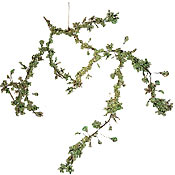
(2.) Tord Boontje’s new leafy light fixture is made of Swarovski crystal and LEDs.
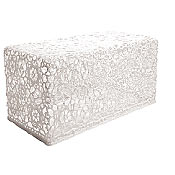
(3.) Marcel Wanders’s resin-dipped crocheted cotton coffee table.
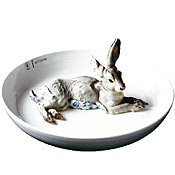
(4.) Hella Jongerius’s “Bowl With Rabbit,” part of her series for Nymphenburg.
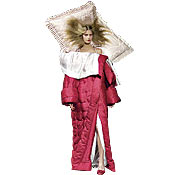
(5.) From Viktor & Rolf’s fall 2005 show, a vertical bed-as-ballgown.
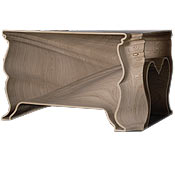
(6.) Jeroen Verhoeven’s dazzling multilayered wood “Cinderella” table starred in a Dutch-furniture showcase this spring.
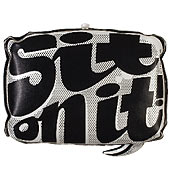
(7.) Leendert Masselink’s leather-and-corduroy cushion, stuffed with polystyrene pearls, on view at FIT.
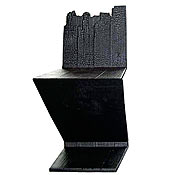
(8.) Maarten Baas’s burnt, epoxied version of a Rietveld classic.
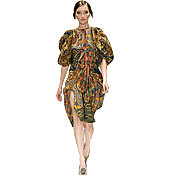
(9.) A dress from Mada van Gaans’s spring 2006 collection, in the “Finding Netherland” exhibit.
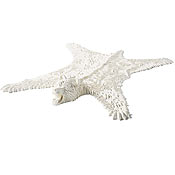
(10.) Eelko Moorer’s polyurethane bearskin rug, on view at FIT.
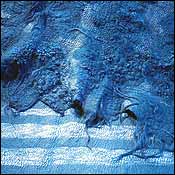
(11.) Claudy Jongstra’s indigo felt rug is made from cotton, silk, and wool from three kinds of sheep.
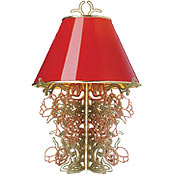
(12.) Job Smeets’s “Roses on the Vine” lamp, made from laser-cut gold anodized aluminum and Swarovski crystals.
The Names You Need to Know (and How To Pronounce Them)
Hella Jongerius = heh-la yon HEER-eeh-us
Niels van Eijk = neels von IKE
Jan Taminiau = yon ta-MEE-nee-ow
Maarten Baas = mahr-tin BAHS
Marcel Wanders = mahr-sell VON-ders
Miriam van der Lubbe = meeh-ree-um VON de leb-beh
Claudy Jongstra = clow-dee YONE-strah
Tord Boontje = tort BONE-cheh