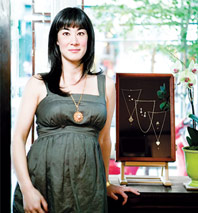
You’re one half of Doyle & Doyle. Who’s the other?
Pam Doyle, my sister. We opened the store because there was no antique or estate jeweler downtown—nothing at an accessible price point. So that’s the void we filled.
Where does your jewelry come from?
Auctions, estate sales, shows. We have a network of dealers who travel all over the U.S. and Europe.
What’s in demand right now?
The layering look has been very popular, so people build on smaller pieces to get a larger look. Colored diamonds have become a lot more desirable, and gold has made a huge comeback.
What is your customer like?
She cares more about having something that’s different, rather than having the thing that makes her fit in or gives her a recognizable status symbol.
How can I identify a quality piece?
The stone should be clear; the purer the color, the better. You don’t want to see any bumps or unpolished parts on stones. Antique jewelry should have an even wear over the whole piece.
Tips for upkeep?
Store your jewelry in a manner that they won’t rub against each other, especially diamonds, which will scratch each other. Your jewelry box should have dividers. As for cleaning: warm, soapy water and a soft-bristled brush.
What makes a great gift?
A locket. Ours start at $80 and go upwards of $5,000.
Strangest thing to keep in a locket?
Baby’s teeth.