The Best Mixing Glasses, According to Bartenders
Save this article to read it later.
Find this story in your account’s‘Saved for Later’section.
Comment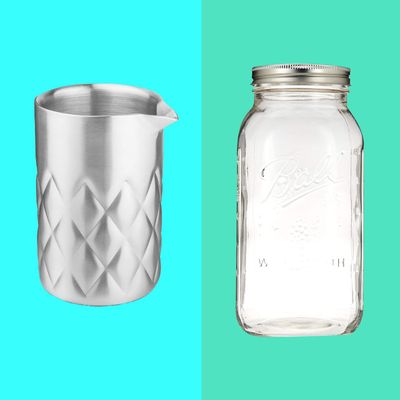
There exists a deep cleavage in the taxonomy of cocktails that I learned about as I was starting out as a bartender: One major branch consists of the cocktails you shake, the other the cocktails you stir. Drinks like the daiquiri, margarita, and whiskey sour are made through the violent action of shaking, while the Manhattan, old-fashioned, negroni, and martini are gently stirred before hitting the glass. With few exceptions, drinks that contain opaque liquids like citrus juice and dairy are shaken, and drinks made exclusively with clear liquids, such as spirits, fortified wines, and bitters, are stirred. Stirring a cocktail preserves the silky texture of the components while chilling, mixing, and diluting them. For the most part, these drinks are considered stronger and more spirit-forward than shaken drinks, and the properties of the stirring process allow those characteristics to shine through.
To shake a drink requires a specialized tool, namely, acocktail shaker. For the task of stirring, bartenders who don’t opt for the trusty pint glass sometimes use a specialized vessel called a mixing glass. Mixing glasses tend to be some of the more ornate items you might see behind the bar, with shimmering etched sides or even a footed base.
To supplement my own expertise as a longtime bartender and bar director for the Momofuku restaurant group,I spoke with four veterans of the bar industry and got some rather surprising results. Overall, there was the sentiment, which I share, that a mixing glass is not the most essential bar tool out there. Heck, I mostly use the small side ofthis shaking setwhen I need to stir something up. However, there are a lot of great reasons why someone might want to purchase a purpose-made vessel. First, aesthetics. Many mixing glasses are beautiful to look at, and the ritual of stirring a drink in them is a legitimate joy. Second, ease of pouring. The experts I spoke with stressed the value of a mixing glass that pours neatly and accurately. This might sound trivial, but I cannot tell you how many times a drink has been underpoured because a poorly designed spout allowed the cocktail to dribble haphazardly all over the bar top. Lastly, volume. A mixing glass allows two, sometimes three or more drinks to be made in the same vessel at the same time, saving steps and ensuring consistency from drink to drink. It also accommodates a good amount of ice, which is essential for every drink you make, shaken or stirred.
Beyond the standard mixing glasses, my experts threw out some curveball recommendations that, despite not being “traditional,” actually make a ton of sense.
New! You can now save this product for later.
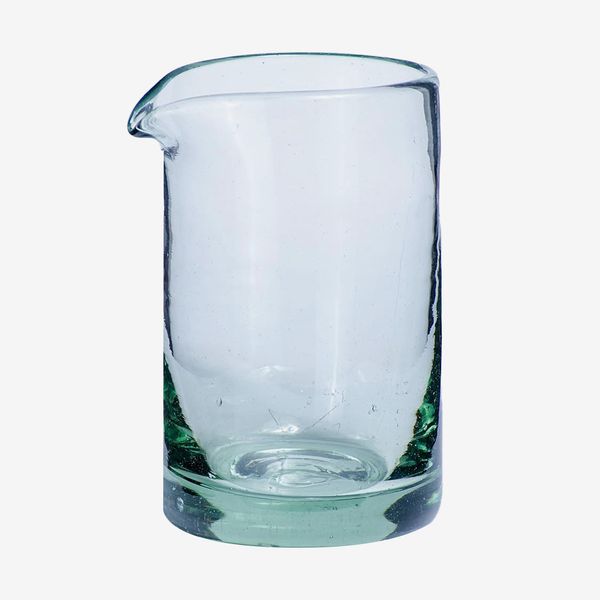
This hand-blown mixing glass made from recycled material is the favorite of Sean Umstead, co-owner ofKingfisher. He prizes it for its heavy base, which adds stability, and “deceptively large” capacity. He also likes the “rustic uniqueness in each piece. Mixing glasses have gotten pretty homogenous, so it’s nice to see craftsmanship at a semi-reasonable price point.”
New! You can now save this product for later.
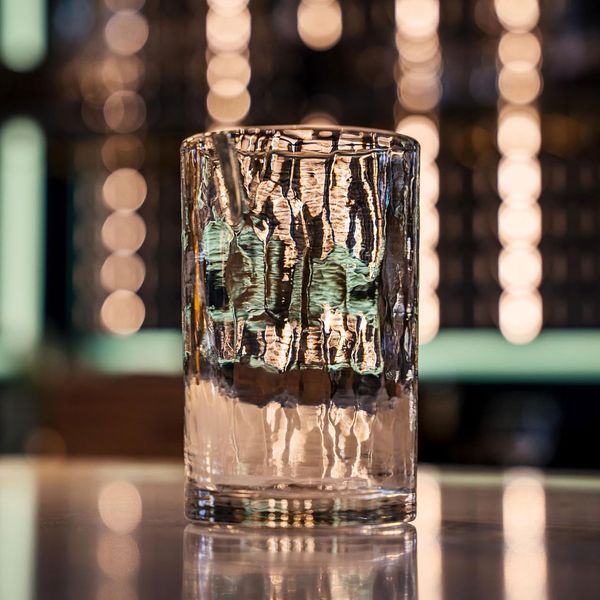
Another hand-crafted option is this mixing glass from Bull In China. It’s an example of how important the aesthetic experience of making a drink can be.Stevan Miller, the beverage director atEsmé, loves the more practical elements of it, such as the high-angled pour spout and durability, but also the pleasing sound it makes when in use thanks to the way ice clinks against irregularities in the glass. “I think it’s beautiful,” he says. “It’s elegant and it makes me happy to make things in it, and I think that’s a big part of having a tool.”
New! You can now save this product for later.
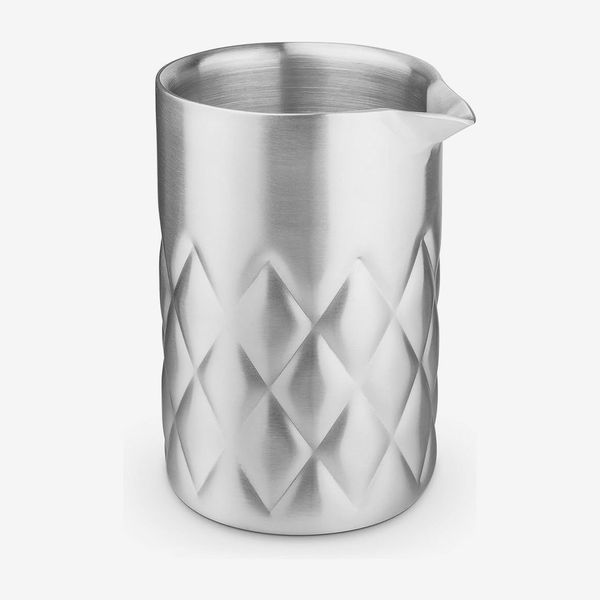
As I mentioned above, a great option for stirring cocktails is a shaking tin. “Yarai” means “falling arrows” in Japanese and refers to the cross-hatched pattern you see on many mixing glasses modeled in the Japanese style. The metal walls of this pitcher are a lot less dense than glass and conduct heat more readily, allowing the drink to reach its optimal temperature and dilution faster and with less ice. This pitcher comes recommended byLynnette Marrero, chief mixologist atDelolaand a Masterclass teacher. “I’m a big fan of the metal mixing tins,” Marrero says. “I don’t think you need the glass at home. And especially if you’re not using your tools all the time and they’re on a shelf, they can get knocked over very easily.”
New! You can now save this product for later.
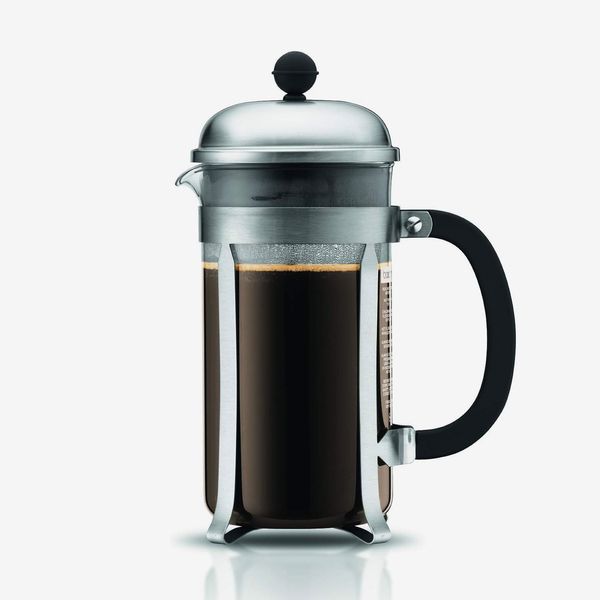
It’s not so much of a stretch to imagine that something used to make coffee can also be used to make cocktails, especially since half of the experts I spoke with said it was one of their favorite alternative mixing glasses. Consultant and educatorDon Lee(formerly of Existing Conditions, Momofuku, and PDT) advises “anyone who’s like, ‘I need to make multiple drinks,’ to just use the French pressyou probably already have. You don’t need more martinis at once than you need cups of coffee.” Marrero also points to its convenience. The plunger can double as a strainer, allowing her to make a big batch, throw it in the fridge, and let guests help themselves at their leisure.
New! You can now save this product for later.
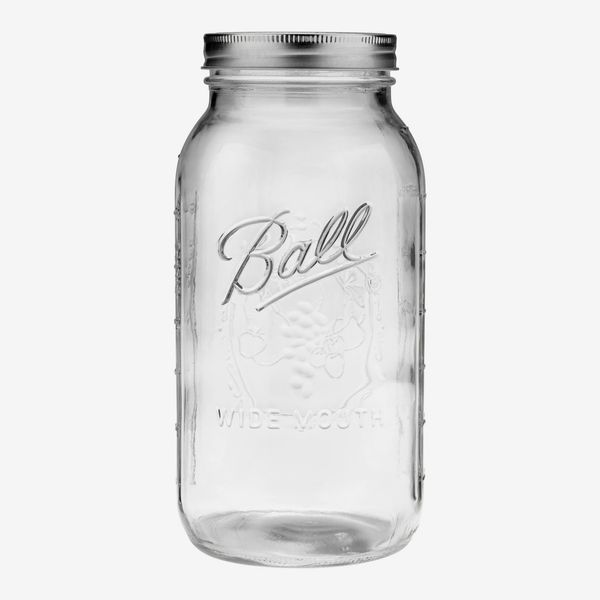
When it comes to batching, Lee says that a Ball jar is indispensable, however unglamorous it might seem. “What I tell people is to look deep within themselves and ask if they are just looking for a means to an end or just want the aesthetic,” he says. He advises those with no ego and nothing to prove to follow his lead. “Seriously, I mostly use Ball jars. You can use the big half-gallon one if you really need to make a lot. The lid means you can transport it too.”
The Strategistis designed to surface useful, expert recommendations for things to buy across the vast e-commerce landscape. Every product is independently selected by our team of editors, whom you can read abouthere. We update links when possible, but note that deals can expire and all prices are subject to change.