The Best Instant Cameras, According to Photographers
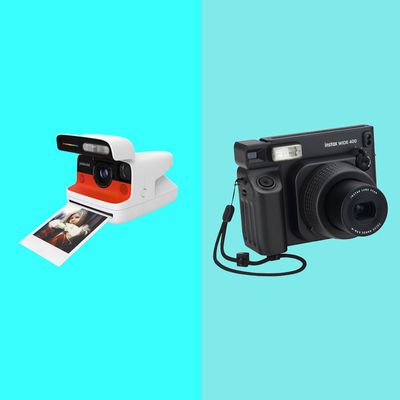
Instant cameras were revolutionary because they could process their own film in just minutes, something that seemed magical in the pre-digital era. Today they represent something different: an alternative to digital perfection, something tangible, expressive, and analog that can’t be captured on a smartphone screen.
Today’s craze was kicked off by Instax — Japanese photography giant Fujifilm’s instant-camera division — when the company brought instant photography back into the mainstream in the 1990s and 2000s with a small, cheap, reliable line of cameras and film that grabbed the attention of a generation saturated with digital images. It filled the gap left by Polaroid, the venerable company that introduced instant photography back in the 1940s and filed for bankruptcy in 2001. But the competition intensified when a Dutch company formerly known as the Impossible Project resurrected the brand’s film format in 2008 and eventually bought the name and even launched a new line of Polaroid cameras.
There’s more choice in instant photography than ever, and it’s easier than ever to get started — and to reap the rewards of this intensely analog form. “Unlike anything possible with a digital camera or an image prompt, instant film brings an alchemic mix of truth, humanity, one-of-a-kind imagery, and a dance between photographer and chemistry that all happens very much offline,” say Ben Fraternale, a filmmaker and proprietor of the YouTube account In an Instant.
Rhiannon Adam, a photographic artist and author of Polaroid: The Missing Manual, loves the way instant film does something no digital image can: reflect the conditions of the moment of capture. “If it’s born on a hot and humid day, that picture is going to look different than the same photograph of exactly the same thing on a cold and windy day. From looking at that Polaroid, I can tell you, in 20 years’ time, what the temperature of that day was.”
By the way, Adam points out that despite what André 3000 says, you should not, in fact, shake your Polaroid pictures. When Polaroid first debuted, she explains, “the film was wet. And then you would shake your wet Polaroid to dry it and stop dust from landing on it.” With today’s film, shaking can actually interfere with the chemical development process inside the film.
How to choose an instant-film camera
Instax or Polaroid?
There are two popular formats in instant photography today — Instax and Polaroid — and the first step is deciding which is right for you. Both companies make film in a variety of sizes, color and black-and-white options, and specialty stocks if you want round prints or prints with decorative borders.
Our experts generally agree that Instax is the better format for beginners. Instax cameras tend to expose photos more consistently, produce brighter and sharper images with more accurate color, and require less experimentation. “For someone just starting out, Instax is probably the way to go if they want something, right out of the gate, that just simply works,” says Michael Behlen, a Polaroid photographer and publisher of Analog Forever Magazine. “Instax is way more cost-effective, easier to use, anyone can pick it up, hit the button, go through the images, hit print. It’s way easier.”
But ease of use comes at the expense of user control. “The sacrifice with Instax is that the camera options are exceedingly simple, not intended for manual control or much in the way of creative opportunities,” says Fraternale.
So if you’re looking for more tools for creative expression, you’ll want to look at a camera that uses Polaroid film, which produces images that are more like the instant prints you might remember. They’re more muted and atmospheric, with lots of quirks that make the final product more unique and artistic. Polaroid, says Fraternale, “has geared their efforts more toward people looking to shape an image and put more of themselves into the picture.”
Behlen says it’s a matter of choosing the right format for the situation. He asks himself, “Do I want what we call happy accidents in Polaroid film, or do I want to shoot Instax at the club or at a party and have that be a consistent experience?”
The Instax and Polaroid film formats are proprietary, by the way, so you can’t mix and match cameras and film. You don’t necessarily need to buy a Fujifilm-branded camera to use Instax film, however. Moses notes, “Lomography’s Instant cameras and the Leica Sofort are both compatible with the Instax format too — so if you are using Instax film, you do have a wider variety of modern camera brands that you can work with.”
Print size
Instax offers three sizes: mini (1.8” x 2.4”), square (2.4” x 2.4”), and wide (3.9” x 2.4”). The cameras that are available work specifically with these three film sizes; you can’t shoot mini film on a wide camera model, for instance. Film is available with decorative borders in a huge range of colors (the borders of the prints are larger than the image size, so there’s plenty of extra space). You can find all of the film formats on the Instax site.
Polaroid offers two sizes — standard 600 film, which produces a 3.1” x 3.0” image and Go, which measures 1.8” x 1.8”, roughly equalvent to Instax’s mini — for its current cameras. You can also get specialty types like round-frame film for dramatic portraits, eight-by-ten sheets for professional cameras, film for your old SX-70, and decorative and colored borders directly from Polaroid.
Can I still use my old instant camera?
Adam recommends vintage cameras to beginners who don’t want to spend a lot or prefer the look of the classic cameras and film. “I like to be able to manually focus,” she says. “My whole thing is depth of field and manual focus, and so I shoot a lot with just an SX70 camera.”
One advantage of Polaroid is that the new company produces film in the old factory, and still makes stock for older Polaroid cameras. 600 film works with cameras from the 1980s and 90s, and you can even get film designed especially for the SX-70, Polaroid’s classic folding camera from the 1970s. Several of the Polaroid photographers we spoke to still use the SX-70, sometimes in modified form.
Modern Polaroid cameras use i-Type film, which doesn’t have a built-in battery pack (it’s made for modern cameras that contain their own rechargeable batteries). Traditional Polaroid film cartridges (like the version made for the SX-70) includes a built-in battery pack because vintage Polaroid cameras relied on the film itself for power. i-Type film still delivers the classic Polaroid look — soft detail, rich textures, and vintage color — but with updated chemistry.
If don’t have an old Polaroid in the closet, used SX-70s are still widely available. If you end up using one and want some more modern conveniences, Behlen recommends an accessory that brings some smarts to the classic design. “It adds Bluetooth, so you can meter with your phone and hit a picture if your camera’s on a tripod. The exposure is way better,” he notes.
Best instant camera overall
New! You can now save this product for later.
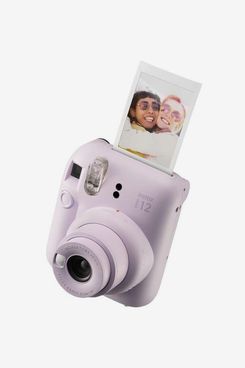
Film format: Instax | Print size: Instax mini
If you’re just trying your hand at instant photography, Instax makes the barrier to entry extremely low. The Instax Mini 12, Fujifilm’s popular point-and-shoot instant camera, is an easy-to-use instant camera for casual photographers who want quick, tangible memories, along with features familiar to digital camera users like fully automatic operation and a close-up mode accessible with a twist of the lens barrel.
“The Instax Mini is one of the lowest-cost instant cameras, its film ranges from about 50 cents to $1 a shot, and you can buy the film in bulk. This style of Instax camera has excellent auto-focus, they come in a variety of fun colors and there’s a handy selfie-mirror on the front of the camera for framing up a perfect analog selfie,” says Jeanette D. Moses, a photographer and frequent contributor to Pop Photo.
Best instant camera for larger prints
New! You can now save this product for later.
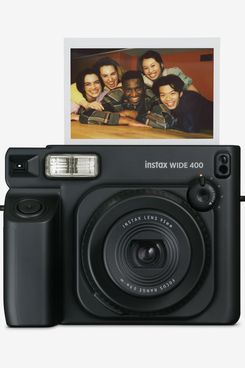
Film format: Instax | Print size: Instax Wide
Instax mini prints are great for sharing, but sometimes you want a larger print, closer to Polaroid’s standard size.
Fujifilm’s Instax Wide format — twice as large as the mini format — is perfect for landscapes, group shots, and travel photography. The Instax Wide 400 gives you the same bright colors, reliable exposure, and beginner-friendly operation as its smaller sibling, but the larger film format gives images a more substantial and display-worthy feel.
For those who enjoy the convenience and consistency of Instax film but want something closer to the classic impact of vintage Polaroid prints, the Instax Wide 400 offers a compromise, plus you get convenience features like a stand (an “angle adjustment” block that stores on the wrist strap), a self-timer, and a dedicated close-up lens attachment.
Best instant camera for more advanced photographers
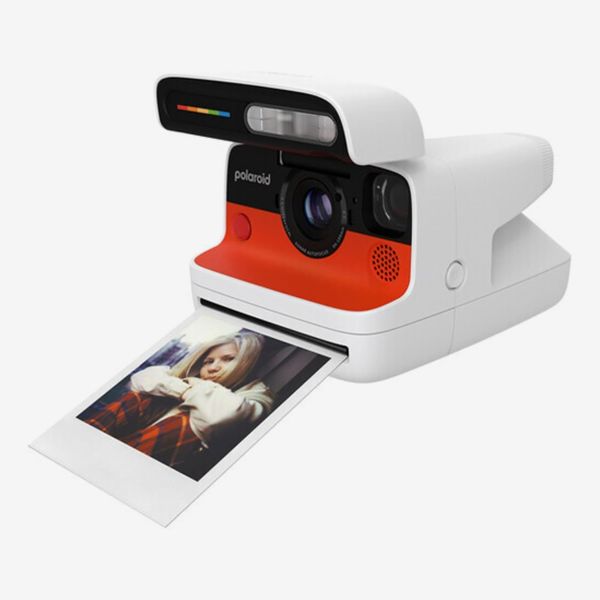
New! You can now save this product for later.
Film format: Polaroid i-Type | Print size: 600 (3.1” x 3.0”)
“The Flip is a good middle ground between automatic functionality and deeper creative tools, if someone wishes to grow with their camera, “ says Fraternale.
The Flip is a modern instant camera that blends the nostalgic appeal of classic Polaroid photography with updated features. It’s easy to use for beginners, and the prints it produces maintains the signature Polaroid aesthetic with soft-toned large square prints.
Unlike many minimalist instant cameras, however the Flip has a bunch of extras on board that let more advanced shooters get better image quality. A four-lens array lets you shoot everything from close-ups to landscapes, autofocus helps make sure you get a clear shot of your subject, and a bigger, brighter flash than most competitors along with exposure compensation (and built-in light metering that warns you about under- or overexposure) let you get the image you want in any conditions, indoors or out.
Best instant camera with digital conveniences
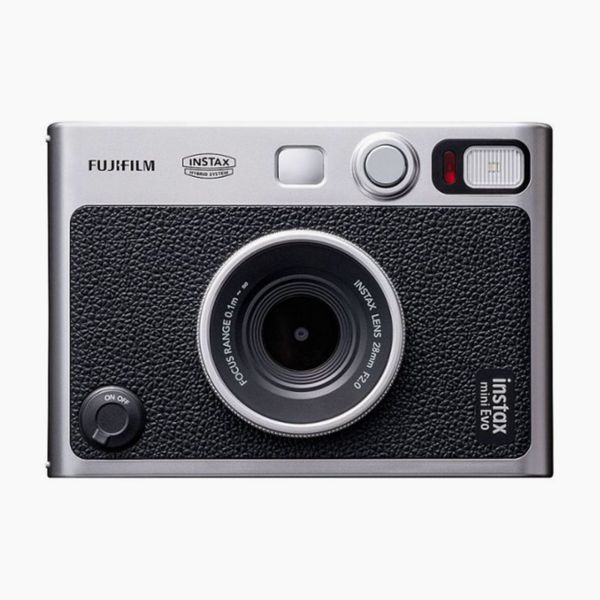
New! You can now save this product for later.
Film format: Instax, digital | Print size: Instax mini
The Fujifilm Instax Mini Evo combines digital convenience with the charm of instant prints, giving you the best of both worlds. Unlike traditional instant cameras that print every shot, the Mini Evo allows users to preview images on a built-in LCD screen and choose which photos to print later, from the camera or a companion smartphone app (with the app, you can even use your phone as a remote). And before you print, you choose from a wide range of filters and film-stock effects — just as you’re used to with a smartphone.
“The Instax Mini Evo is a great tool for capturing fun, casual moments at big events, and having the ability to review images before you print them makes it a great way to experiment with composition and different styles of shooting without burning through packs of film,” says Moses.
Our experts
• Rhiannon Adam, photographic artist and author of Polaroid: The Missing
Manual
• Michael Behlen, Polaroid photographer and publisher of Analog Forever Magazine
• Ben Fraternale, filmmaker and proprietor of the YouTube account In an Instant
• Jeanette D. Moses, photographer and frequent contributor to Pop Photo
The Strategist is designed to surface the most useful, expert recommendations for things to buy across the vast e-commerce landscape. Some of our latest conquests include the best acne treatments, rolling luggage, pillows for side sleepers, natural anxiety remedies, and bath towels. We update links when possible, but note that deals can expire and all prices are subject to change.