The 11 Very Best Air Purifiers
In this article
Whether you’re seeking relief from seasonal allergies, occasional wildfire smoke, or just regular old pollution, an air purifier is a relatively affordable way to make sure the air in your home is as clean as it can be no matter what’s happening in the world outside.
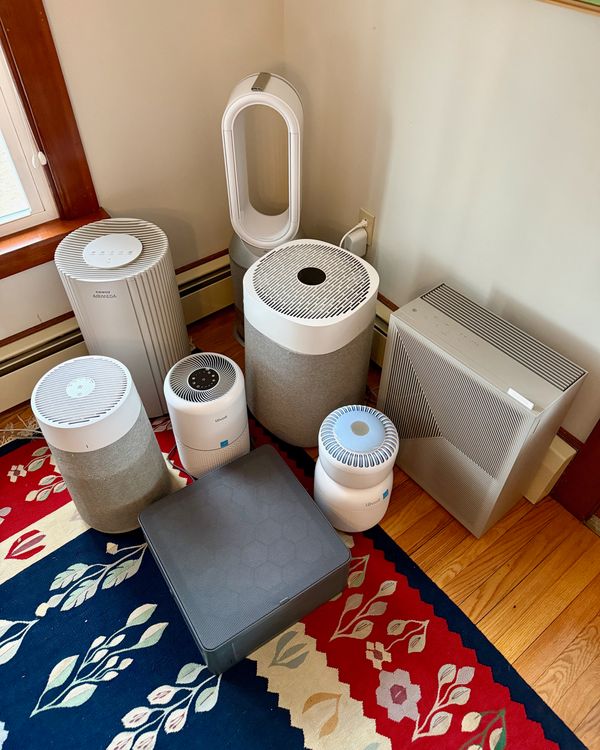
At its core, an air purifier is just a fan that blows air through a filter. In fact, if you’re truly in a pinch, taping five HVAC filters to a box fan (to create what’s known as a “Corsi–Rosenthal box”) does a pretty fine job, as long as you don’t mind the noise. That’s why the most important considerations when shopping for an air purifier have more to do with day-to-day usability than pure performance. However, attributes like the pitch and tone of the fan noise, efficacy of the automatic air-quality sensors, the ease of cleaning prefilters, and how it looks in a home environment are difficult to gauge from a spec sheet. So after researching all the top-rated options available, I tested ten top-rated air purifiers and referred to previous experience with other models to find the best ones.
Updated on November 12, 2026
The new Coway Airmega Mighty2 is our new top pick for best air purifier overall, and the original Mighty is now our pick for pet smells. I’ve also added the Windmill Air Purifier Max as a pick for people willing to pay for modernist design. The Blueair 2-in-1 Pro is our new pick for humidifying air purifiers. All other picks have been updated with the latest stock and pricing.
Our top picks
What we’re looking for
HEPA filtration
HEPA stands for “high efficiency particulate air,” and a HEPA filter, according to the Environmental Protection Agency, “can theoretically remove at least 99.97 percent of dust, pollen, mold, bacteria, and any airborne particles with a size of 0.3 microns (µm).” For physics reasons that aren’t worth getting into here, 0.3µm-wide particles are the most difficult to capture. So HEPA filters are actually even more effective at removing smaller particles (like viruses) and bigger ones (like pollen). “True HEPA,” “medical grade,” “H13,” and “H14” are commonly marketed terms for purifiers that have obtained independent certification for their HEPA compliance, whereas “HEPA-type” is a more misleading term meant to convey certification without having achieved it (and any model labeled as such should probably be avoided).
CADR Smoke
Clean Air Delivery Rate (CADR) is a performance standard for air purifiers developed by the Association of Home Appliance Manufacturers (AHAM) that consists of three separate tests focusing on dust, pollen, and tobacco smoke and is denominated in cubic feet per minute (CFM). These standardized tests are performed on new machines using new filters by independent labs, which means you can accurately compare ratings across certified makes and models. It’s also a requirement for any machine seeking the EPA’s Energy Star certification, and Energy Star maintains a searchable database containing CADR metrics alongside energy consumption for every certified unit across all brands.
When it comes to mitigating wildfire smoke, AHAM recommends a unit that has a Smoke CADR equal to the size of the room in square feet, which ensures that all the air in the room will pass through the filter at least 4.8 times in a given hour while the machine is running on high. For example, a 300-square-foot living room with a standard-height (eight-foot) ceiling needs an air purifier with a Smoke CADR score of 300. Because CADR is measured on the highest and loudest fan setting, it makes sense to get a unit with more power than necessary so it can still effectively clean the air while running on quieter settings.
Some brands decline to certify, citing the cost of doing so or complaints that the test de-emphasizes attributes they believe are more important than filtration speed. This feels like a cop-out. Toyota may emphasize the Prius’s fuel economy in its marketing, but that doesn’t mean they should withhold the performance figures entirely.
Auto mode
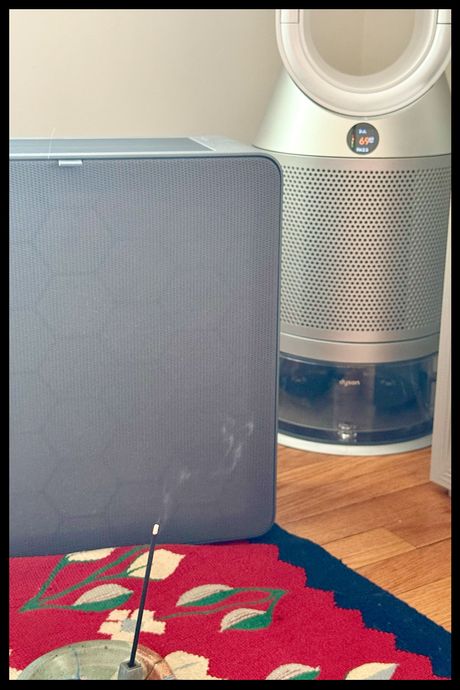
A machine with a built-in air sensor can keep the machine running efficiently on low when the air is already clean, only speeding things up when circumstances demand more. This saves power, keeps noise down, and extends the usable life of the filter and means you never have to worry about fiddling with the settings. While this can’t be determined on a spec sheet, some sensors are more sensitive than others and some brands will tune their auto modes to ramp up fan speeds more aggressively than others. I burned incense to test this behavior on various machines.
Filter lifespan
Some air purifiers require filter changes twice a year. Others only require annual replacement. A select few claim to last up to five years. This means that two filters that look similar and share the same sticker price may vary in actual cost by up to 1,000 percent, so it’s important to consider filter lifespan when comparing options.
Carbon filter
“To filter both particles and gases such as volatile organic compounds (VOCs), many air purifiers contain two filters: a HEPA filter for particles and another for gases,” said Jenna Agins, assistant director of Energy and Sustainability at NYU Langone. This second filter is made from an adsorbent material, commonly activated carbon, which odor-causing VOCs stick to like iron filings to a magnet. Many filters include carbon as either a stand-alone layer or as an integrated part of the main filter. But it’s rarely enough to be an effective long-term solution. If VOC exposure is an ongoing concern, Agins recommends reducing it at the source, for example, by using only low- or no-VOC paints on interior surfaces.
Washable prefilter
A washable prefilter can trap larger air pollutants like dust and hair before they have a chance to clog up a purifier’s main HEPA filter. Some of these are made from fabric and can be thrown in with the weekly laundry; others are mesh-based inserts meant to be rinsed and/or vacuumed periodically.
Best air purifier overall
New! You can now save this product for later.
HEPA: Yes | CADR Smoke: 240 | Auto mode: Yes | Filter lifespan: 1-year | Carbon filter: integrated | Washable prefilter: Yes
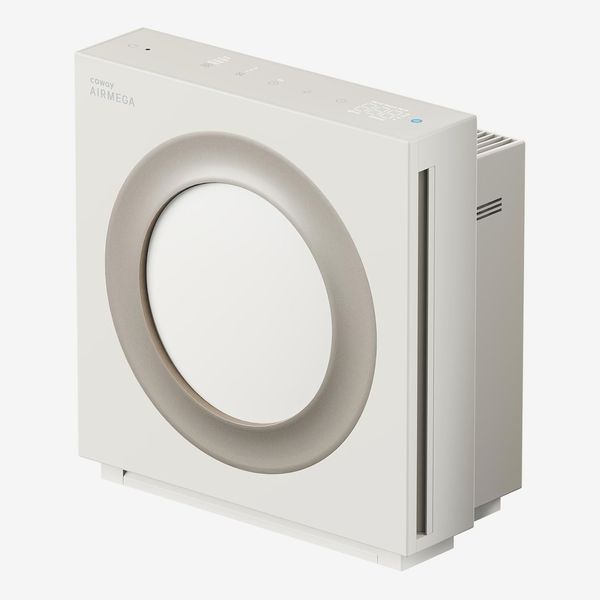
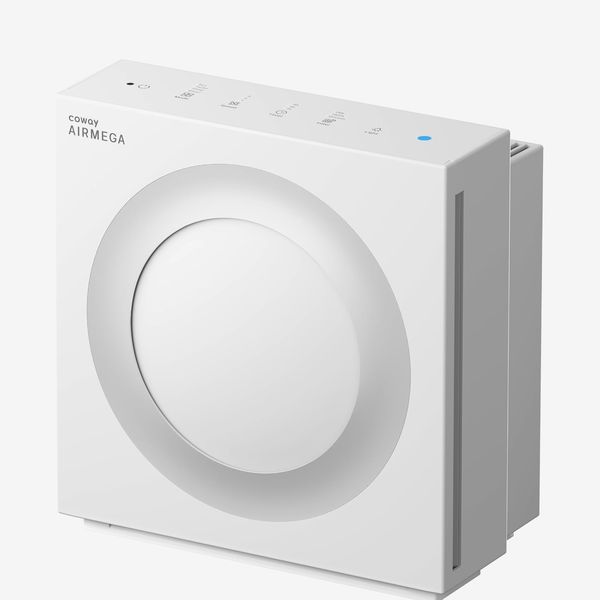
The Airmega Mighty2 preserves almost everything I appreciate about the original Airmega Mighty (our top pick for nearly a decade and still my pick for pet smells) while making significant improvements. It’s noticeably quieter at every fan setting and a lot more energy-efficient. It has a child lock for the control panel (that also works for pets) and a more accurate laser-based particulate sensor that distinguishes between different-sized particles while providing a live-updating Air Quality Index readout on its built-in display (in addition to the color-changing LED indicator). It also has a light sensor that automatically activates sleep-mode (turning off all displays and indicator lights) once the room lights are off for more than a minute. I used to stare at the blue glow of the older Coway’s status indicator as I drifted off, too tired to get up and do anything about it, but no more!
I’ll confess that I never cared for the original Mighty’s bulbous, chiclet styling, so the new Mighty2’s crisp edges are a welcome sight. But it’s not just for looks; the redesigned vents also help make the machine quieter. It’s virtually silent on low and noticeably quieter on high. And unlike the original Mighty, the Mighty2 never rattles or vibrates while ramping up to its highest fan speeds. On its highest setting, the Mighty2’s more efficient motor saves 18 watts compared to its predecessor (comparable to a USB-C phone charger), which should offset its higher upfront cost within a few years.
The Mighty2’s simplified filter stack is easy to clean and change. The mesh prefilter can now be slid out from the side for cleaning without taking off the front panel. A “PRE” indicator light turns on to alert you when it’s time to do this. The main filter ($70) contains both HEPA and activated carbon pellet filtration and only needs to be replaced annually. The only downside to this more integrated design is that you can’t easily replace the carbon layer with a pet- or pollen-specific filter without also swapping out the HEPA.
The Mighty2’s CADR smoke score of 240 makes it suitable for most bedrooms and smaller, apartment-sized living rooms. Its front-facing air intake vent lets you place it right up against a wall without hurting performance. (Air purifiers with cylindrical filters have higher CADR scores, but those scores are only accurate when the machine is placed far away from any walls or furniture that could impede airflow from any direction.)
New! You can now save this product for later.
HEPA: Yes | CADR Smoke: 143 | Auto mode: Yes | Filter lifespan: 1-year | Carbon filter: integrated | Washable prefilter: Yes
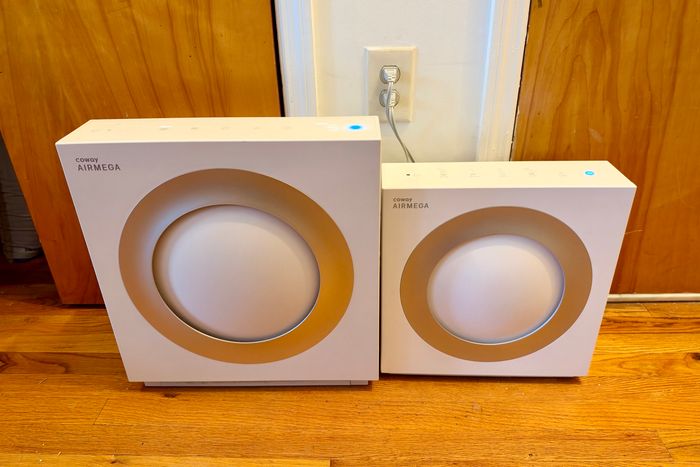
If you’re only planning to use the air purifier in a small room (less than 150 square feet), the Mighty2 Mini is a good option. A bigger purifier will always be more efficient and quieter (and more versatile should you ever need to move it), but $100 in upfront savings is a significant chunk of change.
Best less expensive air purifier
New! You can now save this product for later.
True HEPA: No | CADR Smoke: 113 | Auto mode: Yes | Filter lifespan: 1 year | Carbon filter: Yes | Washable prefilter: No
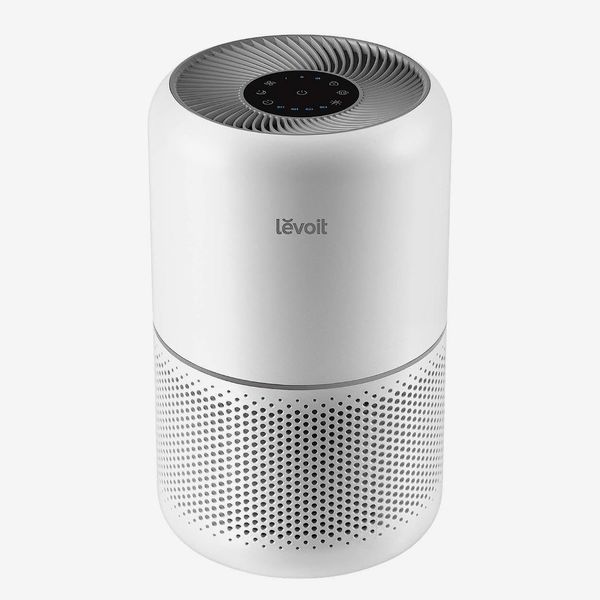
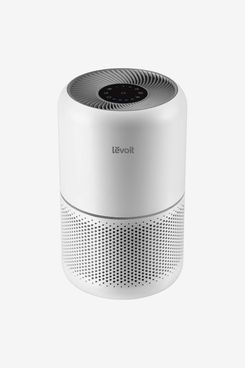
If you must spend less than $100 on an air purifier, the Levoit Core 300-P is one of the most popular, highly rated items I’ve ever encountered on Amazon, with a 4.7-star rating averaged across over 100,000 reviews as of this writing. It is quite solidly constructed, features a responsive touch-control panel, and offers thoughtful features missing from other sub-$100 air purifiers, such as a child lock to prevent interference from kids and pets alike. And it’s pretty quiet compared to other units in its size range, even if it’s whinier than larger units. Its lack of auto mode and washable prefilter are acceptable trade-offs at this price, but I would personally recommend spending the extra $40 to get the more powerful Blue 511i Max in order to have those features if you can afford it.
One thing to note: Levoit stopped advertising the Core 300-P (and a few other units) as being HEPA-certified after a competitor filed a complaint to the BBB. This would give me pause if it was a new unit from an unproven brand. However, since the Levoit’s performance has been validated over the years by independent lab testing (as part of its Energy Star certification), professional reviewers, and many more user reviewers — as well as my own testing — I remain confident in its air-cleaning capabilities.
Best air purifier for larger rooms

New! You can now save this product for later.
HEPA: Yes | CADR Smoke: 410 | Auto mode: Yes | Filter lifespan: 6-9 months | Carbon filter: Integrated | Washable prefilter: Yes
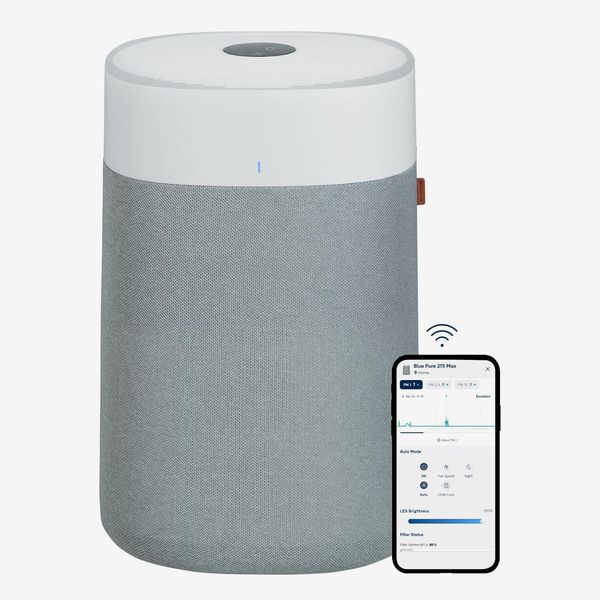
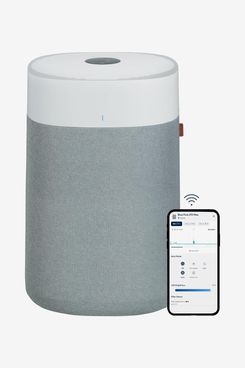
The Blueair Blue Pure 211i Max is about the size of a 50L kitchen trash can, and its CADR Smoke score of 410 CFM means it can quickly clean the air of rooms as large as 615 square feet on its own. This sounds like overkill for smaller homes, but headroom is nice to have on most days — because it allows the machine to run more quietly on its medium or low settings — and it’s critical in case of sudden environmental shocks (such as a nearby wildfire) when greater cleaning power is a necessity.
The Blue Pure 211i Max’s auto mode can access all fan settings and responds quickly and aggressively to changes in air quality in almost real time. Unlike most other units, which gradually increase fan speeds, it kicks into high gear at the first sign of pollution and ramps down as it’s mitigated. This makes it particularly well adapted to combined kitchen-living-dining spaces. Progress can be monitored via the numerical PM counter on top (which can be toggled between PM 1, 2.5, and 10), whereas most other units only have color-coded LEDs. While it’s audibly inoffensive when operating at a steady state, changing fan speeds does temporarily emit a whining noise that sounds kind of like a jet engine taking off.
I appreciate that the Blueair’s washable cloth prefilter wraps around the outside of the unit so you can see clearly when it’s time to launder or vacuum it. (It also comes in several colors if you get bored of gray.) The primary filter costs $70 to replace every six to nine months and consists of a HEPA filter with a layer of activated charcoal for neutralizing odors and other VOCs. For $15 more, there’s also a Smokeblock version that doubles the amount of activated charcoal, and for $20 more, there’s an Allergyblock version that carries additional allergen-specific certifications. All three are available at a 15 percent discount with free shipping if you sign up for a recurring subscription through BlueAir’s website.
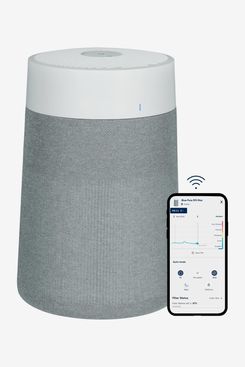
It’s also noteworthy that the Blueair app is genuinely useful, and I say this as an appliance-app skeptic. In addition to tracking your home’s air quality over time, it allows you to schedule various modes to run at different times of the day (e.g., sleep mode at night and auto during the day). You can even set the machine to turn off while you’re away and turn on automatically as you approach home (although this requires sharing location data). This can help extend the filter’s lifespan, which the app calculates based on actual usage data.
Best premium air purifier for larger rooms (that’s also a table)
New! You can now save this product for later.
HEPA: Yes | CADR Smoke: 450 | Auto mode: Yes | Filter lifespan: Up to 1 year | Carbon filter: Integrated | Washable prefilter: Yes
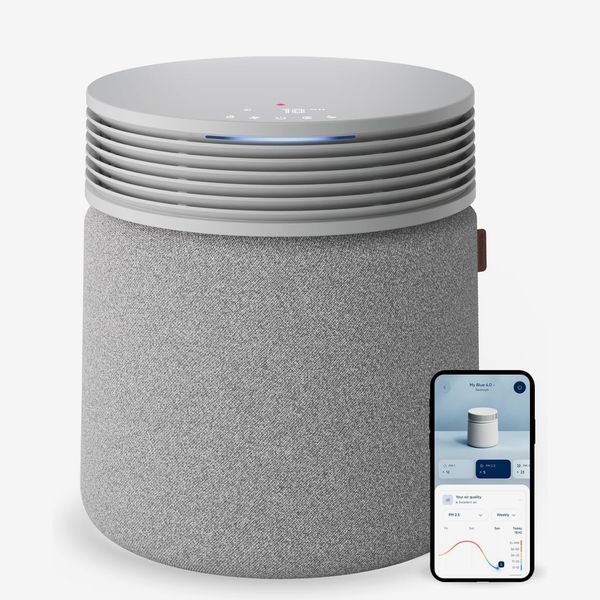
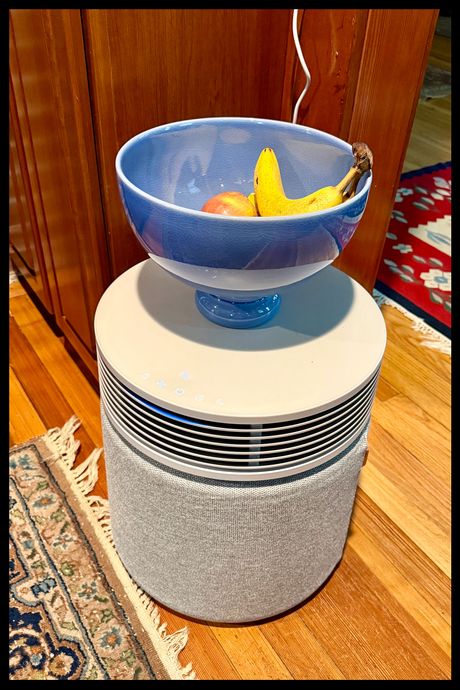
Blueair’s Blue Signature is one of the most powerful, quiet, and efficient models available, yet doesn’t sacrifice good design to get there. While the Scandinavian aesthetic may not suit every style of decor, I appreciate that the Blue Signature’s machine-washable cloth prefilter (which slips on and off like a tube top) can be swapped out for a variety of colors, and that its flat top allows it to double as a side table or plant stand. (There’s even the option to add a chrome plinth or wooden table legs, unavailable at the time of my review.) Other new features include a larger, motion-activated display that provides a live-updating estimate of how long it’ll take to clean your home’s air and a wraparound filter design with two additional layers of odor-reducing material. The only catch is the price, which is $100 more than the already powerful and quiet 211i Max.
Whether the Signature is worth the extra cost depends on how well it fits in your home and whether you’ll use all its new features. At 15.5 inches wide, the Signature is difficult to tuck discreetly into a corner, but if you plan to leave it in the open and use it as a side table, that extra width becomes additional usable surface area. I’ve been using it in my kitchen (in place of a 211i Max) and am finding that the additional layers of odor reduction make a difference in dispatching cooking smells that used to linger well beyond dinnertime. (I am curious to see if this is still the case after several months of consistent use.) Other features like “AirSense,” which turns the fan on high for ten to 25 minutes twice a day to refresh the air, are nice to have but only adjustable in the app. The app also lets you monitor the filter’s lifespan, which Blueair claims is up to twice as long as that of their other models. However, at $100 apiece, replacements are also $30 more expensive.
Best air purifier for modernist decor
New! You can now save this product for later.
True HEPA: Yes | CADR Smoke: 286| Auto mode: Yes | Filter lifespan: 6 months | Carbon filter: Yes | Washable prefilter: Yes
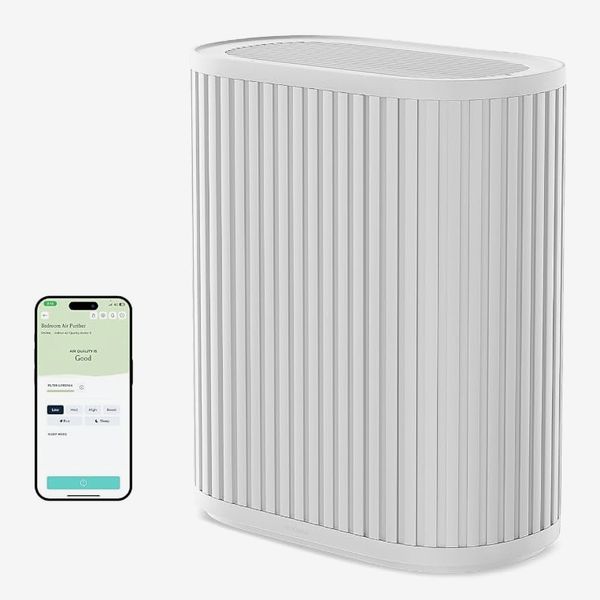
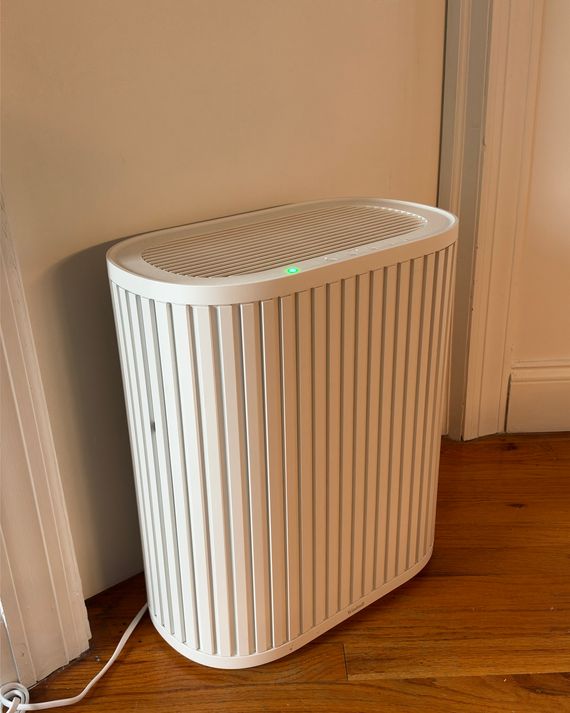
If you want an air purifier that matches your modernist decor and are willing to pay a premium, the Windmill Air Purifier Max offers great performance in a pretty package reminiscent of a fancy planter. It’s even available with a bamboo exterior. It has a front-facing air intake and can sit flush against any wall or piece of furniture. With a smoke CADR score of 286, the Windmill offers better performance than the similarly sized Coway Airmega Mighty2, and it’s comparably quiet. But at $400, with a twice-yearly filter replacement regimen at $79 per set, it costs a lot more. If they happen to be on sale for around the same price, the Windmill’s lifetime warranty (which only applies if you sign up for the filter subscription) gives it a slight edge.
Best air purifier for smaller rooms
New! You can now save this product for later.
True HEPA: Yes | CADR Smoke: 153| Auto mode: Yes | Filter lifespan: 6-9 months | Carbon filter: Yes | Washable prefilter: Yes
The Blue 511i Max has most of the same features as the 211i Max, but is smaller and less powerful and uses a small color-coded LED to indicate air quality instead of a numerical display. This makes it ideal for a bedroom where space is limited and you don’t want to deal with having to activate sleep mode to get rid of any bright lights. Otherwise, it has the same responsive auto mode, washable prefilter, quiet operation, and app support as the bigger unit. Its CADR of 151 can handle most bedrooms with capacity to spare in times of need.
Best air purifier for pet smells
New! You can now save this product for later.
HEPA: Yes | CADR Smoke: 233 | Auto mode: Yes | Filter lifespan: 1-year (HEPA filter), 6 months (secondary) | Carbon filter: separate | Washable prefilter: Yes
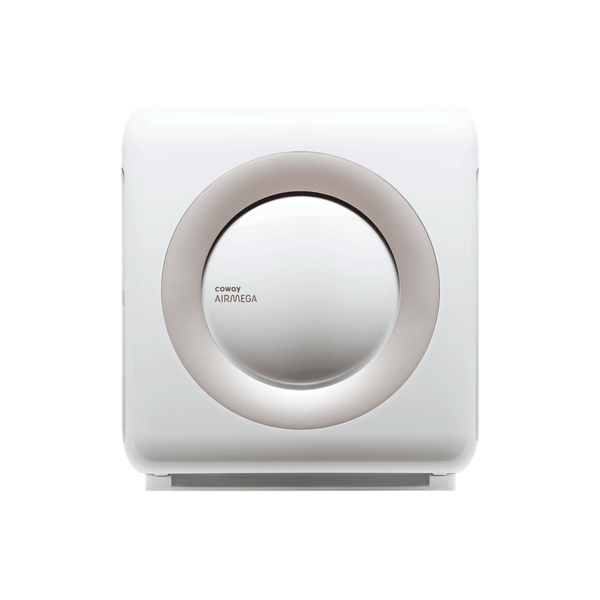
The Coway AP-1512HH may not be the quietest, prettiest, or most powerful air purifier. But its CADR smoke score of 233 is exceptionally high for its compact size. It’s also decent in all other regards: It has an inoffensive design and it’s almost always in stock (which is important for something you might need to pick up in an emergency), and because its intake is on the front and the output vent is on top, it can be placed right up against a wall — unlike many of the columnar designs. This Coway is also one of the few popular air purifiers available with a separate secondary filter. This is helpful because adsorbent materials for trapping odors or other VOCs have a shorter service life than particulate-trapping HEPA filters. Separating these functions means more maintenance, but it also allows you to freely replace the secondary filter anytime you sense it’s starting to fade. This is especially useful if you’re using it to mitigate persistent odors, such as pet smells.
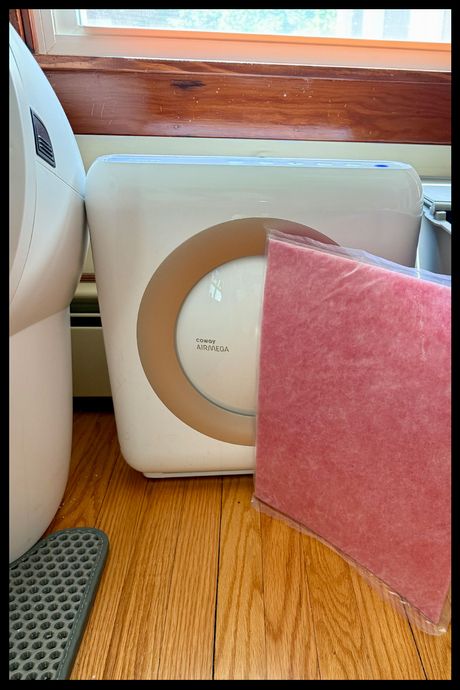
I’ve been using the AP-1512HH with a pet-specific pink filter (formulated to adsorb ammonia and hydrogen sulfide) in the room that houses my two cats’ three litter boxes. It quickly became noticeably less smelly compared to how it was with the all-in-one filter that was previously in there. This may be partly due to the aggressively tuned auto mode, which kicks into the highest fan setting within seconds of me scooping any of the three boxes. The AP-1512HH’s fan noise is a tiny bit whinier than that of our other picks and can be irksome in a living area, but I appreciate it in this context. There’s also a washable mesh prefilter for capturing dust and other larger particles.
Besides the pink filter for pets and the normal charcoal filter for odors, Coway offers a green filter for allergens and a thicker black one for intense smoke, all of which can be found in pairs at this listing for $65, packaged with a single HEPA replacement. (Cheaper imitations abound on Amazon, but using these may void your warranty.) It would be nice if these secondary filters were available separately, but that’s not currently the case.
The Coway’s auto mode responded quickly to burning incense and can access even its highest fan speeds to aggressively clean as needed. This means you can leave it in auto with the child lock activated (which is just as helpful for keeping curious cats from messing with the settings) and trust that it’s keeping your home’s air as clean as possible. Progress is indicated by a status LED that glows blue to indicate clean air, green to indicate some particulates, yellow for a lot, and red if you’re searing a steak without a range hood. While I preferred the more informative, real-time numerical displays found on some other units, it’s enough to assure you that it’s working as intended. There’s no Wi-Fi-connected app to keep track of air-quality levels over time or filter usage over time, but I didn’t miss it.
Most low-maintenance air purifier
New! You can now save this product for later.
HEPA: Yes | CADR: 131 (not smoke-specific) | Auto mode: Yes | Filter lifespan: 5-years | Allergen filter: No| Washable prefilter: N/a
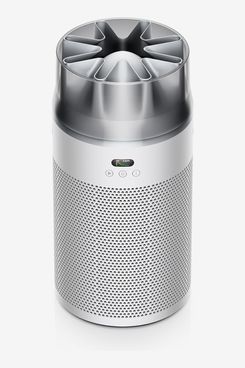
This Dyson unit is expensive up front, but its five-year filter lifespan and quiet operation make it a great pick for people who just want to put something in their bedrooms, set on auto mode, and not have to think about it. All you need to do is vacuum or dust the exterior every once in a while. The display on the front reports the current air quality and also maintains a color-coded log of recent readings. It’s worth noting that even with the five-year filter lifespan, it doesn’t quite pay for itself compared to a similarly powerful air purifier that requires annual or biannual filter changes, such as the Levoit or the smaller Blueair models. And its CADR of 131 is not suitable for use in larger rooms. The Hushjet’s real value comes from not having to maintain it.
Best air purifier for odors and VOCs
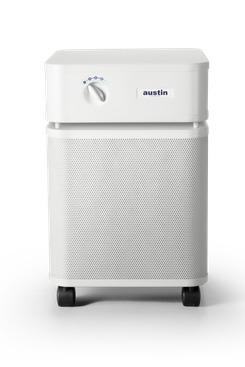
New! You can now save this product for later.
HEPA: Yes | CADR Smoke: N/A | Auto mode: No | Filter lifespan: 5 years | Carbon filter: Yes | Washable prefilter: No
The AustinAir HealthMate lacks an auto mode and the sleek design of most contemporary machines — it looks like an IBM computer from the 1980s. What it does have is a whopping 15 pounds of activated charcoal and zeolite-absorbent material built into its filter. (For comparison, the entire Blue 211i Max unit weighs just 16.2 pounds.) This means the HealthMate will mitigate smells and other VOCs much more effectively and for much longer than any other machine. However, its $765 price tag is hard to swallow for all but the smelliest situations, even when you account for the filter’s five-year lifespan and pro-rated warranty.
Best air purifier that’s also a humidifier
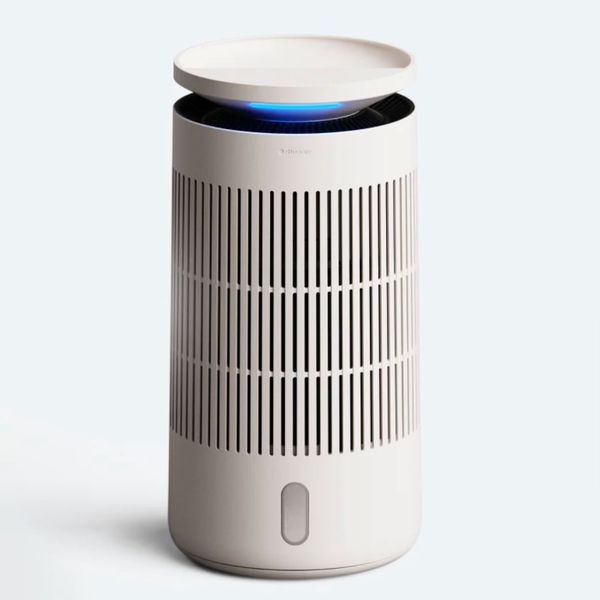
New! You can now save this product for later.
HEPA: Yes | CADR Smoke: around 240 | Auto mode: Yes | Filter lifespan: 9-12 months | Carbon filter: No | Washable prefilter: No
This Blueair unit is not the most capable humidifier, nor is it the most powerful air purifier, but it manages to be pretty good at both functions while maintaining a relatively svelte profile (it’s only 12.5 inches wide, albeit 24.6 inches tall), so it’s a great choice for homes with limited floor space. It’s not the only humidifying air purifier, but it is the quietest I’ve tested.
The Blueair is designed to be conveniently refilled from the top — you water it like a plant and it finds its way to the removable reservoir at the bottom of the unit, which has a built-in UV light to prevent mold and bacterial growth. I also appreciated that it has an auto-dry mode for the wick that prevents it from getting funky once the 1.3-gallon reservoir is empty. The reservoir has a wide opening, making it easy to clean weekly while in use as a humidifier. Like Blueair’s other purifiers, it uses a single cylindrical HEPA filter that’s easy to replace every 9 months. The humidifying wick lasts about 12 months between replacements. You can track filter and wick lifespan and get reminders of upcoming replacements if you set the machine up with the optional, surprisingly useful Blueair app.
The machine has an LED screen on top that can display relative humidity or the current PM2.5 level in the air. Both of these stats can also be viewed in the app. The touch controls on the top front edge are responsive, and it has a child lock to prevent pets and kids from messing with the settings. I was also disappointed that Blueair doesn’t list the CADR scores for this machine in the specs. (Based on the fact that it is stronger than the previous 2-in-1 and slightly weaker than the 311i, I’m estimating a smoke CADR score of around 240.)
Best air purifier for gas-stove users
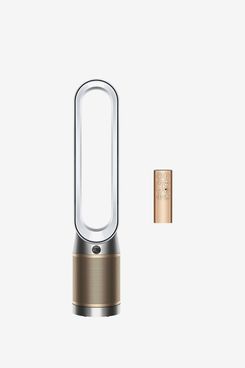
New! You can now save this product for later.
HEPA: Yes | CADR Smoke: N/A | Auto mode: Yes | Filter lifespan: 1 year | Carbon filter: Yes + potassium carbonate | Washable prefilter: No
If you have a gas stove and want to lower your home’s NO2 levels without opening the window, most air purifiers won’t be of much help because HEPA filters only trap particles and not gases. Filters that include a separate or integrated activated-carbon layer can be effective for a short period, but they rarely contain enough carbon to last the entire service life of the main filter. Dyson’s De-NOX HEPA filters improve performance and longevity by adding potassium carbonate. This reacts with NO2 and traps the byproducts in the filter, where they remain until it’s replaced (approximately every 12 months). Dyson claims this removes up to 50 percent more NO2 than carbon filtration alone, which aligns with the findings from a 2015 study published in the Journal of Hazardous Materials. New filter and snazzy bronze paint aside, the new De-NOX machines have the same design and pricing as the formaldehyde-eliminating models they’re replacing. Which is to say they’re very nice and very expensive.
The Dyson’s full-color OLED display is easy to read from a distance and responds to changes in air quality in real time. Its fan speed also responded noticeably quicker to any smoke or vapors emitted by my cooking in the adjoining kitchen when compared to other air purifiers. I only wish that the noise was less whiny on its highest fan settings. It’s unusable on speeds eight to ten if you also want to have a conversation in the same room.
Dyson does not believe in the value of CADR for evaluating air-purifier efficacy and therefore does not report these figures. However, Energy Star filings for similar Dyson air purifiers using similar filters indicate a flow rate of around 80 CFM for smoke. This means it is most suitable for use in a smaller bedroom or office.
The Strategist is designed to surface the most useful, expert recommendations for things to buy across the vast e-commerce landscape. Some of our latest conquests include the best women’s jeans, rolling luggage, pillows for side sleepers, ultra-flattering pants, and bath towels. We update links when possible, but note that deals can expire and all prices are subject to change.
Every editorial product is independently selected. If you buy something through our links, New York may earn an affiliate commission.