The Best Ultralight Backpacks for Backpacking, Hiking, Traveling, and Commuting
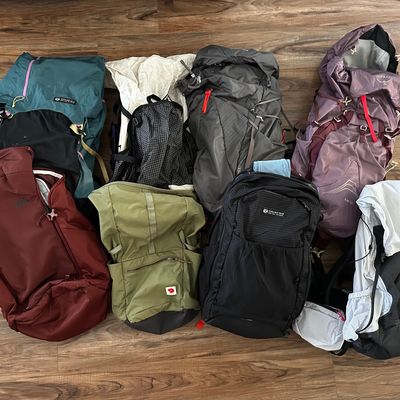
If “ultralight backpack” makes you think of a minimalist sack fit for only the most extreme ounce-counting thru-hikers, you will be surprised to hear that’s a thing of the past. Today’s technical fabrics and construction techniques mean you can find feature-rich packs that combine design and comfort with weight savings, allowing you to reduce the load on your back and carry your gear more comfortably, whether you’re on the trail or just headed to the office.
In this article
Operating with an ultralight ethos, I have used and reviewed ultralight backpacks extensively over the past 15 years. I’ve tested the bags below while thru-hiking, backpacking, traveling, day-hiking, and commuting to find the best ultralight backpacks for outdoors, travel, and everyday use. All of these packs fall on the lightweight end of the spectrum and are tailored to drop weight without sacrificing comfort, organization, or performance.
Our top picks
New! You can now save this product for later.
Our favorite do-it-all ultralight bag is built for the backcountry but versatile enough for travel.
New! You can now save this product for later.
An ultralight commuter pack that lets you shave ounces where it really counts — everyday wear.
New! You can now save this product for later.
Getting on a flight instead of hitting the trail? This ultralight travel bag makes the trek easier.
What we’re looking for in an ultralight backpack
Intended use
Consider whether you’re using this backpack primarily for backpacking, hiking, commuting, or traveling. For the ounce-counting thru-hiker, a pack with a hip belt and internal frame is an abomination. For the hiker graduating from a five-pound pack to something more streamlined, those extra pockets and four-ounce frame are worth it. Plus day hikes, travel, overnight backpacking trips, and extended wilderness expeditions all require different capacities, designs, and levels of support.
A backpacking pack will have a dedicated hip belt for weight distribution, external pockets for accessing small items, and a cavernous main pocket for most of your gear. A travel backpack might have the same capacity but is often slightly heavier and should have several secure internal pockets for valuables. I also love a padded laptop sleeve in my travel backpacks. Commuter bags and daypacks often have fewer external pockets and padding but should have internal pockets and space for organizing folders and chargers.
How much capacity do you need?
The packs on this list range from 24 to 60 liters. Daypacks, commuter bags, and personal items for travel range from 20 to 24 liters, while backpacking packs that can hold a week’s worth of gear and food will be between 45 and 60 liters. For a carry-on travel backpack, you’ll want something that fits in an overhead bin, which usually means a bag that holds between 35 and 45 liters.
Ultralight bags intended for backpacking and thru-hiking also have a cargo weight limit, which you’ll need to pay attention to — otherwise your load can become unmanageable.
Organization
I like to have a few external pockets on every backpack. For daypacks and commuter bags, this can be as simple as a water-bottle pocket that also holds a rolled-up layer, plus at least one external zip pocket. For backpacking, I look for multiple external pockets for small items. For travel bags, I want at least two secure internal pockets to keep my passport and wallet safe, and any extra interior organization is a bonus. My organizational methods go out the window by the end of the trip, but having smaller pockets helps keep my luggage and gear as organized as possible … at least when I start.
Comfort
Especially important to keep in mind for larger travel packs and backpacking packs is making sure your pack fits your torso and distributes more weight onto your hips than your shoulders. Your pack should sit close to your back to avoid pulling back and throwing you off-balance, and check to make sure the straps don’t dig into your shoulders. Larger packs have load-lifter adjustments to keep the weight in place, and I always recommend trying on packs before buying. If you’re purchasing online, many packs offer several size options, so be sure to check your measurements against the size chart.
Weight
Finally, weight. If I were writing a single-category guide for ultralight packs, this would be the first criteria. But since we’re covering everything from daypacks to thru-hiking to travel, it varies. For daypacks, I like my ultralight packs to weigh no more than 1.5 pounds. For backpackers just getting into ultralight backpacking, I’d suggest three pounds for a 45-liter pack. For experienced thru-hikers and ultralight backpackers, your empty pack should weigh two pounds or less. And for carry-on travel backpacks that balance weight and comfort, anything under three pounds is impressive.
The best ultralight backpack overall
New! You can now save this product for later.
New! You can now save this product for later.
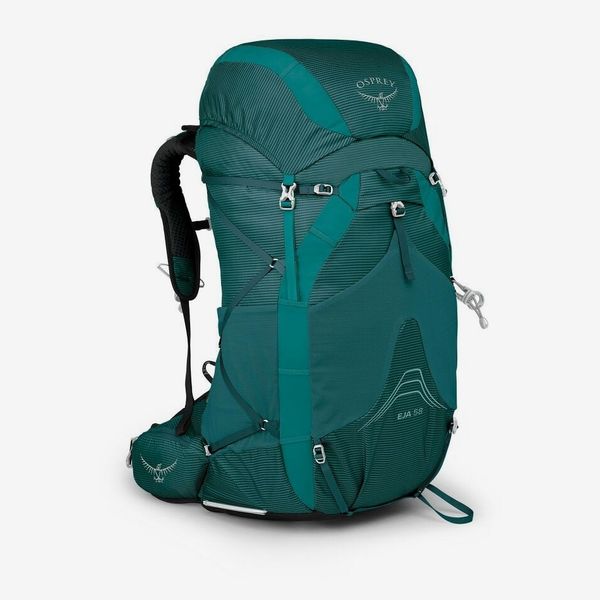
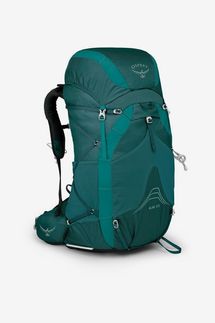
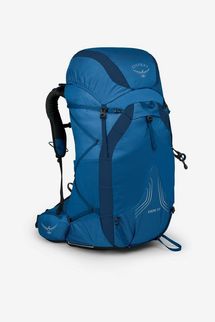
Capacity: 58L (men’s), 55L (women’s) | Weight: 2 lb., 13.4 oz. (men’s); 2 lb., 11.5 oz. (women’s) | Materials: Nylon (100D & 400D) | Protection: Water resistant | Pockets: 6 | Closure: Cinch | Weight Limit: 35 lb.
The Eja and Exos have been popular for years in the backpacking world, and there’s a good reason for that. Osprey nailed it with these packs: Comfortable, versatile, and with streamlined organization, they’re a common sight among both travelers and backpackers. While they aren’t the glorified frameless sack of the most niche ultralight backpacks, the Eja and Exos do a standout job balancing weight savings, comfort, features, ventilation, and durability. I carried the first iteration of the Exos for the second half of my Appalachian Trail thru-hike back in 2015 after trading out my massive backpack, and I’ve used some version of this pack ever since. The current Exos weighs less than three pounds and doesn’t skimp on pockets or padding.
Recent material updates make the pack more durable than earlier models. The pockets are a dense, stretchy mesh, and Osprey added 400-denier nylon on high-abrasion areas of the pack body. Both the men’s (Exos) and women’s (Eja) take design inspiration from Osprey’s fully featured packs, using a mesh suspension system slung between a lightweight aluminum frame for excellent stability and weight distribution. This “AirSpeed” suspension allows airflow between the pack materials and your back while keeping the load close to your body, and the straps are easy to adjust while moving.
The organization is just right with a removable top lid and an interior zippered pocket. This pack is designed for backpacking, but it’s versatile enough that I’ve used it as my carry-on (Note: Not filled! It’s too big filled!) for travel, and I appreciated the comfort and organization. For backpackers looking to shave weight but still seeking the comfort of a more feature-rich pack, it is a great option that slots neatly between weight savings and organization.
The best ultralight backpack for beginners

New! You can now save this product for later.
New! You can now save this product for later.
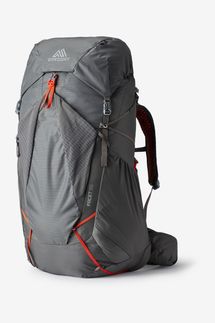
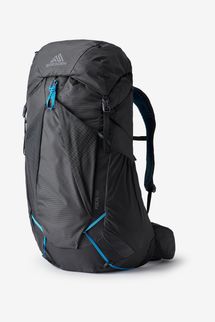
Capacity: 58L (men’s), 55L (women’s) | | Weight: 2 lb., 12.8 oz. (men’s); 2 lb., 10.6 oz. (women’s) | Materials: 100D nylon, 210D nylon, mesh | Protection: Water resistant | Pockets: 6 | Closure: Cinch | Weight Limit: 35 lb.
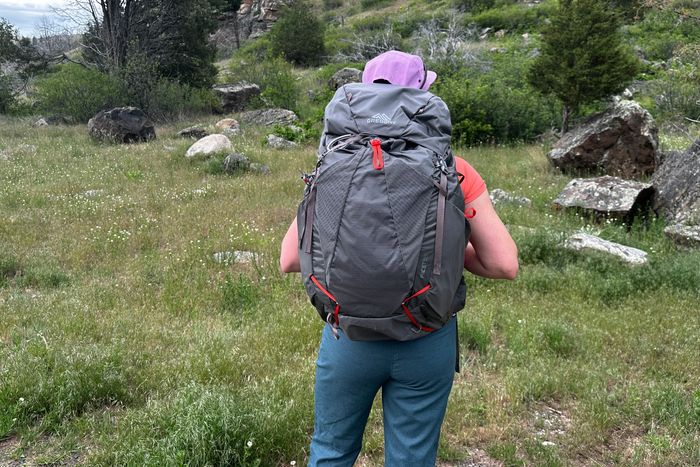
At first glance, Gregory’s Facet (women’s) and Focal (men’s) packs seem like a direct answer to Osprey’s Exos and Eja, but I’d give the Gregory packs the edge when it comes to transitioning from heftier packs to more streamlined models. The Facet and Focal have slightly lower weight limits than similar-capacity models (the Exos and Eja are the same, however), which can encourage newer ultralight backpackers to streamline their gear. The pockets are also easier to reach while moving, and the organization can feel more intuitive when you’re just getting used to reducing pack load. The suspended-mesh back panel does an excellent job of keeping air moving while making sure the load stays close to your back. For backpackers looking to shave weight while still seeking the comfort and organization of a more feature-rich pack, it’s a great option that strikes a balance between the two.
The Facet and Focal are also a few ounces lighter than the Exos and Eja, using a 210-denier nylon in high-abrasion areas. Even so, I’ve never noticed any durability issues with this pack, and I’ve used some version of it for the past three seasons. The water-bottle pockets have enough stretch to fit two one-liter water bottles, and the tensioned top keeps them from sliding out when I dump the pack on the ground during breaks. Like the Exos and Eja, this will likely still be too much pack for a true ultralight hiker, but it is perfect for people looking to reduce pack weight and volume without giving up too much comfort and encourages a more streamlined gear system at the same time.
The most durable ultralight backpack
New! You can now save this product for later.
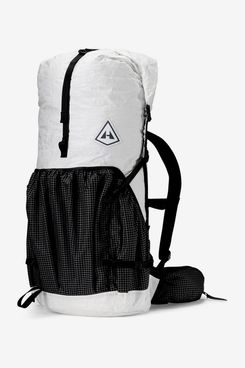
Capacity: 55L | Weight: 1 lb., 15 oz. | Materials: Dyneema Composite Fabric, hardline | Protection: Waterproof | Pockets: 5 | Closure: Roll top | Weight Limit: 40 lb.
I think of Hyperlite’s Southwest 55 as the next step up in ultralight backpacking. Popular with weight-conscious travelers and in the backcountry, this light-but-tough backpack has accompanied me on extended travel in Europe, long backcountry routes in the U.S., and one particularly grueling backpacking trip in Slovenia’s Julian Alps. Through it all, the Southwest 55 has taken a beating but has never worn through. The pack is made almost entirely of Dyneema Composite Fabric (ultrahigh-molecular-weight polyethylene, if you must know), originally developed for racing sailboats and later co-opted by outdoor brands for its incredible strength-to-weight ratio, abrasion resistance, and waterproofing.
The Southwest’s roll-top closure and waterproof materials keep out the most intense high-elevation rainstorms, and the pockets are a bombproof hardline material that I’ve scraped through countless sandstone slot canyons. The roll-top closure can be rolled multiple times and secured to the sides, so hikers with a smaller load don’t have to worry about the material flapping around like with a zippered or cinch-closure pack. All that said, the Southwest is a more specialized ultralight backpacking pack than the Exos or the Focal I recommended above. The Southwest doesn’t have the elevated suspension system of those packs, which keeps the weight lower but reduces breathability. It also has fewer pockets, and the streamlined organization is geared more toward experienced thru-hikers than newer backpackers. But for travelers and backpackers with a pared-down load and a need for maximum protection, this burly pack remains at the top of its category.
The best ultralight backpack for experienced backpackers
New! You can now save this product for later.
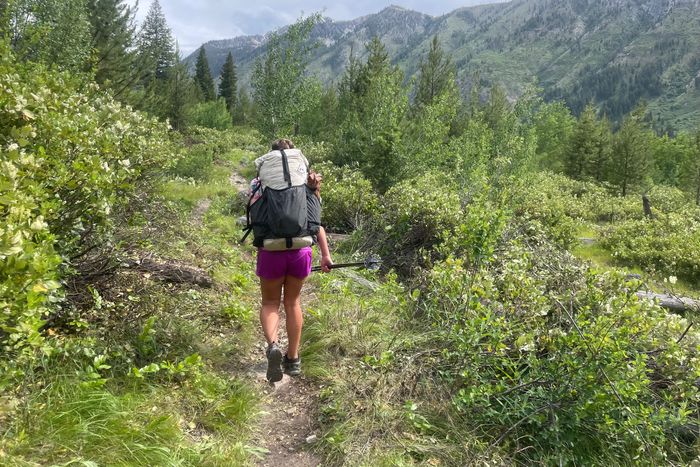
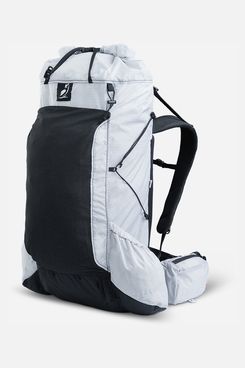
Capacity: 58L | Weight: 1 lb., 14 oz. | Materials: Robic nylon (100D & 210D) | Protection: Water resistant | Pockets: 5 | Closure: Roll top | Weight Limit: 40 lb.
Outdoor Vitals has been flying under the radar for years, and while the company isn’t a household name like Osprey or Gregory, it deserves attention for its excellent ultralight gear that combines efficiency, comfort, and user-focused design better than many larger brands. The Utah-based team members are all dedicated thru-hikers, ultrarunners, and fast packers, and you can tell their packs have been put to the test on the trail. The Carbon Evo 50 is new this year, and I tested it in a variety of early-season conditions this spring. It quickly climbed to the top of my list for everything from overnight trips to weeklong expeditions, and I can see it working for thru-hikers thanks to its massive external area, excellent weight distribution, and 58-liter capacity — in a pack that weighs less than two pounds.
The massive side pockets hold everything from dual water bottles to a rolled-up tent, and the hip belt is nicely padded with large pockets where I can fit snacks, my phone, and a headlamp. The roll-top closure is secured with a Y-strap, similar to the Hyperlite Mountain Gear Southwest, and I was able to compress my smaller overnight-gear list and then extend it for a longer trip without wasting space and weight.
I recommend this for more experienced backpackers for a few reasons: The streamlined design is more akin to the Hyperlite Southwest than the Exos and Facet, and it has fewer pockets and organizational options. It also lacks the suspended-mesh back panel of the more beginner-friendly packs, and while I find the foam cutouts on the Carbon Evo back panel comfortable, a newer backpacker might have trouble getting used to the pack pressing directly against their back. But the carbon-fiber internal frame flexes more smoothly with each step than aluminum-framed packs such as the Osprey Eja/Exos and Gregory Focal/Facet, and it holds support and shape as well as heavier models. This pack carries weight better than other packs in its weight class, and it’s hard to believe it weighs so little.
The best ultralight backpack for thru-hikers
New! You can now save this product for later.
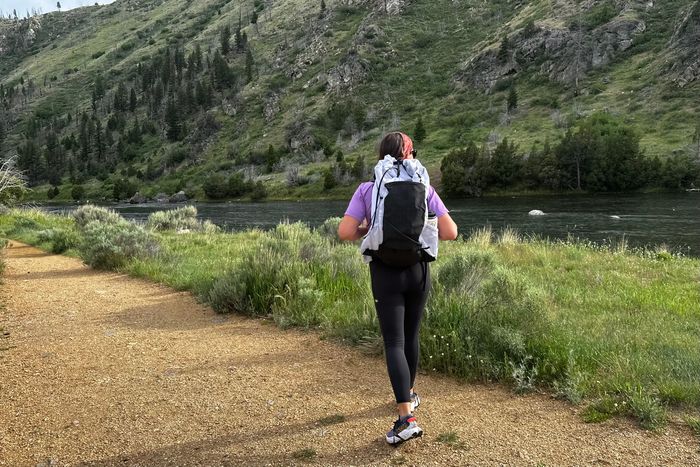
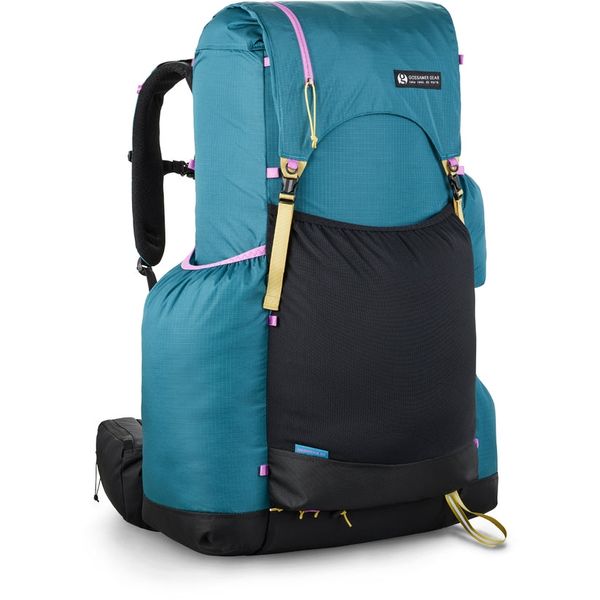
Capacity: 60L | Weight: 2 lb., 2.2 oz. | Materials: Robic nylon (100D & 210D) | Protection: Water resistant | Pockets: 7 | Closure: Flap | Weight Limit: 35 lb.
An enduring favorite in the long-distance hiking community, the Gossamer Gear Mariposa underwent a significant overhaul two years ago. The results were a sturdier structure, a more precise fit, and better customization options through the hip belt and torso. The updated version distributes weight better than its floppier predecessor, and Gossamer Gear also updated the material to a more abrasion-resistant 100-denier and 210-denier Robic nylon. The overall design didn’t change, though, and you still get a massive main compartment and external pocket organization built with thru-hikers in mind. This means large exterior pockets so you don’t have to stop and open your pack during the day and easy-access side pockets so you can grab water bottles without stopping and taking the pack off. When you’re putting in more than 20 miles a day, time-saving matters, trust me.
Most ultralight packs have a listed weight limit, and I’d caution hikers to follow this more closely with the Mariposa. I ferried a heavy resupply for a desert backpacking trip, and while I did have the pack far overweighted, the instability of the heavy load threw me precariously off-balance on a steep descent to the food drop. Not the pack’s fault (Gossamer Gear is clear about the 35-pound limit), though I’d advise people to keep it even lower, around 30 pounds. Because of this, the Mariposa is best suited for more experienced backpackers and thru-hikers who already have their gear list pared down, as the internal frame doesn’t have the same support as a pack like the Osprey Exos or Gregory Facet. However, for people who value easy access and intentional design from a specialized brand and appreciate thoughtful details like the removable back panel that doubles as a sit pad, the updated Mariposa can’t be beat.
The best ultralight travel backpack
New! You can now save this product for later.
New! You can now save this product for later.
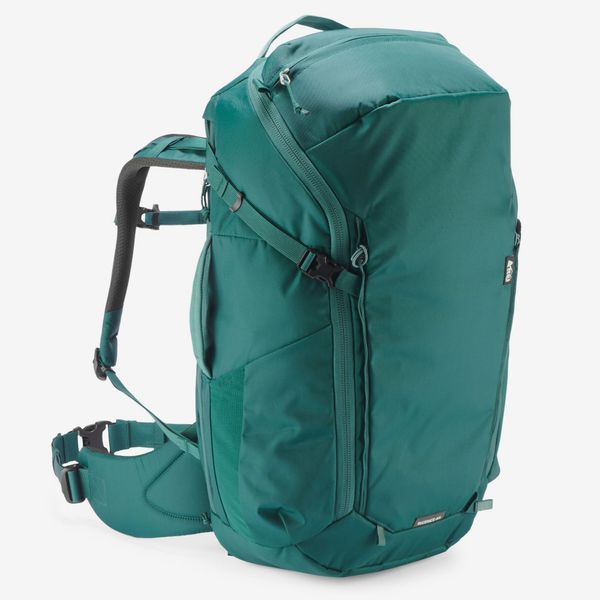
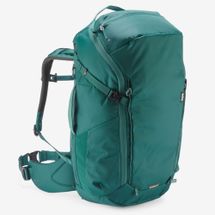
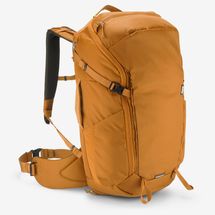
Capacity: 40L | Weight: 2 lb., 11 oz. | Materials: 400D nylon | Protection: Water resistant | Pockets: 9 | Closure: Zipper | Weight Limit: Not listed
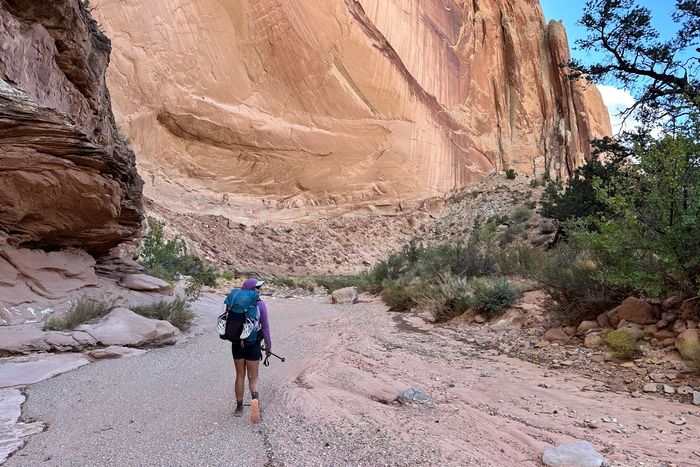
I test a lot of travel backpacks and suitcases for my accidental career as a travel-product reviewer, and most of them get donated after I’m done testing them. The Ruckpack 40 is the exception. This pack is one of the best travel backpacks I’ve ever tested, and it accompanied me to Mallorca, Japan, and extended trips around Europe. I’ve taken it on road trips and employed it as a backpacking pack, and it’s perfectly suited for use whether I’m staggering onto a train while fighting a losing battle with jet lag, rummaging around in the back seat of my truck, or throwing in layers and food for a longer hike once I reach my destination.
REI built this pack with the perfect amount of engineering: It has side pockets, a J-shaped zipper that opens the whole pack for easy access to the main compartment, and a light-colored interior so your stuff is easier to see if you don’t open the zipper all the way. The material is 400-denier, DWR-treated nylon, and the pack also comes with a cover for added assurance. This came in handy on a high-speed ferry hopping between islands in southern Japan. The interior has five secure pockets, which I use to stash my passport, wallet, charging cables, and other small items. There is also a separate, dedicated passport pocket close to the back for secure storage without opening the pack. REI based the structure, load-bearing, and back panel on a backcountry pack, combining the two styles for a lightweight pack that is comfortable to carry, with excellent weight distribution and airflow, when you accidentally wind up in Venice in August.
The best ultralight personal item
New! You can now save this product for later.
Capacity: 35L | Weight: 2 lb., 4 oz. | Materials: Robic nylon (100D & 210D) | Protection: Water resistant | Pockets: 10 | Closure: Zipper | Weight Limit: Not listed
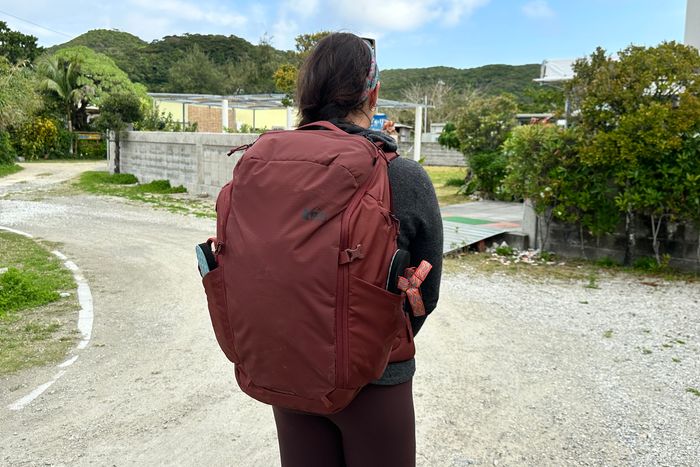
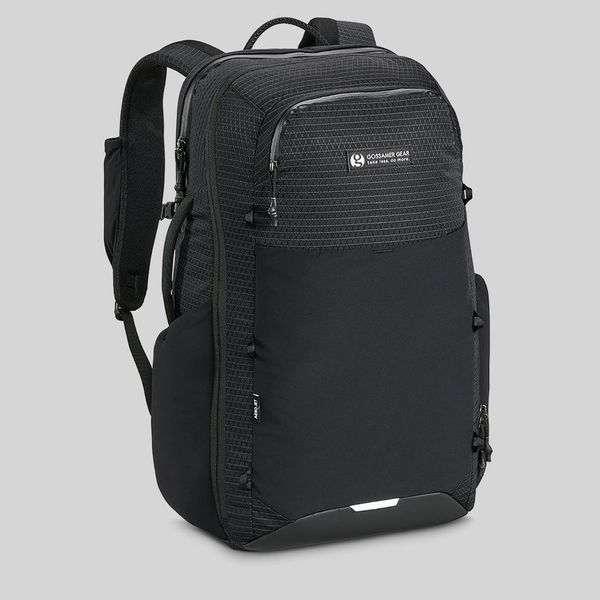
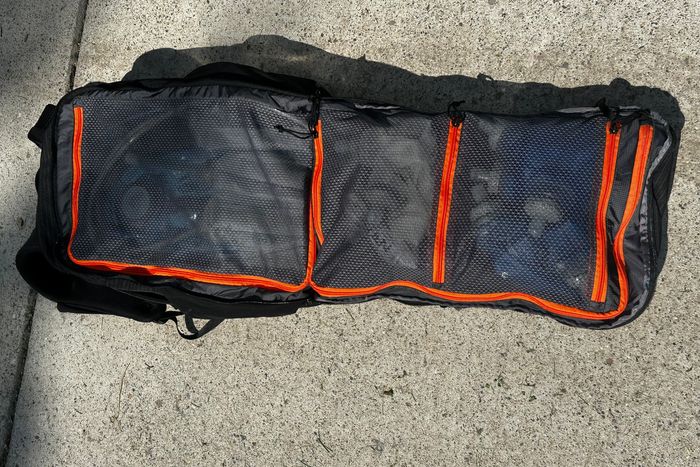
Gossamer Gear applied its ultralight backpacking ethos to travel packs a few seasons ago, coming up with the Aero Jet, a personal-item-size pack that maximizes under-seat space, making it perfect for basic-economy tickets where you don’t even get the dignity of a full-size carry-on. Since I’m always buying the absolute cheapest ticket, I am happy to report that I’ve been able to fit everything I need for a four-day trip into this bag, which is designed more like a clamshell suitcase than a backpack. The bag lies flat with zippered pockets on both sides, and I usually use packing cubes to help organize. The back of the pack unzips lengthwise and features several padded slot pockets that fit a 16-inch laptop, a book, and a notebook.
Similar to my favorite full-size travel backpacks, the Aero Jet has a padded mesh and foam back panel that helps maintain airflow, and the narrow, rectangular shape sits close to my back and doesn’t swing wildly on crowded airport trains. It has a zippered top pocket and a stretchy mesh exterior pocket, which work well for quick-access items and fit snacks and earbuds. I’d avoid leaving a wallet and passport in this front pocket and put those items in the more secure zippered pocket, which sits against your back. The main downside? The clamshell design lacks a standard main compartment like a regular daypack. The separated pockets work well for packing cubes and clothing but make the pack less useful for everyday walking-around days or for doubling as a commuter bag. But as a personal item functioning purely as a travel bag, it offers a smart, unique design tailor-made for those of us in boarding group eight.
The best ultralight commuter daypack
New! You can now save this product for later.
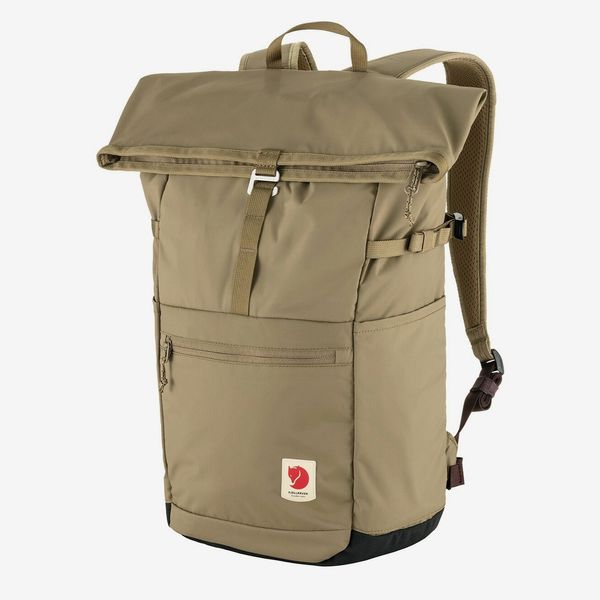
Capacity: 24L | Weight: 1 lb., .2 oz. | Materials: 210D nylon | Protection: Water resistant with waterproof base | Pockets: 5 | Closure: Zipper, folding | Weight Limit: Not listed
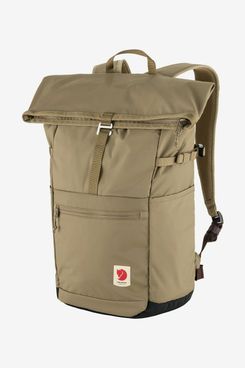
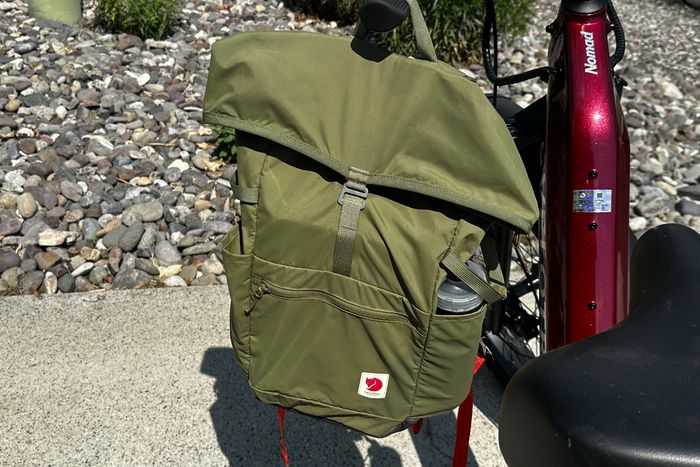
I appreciate that Fjällräven calls this a “sack” because that’s what it is. Weighing barely over one pound, this lie-flat pack is my go-to for a quick bike commute, park day, coffee-shop work session, or chill hike. While it lacks the technical chops of an internal-frame daypack, most people on a casual hike won’t require much more than this unless they’re carrying significant weight and need the support of a hip belt. The top zips shut and folds down to latch onto the front daisy chains, compressing to what you have inside. The side water-bottle pockets fit a 24-ounce water bottle, and it has a front zipper pocket and an interior pocket I use to stash my keys. The shoulder straps are adjustable, and the 24-liter capacity is more than enough for a layer, snacks, my laptop, and a few books. I can also swing by the store on my way home and toss some groceries in here, tightening the straps for more security on the bike ride home if I add weight to the pack.
This is also an excellent option if you need to pack an extra bag for travel. It lies flat but deploys for a useful travel pack once you arrive at your destination, and it’s also the perfect size for an under-seat item on a flight. The 210-denier nylon is abrasion resistant, and it has a smooth finish that has somehow resisted stains despite near-daily use for the past year. The body of the pack has proven itself against light rain during a bike ride home, and the base is reinforced with a heavier material and is fully waterproofed.
More From The Strategist
- Hark, the Advent Calendars Arrived (Very) Early This Year
- The Best Things Strategist Editors Have Bought This Year (So Far)
- 63 Things You Should Never Buy Full Price
- The Strategist Fall 100
The Strategist is designed to surface useful, expert recommendations for things to buy across the vast e-commerce landscape. Every product is independently selected by our team of editors, whom you can read about here. We update links when possible, but note that deals can expire and all prices are subject to change.