The 11 Very Best e-Readers

In this article
In the decade-plus that I’ve been using them, e-readers have become indispensable in my life. Unlike with paperbacks, an e-reader allows me to carry dozens of books in a fanny pack or backpack, and I can adjust the font size if my eyes are feeling particularly tired or the light level if I’m sitting somewhere that’s especially dim. And thanks to their typically weeks-long battery life, I rarely have to worry about losing access to my books. I also just find myself reading more than when I depended on physical books, because it’s so easy to cue up the right reading material for the circumstances — an article I saved for a short commute, an engrossing novel for a long flight.
I’ve also learned that each e-reader is different: Some work better with news articles than others, while some trade a refined e-book experience for better note-taking capabilities or app support. Someone who frequently switches between e-book and audiobook versions may want a model that automatically syncs the two. Amazon’s Kindle is the biggest name in the space, but Rakuten’s Kobo lineup has shown itself to be an equally viable option for readers and has plenty of fans. Other companies, such as Onyx and reMarkable, have created more unique ways to use e-ink displays, like making them work as modern typewriters or giving them the ability to run Android apps.
I’ve tested 19 e-readers in the last three years, including nearly every Kindle that’s been released. I’ve learned that while most readers provide the same general ability to carry a library of books on a single device, their small differences can greatly affect the experience. These are the best e-readers for every type of book-lover, plus a few for those who want to take notes without a bright laptop screen shining back at them.
Updated on June 17, 2026
All of these e-readers are still our favorites, and all but one (the reMarkable 2) are still in stock. We’ll be finding a replacement for the reMarkable 2 soon.
What we’re looking for
Screen size
E-reader screens come in a variety of sizes, ranging from six inches that are perfect for dropping in a jacket pocket or inside your tote to 11.8-inch screens that can show more text (or images in comics and graphic novels) and let you draw right on the screen. A smaller-screened device will be more portable and can still deliver the full e-reader experience.
Light
Most readers have frontlighting that evenly illuminates the whole display. Some e-reader displays also allow you to adjust the color tone of the screen, so you can set it to a warmer tone when you’re reading in bed at night.
Battery life
Unlike with smartphones, the battery life of an e-reader can be measured in weeks, or sometimes months. In general, it’s best to get a reader that’ll last for several weeks on a single charge. The frequency with which you’ll have to charge your device will depend on how often you’re using it and for how long, but I’ve never had a problem getting through at least a couple weeks with any e-reader.
File support
E-books come in MOBI, KFX, and EPUB formats. MOBI, supported by nearly every model on this list, and KFX, supported exclusively by Kindles, are usually protected by some form of digital rights management that limits what or how many devices can access the file’s contents. The more open file format, EPUB, is easier to use for managing your own library if you get your books from outside the Kindle store, but it’s more difficult to get onto a Kindle than MOBI or KFX. If you do want to put EPUB files (which you can get from third-party bookstores or indie publishers) on your Kindle, you’ll have to use third-party software like Calibre to convert to one of the Kindle-friendly formats or transfer them over email, and even then, the cover art may not transfer. If you just plan on buying directly from the bookstore that’s baked into your e-reader (Amazon and Kobo both have their own), don’t worry about this too much.
Storage
Most models come with either 8, 16, or 32 GB, and some even have microSD card slots for expandable storage. 8 GB should be fine for most people who plan on only using their e-reader for reading text, though, as that will store about 6,000 books. If you want to use your e-reader to listen to audiobooks or read comics, you’ll probably want 32 GB.
Audiobook playback
Some e-readers have the added capability of playing audiobooks. You’ll need a pair of Bluetooth earbuds or headphones to do so, as most don’t have audio jacks or speakers. Amazon also has a nifty service that’ll sync your progress between an audiobook and its e-book counterpart if you’ve purchased both.
Best e-reader overall
New! You can now save this product for later.
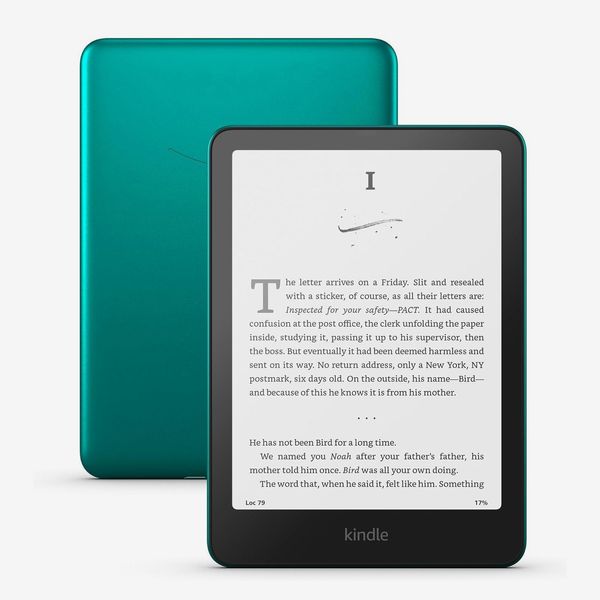
Screen size: 7” | Light: Yes, color-tone adjustable| Battery life: Up to 12 weeks| File support: MOBI, KFX, EPUB (through email), PDF | Storage: 16GB | Audiobook playback: Yes
Amazon’s Kindle Paperwhite has been the paragon of e-readers for over a decade, thanks to its solid hardware and access to the internet’s largest e-book store. The latest iteration, released in 2024, is no different. It features a slightly larger (7-inch) screen than its predecessor’s and can consequently show more text, but that also makes the device slightly larger. Amazon also says the new model can turn pages 25 percent faster than the previous one, but it’s hardly noticeable in practice, so you shouldn’t upgrade if you’re still rocking the Paperwhite that was released in 2021. It’s also waterproof, so you can bring it in the tub or read a book by the pool worry-free.
The plastic backing of the Paperwhite has a grippy matte finish that’s comfortable to hold even for long periods of time. This Kindle’s display sits flush with the face, giving it a streamlined look that e-readers with recessed displays (like the cheaper Kindle and some Kobos models) lack. It has an array of lights that get bright enough to make the text visible even on a sunny day, but can get dim enough to read in bed without bothering anyone else. You can also change the warmth of the screen’s display to give it an orange-ish hue that’s softer on the eyes. No matter what brightness or warmth you set the display to, the text is consistently easy to read, and you can adjust the font size as needed. As with Amazon’s other Kindles, it also comes with the OpenDyslexic font pre-installed that some people with dyslexia may find helpful.
Just like with previous Paperwhites, this model can go months without needing to be recharged. That’s been the experience of other Strategist writers and editors, many of whom spoke enthusiastically about their Paperwhites. Whether you’re using this as your at-home reader or your travel companion, it’s comforting to know that you don’t have another device to worry about charging at your nightstand every night.
In addition to the standard Paperwhite, Amazon also sells a model called the Signature Edition for $40 more, and it comes without ads (you can pay $20 to have them taken off the cheaper model), plus wireless charging and an increased 32GB of storage over the standard edition’s 16GB. Given the infrequency with which you have to charge the Paperwhite, the wireless charging is more a novelty than a necessity, and I’d recommend saving the money and putting it towards a good case, unless you need the extra storage for audiobooks (only the Signature comes with 32GB).
My main gripe with the latest Paperwhite is that although its bigger screen looks better, it’s also a bit less portable. When portability matters, I choose the standard Kindle (you can read more about that, right below). Additionally, it’s a more limited device than those you can get from Kobo or Boox. When you buy a book on the Kindle store, you can only read it on a Kindle; there’s no way to download it and create a backup of your library. And while you can side-load books from third-party e-book stores, you won’t be able to use their book covers as your lock screen like you can with e-books from Amazon.
Amazon released the Kindle Colorsoft, which is effectively a Paperwhite with a color display, last year. I’d like to recommend it on its own, but as of right now, an issue with the display makes it a tough recommendation. Many users have reported (and I’ve confirmed on a unit I bought) a yellow bar along the bottom of the display that some may find unpleasant. I didn’t notice this until posts on the Kindle sub-Reddit brought it to my attention, but it’s prominent enough to upset some, especially at this Kindle’s price of nearly $300.
Best (less-expensive) e-reader

New! You can now save this product for later.
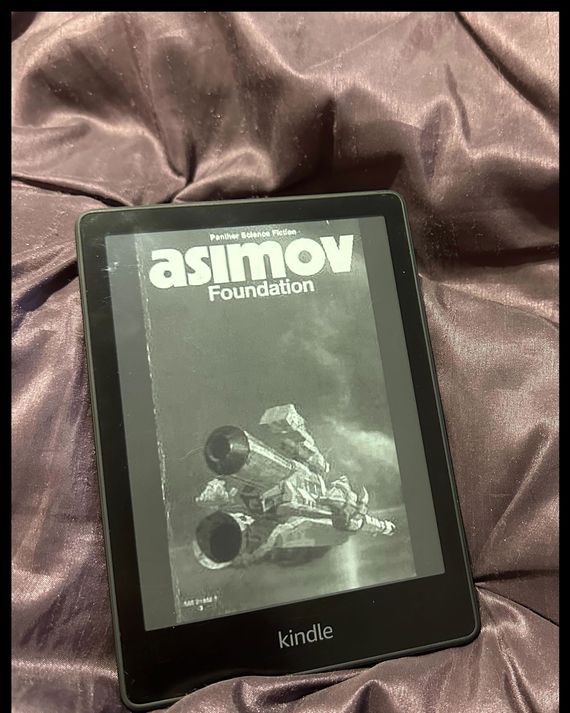
Screen size: 6” | Light: Yes | Battery life: Up to 6 weeks| File support: MOBI, KFX, EPUB (through email), .pdf | Storage: 16 GB | Audiobook playback: Yes
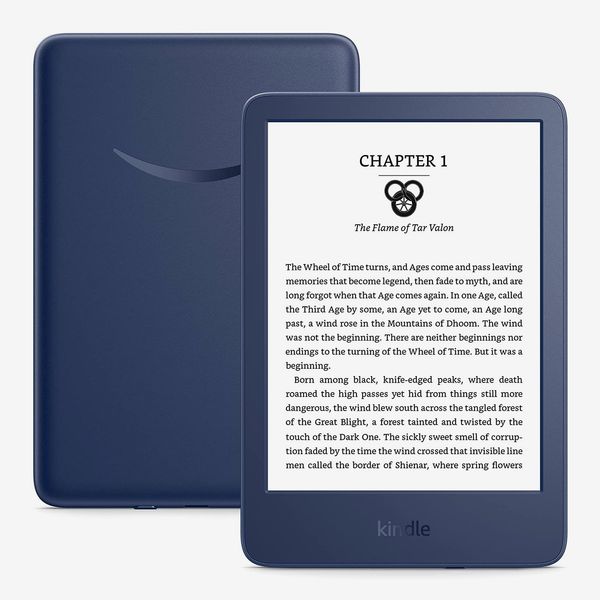
As much as I love the Paperwhite, it’s not the Kindle I’d travel with — that would be the standard Kindle, which is mostly just a smaller version of the Paperwhite, minus a few embellishments. Its display isn’t flush with the bezel, so it looks less sleek, but functionally I haven’t noticed any difference. The screen also isn’t color-adjustable, and it’s not waterproof, unlike with the Paperwhite. The text is just as easy to read as on the Paperwhite’s larger screen. Its battery life is a bit shorter, maxing out at six weeks if you’re just using it to read, but that’s still plenty of time between charges. Since you can’t adjust the tone of the screen, it’s a little less pleasant to read in darker settings, but again, it’s perfectly fine, and you can still adjust the brightness as needed. None of its shortcomings detracts from the fact that it’s a great e-reader. And for those with smaller hands, or who like to read for extended periods of time, the smaller size and lighter weight may be worth the trade-offs.
Best non-Kindle e-reader
New! You can now save this product for later.
Kobo Clara BW
Screen size: 6” | Light: Yes, color-tone adjustable| Battery life: Up to one month| | File support: EPUB, MOBI, PDF | Storage: 16 GB | Audiobook playback: Yes
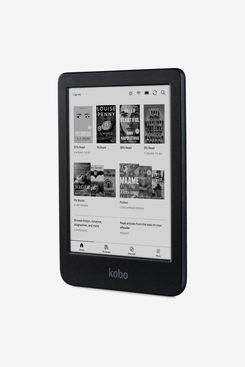
If you haven’t built up a huge library of Kindle e-books and/or don’t want to be locked into one ecosystem, get Kobo’s Clara BW. It’s about the same size as the standard Kindle; it works better with books purchased outside its own ecosystem, such as directly from publishers; and its textured back is nicer to hold than the smooth finish on Kindles. This model has a natural-light setting so you can adjust the display’s warmth, while Amazon restricts this feature to the Paperwhite.
Kobo’s software feels more polished and tailored toward passionate readers. For instance, you can browse the service Libby — which lets you check out e-books from your local library — directly from the device. On a Kindle, you’d have to access Libby from a smartphone or computer and connect your Kindle, then send the book to the device. It’s still doable, but Kobo’s process is refreshingly streamlined in comparison.
Kobo recently updated its software to include integration with the read-it-later service Instapaper, so you can save news articles to the service from your phone, tablet, or computer, and read them right on your e-reader. It replaces integration with Mozilla’s now defunct service Pocket and works exactly the same: Log in from your Kobo, then wait for all your articles to sync and download. I do wish that Kobo’s software supported viewing and creating highlights within articles (you can do that in the Instapaper app on iOS or Android) but I like reading articles on my Kobo more than on my phone.
Also worth noting is the fact that Kobos are easier to side-load books onto. When you acquire books from anywhere outside the Kobo store — such as buying directly from publishers or downloading free books from a site like Standard e-Books — you can sync them using software like Calibre. When you do this, everything syncs, including the book covers. On a Kindle, the covers don’t sync, so you have to deal with all your books showing a blank page with the books’ titles as the cover. It’s fine, but not as pleasant to look at. Additionally, Amazon has removed the ability to download your purchased e-books for archiving purposes, while the Kobo store still allows it.
Unlike the Kindle lineup’s sleek back panels, the Kobo Clara BW has a textured back that adds more grip (though you could, of course, use a cover with either). I also like that the device’s power button is on the back, while many e-readers — including the Kindle — keep their power buttons on the top or bottom where you can accidentally hit them while holding your reader.
There’s also a color version of this e-reader called the Kobo Clara Colour. It’s identical to the black-and-white model, aside from its color display. Given the Clara’s fairly small screen, the color isn’t useful for things like reading comics or graphic novels, and works best for color-coding your highlights. If that’s not enticing to you, the black-and-white model will save you some money and give you crisper text, as color e-ink displays have lower resolutions.
Best large-screen e-reader
New! You can now save this product for later.
Screen size: 10.2” | Light: Yes | Battery life: Up to several weeks (not specified)| File support: MOBI, KFX, EPUB (through email), PDF | Storage: 16/32/64GB | Audiobook playback: Yes
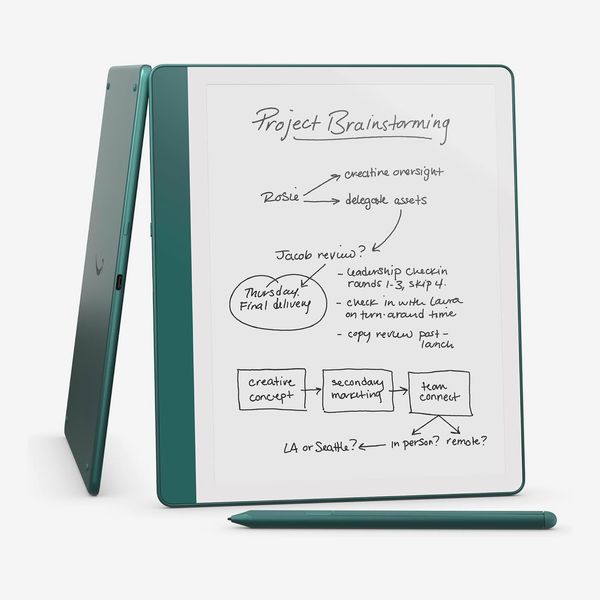
I like my e-readers to be as portable as possible, but the second-generation model of Amazon’s large-screened Kindle Scribe convinced me that a big e-reader can work as someone’s only reader. Its 10.2-inch screen can display a much larger amount of text per page than any other Kindle, and it supports the exact same font sizes as the smaller models. You can create custom digital notebooks with the included stylus and choose from several page templates, including grid, college-ruled, and unlined. There’s plenty of room to write lots of notes, and the stylus is a delight to use. You can select pencil or fountain pen modes, and also use it to highlight text within an e-book. There’s a dedicated tab at the bottom of the Scribe’s navigation bar to access all your notebooks, so they’re always a tap away.
While the Paperwhite and regular Kindle both have plastic backs (with different finishes), the Scribe has a metal back. It’s a bit harder to hold for extended periods, especially given its larger size and heavier weight, but it makes the device feel more premium. Each back corner has a little rubber foot to prevent the e-reader from sliding around when you’re writing away on it. The metal back is more slippery than the plastic on the Paperwhite or standard Kindle, though, so the Scribe is harder to prop up against a wall or another surface.
The Scribe is quite similar to Kobo’s Elipsa 2E, which shares the same screen size and stylus support, and has similar note-taking capabilities. I prefer the Elipsa for taking notes (more on that below), but the Kindle Scribe has a smoother overall experience, with software that feels slightly more polished. It has a larger library of e-books you can buy, and they are often cheaper than those in the Kobo store.
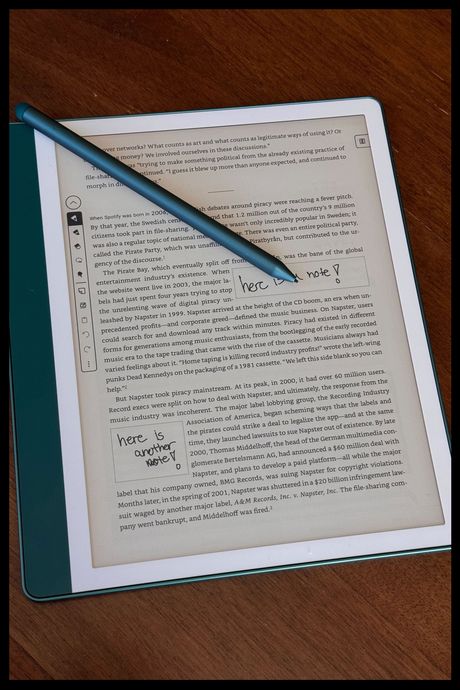
With the newest version of the Scribe, Amazon added the ability to write directly inside an e-book, sort of like you can with Kobo’s Elipsa 2E. Unlike with the Elipsa, though, you can only use the stylus to write inside e-books you’ve bought through Amazon’s store, not ones you’ve bought elsewhere and synced to your Kindle. That’s a bummer, but Amazon does have some fancy software that makes taking notes inside books more useful.
When you write over text inside a book, the Scribe will automatically rearrange the text on the page to make room for your notes, keeping it aligned with the text you wrote over. It’s a clever feature that takes one advantage of reading physical books and makes it better, but I wish Amazon made this feature available in books obtained outside its own ecosystem.
Amazon also says the newest Scribe’s screen is meant to feel even more paperlike than the original. While the reMarkable Paper Pro comes closest to the feeling of paper among all the e-readers I’ve tested, I’m impressed with how close Amazon has gotten with this model.
Best Android-based e-reader
New! You can now save this product for later.
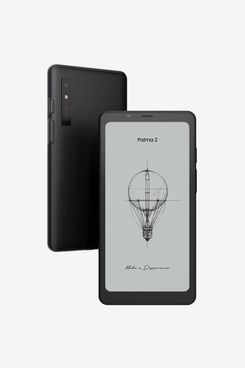
Boox Palma 2
Screen size: 6.1” | Light: Yes, color-tone adjustable| Battery life: Up to two weeks| | File support: PDF, CBR, CBZ, EPUB, MOBI, DOC, DOCX, TXT | Storage: 128 GB | Audiobook playback: Yes
Of all the e-readers I’ve tested, Onyx’s Boox Palma — which debuted in 2023 and received an update late in 2024 — is the one I use the most. It takes the portable design of a smartphone, the pleasant e-ink display of a Kindle or Kobo, and the vast ecosystem of third-party apps on Android’s Play Store and packs it all into one device that’s a reader’s dream. The updated Palma 2 adds a fingerprint sensor, as well as a faster processor and a newer version of Android. The new e-reader is even better than the original.
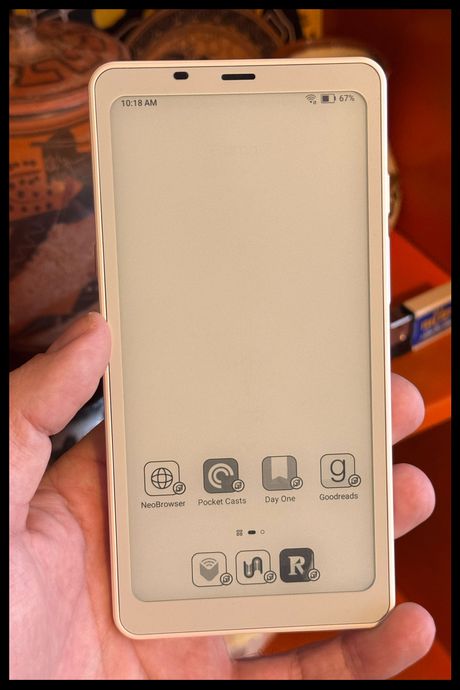
Since the Palma 2 runs Android, you can install apps like Libby for getting e-books from the library, Audible or Libro.fm for audiobook listening, and Readwise Reader or Instapaper for catching up on the news and articles you’ve saved. You can use your music-streaming service of choice on the Palma 2 as well, though if you want to stop the Palma 2 from pausing music when the screen shuts off, you’ll have to tinker with some of the device’s power settings. You only have to do that once, but it would be nice if it were the default. Apps like TikTok and YouTube will technically run on the Palma 2, but they don’t look great, so it’s best to stick to text and audio. Audio sounds pretty good, especially when paired with a good set of wireless earbuds; this is how I listen to podcasts when I’m on a walk with my dogs. Do note though, while Spotify works, the interface can look pretty janky, especially if you use the service’s Canvas feature.
Like a smartphone, the Palma 2 has a sensor on the front that allows the system to automatically adjust the display’s brightness based on your surroundings. The hardware also has some delightful add-ons that I’d like to see on other e-readers. The volume controls can be programmed on an app-by-app basis to either adjust sound levels or scroll through the pages of a book or down a web page. Since the Palma 2 is small enough to hold and operate with one hand, being able to scroll through my books without having to readjust my hand’s position is a delightful convenience. The left side also has a button that you can program to do things like refresh the screen manually. The Palma 2’s power button also has a built-in fingerprint reader. This may seem frivolous for an e-reader, but because you can install apps that hold personal information, such as Gmail or note-taking programs, that added security may come in handy.
The Palma 2 is my favorite e-reader these days, but I have some concerns. The fact that it runs the already outdated Android 13 means it’s susceptible to more security vulnerabilities than an up-to-date Android device. This also means that if an app developer decides to remove support for older operating systems, the app may stop working on the Palma 2 or you may not receive updates for security patches or new features.
Best e-reader for kids
New! You can now save this product for later.
Screen size: 6.8” | Light: Yes, color-tone adjustable| Battery life: Up to 10 weeks| | File support: MOBI, KFX, EPUB (through email), PDF | Storage: 16 GB | Audiobook playback: Yes
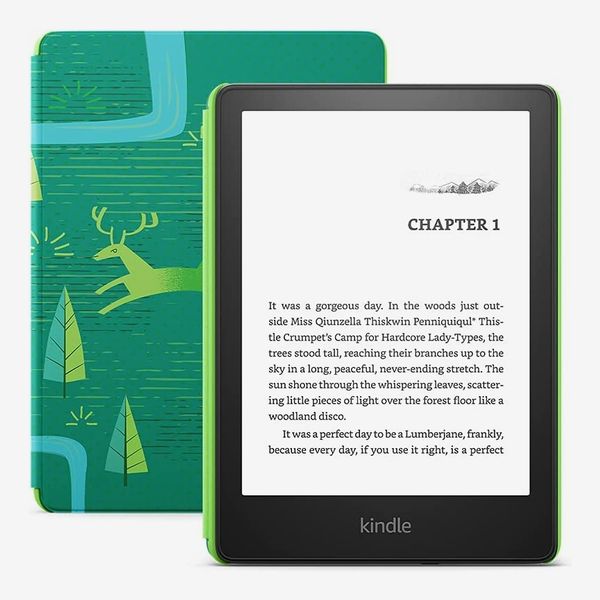
Amazon also makes a kid-friendly version of the Paperwhite. Its specs are identical, but it comes with a case and without ads, and parental controls are enabled. You can get your kid a regular Kindle Paperwhite and still enable parental controls, but this comes with everything already set up, and you don’t have to go through any hoops to remove lock screen ads. It comes with a free year of Amazon’s Kids+ service, which comes with both entertaining and educational content made for kids. Just like the Paperwhite, it’s waterproof, so it’ll be safe even in the hands of the messiest kid. (In the unfortunate event that your child does try to test this Kindle’s limits, it comes with two-years of “worry-free” protection, but accidental damage isn’t covered.)
You could buy this version of the Paperwhite for yourself if you want to save $35 on the cost of a case (the 16GB Paperwhite without ads cost the same as the kids’ version), but you’ll have to be okay with rocking one of the three kid-oriented cases. The most adult-friendly of the bunch is Cyber City, which gives the Kindle a cyberpunk feel. There’s also Diary of a Wimpy Kid, featuring an illustration of the series’s characters, and Starfish, which showcases a bunch of starfish swimming under the sea. You’ll also have to remove the parental controls if you plan on using it for yourself, which is easy enough.
Best color e-reader
New! You can now save this product for later.
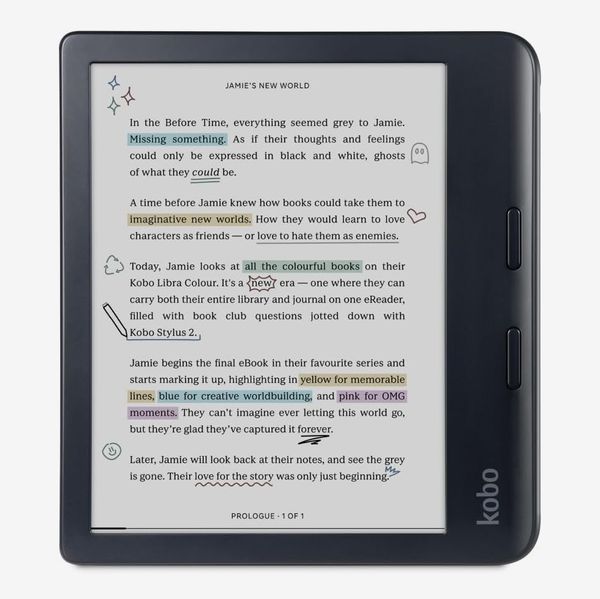
Kobo Libra Colour
Screen size: 7” | Light: Yes | Battery life: Up to several weeks (not specified)| File support: EPUB, MOBI, PDF | Storage: 32 GB | Audiobook playback: YesAudiobook playback: Yes
If you want an e-reader that can display comics and illustrated or picture books in full color, get Kobo’s Libra Colour. It’s not the first color e-reader to come out, but it’s the first from a major manufacturer, and it’s the first that convinced me the technology is ready.
The Libra Colour’s display is the same size as the Paperwhite’s and Colorsoft’s, and colors look great on it. It’s not anywhere near as vibrant as an iPhone’s Retina display, but if you’ve ever looked at a comic strip in a newspaper, you’ll have an idea of how pictures look on the Libra Colour. If you’re mostly reading text, though, consider that color e-ink displays have a slightly washed-out effect on text, making it look less crisp. That said, it’s still readable and only noticeable when you have two readers side by side.
Like the company’s Sage and Elipsa e-readers, the Libra Colour supports Kobo’s stylus, so you can take notes on it both inside e-books and in the reader’s dedicated notebook app. Because the display shows colors, you have some more flexibility with highlighting than you do with black-and-white screens.
Best large-screen color e-reader
New! You can now save this product for later.
Screen size: 10.3” | Light: Yes | Battery life: Up to several weeks (not specified)| File support: PDF, CBR, CBZ, EPUB, MOBI, DOC, DOCX, TXT | Storage: 64 GB | Audiobook playback: Yes
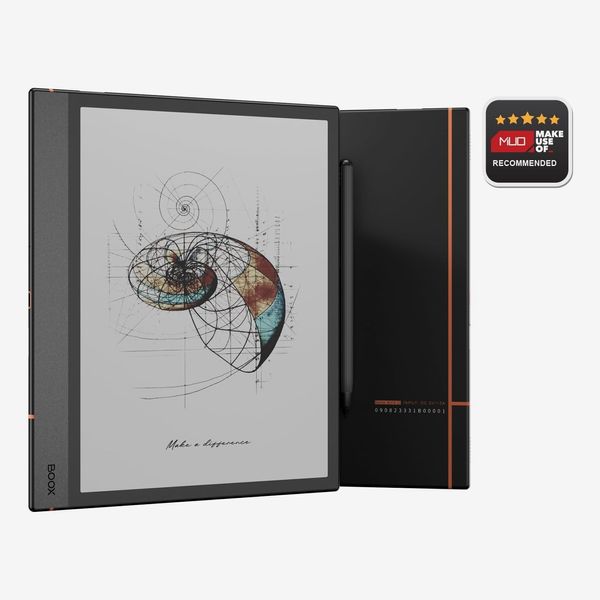
Onyx’s Note Air4 C is about as close as you can get to an e-ink iPad. Its 10.3-inch screen is big enough to clearly read text in graphic novels and take handwritten notes using the included stylus. And unlike the Kobo Elipsa 2E and Kindle Scribe, the Note Air4 C has a color display. It looks a lot like the Kobo Libra Colour’s display — similar to a physical comic book — but the display on the Boox is flush with the rest of the front, which looks nicer than recessed displays like the Kobo Libra Colour’s and standard Kindle’s.
I tested the Note Air 4C’s display by reading an e-book through the Android app Moon+ Reader Pro, as well as the first issue of Yowamushi Pedal, a mostly black-and-white manga, and a compilation of X-Men comics in color. Text in black-and-white documents looks as crisp and paperlike on this e-reader as on any Kindle or Kobo. When the Note is showing content with color, such as a graphic novel or web page, the resolution gets cut in half — from 2480 x 1860 to 1240 x 930 — so things aren’t as clear. It still looks good and text is legible, but it doesn’t have the exact same printed look as black-and-white text.
Like the Palma 2, this e-reader runs Android, so you can install apps from the Google Play Store onto it. And if you want to take notes in your note-taking app of choice, you can do that using the included stylus. The Air4C’s stylus is also great for editing text by hand if you want to feel like an old-school editor. That said, it still has an e-ink screen, so its slow refresh rate means it won’t be good for doing anything that isn’t text-based (don’t try watching movies or playing any motion-based games).
Best color e-reader for taking notes
New! You can now save this product for later.
reMarkable Paper Pro
Screen size: 11.8” | Light: Yes | Battery life: Up to two weeks| File support: EPUB, PDF| Storage: 64 GB | Audiobook playback: No
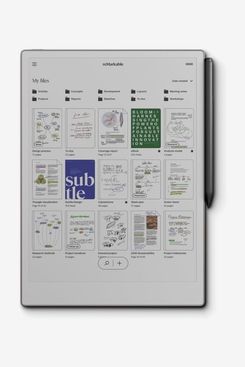
The reMarkable Paper Pro has the best color display on any e-ink device I’ve tested; it’s great for those who like to read comics and graphic novels on a large screen. It’s also good for taking detailed notes, since you can highlight and write notes in different colors. To address the slower refresh rate of color e-ink displays, reMarkable developed a clever work-around: The initial markings show up on the page in black, and once you lift the stylus, the color shifts all at once. All these changes make the Paper Pro feel like a luxurious version of the reMarkable 2 that’s even more delightful to take notes on.
Reading on the Paper Pro is a bit less praise-worthy. It’s not bad, but it’s not nearly as good as the reading experience on a Kindle or Kobo. There’s a toolbar on the screen that you can’t make go away. It’s handy when taking notes — there are options to tag notebooks, add layers to the note like in Photoshop, or select parts of the page that you’ve marked up — but distracting when trying to read. Like with the Elipsa 2E and second-generation Kindle Scribe, you can write directly on the page of an e-book, but Kobo’s software handles it more elegantly by not cluttering the screen with a toolbar.
The Paper Pro is also quite expensive. It costs $100 more than the Note Air 4C and $200 more than the reMarkable 2, and that’s before you add the $230 keyboard folio case. While the Paper Pro is great on its own, the keyboard case’s comfortable keys are fun to type on, and it’s one of my favorite ways to take notes. To make the most of these notes, you’ll have to pay $3 per month or $30 per year for reMarkable’s syncing service or connect your tablet to your computer every time you want to transfer your work.
reMarkable also recently released the Paper Pro Move, which is a 7.3-inch version of this tablet. It’s great as a more portable digital notebook, but its software has the same shortcomings for reading e-books as every other reMarkable tablet.
Best e-reader for writers
New! You can now save this product for later.
Screen size: 10.3” | Light: No | Battery life: Up to two weeks| File support: EPUB, PDF| Storage: 8 GB | Audiobook playback: No
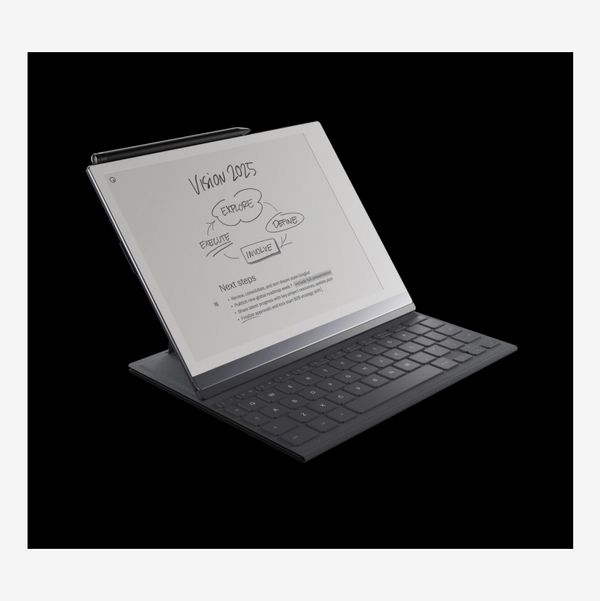
The reMarkable 2 has been one of my favorite e-ink devices for the better part of a year. It’s more of a tablet than an e-reader, but it still supports e-books. Its screen is about the size of the Kindle Scribe or Kobo Elipsa 2E, but with a sleeker design and a slimmer profile that makes it easier to hold. Its display, which you can write on using a stylus (sold separately), feels more like writing on actual paper than either the Scribe or Elipsa’s displays.
Just like with those two e-readers, the reMarkable lets you create digital notebooks that you can write or draw in, and you can make as many as you want. Because this device is geared more towards writing than reading, it has more built-in templates for the pages of your notebook than either Amazon or Kobo’s offerings. In addition to the standard grid, lined, and dotted templates, you can choose from three different storyboard templates, isometric grids, and perspective grids to help you with drawing. You can even draft music on it using the included music sheet templates.
You can also buy a keyboard case that turns the reMarkable into a mobile writing station without the distractions of the web. The reMarkable doesn’t support third-party apps, so literally all you can do is read or write on it, making it a great coffee shop or library companion when you need to get some writing done. At $200, the keyboard case is far from cheap, but if you want a mobile typewriter that keeps you focused on your words, no other device has helped me get more writing done than this one.
The reMarkable’s display also doesn’t have a light. That’s likely because adding one would require a larger gap between the actual screen and the stylus, which would introduce some lag and make it feel less like writing on actual paper. Since that’s the device’s main attraction, it’s an understandable trade-off, but it does mean that you can’t read on this device without having a light on (or using a clip-on light).
[Editor’s note: The reMarkable 2 has been discontinued. The newer model, the reMarkable Paper Pure, is available for the same price; we’ll be testing it soon and updating this piece with our thoughts.]
Best e-reader for taking notes
New! You can now save this product for later.
Kobo Elipsa 2E
Screen size: 10.3” | Light: Yes | Battery life: Up to several weeks (not specified)| File support: EPUB, MOBI, PDF | Storage: 32 GB | Audiobook playback: Yes
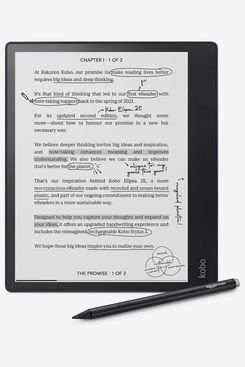
I’ve long been a Kindle devotee, but Kobo’s Elipsa 2E persuaded me to branch out for two major reasons. First, Kobos are better for reading library books and news articles (like Amazon’s Kindles, Kobos also have the OpenDyslexic font pre-installed). Second, taking notes inside an e-book on the stylus-friendly Elipsa is as simple as writing directly on the page, either over text or alongside it. It doesn’t automatically wrap your handwritten notes around the text like Amazon’s Kindle Scribe can inside books from the Kindle store, but Kobo’s method works in any book on the device, not just ones you buy through Kobo.
The Elipsa 2E’s back is made of a textured plastic that’s easier to hang onto than the Scribe’s slick metal back. It also has rubber feet that are larger than the Scribe’s, but because they’re the same color as the back of the device, they’re not as obtrusive, and they do a good job of keeping the Elipsa in place.
I don’t like that the Elipsa 2E’s stylus needs to be charged separately from the reader itself. Both use a USB-C charging port, so you’ll only need one cable if you don’t need to charge them at the same time. The Scribe’s stylus doesn’t even need to be charged, nor does the reMarkable’s. I prefer the feel and functionality of Kobo’s stylus (which also works with the smaller Sage reader), but I wish charging it were less tedious.
The Strategist is designed to surface the most useful, expert recommendations for things to buy across the vast e-commerce landscape. Some of our latest conquests include the best acne treatments, rolling luggage, pillows for side sleepers, natural anxiety remedies, and bath towels. We update links when possible, but note that deals can expire and all prices are subject to change.