Can Red Light Help Me Sleep Better?

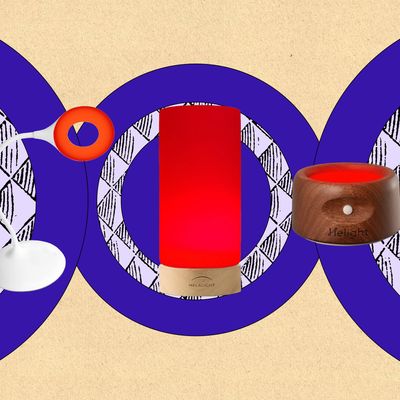
If you’ve opened Instagram, TikTok, or any other social-media platform where wellness types congregate, you know red-light therapy is everywhere. The products range from ubiquitous red-light masks to giant glowing panels of red light. We’ve covered plenty of those products for skin care, hair growth, and pain relief here at the Strategist — and in certain use cases, there is decent evidence that red-light therapy can be effective.
But lately, I’ve seen more and more claims from red-light devices designed to help you sleep better. I’ve been hearing about red light for sleep for a while now. The theory is that because blue light — the type of light the sun emits — signals to our brains that they should be awake and alert, and because some research suggests that too much exposure to blue light at night can disrupt your sleep, red light can help promote sleep because it is furthest from blue on the visible light spectrum. It’s exactly the kind of science-y claim that seems plausible enough to a relative layperson like myself. So I called up an actual expert, S. Justin Thomas, Ph.D., associate professor of psychiatry and behavioral neurobiology and director of the behavioral sleep medicine clinic at the University of Alabama at Birmingham. And for good measure, I tried a couple of red-light lamps myself.
What does the science say about red light benefiting sleep?
Right now, not much. There haven’t been many clinical trials, Thomas tells me, so there isn’t any strong evidence supporting red-light therapy for sleep. But there is some credibility to the idea that red light’s longer wavelengths may be better for sleep than blue light’s shorter wavelengths. “The way the circadian system operates is that we have specialized cells in our eyes that transmit light information back to a part of our brain called the suprachiasmatic nucleus,” Thomas says. “And that in turn sends a signal to produce melatonin or not.” So when our eyes take in blue light — or light that’s close on the visible light spectrum, like green light — melatonin production is suppressed. Darkness in the evening signals to our brains through our retinas that it’s getting close to bedtime, and slowly our body’s melatonin levels will start to rise. Since we often use blue-light-emitting devices like screens — and just regular lamps! — at night, that natural process of melatonin production can be interrupted. That’s why blue-light-blocking glasses are a thing and where the idea for switching to red light comes in.
But when I asked Thomas if red light can actually help you sleep better, he suggested reframing the idea as red light is less likely to harm sleep via the circadian system. Using a red-light lamp at night before bed instead of a full-spectrum lamp may be less disruptive to your circadian rhythm, but it won’t do anything special beyond that, nor will it actively increase melatonin production. “You could also turn your lights down to a very dim lighting and do relaxation strategies for 30 minutes and achieve the exact same result,” Thomas explains. He advised thinking about red light for sleep as a way to minimize harm, rather than a strategy to improve sleep, “just like not drinking a pot of coffee before bed will help your sleep.”
Is there any harm to using a red lamp before bed?
It’s unlikely that using a red-light device for sleep would cause any ill effects. If you like having a red lamp on at night before bed and it makes you feel relaxed and sleepy, that’s a win in Thomas’s book. He does recommend keeping an eye on how bright your red lamp is, however, as brightness alone can be disruptive to your circadian rhythm, no matter what color the light is. And remember, nothing is better for your sleep than pure darkness — I’ve heard this over and over again from many sleep experts I’ve spoken to — so there is no benefit to leaving your red lamp on after you’ve fallen asleep.
Thomas also emphasized that if you’re having genuine difficulty with sleep, a visit to your doctor is always a good idea. No amount of futzing with your bedroom lighting can resolve serious sleep conditions like sleep apnea or insomnia.
Are red-light sleep devices worth buying?
According to Thomas, if you’re normally exposed to a lot of bright light in your living room or bedroom after sunset, and you find that is negatively impacting your sleep, using a red-light device would be reasonable. But it’s also not the first thing he’d recommend people spend their money on. Simply dimming the lights or reducing the overall brightness in your space is just as effective, he says. And making sure that you get enough exposure to bright blue light during the daytime, ideally from going outside, can help preserve your circadian rhythm so that you get enough sleep at night.
From my own experience testing red-light devices, I’m also a bit wishy-washy on whether they’re worth purchasing. The ones marketed as beneficial for sleep are essentially bedside lamps, and I tried two of them: the Melalight and the Helight. The Melalight is more of a straightforward lamp, while the Helight is smaller and designed to slowly fade out to mimic a sunset (the Melalight does have a timer feature but no option to fade gradually). The Melalight emits 660-nanometer wavelengths, and the Helight emits 630-nanometer wavelengths — both of which are in the red spectrum — and the two companies make similar claims about red-light’s connection to the circadian rhythm and how red light “supports” melatonin production.
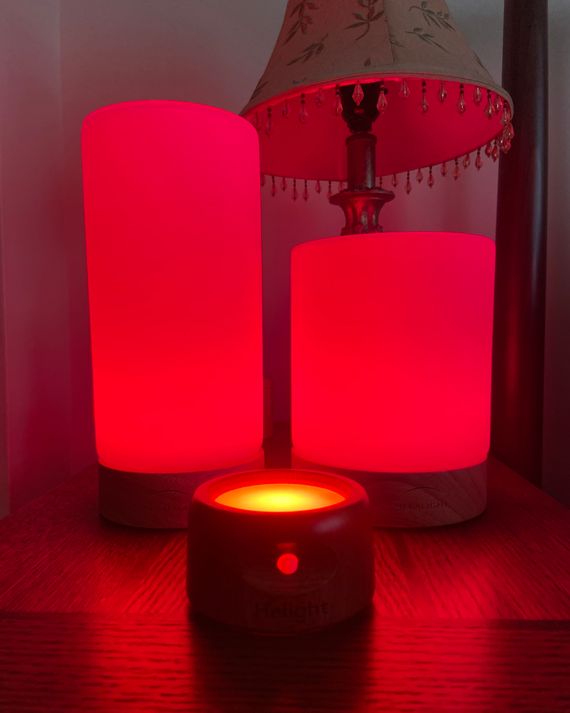
Both the Melalight and Helight were significantly less bright than my regular bedside lamp and did create a vibe-y ambience in my bedroom. But their lack of brightness also made them not very functional as lamps. They weren’t bright enough to serve as a reading light or to light my bedroom while getting ready for bed, so I still had to use other lighting, which defeated the purpose of having red light. There simply isn’t a time before bed when I need an extremely dim light — I either want enough light to read or none at all. But between the two brands, I’d give a slight edge to the Melalight, as its larger size allows it to work better as a lamp that actually illuminates the room (especially if you have one on each side of the bed).
That’s not to say these lamps have no use. I occasionally find them useful on dark mornings when getting ready for the gym before work, as I can have a bit of light without waking up my husband. And if you like to meditate, stretch, or do another calming activity before bed that doesn’t require much light, they could be a nice way to help you get into a sleepy headspace. They could also be a nice accent light, like a Himalayan salt lamp. But given their price tags — the Melalight costs $169 and the Helight costs $139 — they likely aren’t worthwhile for most people who are looking to seriously improve their sleep.
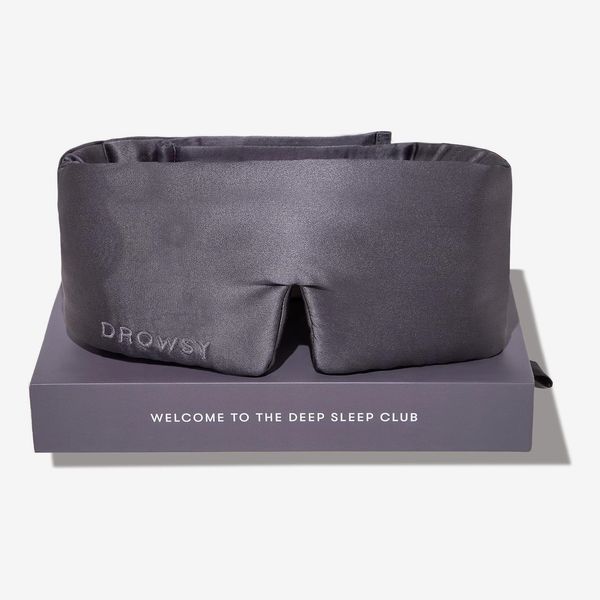
Light-blocking sleep gear we like


The Strategist is designed to surface useful, expert recommendations for things to buy across the vast e-commerce landscape. Every product is independently selected by our team of editors, whom you can read about here. We update links when possible, but note that deals can expire and all prices are subject to change.