The Very Best Electric Scooters
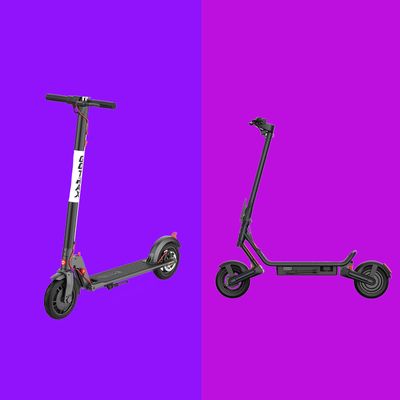
The right electric scooter can be a great way to get from A to B quickly and with minimal fuss. Some of today’s best scooters have the speed and range to cover entire commutes, while smaller models can be perfect for last-mile segments of commutes, quick errands around the neighborhood, or just fun joyrides. With a small, portable footprint, they’re easier to keep in small apartments or tote along in car trunks or on public transit than a bike, and they let you zip around traffic and park where cars can’t.
With all that in mind, it’s no surprise rental scooters have proliferated. But if you’re riding to and from work every day, those scooter-share memberships quickly add up — so if you’re a regular commuter, it makes sense to buy your own.
There’s a lot that separates one electric scooter from another. Some have minimal suspensions that transmit every bump and groove in a road’s surface, while others smooth out even gnarly urban terrain. Some are small and light enough that they’re easy to carry with one hand, while others might incline you to ask a friend for help if you need to carry it indoors (or have you looking for secure parking outside).
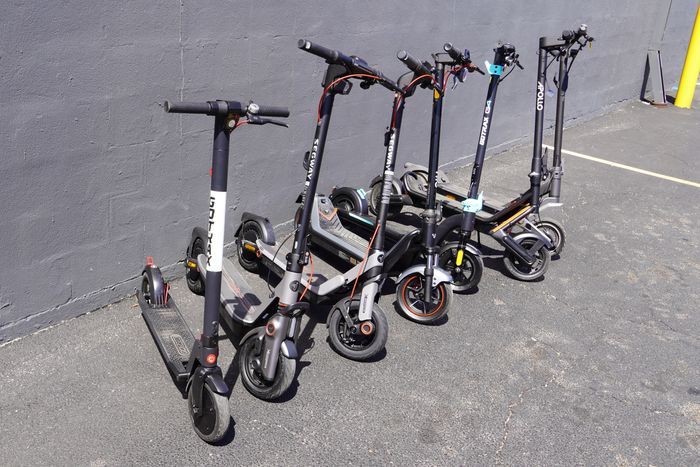
I looked over the market for electric scooters to find promising options at a variety of prices and put them to the test ripping around the streets of Chicago to see which delivered the best experiences.
(Note: As a six-foot-three, 240-pound rider, I am testing these scooters at their limits — in some cases, I am even testing them beyond their stated limits, as 220-pound payload capacities aren’t rare in the scooter and e-bike world. So folks smaller and lighter than me should be able to expect some improvements to the acceleration, top speed, range, and ride feel I experienced in testing.)
Updated on October 16, 2026
We stand by our electric scooter recommendations, and have updated this article with the latest pricing and availability
What we’re looking for
Handling and ride comfort
All of the scooters we tested were easy to hop on and start zipping around with, but there’s a lot that can separate a fine ride from a great one. Suspension, tire grip, braking strength, steering steadiness, handgrip quality, control placement, and deck length all play a part in how comfortable and easy a scooter is to ride long term, and getting those features right makes for a much better overall experience. We looked for suspension elements that could smooth out urban pavement, control layouts that let us steer with confidence, dependable braking systems, and enough space on the deck to move around — a key element in long-term comfort.
Range
Electric scooters are supposed to help you get around, but if the battery doesn’t deliver the range you need, you end up carrying the scooter, rather than it carrying you. And trust me, you don’t want to use a dead electric scooter as a kick scooter.
We’re looking beyond the advertised “best case” range estimates that manufacturers provide to get a realistic sense of how far you can rely on these scooters to take you. We used GPS to track the range of our rides and either drained the batteries fully or used an outlet power meter to measure how much charge was used on a ride.
Safety
Low-quality electronics can be dangerous, and they are all the more so when fitted with batteries, which have the potential to be explosive and highly flammable. An assurance of the quality of electronics and battery is vital for any electric scooter, let alone a great one. New York City requires electric scooters to be certified in compliance with Underwriters Laboratories’ UL 2272 standard. To that end, safety certification from a testing laboratory to UL 2272 is a prerequisite to land on our list.
Portability
One of the perks of electric scooters is convenience, and a big part of that is being able to carry them around and store them easily. But while electric scooters invariably fold down, not all of them are so convenient to tote. Some have fiddly locking mechanisms or are surprisingly heavy — or both! We’ve taken into consideration just how easy each scooter is to wrangle. After all, an electric scooter may not be convenient if it’s so heavy you need a ground-floor garage to house it, and you’ll need to think more about parking if you can’t easily lug it up the stairs or into an elevator at work.
Is owning worth it?
If you live in an area that offers rental scooters or a scooter-share service, they can be a helpful tool for quick jaunts. Those scooters are fairly tank-y and generally accommodating for a wide range of riders (and sometimes two or three riders from what I’ve seen around the streets of Chicago). If you’re riding them a few times a month, they may still be more sensible, especially as you don’t have to worry about charging them or safely storing them. But it’s worth doing some quick math for yourself to see if you’re really saving money.
At the time of writing in Chicago, a Lyft rental scooter cost $0.44 per minute; at that rate, a quick five-mile ride at 15 mph would cost almost $9. Extrapolate that to round-trip riding 20 days a month, and you break $1,000 in just three months — enough to pay for our top pick. Sure, you have to pay to charge a scooter you own, but a full charge of any of the scooters below is cheaper than a single minute on a rental. With rentals, you may have to do some work finding stations at each end of your journey, whereas a personal scooter can roll right out your door and directly to your destination. Ultimately, you have to assess your own situation, but for frequent travel, ownership can make a lot of sense.
Scooter or bike?
The convenience of scooters is undeniable. They’re an almost effortless way to zip from place to place (perfect if you don’t want to break a sweat) and great for quick trips, whether you’re running errands or just having fun. Many can accommodate a bag on the steering tube, and they’re easy to ride with a backpack on. But if you’re on the fence between a scooter and bike or e-bike, there are some things to consider.
First off, a scooter simply doesn’t have the cargo-carrying potential of a bike, which you can outfit with racks and bags. But even if you’re just carrying stuff in a handlebar bag or in a backpack, even the best scooters aren’t as stable as a bike because of their smaller wheels, often narrower handlebars, and high center of gravity relative to the front wheel. And when an electric-scooter battery dies, they also become a slog to ride at even half the pace of a casual bike ride — if your e-bike battery quits, you can always pedal.
Scooters are more compact to carry when folded, and by and large easier to stow away at home or when you get to your destination. But bikes let you take better advantage of your city’s existing infrastructure. Scooters can lock to bike racks (in most cases) but are less accommodated by things like the racks on the front of buses or the mounting places inside of trains. Some public trails also outright ban electric scooters but not bikes, so check the rules where you live.
Best electric scooter overall
New! You can now save this product for later.
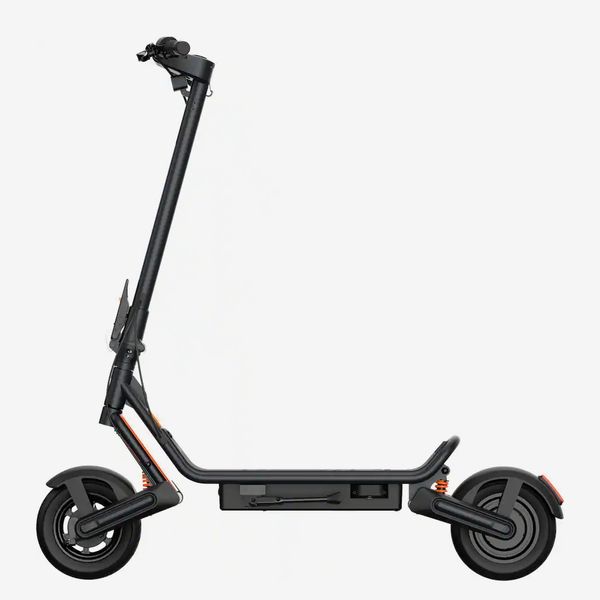
Top speed: 25mph / Rated range: 37 miles / Weight: 61.6 pounds
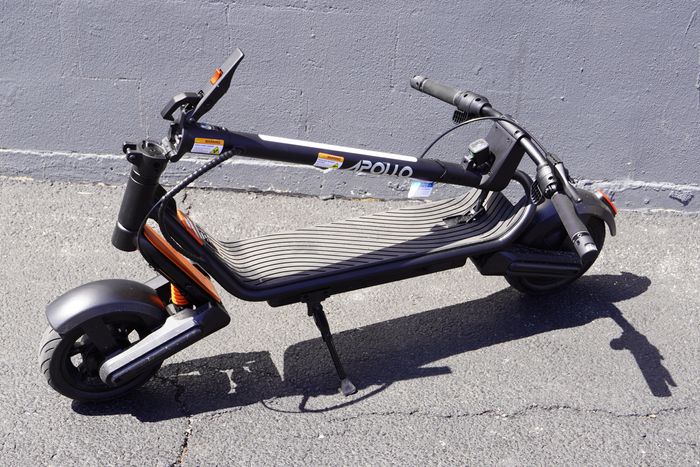
The Apollo Explore 2.0 was a true knockout from the jump. It’s well designed and built, easy to assemble and get going on, and the ride experience more than lives up to expectations.
For the money, you get a very capable scooter. The motor is potent, readily getting the Apollo Explore 2.0 up to its 25 mph top speed and handling modest grades without issue. Most users will be facing legal caps of 15 to 20 mph, so I took it for a long cruise, covering 7.5 miles at 20 mph and then switching over to 15 mph until the battery eventually petered out — after 20.57 miles. That’s impressive range, especially with some of the strong winds I faced in Chicago and my weight on the scooter.
The Apollo Explore 2.0 also proved a joy to ride. I found the handlebar a hair low for me at six-three, but shorter riders should be fine, and the wide grip felt easily controllable even for me. The thumb throttle for acceleration and electronic braking were well positioned. The scooter has strong front and rear suspension that felt cushy even cruising along at 20 mph. I ignored bumps on this scooter that I wouldn’t have dared to take on others and even hopped down a few curbs. The only time the suspension showed the least bit of irritation was when going over a pothole; the front sprung downward from the relieved pressure, leading to a thunk from its plastic fairings and fender but no damage or loss of control.
The Explore 2.0 has a clean design, a long spacious deck, a great lock anchor point in the form of a carrying handle at the back, ample lighting and turn signals, a sharp bell integrated into the brake lever, and sturdy mechanisms for folding and locking. I found it a little tough to release the folding latch and tedious to unfold as well, but better too difficult than too easy. The scooter’s manual regenerative braking also provides convenient and flexible control of the ride while still getting the benefit of recapturing energy — on my 20-mile ride, I only pulled the actual brake lever twice.
The Apollo app supports deep customization of the ride, letting you tune acceleration, electronic braking, and top speeds to your liking. And if you want detailed riding metrics or navigation while you’re in motion, the handlebars have a Quad Lock mounting point you can set your phone up with (using sold-separately mount and case).
The Apollo Explore 2.0 only has a couple of downsides: It’s relatively heavy at 61.6 pounds, meaning you’ll want to look out for street-level parking (you’ll likely have a hard time carrying it up a flight of stairs); also, while the big battery gives the scooter its impressive range, it will take over six hours to fully recharge once empty (a faster charger is sold separately).
Best less-expensive electric scooter
New! You can now save this product for later.
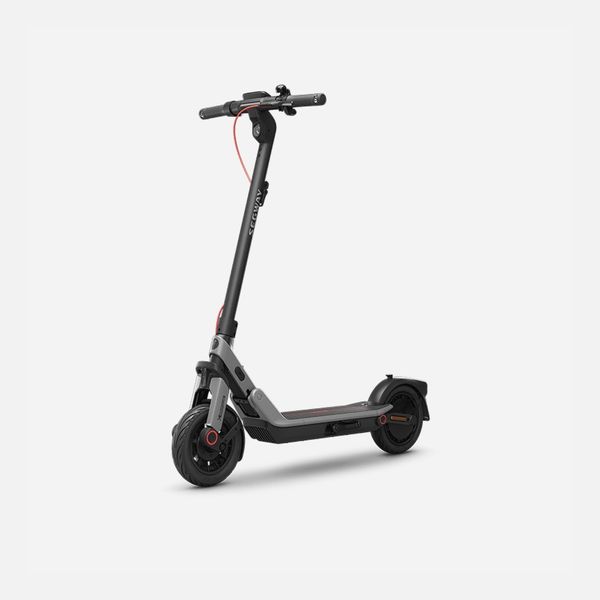
Top speed: 20 mph / Rated range: 34 miles / Weight: 40.1 pounds
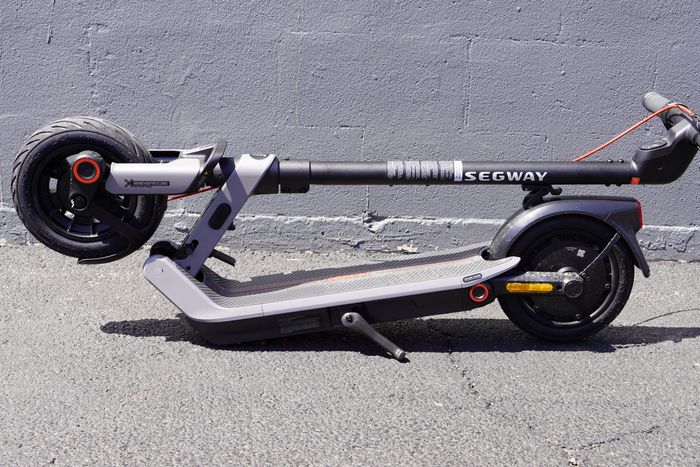
The Segway E3 Pro is a well-rounded scooter that foregrounds convenience. At just over 40 pounds, it’s a lot easier to carry around than a lot of its contemporaries, and it doesn’t sacrifice too much performance to get there — it splits the difference between bare-bones lightweight models and full-featured luxury scooters. Best of all, its folding mechanism is awesome: You just kick up a small latch and then stomp a larger latch with your foot to fold it up; the front wheel lifts up in the process, so the compact package is less likely to fall over while you’re packing up your stuff. Unfolding is also a breeze. Between its weight and convenient folding, the Segway E3 Pro can be a great partner for multi-modal commutes.
There are lighter, smaller scooters out there, but the Segway E3 Pro has superior ride quality. While cruising along, its elastomer suspension suppresses road vibration and smoothes out small lumps and potholes fairly well. It has a spritely motor that can get up to 20 mph and sustain it. On one jaunt, I covered a bit over four miles while pushing the speed as much as possible, and the battery only drained about 40 percent (the scooter itself estimated 39 percent used, while a power meter on the charger I used to fill up showed that I’d used 43 percent of capacity, though that accounts for some efficiency losses in the charger). That puts the scooter on track for a ten-mile range when ridden hard, so it’s not just for last-mile commutes — that’s plenty of range for errands or cruising around the neighborhood.
The E3 Pro’s rear brake supports regenerative braking, slowing you down and providing a top-off charge as you back off the throttle or engage the brake lever, and has a strong front drum brake as a backup. It has integrated lighting, turn signals, and colorful underlighting for visibility. Segway’s app supports some customization of your ride, letting you dial in acceleration, braking, and top speed caps, among other things.
Best lightweight electric scooter
New! You can now save this product for later.
Top speed: 15.5 mph / Rated range: 12.5 miles / Weight: 27 pounds
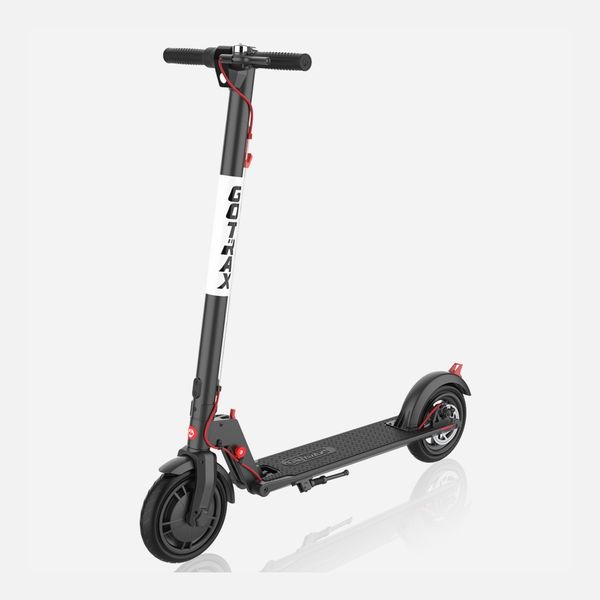
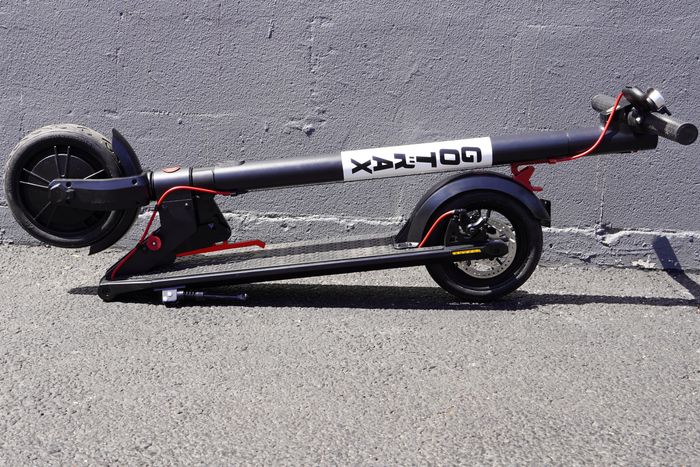
The Gotrax GXL V2 is a very different category of scooter from the others. It’s much cheaper, for one thing, and the look and feel reflect that. It’s very light, even beating the Segway E3 Pro by 13 pounds. It folds up easily and compactly, and it unfolds just about as easily — it’s the kind of scooter you can really take with you anywhere, and it’s an almost perfect last-mile commuter.
Despite only being rated for 220-pound riders, it didn’t buckle under my load even when I forcefully jumped on the deck to see how it’d hold up. The motor was even content to muster its 15.5 mph top speed with me aboard. Slopes were a challenge, but it didn’t give out on the few I went up. In all, the scooter mustered 5.5 miles of range while pushed to its limit. That may not be enough for serious scooter commutes but fits right into that last-mile travel or short commutes with time to recharge (about three hours) built in.
There are some trade-offs, of course. There’s no fancy suspension to smooth out road vibrations, the small deck won’t support big-footed riders well, the steering is a little too nimble, and hard braking can lead to a skid. But when you’re only riding for a few minutes at a time, those don’t compound quite as much as they do on hour-long trips. So the GXL V2 still proves a solid platform for light-duty riding. It’s not too fast or heavy, and it’s not terribly expensive either. It’s listed for $350 but was $239 during my testing.
Other electric scooters I tested
New! You can now save this product for later.
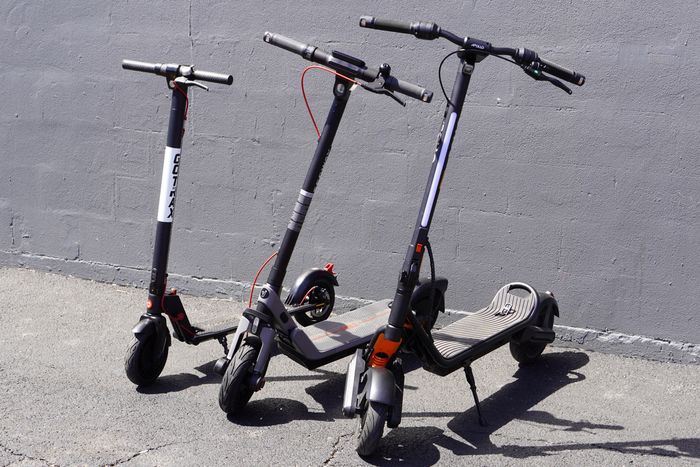
Among the premium scooters we tested, the Niu doesn’t stack up well against the Apollo Explore 2.0 for capabilities nor the Segway E3 Pro for convenience and ride quality. The suspension doesn’t provide a plush ride feel; the motor is powerful but let down by a twitchy throttle; and the deck is smaller than the competition and isn’t spacious enough for long-distance riding comfort.
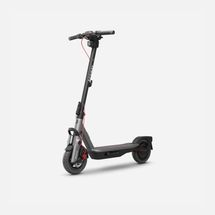
New! You can now save this product for later.
The Segway F3 rides a lot like the Segway E3, but while it has a bigger battery and a bit more range, it lacks the neat folding mechanism that makes the E3 Pro so easy to use — at this price, we’d go with the Apollo Explore 2.0 instead.
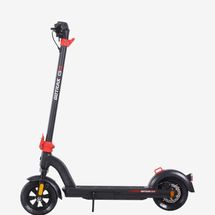
New! You can now save this product for later.
The popular Gotrax G4 is a basic scooter with a modest battery and 20 mph top speed. Unfortunately, it doesn’t stand apart from today’s competition: the front suspension was too stiff to smooth out bumpy roads in our testing, the one-handed folding mechanism was fiddly to operate, and it lacks any sort of app-based customization. The integrated cable lock shouldn’t sway anyone either, as the placement of the mount means the handlebars can give a thief enough leverage to break the lock with their bare hands.
The Strategist is designed to surface the most useful, expert recommendations for things to buy across the vast e-commerce landscape. Some of our latest conquests include the best acne treatments, rolling luggage, pillows for side sleepers, natural anxiety remedies, and bath towels. We update links when possible, but note that deals can expire and all prices are subject to change.
Every editorial product is independently selected. If you buy something through our links, New York may earn an affiliate commission.