Apple’s Folding iPhone Wants to Be Your Everything

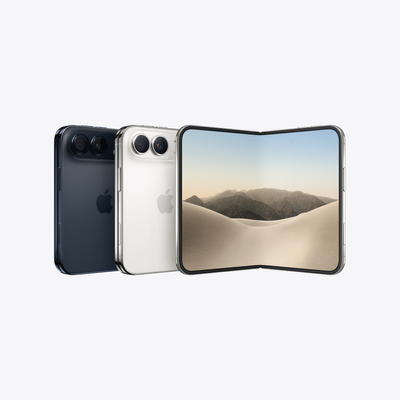
Apple’s fall event looked a bit different this year. It was the first to be run by Apple’s new CEO, John Ternus, and the first to not include a regular iPhone in its announcements — the iPhone 18’s reveal is rumored to be coming next spring. The focus here was on high-end products: the new iPhone 18 Pro, the latest iterations of the Apple Watch and Apple Watch Ultra, revised AirPods, and … one more thing.
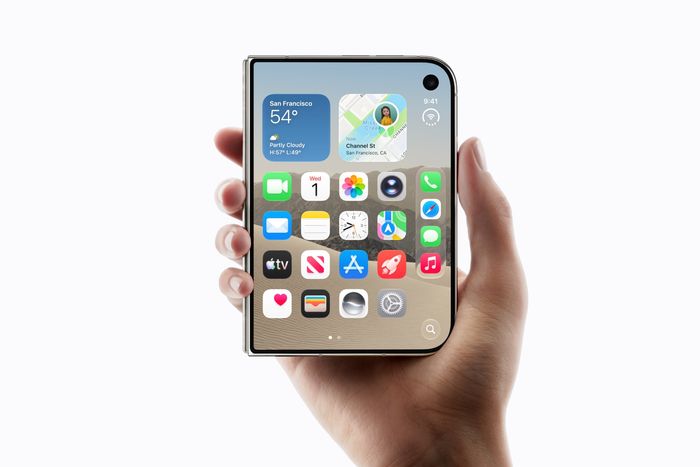
Most notably, Apple announced its first foldable phone, the iPhone Duo. As rumors indicated, it has a passport-style design similar to Samsung’s Galaxy Z Fold 8 with a 5.4-inch external screen that folds horizontally to reveal a 7.6-inch internal screen. That’s only 0.7 inches smaller than an iPad Mini’s screen, so it’ll be great for things like browsing the web or watching videos without needing to carry an actual tablet with you everywhere. Later this year, the Duo will also receive support for the Apple Pencil, making it the first stylus-compatible iPhone.
If you already have an iPhone and a small tablet, the Duo may not be compelling. And it makes us wonder what the future of the iPad Mini may be. After spending time with several foldable phones from companies like Samsung and Google, I’m convinced these phones can be an all-in-one solution for those who sometimes need a tablet but not often enough to dedicate a whole chunk of your budget — and space in your bag — to one. When folded, it is no larger than a pocket-size notebook, while allowing you to keep a tablet-size screen on hand at all times. If you can sacrifice a little extra space, carrying the Apple Pencil could let you go totally paperless.
The Duo has two rear cameras: an ultrawide and a main lens, both of which are 48 megapixels. Apple says the Duo should last up to 24 hours per charge with regular usage. It will be available beginning October 23 and starts at $1,999 for the 256 GB model.
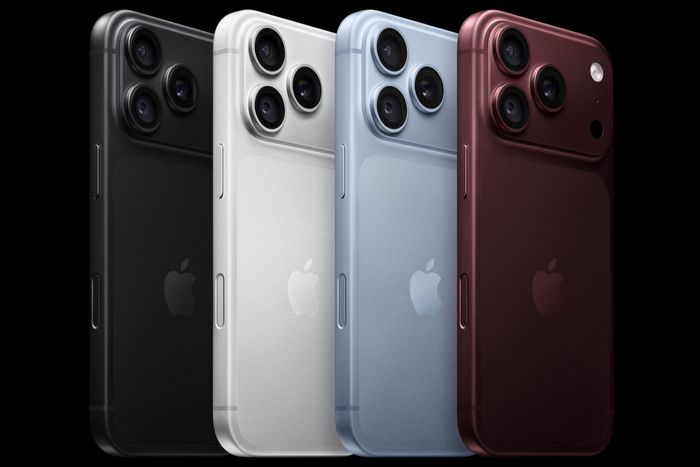
As expected, Apple also announced the iPhone 18 Pro and Pro Max. They look quite similar to the 17 Pro models, though the Dynamic Island has shrunk and the battery is slightly larger. Aside from that, it has all the upgrades you’d expect: There’s a new processor; it comes in some fresh colors, including a new burgundy; and the cameras are improved (the 48-megapixel main camera — better than the camera on the Duo — has a mechanical aperture for DSLR-like control of your exposures). But, likely as a result of the ongoing RAM shortage, the 18 Pro comes at a $100 price increase over last year’s iPhone 17 Pro, starting at $1,199 for the base model with 256 GB of storage. Preorders begin September 12, and it’ll be available for sale on September 18.
Longtime Apple Watch fans might be excited by the return of the ceramic Apple Watch option, which brings a more elegant finish than the standard aluminum models. Aside from that, the new Series 12 is an incremental upgrade over last year’s model with a revised set of health sensors and a focus on a new class of features called Audio Intelligence. Chief among those are Live Rewind, which allows you to request text snippets from the last 15 seconds of conversation (the watch can be set to always transcribe, though it doesn’t record and preserve audio), and Siri Recap, which takes high-level notes about your day based on your conversations. If either of those sound a bit too Black Mirror–yto you, you can turn the features off, but Apple did go to great lengths throughout its keynote to remind us that the AI behind these features runs either locally or on a private server, none of your raw data gets stored or is accessible by Apple, and everything is end-to-end encrypted.
The Series 12 is available in 42-mm. and 46-mm. options with both GPS and cellular options to choose from. It has a new S11 chip and those optical sensors, which enable health-tracking features such as continuous heart-rate monitoring, as well as support for menopause and perimenopause in the Cycle Tracking section of the Health app. The Series 12 starts at $399 for the aluminum model, $699 for the titanium version, and $899 for the ceramic model.
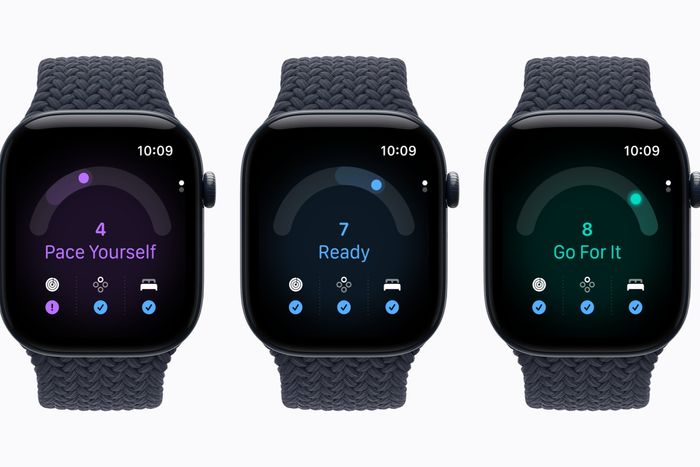
If you prefer Apple’s rugged Ultra line, that got an upgrade as well with the new Ultra 4. It has the same S11 chip as the Series 12 and the same new sensors for continuous heart-rate monitoring. In a bid to compete with other high-end fitness watches, the Ultra 4 can check your “readiness” at any given time based on your current metrics, your sleep score, and other things you’ve allowed your watch to track, according to Apple. Based on all of that, it’ll tell you how you should tackle your day: recover, pace yourself, or go for it. Battery life has improved as well with a claimed 50 hours of usage per charge. The Ultra and the Series 12 will both be available starting September 18.
Finally, Apple announced the AirPods 5, which are an incremental upgrade over the AirPods 4, first released in 2024. Apple says they have 50 percent better noise reduction and overall improved sound. The base model starts at $129 — not bad for decent noise-cancelling headphones — but for $30 more, you can get a pair with the same touch-based controls on the stems as the AirPods Pro. Using those controls, you can swipe your finger up and down to adjust the volume, rather than having to pull out your phone.
I will be testing several of the things Apple announced today in the coming weeks and will update our guides with my thoughts.
More From The Strategist
- Hark, the Advent Calendars Arrived (Very) Early This Year
- The Best Things Strategist Editors Have Bought This Year (So Far)
- 63 Things You Should Never Buy Full Price
- The Strategist Fall 100
The Strategist is designed to surface useful, expert recommendations for things to buy across the vast e-commerce landscape. Every product is independently selected by our team of editors, whom you can read about here. We update links when possible, but note that deals can expire and all prices are subject to change.