The Best Rock-Climbing Shoes, According to Expert Guides and Climbing Instructors
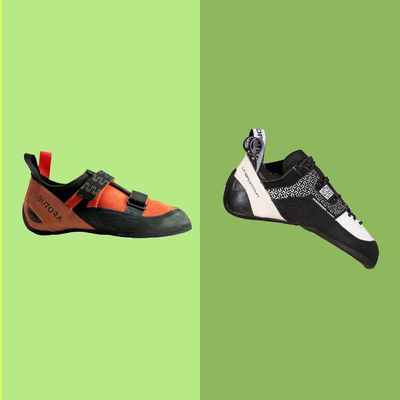
To the untrained eye, climbing shoes — tight, tapered footwear that my former partner called “goofy-looking elf shoes” when I was trying to get him into climbing — may look alike. And before you ask, the answer is yes, if you’re going to climb, you do have to wear them.
In this article
I’ve been climbing for nearly 15 years, spending my free time (and money) on climbing trips all around the West and working full-time at a climbing gym, teaching beginner lessons and advanced clinics. I usually rotate between four or five pairs of climbing shoes, depending on what kind of route I’ll be tackling and how difficult it is.
Exactly what you wear — and there’s a huge variety of models out there — will be based on your climbing style, skill level, and fit preference. So how to choose? The shoes in my arsenal (and on the store shelves) range from neutral, slipperlike options for beginners to aggressively downturned pairs for high-level sport climbs and overhanging boulders.
I’ve broken down the main categories (and the best options for you, whether you’re just getting started or looking to move up) below, with input from climbing coaches, instructors, and route developers.
How to shop for rock-climbing shoes
Understanding climbing-shoe fit
Climbing shoes fit unlike any other footwear. The shoes are meant to feel molded to your feet, compressing your toes to allow you to exert force precisely on small footholds. Most shoes come in European sizing, but even then, the sizing doesn’t always translate. For example, I wear a U.S. 8 running shoe, but in my main climbing shoe brand (La Sportiva), I wear a size 36, which translates to a U.S. size 6, for a tighter fit and more precision on the wall.
“The most important thing about fitting a climbing shoe is to find the one that fits your specific foot shape,” says Ty Morrison-Heath, former climbing-gym manager, avid climber, and current climbing-gym marketer, adding that “many brands have different sub-models of the same shoe in different widths/depths to fit different sizes of feet.” Don’t just buy a shoe because your friend loves it; he says: “Make sure it’s a fit for your foot shape.”
He recommends trying on the size above and below your preferred size to make sure you land in the middle of pre-break-in discomfort. The shoes will likely feel too tight at first, but know that a leather upper will stretch up to a half-size after breaking in, and a synthetic upper will still stretch, but less. The shoes should feel snug at first but don’t need to cut off circulation to your toes. “Climbing shoes are supposed to fit snug, but unless you are climbing very hard, you can typically get away with a comfortable snug,” says Morrison-Heath. “You don’t have to torture yourself with an uncomfortable shoe.
As you progress, you’ll also likely end up changing the size of your shoe based on how hard you’re climbing. My warm-up shoes are a few sizes bigger than my performance-oriented shoes. Size up for comfort, down for accuracy.
Do women need women-specific climbing shoes?
You’ll find a growing array of women-specific shoes, and, as Morrison-Heath told me, varying widths and volume-specific offerings as well. But overall, you should wear the shoe that fits your foot best, and if you’re like me and have a low-volume foot, trying a women’s shoe or a model marked “LV” (low volume) is a good place to start.
“Don’t feel like you have to go with women’s or men’s shoes just because gender-specific styles are offered,” says Alicia Hines, president of Southern Montana Climbers Coalition. “Everyone’s foot volume is different, including width, arch, and toe box. Many climbers with low-volume feet (regardless of gender) choose women’s or LV shoes for a better fit, while many women with higher-volume feet prefer men’s shoes.”
Choose your closure
Climbing shoes are typically available in three closure styles: lace-up, Velcro strap, and slip-on.
“The choice of laces, strap, or slipper comes down to what and where you climb,” says Morrison-Heath. “If you primarily boulder in the gym or outside, a strap or slipper is the best because you will spend a lot of your climbing session taking your shoes off and on, and undoing laces over and over gets tedious.”
However, he also mentioned that laces allow for the most custom fit. If you’re climbing at your limit, lace-up shoes let you adjust for tension more than strap closures or slippers. This won’t be as much of an issue for beginner climbers, and those climbers should choose based on fit first, then narrow it down.
For beginners
“The main way to tell a beginner shoe from a more advanced pair is twofold: the price and how aggressive they are,” says Hines. That means a more downturned shape and a tighter fit. “Beginner shoes,” Hines points out, “are more neutral and offer the basic features you need on the wall for a less expensive price.”
The best beginner shoes will be less downturned, and because of that they’ll feel more comfortable than advanced shoes, but you’ll want a more structured midsole — stiffer with more support — to keep your feet from getting tired on the wall. For beginners, I recommend getting used to wearing a climbing shoe first, then leveling up once you start climbing harder routes. You don’t need to start out with a super-tight, aggressively shaped shoe.
For intermediate climbers
The best intermediate shoes offer a tighter fit and increased stiffness, allowing for more precision as you climb, and come in models meant for specific climbing styles, though they’re not as specialized as shoes meant for advanced climbers.
“To level up from beginner, consider the type of climbing and indoor-outdoor usage,” says Hailey Hosken, a Montana-based route developer, route setter, and climbing instructor. “The biggest upgrades are going to be in the shape/tensioning system and rubber.”
Intermediate shoes for sport climbing and bouldering will have a stiffer construction for greater precision and control on more technical routes and should feature a more downturned shape.
“More downturn means more heel tension and more precision and power on small footholds,” says Oliver Brown, founder and CEO of True Summit Adventures. If you’re considering moving more into trad or slab climbing (routes that are often more vertical, with smaller holds and requiring precarious balancing acts) as you start to specialize, Brown says to look for flat shoes optimized for “long routes and multi-pitch climbing.”
For more advanced climbers
The best shoes for advanced climbers are designed for specific climbing styles, and many advanced climbers have an arsenal of shoes depending on climbing style and difficulty. Advanced shoes are usually more expensive because they have more features, such as specialty rubber, a more downturned shape, added protection for trad climbing, or reinforced heels for bouldering. They usually have a seriously downturned shape for everything except trad climbing, where you’ll see flatter shapes.
What kind of climbing will you be doing?
For simplicity’s sake, you can group climbing shoes into four categories: those meant for sport climbing, trad climbing, bouldering, and the gym. Many shoes will work for all four, but if you plan to climb primarily in a single one of those categories, here’s what to look for.
Bouldering
For bouldering, Brown says to look for “aggressive downturn and softer, thinner soles for sensitivity.” This means the shoe’s shape is curved when viewed from the side, but there is less rubber overall under the sole, though the toe box and edges can have more rubber to allow for heel hooks and toe hooks. “Bouldering shoes should have extensive ‘runner’ on the shoe box,” says Brown, referring to the sticky rubber along the outside of the shoe, as bouldering involves moves that require different parts of your foot to be used in rapid succession. Additionally, look for a well-defined heel for heel-hooking (using the back of your heel on a support for leverage), and a strap or slip-on closure since you’ll likely be taking the shoes on and off between attempts.
Sport Climbing
“Good sport-climbing shoes combine a stiff midsole for support on vertical climbs and small edging holds, moderate downturn for precision, and high-friction rubber for stickiness,” says Brown. Sport routes are longer than bouldering routes, so sport-climbing shoes often fall in between bouldering and trad-climbing models regarding stiffness and comfort.
Trad Climbing
Trad climbers are often on the wall for longer periods than sport climbers or bouldering enthusiasts and climb more vertical routes with more delicate footholds. And they depend on techniques like smearing (using a flat surface for support with friction) and foot and toe jamming (wedging toes or a whole foot into a crevice in the rock for support). To find a shoe up to the task of trad climbing, Brown recommends looking for “comfort for long days, stiffness and support to reduce foot fatigue, and protection for crack climbing.” Aim for a taller, more protective upper, a neutral or flat sole, and a stiff midsole for edging on tiny holds.
Gym Climbing
Indoor climbing doesn’t require the precise footwork and balance you’ll need for outdoor routes, so you’ll be focusing mostly on larger plastic holds, overhung sections, or smearing. For beginners and intermediate climbers who will mostly be indoors in a climbing gym, the best shoes will be moderately downturned, soft, and have a good underfoot feel for sensitivity as you get used to foot placement. Look for more flexibility as opposed to rigid edging and a stiff build.
If you can, try before you buy
First, a disclaimer. This online guide is a good place to start — and I have plenty of experts offering their advice — but nothing compares to trying a shoe in person to evaluate comfort and precision. When you can, hit the stores or check the return policy when you order online.
“Trying a shoe on in person is basically a nonnegotiable,” says Morrison-Heath. “Climbing shoes frequently don’t fit true to size, and brands have very different ideas of sizing compared to each other, despite what the tag says.” He recommends hitting up local specialty shops and climbing gyms, which typically offer a better selection than big-box stores.
The best rock-climbing shoe overall
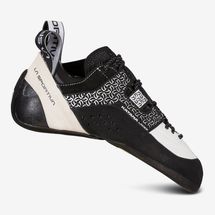
New! You can now save this product for later.
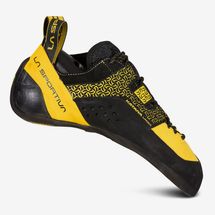
New! You can now save this product for later.
Closure: Lace-up | Upper: Leather | Shape: Downturn
Choosing a “best overall” climbing shoe is a near-impossible task since there are so many types of climbing, but a blend of versatility, performance, and comfort landed the La Sportiva Katana Lace at the top of the list. La Sportiva has an incredible lineup of performance-oriented shoes that fit a variety of feet, and expert after expert recommended them.
The downturned shape might look intimidating, but the Katana has the magical ability to perform well (and stay comfortable) on everything from splitter cracks that run the height of a rock face to overhung boulders, smearing on slabs to notching a toe into a minuscule pocket.
“The La Sportiva Katanas are one of the best options for different climbing styles, foot shapes, and route difficulties,” says Hosken, who noted the rubber durability and tough uppers as bonus points for extending the shoes’ lifespan. Hosken climbed in the Katanas for years, and they remain one of the most commonly seen shoes at the gym and crag.
Versatility is the name of the game here, and climbers can wear the Katana laced loosely for more comfort or tighten them for tougher sends. While this isn’t a true beginner shoe, climbers moving up the grades will appreciate the rubber’s stiffness for footwork precision, and more experienced climbers can use it as a go-to shoe for a variety of climbing styles and routes. People looking for a dedicated bouldering shoe will likely want something softer and more flexible for accuracy on complex moves, but otherwise, this is a high-performing shoe with a versatile build that can be as comfortable or technical as you like.
The best less-expensive rock-climbing shoe
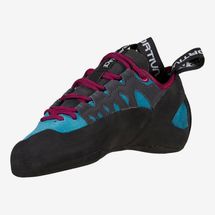
New! You can now save this product for later.
New! You can now save this product for later.
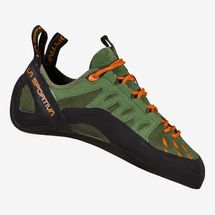
Closure: Lace-up | Upper: Leather, microfiber | Shape: Neutral
“Normally a fiendishly expensive brand, La Sportiva’s Tarantulalace is a good all-around shoe from the iconic Italian company,” says Brown. The Tarantulace, Brown’s top pick for a budget-friendly climbing shoe, is “comfortable, affordable, and works for beginners and more experienced climbers.”
Proper footwork is one of the foundations of climbing, but getting that footwork dialed in often means scraping your shoes along gym walls and rocks as you’re getting used to the movement, which can blow the toes out of thinner shoes. The Tarantulace features five millimeters of stiff rubber along the outsole, which will help extend the shoes’ lifespan as you gain precision on the wall. The leather uppers stretch for slipperlike comfort, but the lace-up style helps nail the fit so you don’t flop around. The shoe also has a relatively flat shape paired with a tapered toe box that encourages power through the toes without the agonizing cramping of a more aggressive downturn.
The best rock-climbing shoe for beginners
New! You can now save this product for later.
New! You can now save this product for later.
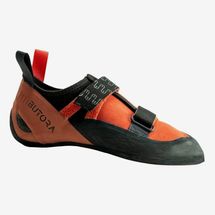
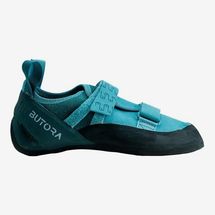
Closure: DualStrap |Upper: Leather, suede | Shape: Neutral
Butora is known for combining performance with a comfortable fit, and that’s what we want in a beginner shoe. The Endeavor 2.0 costs more than some other entry-level shoes, but the slight downturn and sticky Neo Fuse rubber (also used on Butora’s higher-end models) offer a step up in performance compared to other beginner models, giving newcomers some power through the toes that, combined with the sticky rubber, does wonders for foot placement and confidence.
“The Butora Endeavor is a well-balanced, approachable shoe for new climbers, and the two width offerings help avoid the trap of sizing up when you’re just getting used to climbing shoes,” says Hosken, who sold plenty of the shoes at a climbing-gym pro shop. Most new climbers are starting out in the gym, and the Endeavor’s easy on-off from the strap closure and comfort of the leather upper make it an easy choice for indoor sessions, though the shoe is durable enough for plenty of outdoor sessions.
The best rock-climbing shoe for intermediate climbers
New! You can now save this product for later.
New! You can now save this product for later.
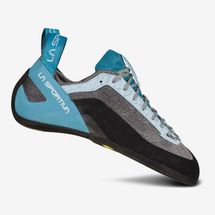
Closure: Lace-up | Upper: Leather, microfiber | Shape: Neutral, slight downturn
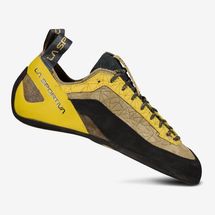
“For someone leveling up from a basic beginner shoe, the best value-for-performance is the La Sportiva Finale,” says Morrison-Heath. “This shoe climbs significantly better than the price would suggest and is an all-rounder that feels great in the gym or on real rock.”
Hines is also a fan of the Finale, citing the shoe’s midrange price that feels more than fair for the quality. “The [Finale] typically doesn’t require a long break-in period and is comfortable right out of the box,” Hines says, adding that while it’s a fairly neutral shoe, “they still heel hook and do other precise movements well as you move into harder sends.”
Our experts waffled between calling this a beginner shoe and an intermediate shoe, and I’ve found it works well if you’re getting into climbing and has the range to stay with you as you’re advancing onto harder grades. It has more downturn than a typical, softer beginner shoe, and the stiffer edge aids in footwork on steeper routes.
The best rock-climbing shoe for bouldering
New! You can now save this product for later.
New! You can now save this product for later.
Closure: Single strap | Upper: Microfiber | Shape: Downturn
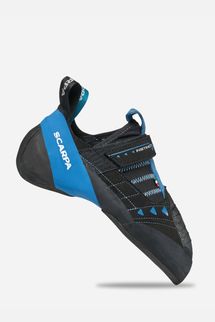
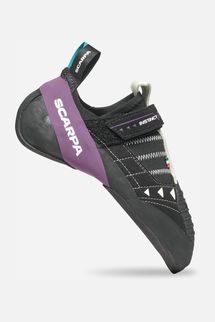
The versatile Scarpa Instinct VSR feels as sensitive and flexible on steep boulders as any shoe I’ve ever worn. This is Hosken’s pick for bouldering, because, she says, it “performs well on technical edges while the soft rubber allows for smearing and grip on overhangs.” I love the massive rubber toe patch (using Vibram’s sticky XS Grip2 rubber), which allows for pretzel-like configurations and off-angle toe hooks, and the shoe comes in both a standard and a low-volume (LV) size, which is perfect for people like me with little golf-ball heels that slide out of heel hooks at incredibly inopportune times.
These shoes are fairly sensitive and have a thinner sole than stiffer models, so I recommend them for climbers who really want to target power on angles and prefer a shoe that allows for a wide range of movement without needing much stiffness for standing on tiny holds. This is an excellent shoe for precise footwork and rewards climbers who know exactly where to toe in and where to edge, and the angled forefoot slots into any hold I’ve aimed for.
Best rock-climbing shoes for indoor climbing
New! You can now save this product for later.
New! You can now save this product for later.
Closure: Single strap | Upper: Leather, microfiber | Shape: Downturn
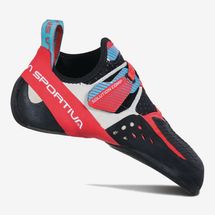
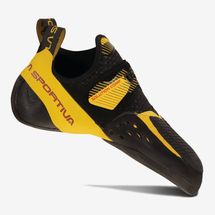
While you don’t necessarily need an indoor-specific shoe, one Hosken and I saw most often while working at a climbing-gym pro shop is the La Sportiva Solution Comp. This aggressively downturned shoe has a wider toe box and more rubber for technical toe hooks — similar to our top bouldering pick — and a more tapered heel, allowing for a more precise fit. It’s Hosken’s top pick for indoor routes and is a popular competition shoe as well.
“The Vibram XS Grip2 rubber is excellent at technical, overhang, and indoor competition routes, which require smearing on volumes,” says Hosken, who also mentioned that “indoor-specific” doesn’t mean beginner. Indoor routes are often set in a competition style, which requires varied moves, toe and heel hooks, and big throws compared to delicate outdoor routes. The Solution Comp is perfect for these features, with the ability to handle everything from inverted toe hooks to precise edging on vertical walls. La Sportiva’s P3 Power Platform construction helps the shoe maintain its downturned shape throughout its lifespan. The shoes come in both men’s and women’s, and for anyone with narrow or low-volume feet, I recommend the women’s for the best performance.
The best rock-climbing shoe for trad climbing
New! You can now save this product for later.
Closure: Lace-up | Upper: Leather, microfiber | Shape: Neutral
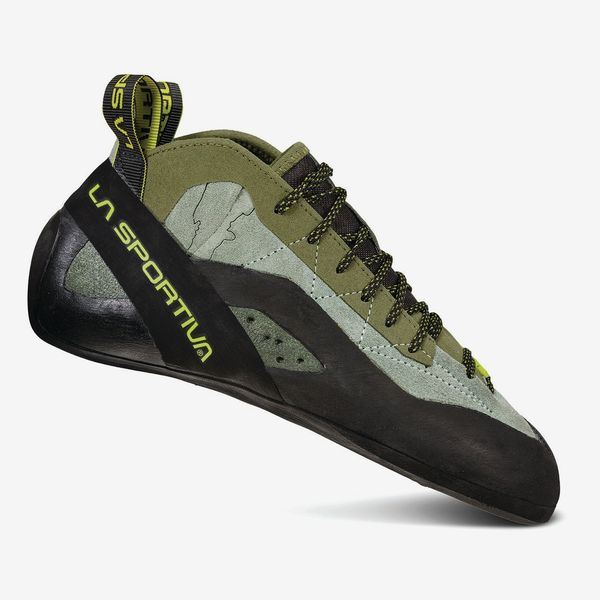
“For trad climbing, the tried-and-true La Sportiva TC Pro is still the go-to for the vast majority of trad aficionados,” says Morrison-Heath. The TC Pro is so popular thanks in part to its ability to perform on incredibly technical, smooth slabs, as well as to wedge effectively and comfortably (okay, as comfortably as possible) into cracks.
There’s a reason every other climber on big walls is wearing the TC Pro, and while the shoes can be a bit of a bear to break in, once the leather molds to your feet, the flat-lasted shoe is comfortable enough for all-day climbs. “The narrow toe fits well into cracks and if sized appropriately can be worn for extended periods of time on multi-pitch climbs,” says Morrison-Heath. “Many shoes have tried to dethrone the king for over a decade, and none have succeeded yet.”
The best rock-climbing shoe for women
New! You can now save this product for later.
Closure: Dual strap | Upper: Leather, microfiber | Shape: Downturn
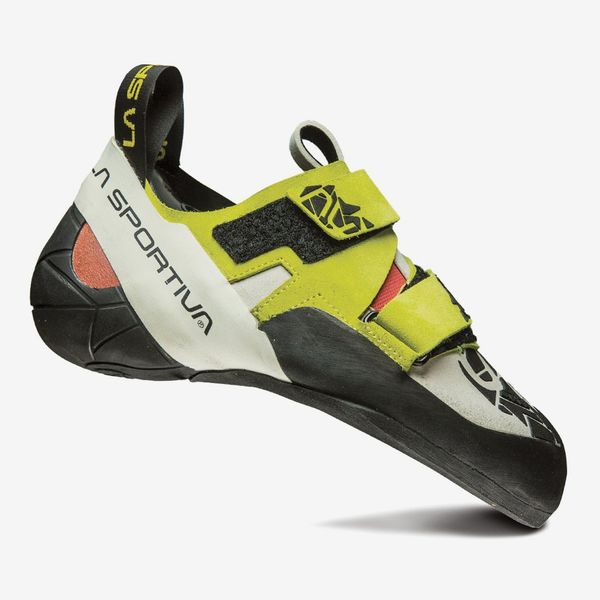
When I asked Hines for her top women’s shoe pick, she immediately recommended the Otaki, which is also the shoe Hosken has been wearing for a ridiculously long time. “The Otaki is the perfect all-around tool for performance footwork across a variety of terrain, including vertical and overhanging rock,” Hines says. “The downturned toe gives you confidence on the smallest edges and steepest overhangs, while maintaining flexibility for maximum contact with the rock so the stiffness doesn’t compromise the sensitivity.”
The shoe is women specific, catering to smaller heels and narrower feet. It’s one of the most aggressive shoes on this list, so don’t expect the most comfortable fit at first. But once you break it in, the power through the toes and edging precision are a huge confidence boost on try-hard routes. The shoe uses the same Vibram XS Grip2 rubber as La Sportiva’s other high-performing options and has the same shape retention from the P3 Power Platform as the Solution Comp.
Our experts
• Alicia Hines, president, Southern Montana Climbers Coalition, and avid climber
• Hailey Hosken, route setter, route developer, and climbing instructor
• Ty Morrison-Heath, climber, former climbing-gym manager, and current marketing director for climbing gyms and adventure sports
• Oliver Brown, mountaineer and climbing guide with True Summit Adventures
The Strategist is designed to surface the most useful, expert recommendations for things to buy across the vast e-commerce landscape. Some of our latest conquests include the best women’s jeans, rolling luggage, pillows for side sleepers, ultra-flattering pants, and bath towels. We update links when possible, but note that deals can expire and all prices are subject to change.
Every editorial product is independently selected. If you buy something through our links, New York may earn an affiliate commission.