Stop Shopping for the Best Power Tool and Look for the Best Battery Platform Instead
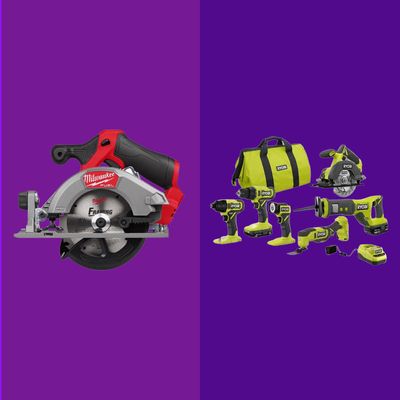
Need a new string trimmer, electric screwdriver, drill, or maybe all of the above? What if we told you the best tool isn’t the highest-performing or most feature-packed model out there but rather the one that uses the same battery as the other tools you already own or might want to buy?
You’ve probably noticed that battery technology has come a long way in the past couple of decades. That’s why your laptop runs all day and you can power your car with a rechargeable battery — and why gas power tools have largely given way to lighter, cleaner, quieter battery-powered models.
Unless you’re a professional contractor, the performance difference between the best drill and its competitors is rarely significant enough to justify investing in multiple battery platforms.
Sticking with one system is more convenient (you’re a lot more likely to have a charged battery when you need one if all of your tools share it), cuts down on clutter because you only need a charger or two, and saves you money since you don’t need to buy so many batteries.
Below, we make sense of the tool and battery brands you’re likely to find at the hardware store or online, break down the tools each has to offer, and tell you everything you need to know to pick the best one for your home, garden, and workshop.
Top battery-powered tools
New! You can now save this product for later.
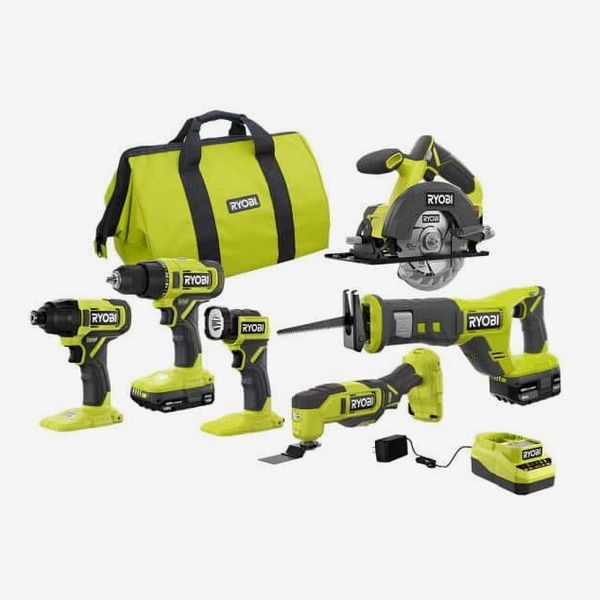
An affordable, powerful kit that can cover most homeowner projects.
New! You can now save this product for later.
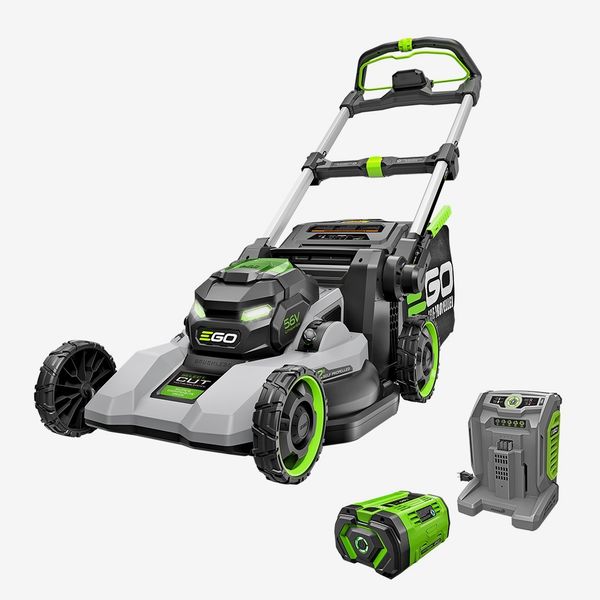
Ego Power+ 1000 Series Super Composite Deck Select Cut 56-Volt, 22-Inch Self-Propelled Battery Mower
A walk-behind mower that’s up to the task of large lawns.
New! You can now save this product for later.
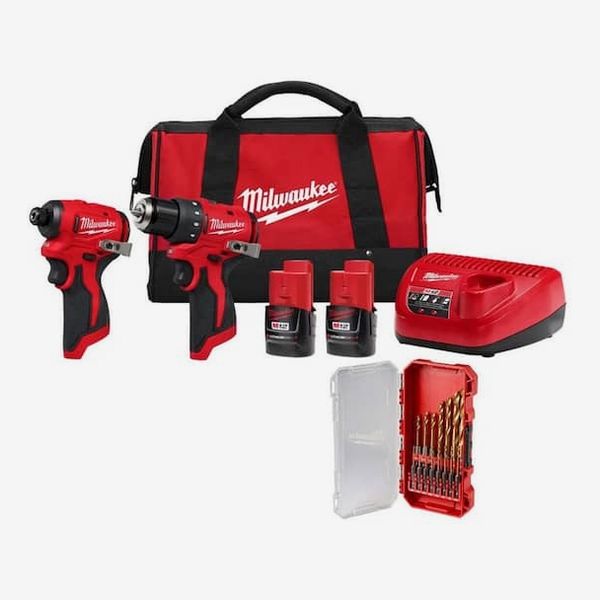
A tiny drill and driver set that can take on most household tasks.
How to choose a battery platform
Range of tools and bare tool availability
Before you buy, ask yourself a few simple questions: Does the brand you’re considering offer the tool you need now? Does the line include the tools you might need down the road? And do you already own a tool or two from that brand?
Those questions are important to consider because nearly every cordless tool is sold in two ways: as a kit that includes the tool, one or more batteries, and a charger or as a bare tool, without a battery or charger.
That’s where the savings kick in: If you stick to a single battery platform, you can pick up the tools you need and share batteries and a single charger. If you’re just getting started, look for a deal on a couple of key tools since buying a tool bundled with a battery and a charger is frequently less expensive than purchasing power packs separately, and from there, purchase bare tools that use the same batteries — you’ll save money, and you won’t clutter your space with chargers you’ll never use.
Voltage
To use a common analogy, you can think of voltage as the water pressure in a garden hose — the amount of force that’s unleashed when you open the nozzle. Low pressure gives you a trickle, high pressure a torrent. Similarly, a low-voltage battery delivers a small amount of force, a high-voltage battery can deliver a lot, and that gives you an idea of the amount of work a tool it powers can do. An electric screwdriver uses a 12-volt battery to spin a bit because it doesn’t need to do as much work as a lawnmower, which may require a 40-volt battery to move its blades.
When you’re shopping, you’ll find three rough categories of battery-powered tools:
Twelve-volt batteries for light-duty handheld tools: drills and drivers, screwdrivers, and more.
Eighteen-volt, 20-volt, and 24-volt batteries for workhorse power tools — that’s everything from heavy-duty drills and impact drivers to circular saws. Sometimes you’ll see these smaller batteries used in pairs to power bigger equipment.
Forty-volt and 56-volt batteries are for heavy-duty outdoor power tools — think lawn mowers, snowblowers, chainsaws, and more.
Battery capacity
If you’re already thinking about voltage as water pressure, you can think of amp-hours (Ah) as the volume of water you have on tap. In a battery, the capacity in Ah is the amount of energy available, a rough measure of how long it will run when fully charged. You can also think about it as the size of the fuel tank. Handheld power tools might use 1.5Ah to 5Ah batteries, while bigger outdoor power equipment such as mowers might use 10Ah or 12Ah batteries to provide enough power for lengthy jobs.
Useful accessories
Many tool brands now offer a range of products beyond tools that let you use their batteries when you’re not in the shop or out in the yard. For emergencies and travel, you’ll find portable power stations that allow you to repurpose multiple batteries as a small generator, USB-A and USB-C adapters that turn a battery into a portable charger, fans, lighting, space heaters, speakers, and more.
Warranty
Battery warranties typically range from two to three years, depending on the battery’s voltage and capacity. Some manufacturers, like Flex, offer extended warranty plans that can cover batteries for up to five years. Ridgid stands apart by offering free lifetime battery replacement through its Lifetime Service Agreement, provided you register the tool and battery within 90 days of purchase. The catch? The company only offers 18-volt power tools and a limited number of outdoor options.
Our favorite tool brands
The best battery platform overall: Ryobi One+
If, like most of us, you don’t need professional-grade power but do need reliable, versatile tools for household and yard tasks and you don’t already own tools you like, Ryobi One+ is our recommendation. The brand’s 18-volt lineup includes more than 300 compatible products, so no matter what you need to get done, you’ll be able to find a tool for the job. Plus the tools and batteries are affordable, reliable, and built with real-world needs in mind.
One+ tools may not be the lightest or most compact options in their category and won’t feel as nice in hand as those from professional brands, but that’s not what they’re meant for. Ryobi is the consumer-oriented brand from TTI, the tool company behind the more pro-focused Milwaukee and Ridgid brands (which are great choices if you spend your days on jobsites). One + tools are less expensive than those from the pro brands, and nearly half the lineup consists of outdoor power tools, including hedge trimmers, chainsaws, lawn mowers, and snowblowers. But the offerings also include things like fans, coolers, stick vacuums, and Bluetooth speakers, giving the batteries a lot of value, even if you don’t do many projects.
“We have a bunch of Ryobi stuff, a mix of decent tools, but without the high-end price, plus they’re committed to sticking with their current battery shape,” says Strategist senior editor Jen Trolio. “Then because we have the batteries, we have various other household things that are useful: a portable fan, a dustbuster-type vac, and a shop vac that we really like.”
Ryobi’s 18-volt batteries — which have used the same design for decades, so you can count on them working with new tools — carry a three-year warranty and generally cost less than comparable packs from other pro brands. You can get them in sizes from 1.5Ah for those short drilling and driving projects up to 12Ah packs that can get you through an afternoon of lawn care.
You’ll only find Ryobi tools at Home Depot, but that makes it easy to get their tools online or try out anything you’re curious about since there’s a store almost everywhere.
If you’re mostly looking for tools to handle jobs like mowing three-quarters of an acre, clearing snow from a large driveway, cutting firewood, or tilling a garden, you’ll need the extra power and run time of higher-voltage tools, and Ryobi also offers a 40-volt platform with similar quality and value to the One+ line, though those batteries aren’t compatible with the One+ tools (Ryobi does offer chargers that can power both voltages). If you are only buying outdoor tools, we prefer Ego’s 56-volt lineup overall if you’re able to spend a bit more.
Ryobi One+ tools we like
New! You can now save this product for later.
An affordable, powerful kit that can cover most homeowner projects.
New! You can now save this product for later.
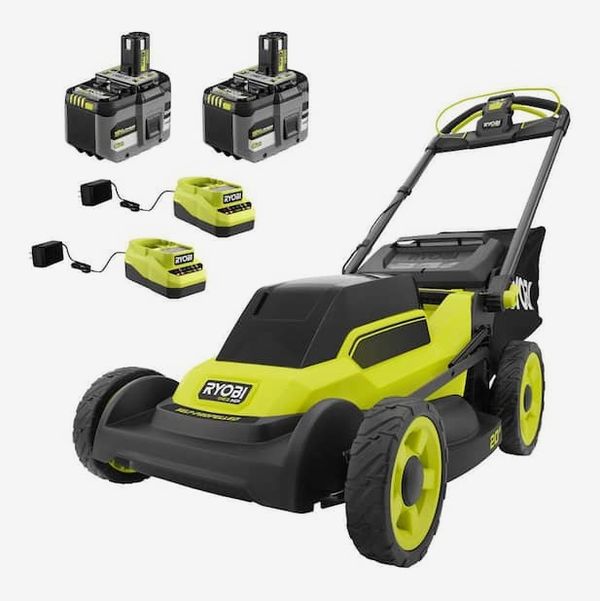
Great for suburban lawns and shares batteries with the rest of your tools.
New! You can now save this product for later.
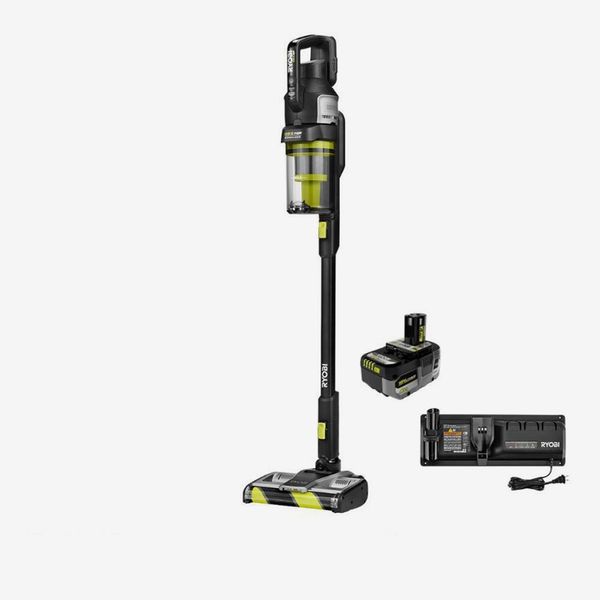
The One+ batteries aren’t just for tools — they can do double duty powering your vacuum cleaner.
The best outdoor-power-tool platform: Ego Power+
With more than 80 compatible tools, the outdoor-only Ego Power+ lineup is ideal for medium-to-large yards that benefit from the bump in power, and the company consistently ranks near the head of the class for core tools like lawn mowers, string trimmers, leaf blowers, and chainsaws, which compete with gas-powered models and are easier to handle and quieter, on top of requiring less maintenance.
“Once we went with Ego, we never looked back,” says Strategist deputy editor Simone Kitchens, whose family owns a mower, leaf blower, snowblower, chainsaw, string trimmer, and hedge trimmer from the brand. “For lawn care, their tech is superior — almost like gas power.”
Ego’s 56-volt batteries range from 2.5Ah packs for shorter jobs like string and hedge trimmers to 12Ah versions meant for riding mowers and snowblowers. As with most cordless platforms, the batteries are a much better value when purchased as part of a tool kit, and bare tools are available across the lineup. Most Ego batteries carry a three-year warranty, while some higher-amp-hour models offer the option to extend the coverage to five years with registration.
Ego Power+ tools we like
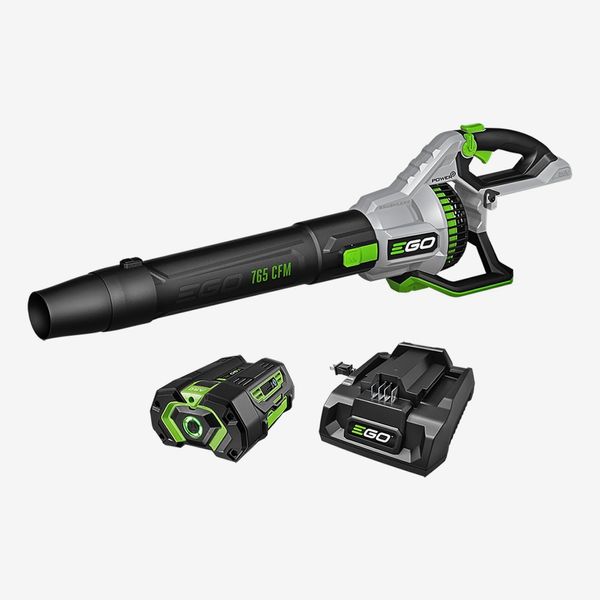
New! You can now save this product for later.
A blower with the power of gas models — but without the noise.
New! You can now save this product for later.
Ego Power+ 1000 Series Super Composite Deck Select Cut 56-Volt, 22-Inch Self-Propelled Battery Mower
A walk-behind mower that’s up to the task of large lawns.
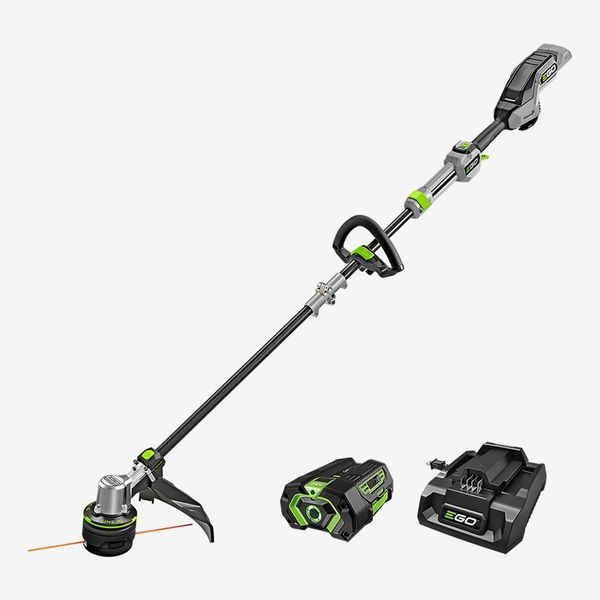
New! You can now save this product for later.
A lightweight, easy-to-handle trimmer with the power to deal with big tasks.
The best light-duty tool system: Milwaukee M12
If you live in an apartment or don’t have a yard to deal with but still take on enough projects that you need quality tools, a compact 12-volt system may be right for you. Milwaukee’s M12 lineup includes more than 100 tools (many meant for professionals to complement heavier 18-volt versions), but if you’re looking for the essentials — drills, impact drivers, reciprocating and circular saws, oscillating multi-tools, and even LED work lights — it’s one of the strongest 12-volt platforms available. And the compact battery makes handy products like heated jackets and hoodies possible.
The standard M12 tools are very compact to begin with, but if you want even smaller, lighter, and more durable options within this lineup, the Fuel series features brushless tools that are among the smallest and highest-performing in the industry.
Milwaukee’s M12 batteries range from compact 1.5Ah packs that cost about $50 and weigh well under a pound to L-shaped 5 and 6Ah batteries that weigh about 1.5 pounds for more demanding tools such as circular saws and high-performance impact drivers. Most M12 batteries are backed by a two-year warranty.
New! You can now save this product for later.
A tiny drill and driver set that can take on most household tasks.
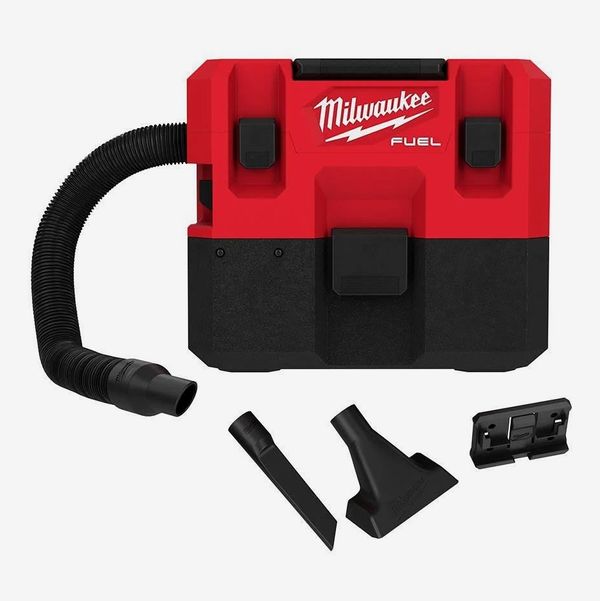
New! You can now save this product for later.
A subcompact shop vac for tough cleanup tasks anywhere.
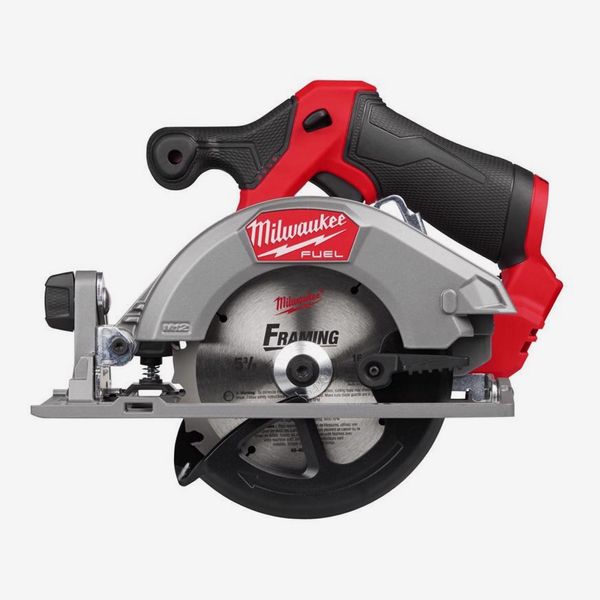
New! You can now save this product for later.
Smaller and easier to handle than full-size circular saws but with no compromise on power.
Other brands worth considering for battery-powered tools
DeWalt
It’s hard to go wrong with DeWalt’s quality and durability. The brand’s tools are made with professionals in mind, and DeWalt offers one of the broadest cordless-tool lineups with both 20-volt and compact 12-volt platforms. For outdoor power equipment, including lawn mowers, string trimmers, leaf blowers, and chainsaws, DeWalt uses its 20-volt battery and offers a wide enough range to cover most homeowners’ yard-care needs. The 12-volt platform has plenty of lighter, more maneuverable tools, though we give the edge to Milwaukee’s even more compact lineup.
While homeowners are unlikely to be disappointed by the power and build quality of a DeWalt tool, its offerings tend to provide a level of performance that most DIYers don’t need and are generally pricier than those from more DIY-oriented brands, including Craftsman, which is owned by the same parent company, or our overall recommendation, Ryobi.
Toro
Toro, like Ego, is an outdoor-power-equipment specialist, long known for its gas-powered lawnmowers and snow blowers. Although the company was slower than many competitors to embrace battery-powered tools, it has built a solid core lineup of cordless lawn care. Its 60-volt platform powers nearly 30 different walk-behind mowers, all sharing the same battery system, and several capable two-stage snow blowers that run on dual batteries for increased power and run time. Beyond mowers, the lineup covers the essentials, including string trimmers, hedge trimmers, leaf blowers, and chainsaws. You won’t find the same breadth of tools other outdoor-power-equipment manufacturers offer, such as pressure washers, leaf shredders, or work lights. Pricing for Toro’s 60-volt tools is generally comparable to Ego’s 56-volt lineup.
Milwaukee
We’ve talked about Milwaukee’s compact 12-volt lineup, but we also considered the company’s 18-volt line. Those tools, built with professionals in mind, are more expensive and offer more features and power than most people will need if they don’t work every day in the trades. In fact, Milwaukee’s parent company, TTI, is clear enough on the distinction that it has another brand — Ryobi, our overall pick — intended for homeowners and DIYers.
Milwaukee’s outdoor power equipment is geared toward contractors who are looking to replace gas-powered tools with equivalently powerful battery-powered alternatives and don’t mind investing in larger-capacity batteries to maximize run time. The lineup covers not just hand tools but all of the core lawn-care tools — string trimmers, leaf blowers, hedge trimmers, and chainsaws — but it isn’t as extensive as some competing platforms. You won’t be disappointed by Milwaukee’s build quality or performance, but if you’re a homeowner, the tools may be pricier than you are comfortable with and have more features and capabilities than you really need.
Skil
A sibling brand of Ego (it’s also owned by Chervon tools nowadays), Skil is a veteran manufacturer of power tools, famous for inventing the circular saw (“Skilsaw” has long been a generic term among people in the trades for that sort of tool). These days, the company continues to make circular saws, plus a broad lineup of electric and battery-powered tools, with some solid values in lawn and outdoor equipment.
Greenworks
The brand offers a range of battery-powered hand tools, along with low-cost, high-voltage lawn and outdoor equipment. Its tools are often cheaper if not as refined as competing products from brands like Ego, and it offers some of the most powerful consumer-grade batteries for power tools (though its items use a variety of different batteries, so you’ll want to take care if you’re building a collection of tools from the brand). They’re also a solid value if you’re looking at acquiring big pieces of equipment like ride-on mowers, which are significantly cheaper than Ego’s offerings.
Stihl
Known for its high-end gas-powered equipment, mainstays for professional contractors and tradespeople, Stihl also makes a full lineup of battery-powered gear with a focus on lawn and outdoor equipment. Stihl products have strong dealer support from specialist retailers, and its warranties — designed to protect commercial equipment that sees heavy use — are among the longest in the industry. Stihl tools are typically more costly than the competition’s, but the build quality is hard to beat, and while most homeowners are well served by Ego products, the brand makes sense for those who want what the pros use.
More From The Strategist
- Hark, the Advent Calendars Arrived (Very) Early This Year
- The Best Things Strategist Editors Have Bought This Year (So Far)
- 63 Things You Should Never Buy Full Price
- The Strategist Fall 100
The Strategist is designed to surface useful, expert recommendations for things to buy across the vast e-commerce landscape. Every product is independently selected by our team of editors, whom you can read about here. We update links when possible, but note that deals can expire and all prices are subject to change.