The Best Projector Screens, According to Experts
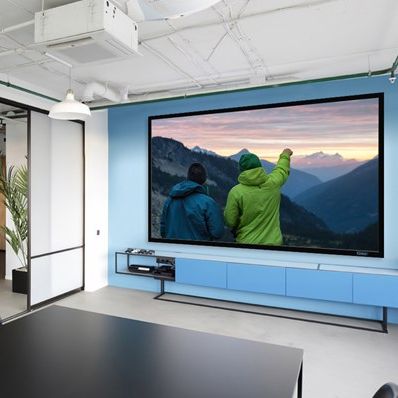
Once you’ve chosen a great new projector, you’ll want the best picture you can get — and that means picking up a screen that’ll show off your movies, sports, and games a whole lot better than a wall or garage door can, even if those will do in a pinch (and an outdoor watch party is always a great idea).
In this article
Luckily, screen companies build a wide range of screens for any situation and budget, whether you want something simple you can mount permanently in your home theater, or a screen that rolls down from the ceiling at the press of a button and then rolls back up again out of sight when not in use, or one that makes pictures look vibrant and bright when the room lights are on. There are even great screens meant to use outdoors.
To simplify the screen-shopping process, I’ve addressed the key concepts you’ll need to know when shopping online for screens. I’ve also consulted with editors and reviewers who cover the projector category to get their input on what screen features are important. These are experts who have hands-on experience with multiple screen types — and screen brands — in the course of installing and reviewing projectors, and the insights they provided greatly helped to inform our screen recommendations.
Related Articles: Mini-projectors | Home-theater projectors
How to choose a projector screen
Fixed frame or retractable?
The most common projector screens you’ll see are known as fixed frame. These are the models that are mounted permanently on your wall, and are a popular choice for dedicated home theater rooms. “All things being equal, I prefer a fixed-frame screen,” says John Sciacca, a custom installation professional and AV reviewer for Residential Systems. “For one, these are cheaper, and it’s rare in the AV industry for the cheaper thing to actually be the better option. For another, because the screen isn’t rolling up and down in the housing, a fixed-frame screen remains a perfectly flat, uniform projection surface.” That means you’ll get the best overall picture and the longest use out of the screen itself.
It’s in the frame — the border around the projection surface — that you’ll find differences between fixed-frame screens. Fixed-frame screens are available with various frame options, ranging from a narrow “zero edge” design that mimics the look of thin, flat-panel OLED TVs to wide, dark borders. For Sciacca, the wide-border option is the way to go: “If selecting a fixed-frame screen, get one that has a thick, approximately three-inch border encased in a black, velour fabric, as this will help to absorb any stray light reflections from the screen.”
Retractable screens roll up (or down) out of the way into a metal casing mounted to your wall, ceiling, or floor either manually or via a motor powered by a hard-wired electrical connection or built-in rechargeable battery. The big benefit to retractable screens is that the screen essentially disappears from view when not in use, and this disappearing act can be particularly effective with ultra-short throw (UST) projectors — together, you can make your whole home theater disappear when it isn’t in use. “UST projectors are the best option if you’d rather tuck the projector into a credenza right below a retractable projection screen for a nearly invisible installation,” says Strategist contributor and projector reviewer Mark Knapp.
A downside is that retractable screens are generally more expensive than fixed-frame models, and they can be more complicated to install. And even though most feature tab-tensioning to flatten the screen material surface, retractable screens also have issues with creasing over time, which can be visible when projecting images.
Screen material
Matte white, gray, ambient-light-rejecting, acoustically transparent — there are different materials to suit different viewing situations, and choosing the right one is crucial for getting the best performance from your projector.
“If you expect to watch in a dark room, your best option will be a matte white screen material,” says Jeremy Glowacki, editor-in-chief of projector review site ProjectorCentral. “This type of material will best preserve color accuracy and brightness from a moderately bright projector known to deliver good contrast/black level performance.” Michael Hamilton, a professional ISF video calibrator and reviewer for ProjectorCentral, also recommends a matte white material for home-theater viewing. “Color shift is nonexistent, assuring uniformity, and since gain is not necessary, the surface is smooth with no chance of texture irregularities from gain-producing layers.”
Ambient light-rejecting (ALR) screens are a popular choice for viewing in rooms with some level of lighting, including sunlight coming in from windows. ALR screens use optical elements to filter out light hitting the screen from the left and right sides, and many also use a gray, contrast-enhancing material. “If you’ll be watching in a room with a lot of ambient lighting, then you will really benefit from an ALR screen material,” says John Sciacca. “These are often gray, silver, or black in color, and they do a really good job of reflecting only the projected light back toward the viewer, producing watchable images even when the lights are on.”
Ceiling-light-rejecting (CLR) screens are a special type of ALR screen used specifically for ultra-short-throw projectors. In this case, optical elements reflect the light beamed from directly below the screen (where the projector is located) while filtering out ambient light hitting the screen from above. Similar to ALR screens, CLR screens use a gray material that enhances contrast when viewing in bright rooms.
Acoustically transparent screen materials are used for home-theater installations where speakers are positioned behind the screen, as in a movie theater. This type of arrangement is in many ways optimal, since sound emanating from the screen has a more natural presentation than sound coming from speakers positioned above or below the screen.
Asked about acoustically transparent screens, Michael Hamilton says, “There are two types: perforated vinyl surfaces and woven cotton or synthetic textiles. Each can be made to perform well, but they have tradeoffs with respect to one another with gain, uniformity, and acoustic transparency.” While acoustically transparent screens make the most sense for high-end home theater installations, it is “nearly impossible to determine how to properly pair a projector with a perforated screen and calculate the lost light via the perforation or the weave,” adds Hamilton. For this reason, an acoustically transparent screen installation is best done in consultation with a home-theater design professional.
Screen gain
A common term you’ll come across when browsing projection screens is screen gain, a specification indicating the level of “amplification” in the amount of light being reflected off the screen. “An important performance factor for any screen material is what is called its gain, which is quoted in numbers such as 1.0, 1.3, 1.5, etc.,” says ProjectorCentral’s Glowacki. “Some screen material will reflect light uniformly in all directions. When it does this, it is said to have 1.0 (or ‘unity’) gain.” Hamilton also recommends a a unity gain for the best, most accurate picture in a darkened room.
Higher gain screens (1.1 and above) will give you a brighter picture than what you’d get when using a unity gain screen, maximizing the brightness of a lower-output projector at the expense of a narrower viewing angle (meaning you and whomever else you’re watching with will need to sit closer to the center of the screen).
“If you have an audience seated in a long and narrow room, then using a high gain screen is a viable option, as it intensifies the illumination in the area where your audience is sitting,” adds Glowacki. “This might help you get along with a less bright projector for your desired screen size.”
Negative gain screens (with measurements of 0.8, 0.6, etc.) reflect less light than your projector puts out but increase the level of picture contrast in order to get an image with deeper-looking blacks. “The screen’s contrast-enhancing properties,” says Hamilton, let projectors “deliver deep blacks and greater dynamic range than they are able to create when using a higher gain screen.”
Gain is separate from ambient light rejection, which is a screen design intended to maintain picture contrast and brightness by filtering out ambient room lighting striking the screen from the sides, or from above in the case of ceiling light-rejecting screens. ALR and CLR screens can also have higher or lower gain to increase brightness or enhance contrast even when room lighting is in use.
Aspect ratio
The aspect ratio of a screen is the ratio between its width and height. TVs have a rectangular 16:9 (or 1.78:1) aspect ratio, which matches the width and height of HD broadcasts and most shows available on streaming services. That same 16:9 aspect ratio is common for projector screens, so when you view 16:9 content, the image fills the entire screen.
Movies, on the other hand, come in a range of aspect ratios, and that’s why you see black letterboxed bars at the top and bottom of the screen when watching movies on a 16:9 screen like a TV. If you find those black bars annoying and want a more theaterlike experience, however, there is a fix: an ultra-wide, 2.35 or 2.40:1 aspect ratio projection screen. “If you will be watching a lot of movies, then you might want to consider getting a projector screen with a wider 2.35 or 2.40:1 aspect ratio,” says John Sciacca.
Projectors with motorized optical zoom capability and “lens memories” let you adjust the aspect ratio to match your movie and maximize the space used on the projection screen. “This will eliminate the black letterbox bars when viewing ultra-wide, 2.40:1 movies, making for a more cinematic experience, and you can then switch back to standard 16:9 projection for traditional HDTV content,” Sciacca says.
Our top picks
New! You can now save this product for later.
The best fixed-frame projector screen
New! You can now save this product for later.
The best retractable projector screen
New! You can now save this product for later.
A weather-resistant permanent outdoor projector screen
New! You can now save this product for later.
A great less-expensive fixed-frame projector screen
New! You can now save this product for later.
A less-expensive retractable projector screen
New! You can now save this product for later.
A portable outdoor projector screen for watch parties anywhere you can set up a projector
The best fixed-frame projector screens
The best fixed-frame white projector screen overall
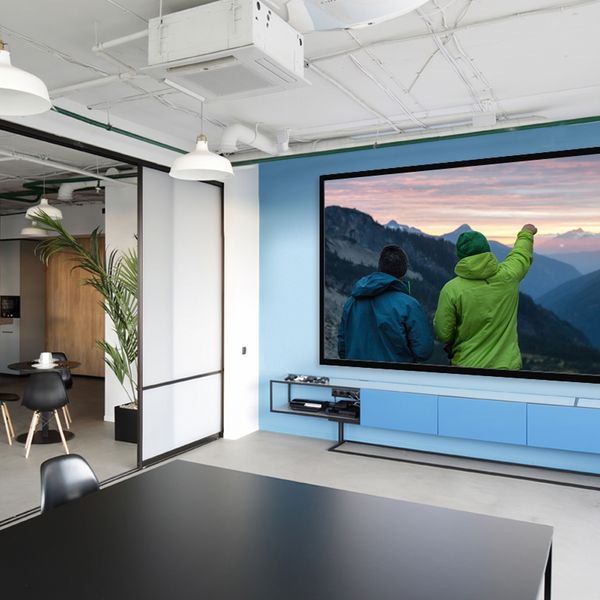
New! You can now save this product for later.
Type: fixed frame material: white gain: 1.1 aspect ratio: 16:9 size: 110-inch (diagonal)
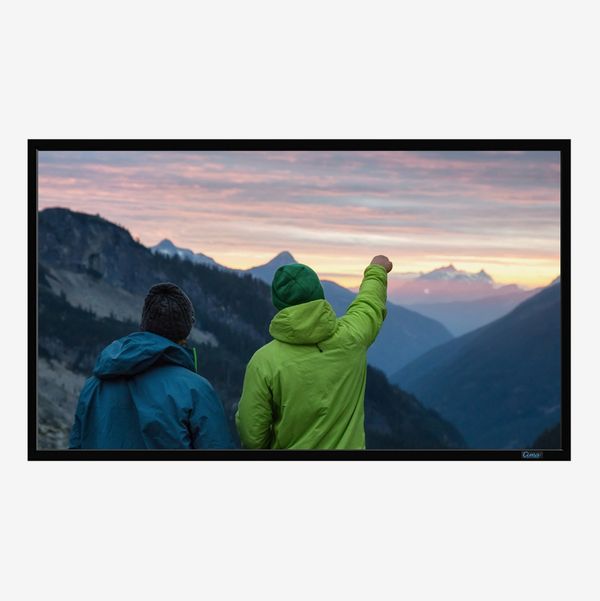
I have used a Stewart Filmscreen CIMA FF with 1.1 gain Neve fabric as my reference projector screen for years, and the picture looks as good as the day I first received it. As with the company’s WallScreen 2.5 fixed-frame screens, the CIMA FF features a 2.5-inch-thick black velvet border to absorb stray light, and it has the same easy-to-assemble snap-on design for the screen material. The Neve fabric’s low 1.1 gain means this screen is best used in dim or dark home theaters. A key difference between this and Stewart’s higher-priced models is that CIMA/Neve screens aren’t made to order, but chances are your projector won’t know the difference.
A made-to order fixed-frame white screen
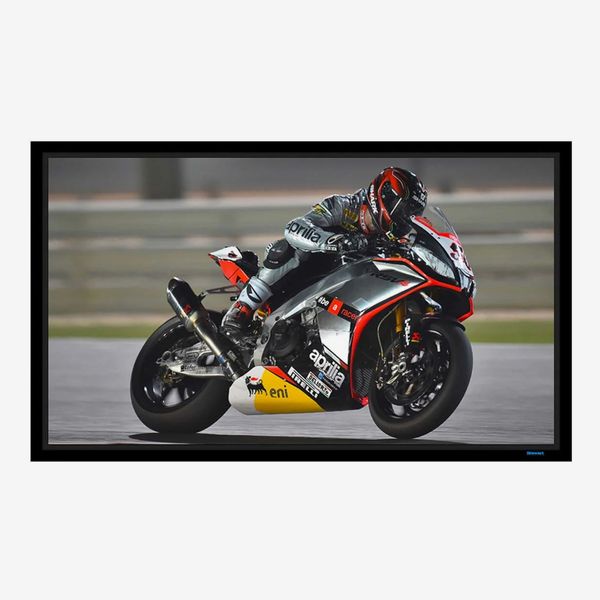
New! You can now save this product for later.
Type: fixed frame material: white gain: 1.3 aspect ratio: 16:9 size: 110-inch (diagonal)
For the best home-theater performance, Michael Hamilton recommends the Stewart StudioTek 130 G4, a white screen with a 1.3 gain. “Stewart’s home-theater screens are remarkably easy to put together. While they sell for what some consider a premium price, the build quality and packaging are the industry standard, and they are designed to last a lifetime.”
This screen’s 2.5-inch-thick black velvet frame addresses John Sciacca’s recommendation that fixed-frame white screens should feature a thick, light-absorbing border. Unlike most projection screens, Stewart StudioTek 130 screens are handmade to order, so the quality control is at a level few other screen makers can match.
A more affordable fixed-frame white screen
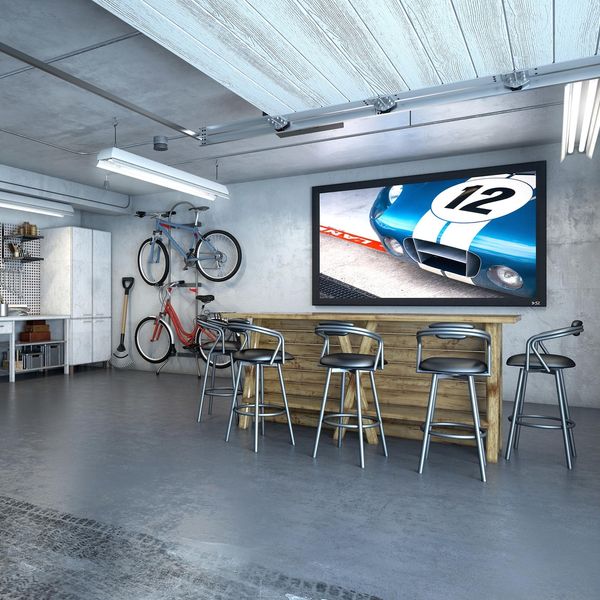
New! You can now save this product for later.
Type: fixed frame material: white gain: 1.1 aspect ratio: 16:9 size: 100-inch (diagonal)
This fixed-frame screen from Screen Innovations features 1.1-gain matte white fabric and a thick aluminum frame with a black velvet covering to absorb stray light. The 1 Series is a relatively affordable option from a well-known brand that’s recommended by our experts.
A budget fixed-frame white screen
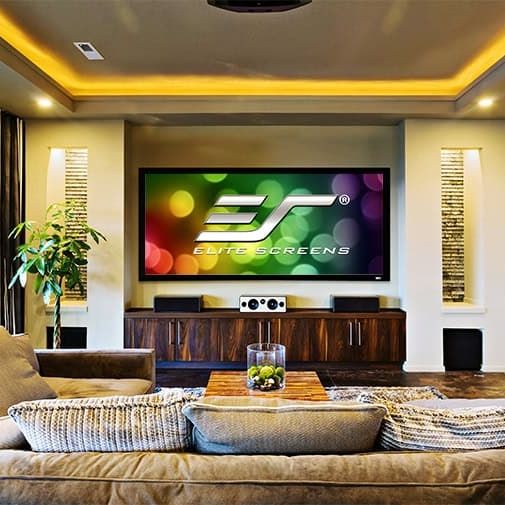
New! You can now save this product for later.
Type: fixed frame material: white gain: 1.3 aspect ratio: 16:9 size: 100-inch (diagonal)
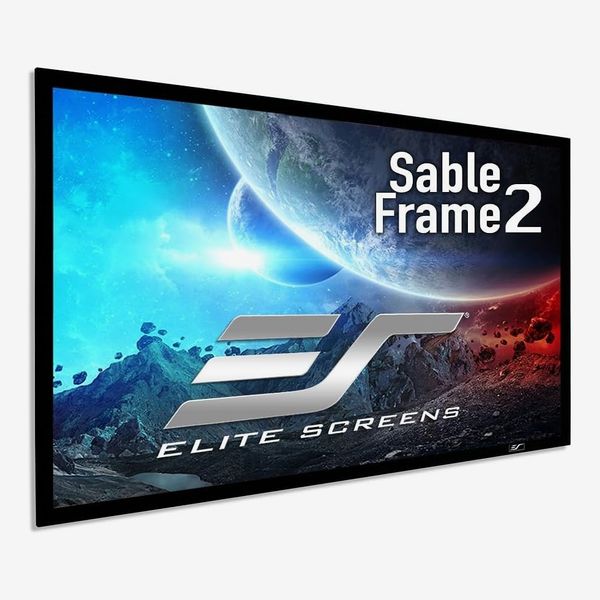
Jeremy Glowacki recommends the Elite Screens brand as a solid budget projector-screen option, and there’s no denying that the company’s fixed-frame Sable Frame 2 with 1.3 gain CineWhite UHD-B fabric is a big-screen projection bargain. This model features a 2.4-inch black velvet-wrapped border to absorb stray light, and its 1.3-gain CineWhite UHD-B screen material is ISF-certified for color accuracy. In my experience, putting together an Elite Screen fixed-frame model isn’t as fast or fuss-free as the installation process for a Stewart screen, but then again, look at that price.
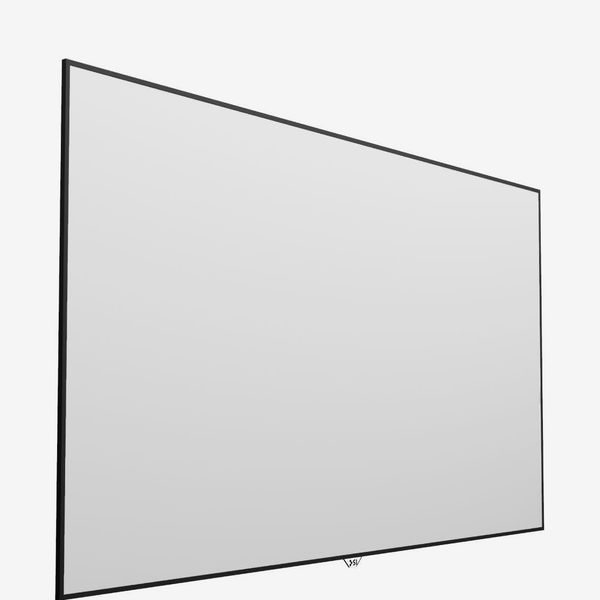
A zero-edge fixed-frame white screen
New! You can now save this product for later.
Type: fixed-frame material: white gain: 1.3 aspect ratio: 16:9 size: 110-inch (diagonal)
Screen Innovations was one of the first manufacturers to develop a “zero-edge” fixed-frame screen, a design that mimics the look of flat-panel OLED TVs. While its Zero Edge screens are available with a range of materials, this Pure White 1.3-gain option is aimed at those looking for a dim- or dark-room viewing option. A built-in LED channel is provided for backlighting, a recommended option to reduce eyestrain when viewing in dark rooms.
The best retractable projector screens
A retractable white screen
New! You can now save this product for later.
Type: retractable material: white gain: 1.1 aspect ratio: 16:9 size: 100-inch (diagonal)
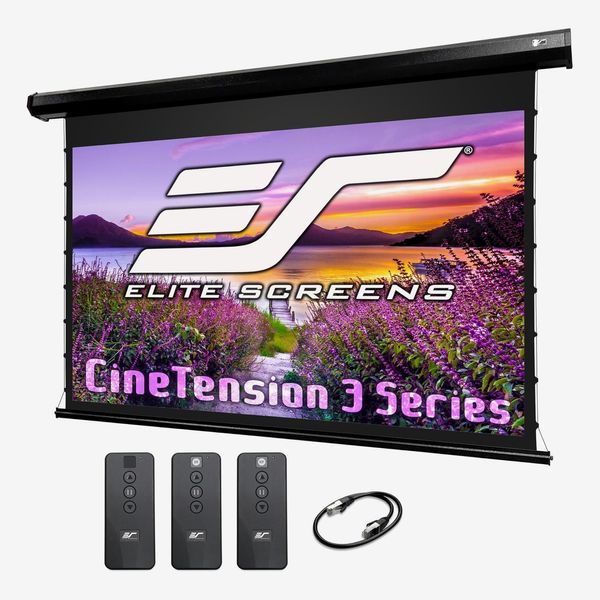
If you don’t want to devote full-time wall space to a projection screen, a motorized, retractable white screen that drops down from the ceiling and rolls back up again when not in use may be the answer, and the Elite Screens CineTension 3 is a good, relatively affordable choice for this category. The 1.1-gain CineWhite fabric is best suited for dim or dark room viewing, and the 100-inch size is perfect for lower-light-output home-theater projectors. Infrared and radio frequency remotes are included for control, and there’s a 12-volt trigger feature for wired operation.
A budget retractable white screen
New! You can now save this product for later.
Type: retractable material: white gain: 1.1 aspect ratio: 16:9 size: 125-inch (diagonal)
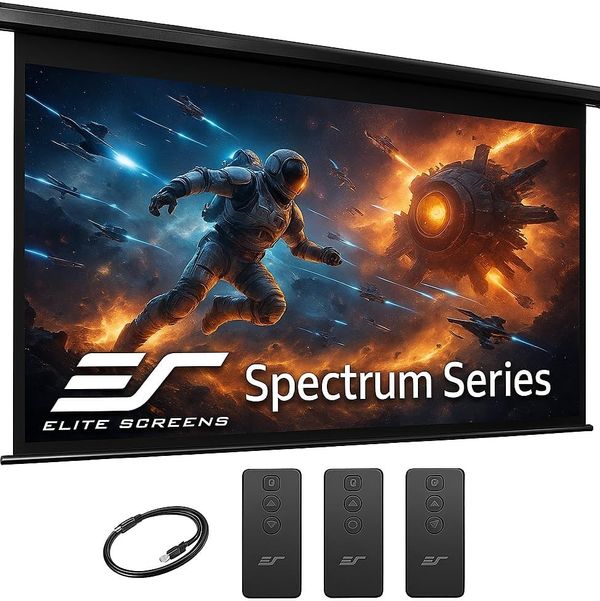
This low-cost motorized, retractable screen features a 1.1-gain fabric and comes in screen sizes ranging up to 180 inches diagonal. Infrared and radio frequency remotes are included, and there’s a 12-volt trigger feature for wired operation. A key difference between this model and the CineTension 3 is a lack of tab-tensioning, which helps to keep the screen surface perfectly uniform when it’s rolled down — without that feature, the Spectrum series may not have the same long lifespan, but it is a lot cheaper.
The best ambient-light-rejecting (ALR) and ceiling-light-rejecting (CLR) projector screens
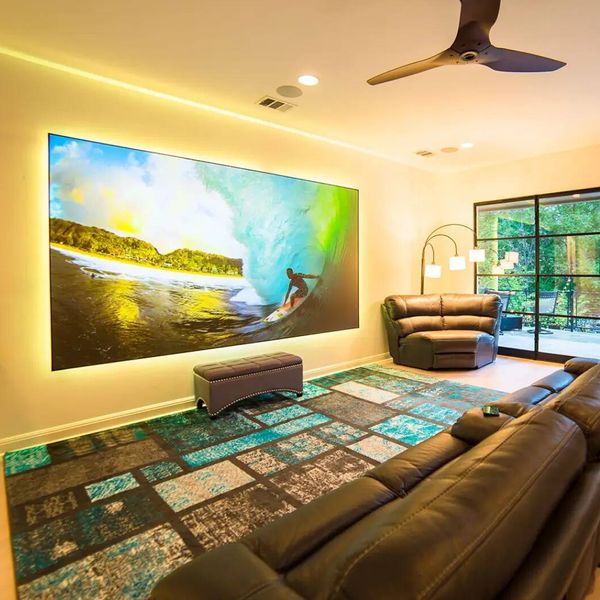
The best ambient light-rejecting (ALR) screen
New! You can now save this product for later.
Type: fixed frame material: ALR gain: 1.0 aspect ratio: 16:9 size: 110-inch (diagonal)
If you want to use a projector in a room with the lights on, an ambient-light-rejecting (ALR) screen will give you the best performance. John Sciacca’s top choice for an ALR screen is the Screen Innovations Zero Edge Black Diamond Fusion, a model that he cites as “delivering the best image in a variety of different lighting conditions.” This fixed-frame model features the company’s Zero Edge design, and it has a gray screen with a gain of 1.0. Screen Innovation specs ambient-room-light rejection at 85 percent, making the Zero Edge Black Diamond Fusion a good fit for environments with some degree of room lighting.
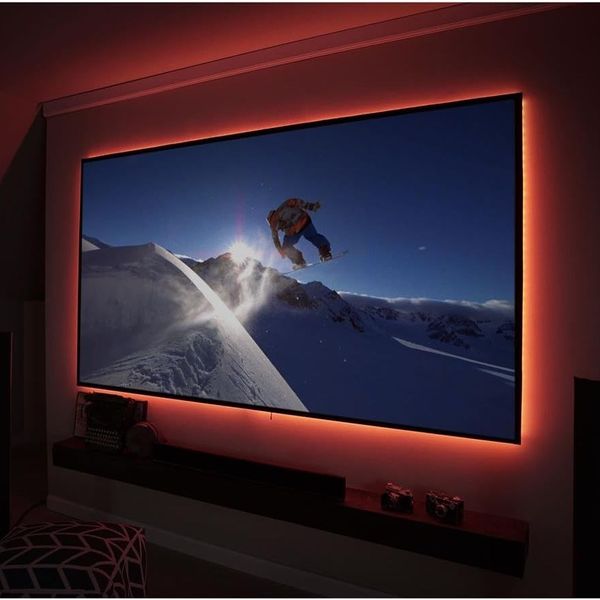
A budget zero-edge fixed-frame ALR screen
New! You can now save this product for later.
Type: fixed-frame material: ALR gain: 1.2 aspect ratio: 16:9 size: 110-inch (diagonal)
This budget fixed-frame ALR screen is ISF certified for color accuracy and provides ambient-light rejection for viewing even in bright rooms. Its edge-free aluminum frame is only 0.4 inches wide, creating a flat-panel TV-like look. A built-in LED channel is provided for an optional backlighting kit. As for the downsides of spending less, with a 65 percent ALR specification, this low-price option is not as effective at ambient-light rejection as pricier ALR screens, and with 1.2 gain, its screen material has a narrower viewing angle than a unity gain screen.
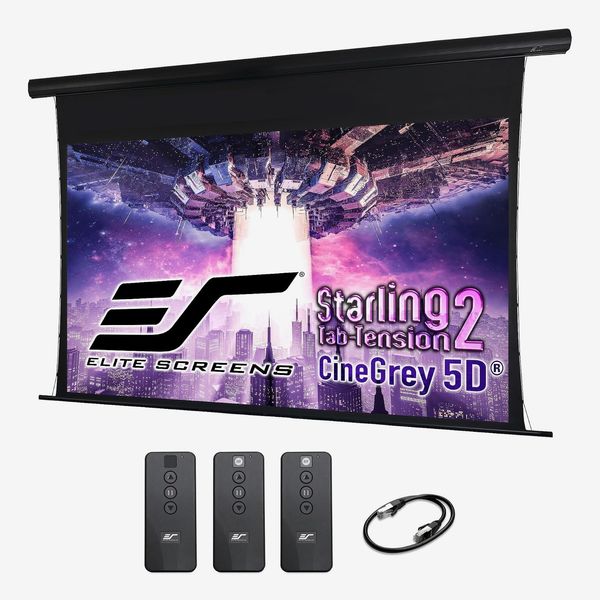
A retractable ambient light-rejecting screen
New! You can now save this product for later.
Type: retractable material: ALR gain: 1.5 aspect ratio: 16:9 size: 106-inch (diagonal)
If you prefer a retractable ALR screen, then Elite Screens has you covered with this affordable motorized wall-mount model. As its name implies, the Starling Tab-Tension 2 uses tab tensioning to ensure screen uniformity when it’s rolled down, and there are infrared and radio-frequency remotes for control plus a 12-volt trigger feature for wired operation. The CineGrey 5D screen material is ISF certified for color accuracy, and with 1.5 gain, it’s a good match for lower-brightness projectors.
The best fixed-frame ceiling-light-rejecting screen
New! You can now save this product for later.
Type: fixed-frame material: CLR gain: 0.8 aspect ratio: 16:9 size: 103-inch (diagonal)
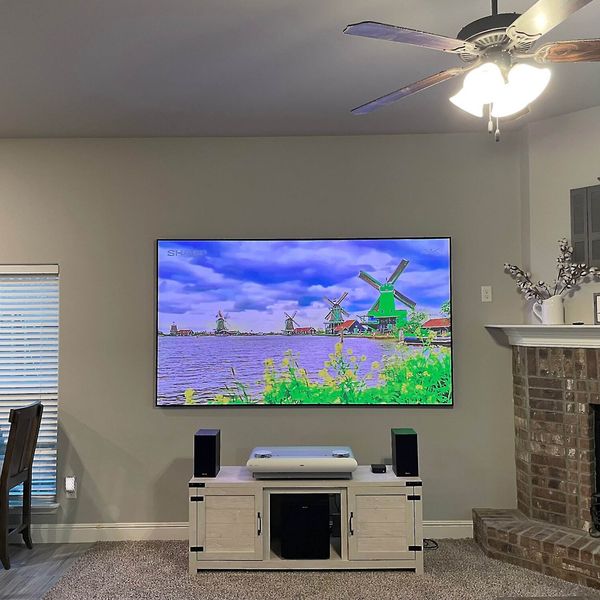
The Elite Screens Aeon is an affordable fixed-frame CLR screen designed for use with UST ultra-short-throw projectors. An Edge Free frame design provides a flat-panel OLED TV look when an image is projected on it, and the 0.8-gain screen material helps to enhance picture contrast in bright rooms. This screen also comes with an LED light kit to relieve eye strain by backlighting the screen when viewing in dark rooms.
A retractable floor-rising ceiling light-rejecting screen
New! You can now save this product for later.
Type: retractable material: CLR gain: 0.6 aspect ratio: 16:9 size: 101-inch (diagonal)
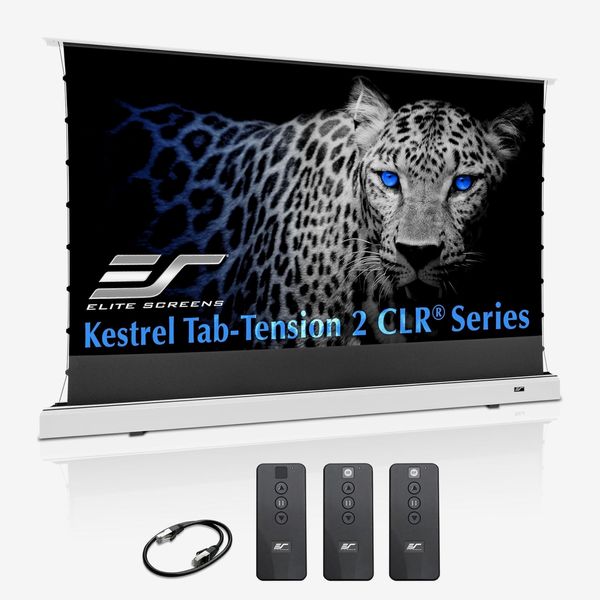
This motorized, retractable, floor-rising CLR screen is ideal for those who don’t want to see the screen when not in use and also don’t want to see a screen casing hanging from their wall or ceiling. The 0.6-gain screen material helps to enhance contrast when viewing in bright rooms, and tab-tensioning is used to help maintain screen-surface uniformity. As with other Elite Screens motorized models, infrared and radio-frequency remotes are supplied for control, and there’s a 12-volt trigger feature for wired operation.
The best acoustically transparent projector screens
The best acoustically transparent screen
New! You can now save this product for later.
Type: fixed-frame material: acoustically transparent gain: 0.7 aspect ratio: 16:9 size: 120-inch (diagonal)
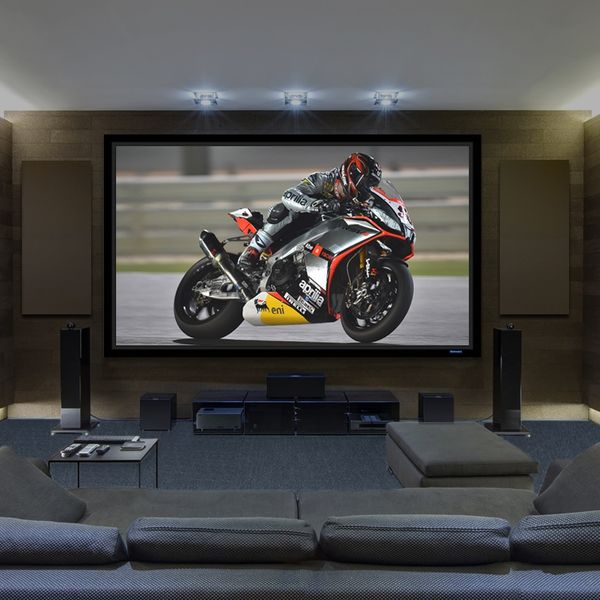
Stewart’s Harmony G3 acoustically transparent fabric is well regarded for its color and brightness uniformity as well as its ability to pass through audio from speakers situated behind the screen with minimal high-frequency loss. Stewart’s QuickSnap system and EZ-Mount wall bracket allows for easy screen setup and installation, and the 3.25-inch-wide frame with black velvet overlay helps to absorb stray light reflections.
The best ultrawide acoustically transparent screen
New! You can now save this product for later.
Type: fixed-frame material: acoustically transparent gain: 1.1 aspect ratio: 2.35:1 size: 138-inch (diagonal)
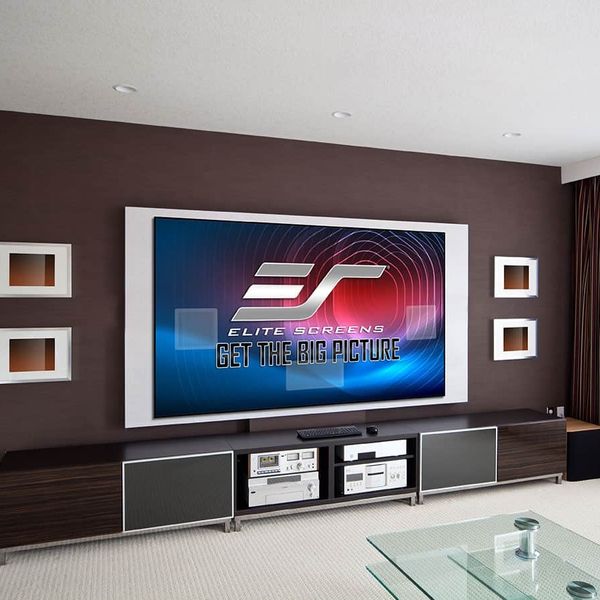
If you’ve decided to go ultrawide for your projector screen, the Elite Screens Aeon CineWhite 2.35:1 offers a relatively affordable fixed-frame screen option that’s also acoustically transparent. This model has an edge-free design that gives the screen a flat-panel TV look, and the ISF-certified CineWhiteA8K fabric’s ultra-fine weave is said to provide artifact-free images even when used with 8K-resolution projectors. Sliding mounting brackets are included for on-wall installation.
The best outdoor projector screens
A great portable outdoor screen
New! You can now save this product for later.
Type: fixed-frame, portable material: gray gain: 0.8 aspect ratio: 16:9 size: 100-inch (diagonal)
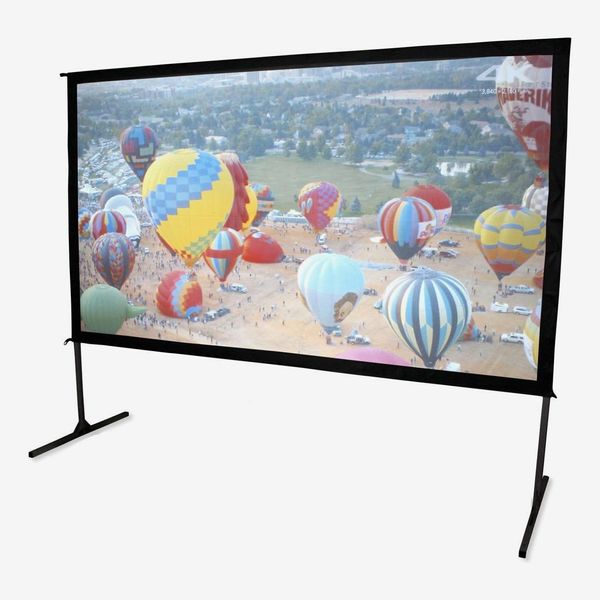
Designed for both a front- and a rear-projection setup, with the projector placed behind the screen, the Yard Master 2 Dual features an aluminum frame and stands for easy portable setup and breakdown. Elite Screens’ WraithVeil Dual screen material snaps on to the frame, and it has 0.8 gain for enhanced contrast. A carrying bag that fits all parts is included.
A retractable outdoor screen
New! You can now save this product for later.
Type: retractable material: white gain: 1.1 aspect ratio: 16:9 size: 120-inch (diagonal)
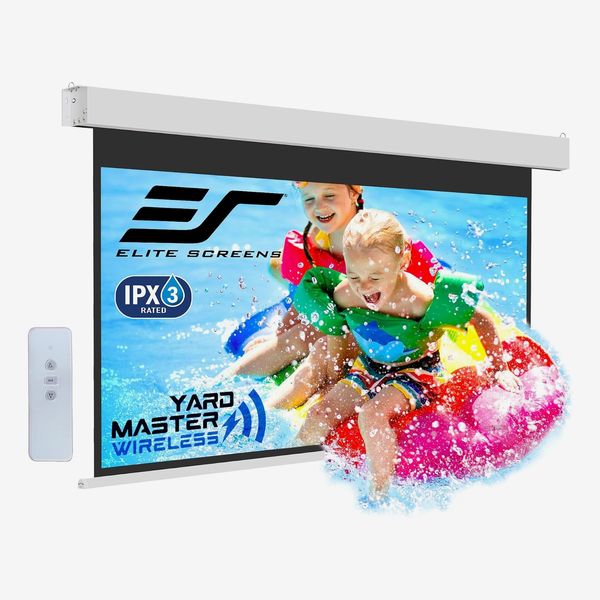
This retractable screen attaches to an outside wall of your home or garage and features a built-in rechargeable Li-ion battery that lets it roll down for movie time via remote control. Its matte white, 1.1-gain screen has black backing for enhanced contrast, and it has an IPX3 weather-resistant rating so it should stand up to the elements.
Our experts
• Jeremy Glowacki, editor-in-chief, ProjectorCentral
• John Sciacca, TV and AV reviewer for Residential Systems
• Michael Hamilton, ISF video-calibration professional and reviewer for ProjectorCentral
• Mark Knapp, Strategist contributor and projector reviewer for TechRadar
The Strategist is designed to surface the most useful, expert recommendations for things to buy across the vast e-commerce landscape. Some of our latest conquests include the best acne treatments, rolling luggage, pillows for side sleepers, natural anxiety remedies, and bath towels. We update links when possible, but note that deals can expire and all prices are subject to change.
Every editorial product is independently selected. If you buy something through our links, New York may earn an affiliate commission.