Is There Anything Wrong With Tap Water (and What Should You Buy to Filter It)?

Save this article to read it later.
Find this story in your account’s ‘Saved for Later’ section.

The reason people in Silicon Valley are spending $36 for 2.5 gallons of unfiltered raw water in shapely glass bottles is fear, but not of contracting a waterborne disease like cholera. The raw-water trend really stems from a concern about chemicals in municipal tap-water supplies. As the founder of Live Water, the company bottling and marketing this untreated, unfiltered water, told the New York Times, “Tap water? You’re drinking toilet water with birth control drugs in them … Chloramine, and on top of that they’re putting in fluoride. Call me a conspiracy theorist, but it’s a mind-control drug that has no benefit to our dental health.” And his fellow raw-water acolytes agree.
But all of this hubbub about raw water got us thinking: Is there any truth to these claims about unwanted chemicals in our tap water? The short answer is yes, and no. As Jonathan Yoder, epidemiologist and deputy branch chief of the U.S. Centers for Disease Control and Prevention’s Waterborne Disease Prevention Branch, explained, “We know that [tap] water’s not pure; it’s not sterile. So while it’s being treated and brought to the home, there certainly could be things that could be in water that the consumer might be concerned about.” That includes chemicals like ozone and chlorine used to disinfect the water, traces of which might remain when it gets to your faucet. But when you’re getting water from a municipal system, you at least have some sense of what chemicals and contaminants are present. That’s because water utility is required to share a consumer-confidence report to its customers. “It would list anything that’s in the water that the EPA has determined is potentially harmful to human health,” notes Yoder.
You can also feel pretty confident that any potentially harmful bacteria, viruses, or parasites have either been killed or filtered out of tap water; the same can’t be said for raw water, even if it’s pulled from the seemingly purest of sources.
If you’re worried about the chemicals that might be lingering in your filtered and treated tap water, though, and don’t want to start drinking the bottled stuff, I talked with Yoder about some of the most common chemical contaminants in drinking water and how to find the best water filters that have been rigorously tested and proven to actually work. (A quick disclaimer here: It’s against CDC policy to recommend specific products or brands, so all recommendations are my own, not the government agency’s or Yoder’s.)
New! You can now save this product for later.
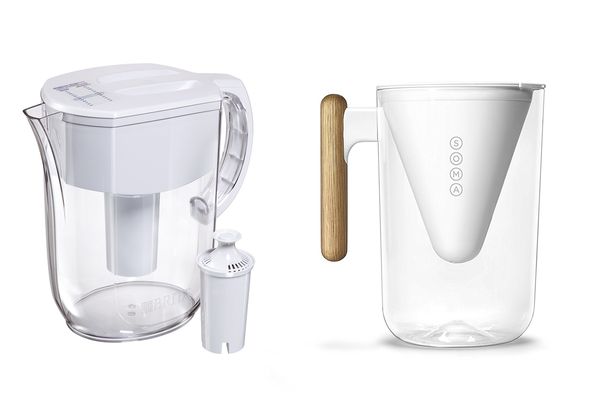
If you’ve ever used a pitcher-style water filter from Duane Reade, it probably adjusted what Yoder refers to as “aesthetics.” That means taste and odor — the most noticeable of which is often chlorine, which is used in water-treatment facilities to disinfect the supply of bacteria and viruses, and can leave behind a distinct smell. Don’t feel bad about trying to get rid of that, though. By the time chlorine-treated water reaches your tap, the chemical has “hopefully done its job in protecting the water all the way through the system,” says Yoder, so removing the chlorine won’t affect the quality. And if all you’re trying to do is get rid of that pool-like scent, or make your water taste more neutral, most readily available water filters, like a Brita or a Soma, will do just fine — since both of these models have been tested by independent water-quality agencies to remove chlorine.
New! You can now save this product for later.
New! You can now save this product for later.
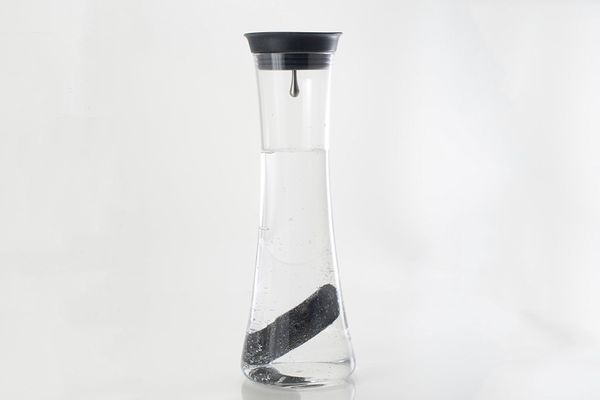
A plastic-free option to adjust the taste of water is an activated-charcoal filter. The chemical essentially binds to the carbon in the filter, thereby sucking it out of the water, and there’s at least one Japanese study to suggest that activated carbon is useful in removing residual chlorine from tap water.
If you’re worried about lead
Where a standard drugstore water filter won’t help you is when you’re trying to remove heavy metals from your water, such as lead. And if you really are concerned that your water supply might be tainted with this dangerous element, the first step is to get your water tested. “Contact your water utility or your health department,” says Yoder. “Ask them if there are lead pipes, and if so, can they test your water for the presence of lead.” If your water is contaminated, obviously the ideal situation is to have those old lead pipes replaced. “But there are also, in the meantime, filters that can filter out lead,” notes Yoder, adding, “and when used appropriately, they seem to work very well.”
New! You can now save this product for later.
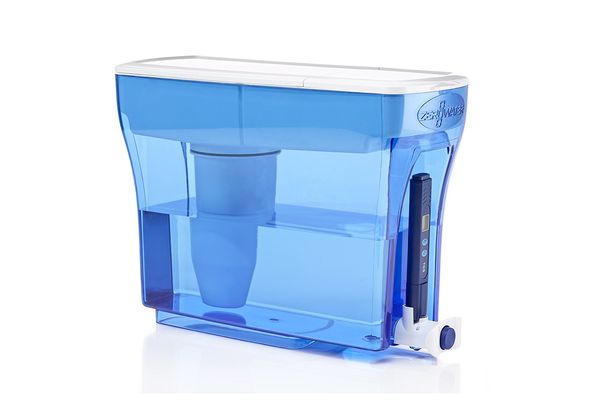
To ensure that your lead-removing water filter will actually remove lead is to get one that’s been certified by NSF International, formerly known as the National Sanitation Foundation. This independent nonprofit runs a robust water-filter testing program, the standards of which are used across the water-quality industry. And to date, the only pour-through water-filtration systems currently certified by the NSF to reduce lead in drinking water (as well as chromium and mercury, if those elements concern you, too) are certain models from ZeroWater, such as this plastic water dispenser.
New! You can now save this product for later.
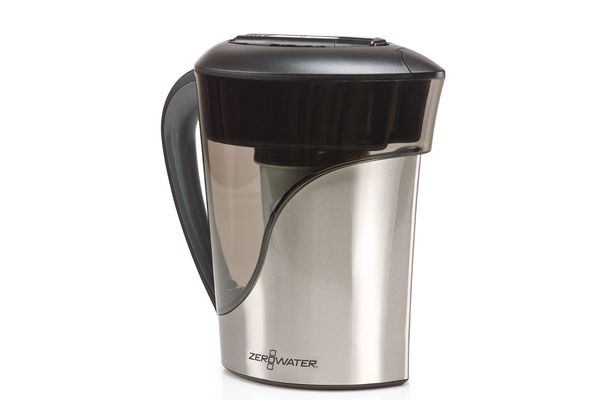
If you’d like a nonplastic but still lead-filtering option, try this NSF-certified stainless-steel pitcher.
If you want to filter out fluoride
Anti-fluoride conspiracy theorists who believe that fluoride is a secret mind-control drug will be happy to know that there are water filters that can get rid of fluoride. (It should be said here that the New York Times notes that there is “no scientific evidence that fluoride is a mind-control drug.” There is, however, plenty of peer-reviewed, scientific evidence that its inclusion in our water systems has helped improve American dental hygiene over the last 70 years.)
The type of filter that works best to get rid of fluoride is a reverse-osmosis system, and it has been demonstrated in several scientific studies to effectively remove this chemical from drinking water. There are some real downsides to using this kind of filter at home, though, not least of all the fact that fluoride is good for your teeth. Reverse-osmosis systems are not cheap, and they must be connected to your sink, which is way more complicated than pouring water into a pitcher. Reverse osmosis also removes all minerals from water, and this demineralized water is “not considered ideal drinking water,” according to the World Health Organization, because you may miss out on other important nutrients like calcium or magnesium. (Those minerals are also what give different waters their taste.)
New! You can now save this product for later.
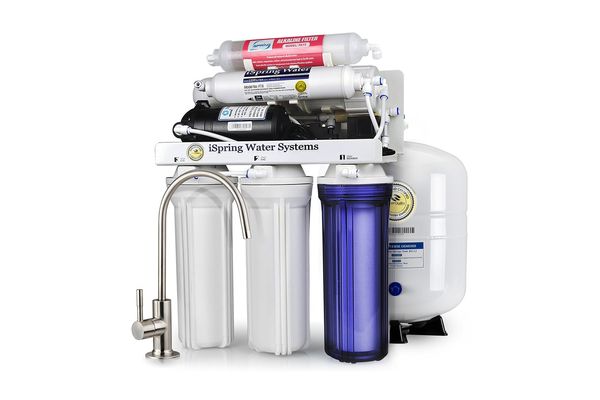
iSpring RCC7P-AK 6-Stage Maximum Performance Reverse Osmosis Drinking Water Filtration System
But if getting rid of fluoride is that important to you, and you’re looking for a reverse-osmosis filtration system that actually works, the Water Quality Association, a nonprofit trade organization that tests and certifies water filters (often to NSF standards), has tested and given gold-seal certification to a few reverse-osmosis systems for fluoride-removal, including this one from iSpring that’ll fit under your sink.
The Strategist is designed to surface the most useful, expert recommendations for things to buy across the vast e-commerce landscape. Some of our latest conquests include the best women’s jeans, rolling luggage, pillows for side sleepers, ultra-flattering pants, and bath towels. We update links when possible, but note that deals can expire and all prices are subject to change.
Every editorial product is independently selected. If you buy something through our links, New York may earn an affiliate commission.