The Rise of the Beauty Super Dupe
Save this article to read it later.
Find this story in your account’s ‘Saved for Later’ section.
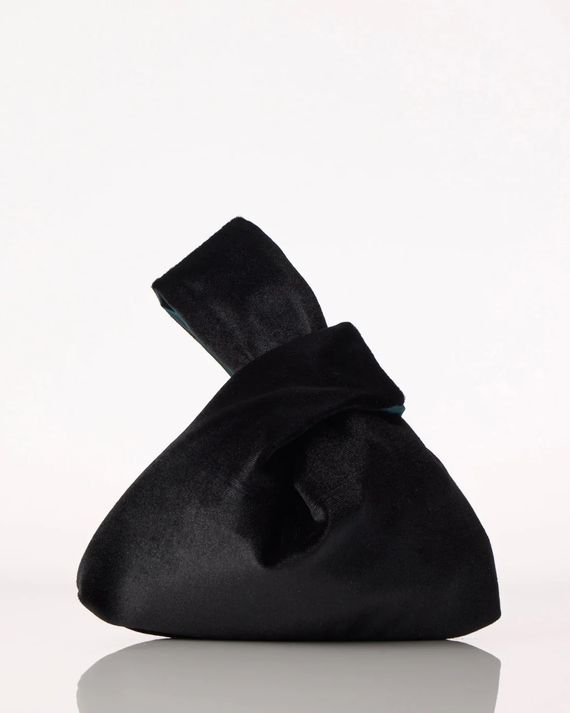
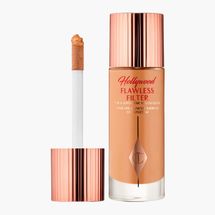
Earlier this month, the beauty side of the internet erupted when Yise Beauty founder Molly Sims posted a tearful, now-deleted video about the launch of a product she alleged was just too similar to her Wide Awake Brightening & Depuffing Eye Cream. According to Sims, it not only copied her product’s name, but its marketing was a crib, too. The concealer in question was from Bobbi Brown’s Jones Road (its, well, Wide Awake Concealer). The two founders handled the kerfuffle amicably days later (apparently, a new Jones Road concealer name is forthcoming). But the incident kicked off a finger-pointing cascade: Necessaire founder Nick Axelrod commented on Sim’s post saying her line’s aesthetic is a dead ringer for Necessaire’s packaging. (Yise Wide Awake also looks painfully similar to YSL Touche Eclat, by the way). Nocturnal founder Daniel Kiyoi later posted a video outlining how Sims released a knot bag as a part of her product packaging, six months after he launched his nighttime skin-care serum that came nested in what? A knot bag. (He was very clear, though, that his beef was primarily about Yise’s co-opting a Japanese heritage object without authentically acknowledging its origins.)
The dust-up of the last couple weeks is a reignition of a conversation that’s been raging since early summer. It’s long been understood that a beauty dupe is an affordable alternative to something fancier. We’ve even done Dupes Week here at the Strategist, where we surfaced products that performed similar to their more-expensive counterparts. And as we said then, “A dupe is not a doppelgänger or a knockoff or an impersonation — at least not explicitly so.” But now that things are shifting in the beauty industry, it raises the question: When, exactly, does a product stop being a dupe and start being a copy?
What does the law say?
That’s a tricky question to answer because one single beauty product is both a formula (with specific ingredients) and also packaging, naming, and branding. Is a copy something that just looks exactly the same? Is it a product that is obviously trying to be something that existed before it? Cosmetic chemist Julian Sass points out that similar formulas by themselves have never been an issue — riffing on existing formulas has always been an industry standard. “Our whole job as chemists is to get products that a brand likes and wants to make tweaks to. Basically reverse engineer them and make tweaks. That’s the job,” says Sass. “Nothing is undupe-able, unless you’re dealing with proprietary products.” The formulas of proprietary products are legally owned by the company.
But the formula isn’t the only part of a product that can raise intellectual-property questions. When it comes to the label, the visual design on the product packaging, copyright protection is relatively limited. “Some labels may be protectable under copyright law; however, labels are considered thin or weak copyrights and are not entitled to a broad scope of protection,” says attorney Vanessa Hew, who practices intellectual-property litigation. “So, a competitor can come fairly close to a label without infringing upon it.”
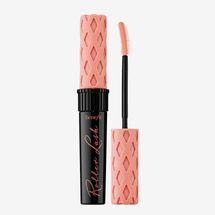
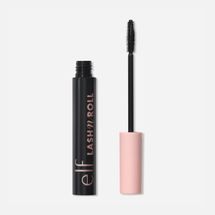
That distinction was at the center of a legal battle between Benefit and E.l.f.: Benefit sued E.l.f. in 2023, arguing that the latter’s $7 Lash ’N Roll mascara infringed on the trademark and trade dress (the look) of the Benefit Roller Lash mascara, $29. E.l.f. acknowledged that Roller Lash had inspired the product but argued that the similarities were intended to “cue” consumers to an affordable alternative, not make them believe the products came from the same company.
New! You can now save this product for later.
New! You can now save this product for later.
“The ultimate question is whether there is a likelihood of consumer confusion,” Hew says. A court can consider the similarity between the products, how and where they’re sold, their prices, the sophistication of their customers, the strength of the original brand, evidence of actual confusion, and even whether the competitor acted in bad faith. A federal judge ultimately ruled in E.l.f.’s favor, finding that Benefit had not shown a likelihood of consumer confusion and therefore had not established trademark or trade-dress infringement.
As mentioned, copying a formula raises a different set of intellectual-property questions. “Functional product characteristics and features generally are not protectable,” Hew says. A competitor can potentially develop or legitimately reverse-engineer a similar formula without infringing on intellectual property. Some formulations may be protected by a patent, which typically lasts 20 years — as we saw in 2025 when patents on Skinceuticals CE Ferulic Serum expired, allowing competitors to replicate the formula. And a company’s proprietary formula or manufacturing process could potentially qualify as a “trade secret.” In those cases, obtaining or using the information improperly can cross a legal line. However, “there really are no bright line rules,” Hew says. “Determinations are made on a case-by-case basis and are extremely fact driven.”
What makes a dupe?
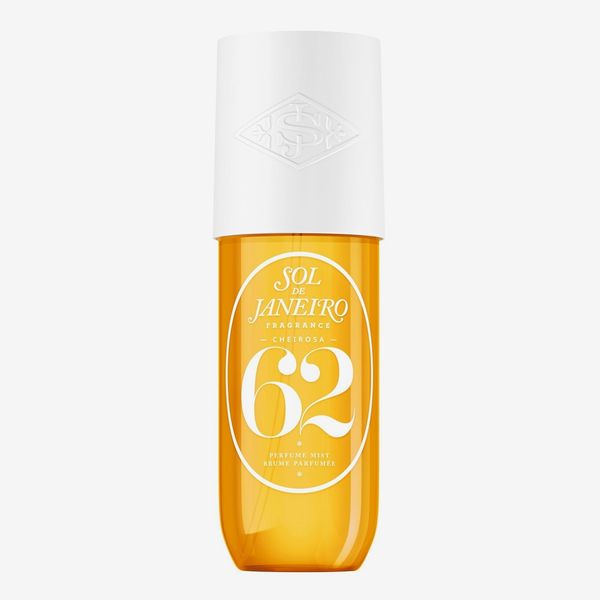
In trying to define a copy, it helps to take a step back and look at what a good ol dupe is. The search for a solid one is like a treasure hunt, with beauty enthusiasts and experts finding similarities between products that weren’t explicitly linked. “Dupe” was mostly a comment on how well the product worked, not how closely it resembled a more expensive thing.Trader Joe’s is a good example of this. The grocery store makes everything from body butter to sunscreen, many of which have been compared to more expensive products like Supergoop and Sol de Janeiro and, most recently, Skinceutical’s CE Ferulic Serum, but the products are good in their own right and don’t lean too heavily on copycat marketing. The labeling and packaging aren’t blatant copies.
Dupes are good content
Judging how a dupe compares to the real thing has become a content pillar for beauty creators, generating buzz around the product for both brands but mostly lending credibility to beauty brands that would’ve otherwise not been featured. The content also performs. As consumers become more price conscious, interest in affordable beauty has grown significantly. According to Google Trends, “makeup dupe” is up 10 percent in search year over year and “best makeup dupes” is up 50 percent. Specific products have seen even more growth, with search terms like “rhode toasted teddy dupe” seeing a 5,000 percent increase over the past year.
Beauty creator and makeup artist Erica Taylor, who has more than 4 million followers combined on her social platforms, says what has made dupe content so appealing is the discovery itself. She recently found a Dollar Tree serum that reminded her of Clarins Double Serum. “It’s not the same, but it’s a really affordable option,” she says. For her, that’s the kind of dupe she likes sharing: a less-expensive product that gives consumers another option without trying to pass itself as the original. “There needs to be a little more honor when you’re creating a dupelike product. It shouldn’t be a straight rip-off.”
So what’s happening right now with copies?
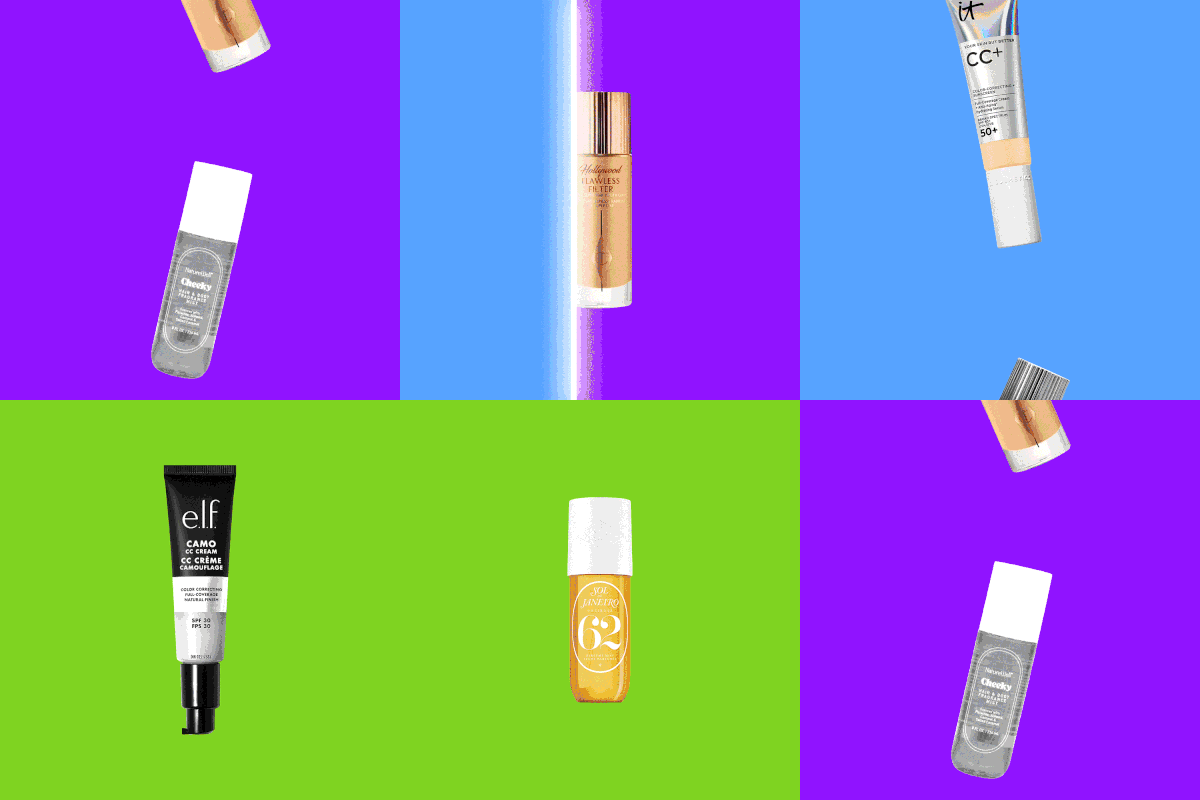
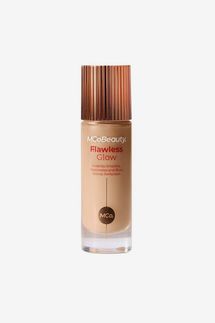
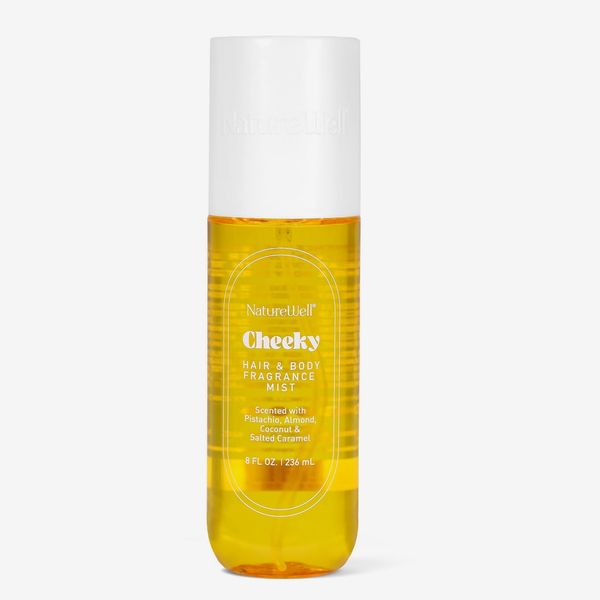
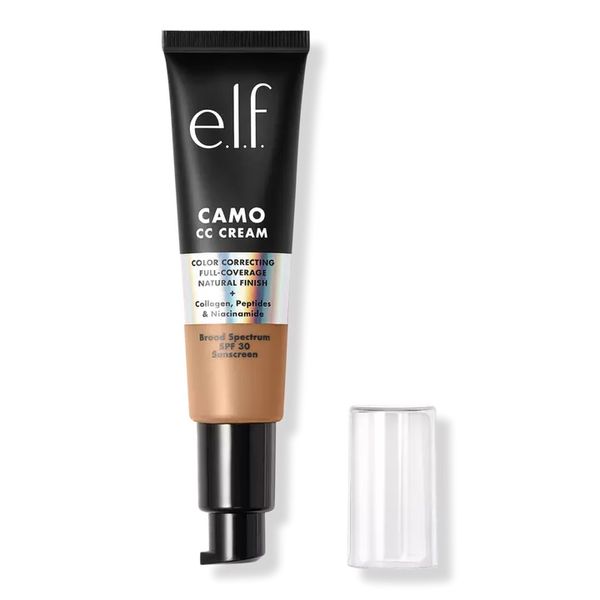
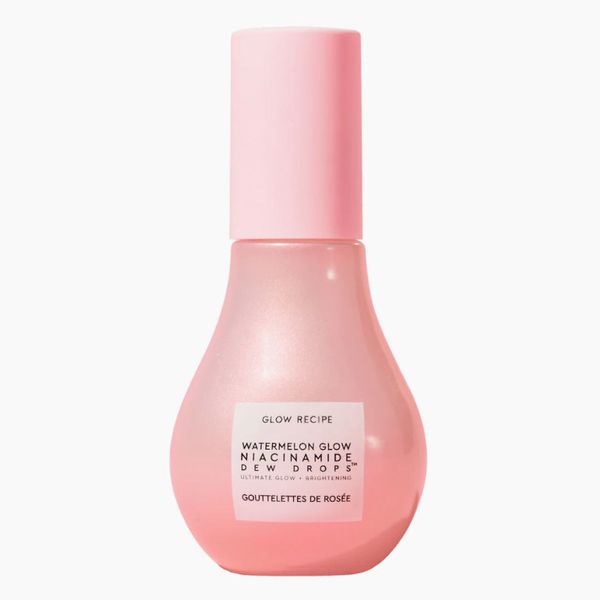
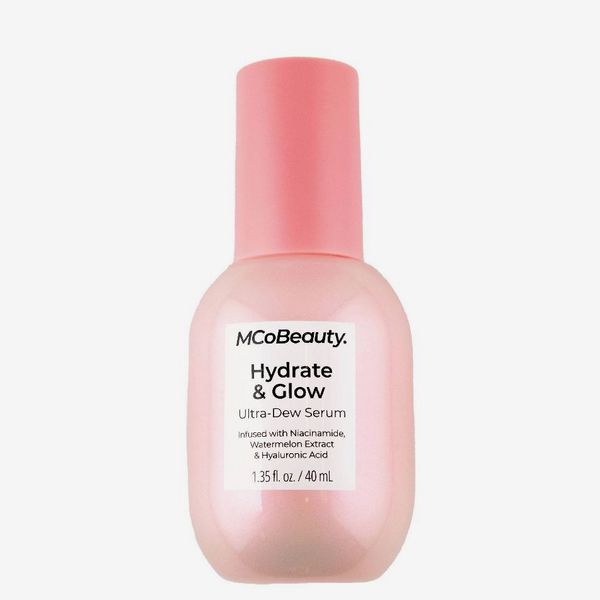
In recent years, there’s been some product design that pretty much cuts out that search-and-discovery process. Brands like MCo, SheGlam, NatureWell, and even E.l.f. make products that closely resemble successful luxury products. As beauty companies become shameless about intentionally referencing another brand’s best sellers, the tension in the air increases. This is all a relatively new phenomenon for beauty, particularly at scale, but we’ve been seeing it in the fashion industry for decades.
Fashion has long had a more established name for this kind of imitation: fast-fashion. Companies routinely take cues from runway and designer looks and translate them into inexpensive versions for a mass audience. Lower-priced alternatives in beauty is not new, but the increasingly literal replication of a product’s packaging and visual identity feels different. It’s one reason why some newer beauty brands can seem like the “Zara of Beauty.” They aren’t just competing on price or performance; they’re using successful products’ labeling to make the comparison obvious.
And since the guardrails of what’s legal are wide, the beauty community of creators, experts, and consumers judges what crosses the line. For Sass, like Taylor, it’s when brands start to copy packaging. “There’s nothing wrong with having a less expensive version of a product. But when a brand piggybacks off of the marketing, the messaging, and the packaging, and that consumer recognition of the product, that’s when it bothers me,” he says.
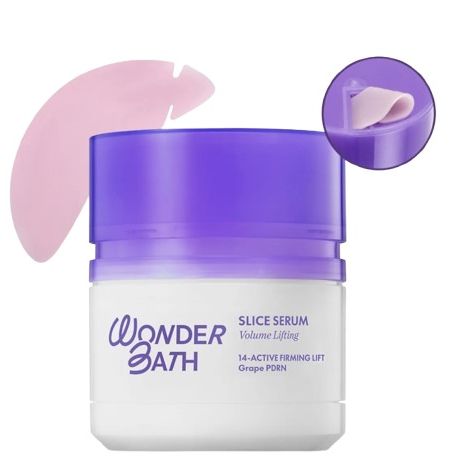
And while it is fair for the luxury brands being copied, to point out that an imitation may not perform exactly like the original, it’s reductive to say consumers themselves are always being “duped.” As Sass pointed out, overlap is inevitable because brands are often working with the same designers, chemists and suppliers. We saw this unfold recently when three brands — Huda Beauty, Fenty Beauty, Glow Recipe — teased hydrogel undereye patches in twist-and-slice packaging, similar to Wonder Bath Sliced Serum, which launched in July 2026. Many beauty consumers are savvy enough to understand those relationships. And it comes off, at best, as condescension when founders of luxury brands don’t acknowledge that fact.
New! You can now save this product for later.
Shoppers aren’t necessarily buying dupes over prestige brands
The dupe phenomenon may be changing the beauty market in ways that aren’t as straightforward as one brand taking sales from another. There’s evidence that dupes can expand beauty spending rather than simply redirect it. NielsenIQ found that 98 percent of shoppers reported that dupes expanded their regular beauty routines with additional products. “If buying dupes leads to using additional products, perhaps the original and dupe markets could benefit,” says Trae Bodge, a retail expert and co-founder of Threadneedle Alley Foundation. That could make dupes less of a replacement for prestige beauty and more of another price point within an increasingly segmented market. “We have mass, masstige, prestige, luxury, and now dupes,” says Bodge.
The part of the dupe conversation worth questioning is not whether consumers should have to pony up for an original. Or who’s copying whom. But it’s about whether an industry built around copying makes beauty less interesting. The dupe is showing itself to be good for business, giving consumers more affordable options and creators an endless stream of content. But what happens when imitation becomes a business strategy rather than a happy accident? Maybe we end up with an industry that’s less fun and permanently referential. Affordable alternatives that perform like more expensive products have always had a place in beauty, but when brands rely on copying existing, bestselling products, there’s less incentive to take a risk on a new formula, concept, or design. If the overarching model is “similar, but cheaper,” we could end up rewarding imitation over innovation — and give consumers more versions of what already exists instead of something genuinely new.
New! You can now save this product for later.
New! You can now save this product for later.
More dupe duos
New! You can now save this product for later.

New! You can now save this product for later.
More From The Strategist
- Hark, the Advent Calendars Arrived (Very) Early This Year
- The Best Things Strategist Editors Have Bought This Year (So Far)
- 63 Things You Should Never Buy Full Price
- The Strategist Fall 100
The Strategist is designed to surface useful, expert recommendations for things to buy across the vast e-commerce landscape. Every product is independently selected by our team of editors, whom you can read about here. We update links when possible, but note that deals can expire and all prices are subject to change.