There’s Something Curious About Zara Home

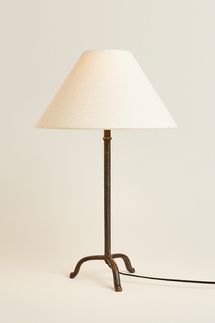
My first purchase from Zara Home was this table lamp, a recommendation from Annie Meyers-Shyer in the inaugural issue of Secret Strategist. It has a cotton shade and a hefty iron-aluminum tripod base that gives it a vaguely Diego Giacometti vibe. I love it — and it was only $129. The lamp and everything else on the Zara Home site has the look of what I can only describe as being “European”: Tasteful neutrals or otherwise muted colors populate its pages, while the furniture skews modern and minimalist. It would all read very greige if it weren’t for the fact that Zara’s DNA is actually continental (it’s owned by Spanish retail behemoth Inditex).
New! You can now save this product for later.
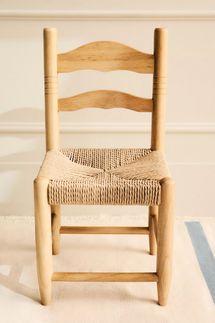
But Zara Home, which was founded in 2003 and has its own website apart from Zara.com, appears so different from its fashion counterpart. According to representatives from the brand, it operates as a separate business under the Inditex Group, but “there’s obviously naturally crossover,” they say. Still, that doesn’t quite explain how different the two brands really feel. Zara Home also has retail locations all over Europe but none in the United States. In addition to home furnishings, and weirdly, stationery, it sells some truly adorable stuff for kids: a rattan stroller ($149), a woven Shaker-style chair ($100), a retro flap clock ($56), wooden mouse knobs ($16), a play kitchen ($149), and clothing.
New! You can now save this product for later.
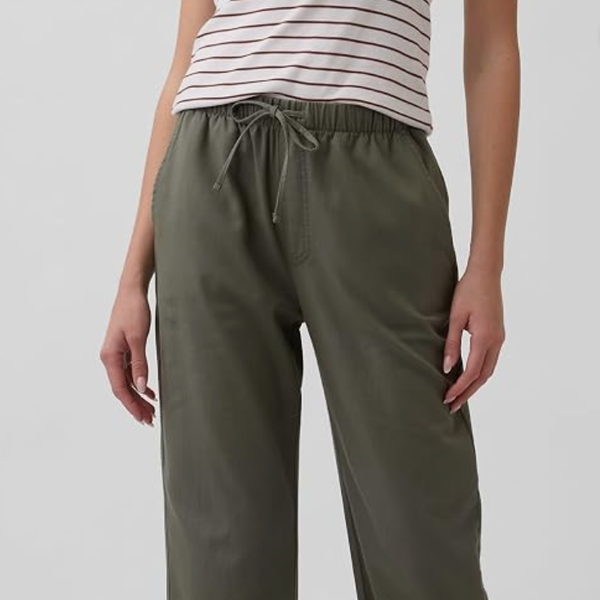
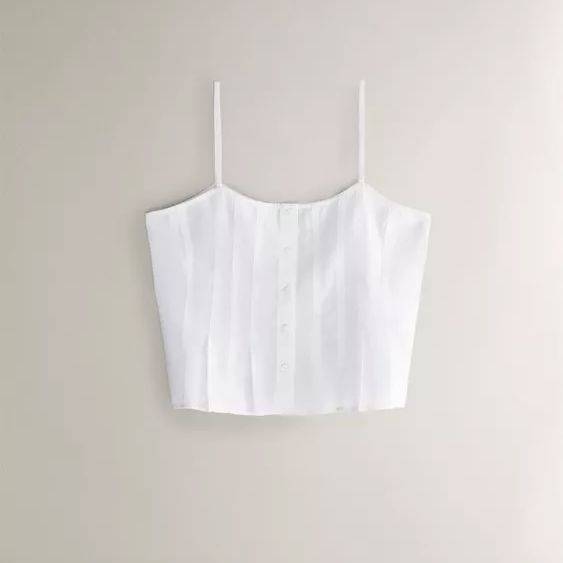
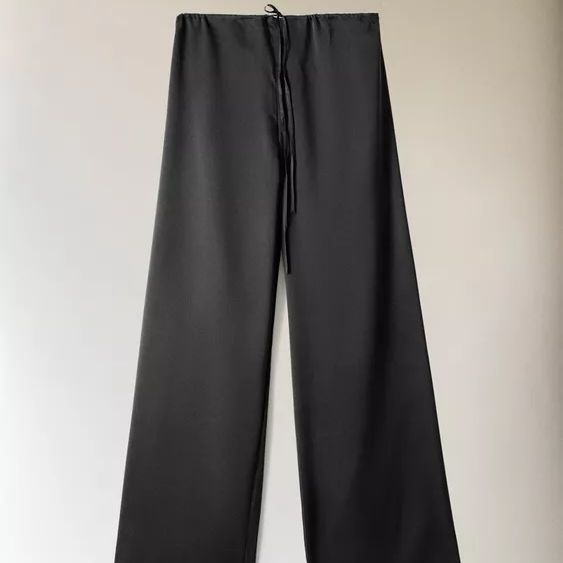
Confusingly, Zara Home also sells clothes that are so different from regular Zara’s offerings. Most of the clothing is categorized as loungewear, but you could definitely wear some of it out, like these 100 percent silk pieces: $200 pants, a crêpe silk dress, and a gathered silk dress (both $299). There’s also cotton nightgowns, like this embroidered dress ($100) and this Salter House–esque pin-tucked camisole ($56); women’s footwear including house slippers but also Birkenstock-like faux-fur-lined leather clogs ($70), jelly thongs ($36), and these intriguing leather crossover mules ($100); and leather and suede handbags ($149) reminiscent of the Row’s Margaux. Plus a smattering of men’s loungewear.

Some of it feels random, but every time I go on the site I am compelled to buy something. In addition to the lamp, I recently bought some children’s bedding in green gingham, cornflower blue checks, and a floral print on sale, and while I haven’t used it yet, it looks promising. The prints are sweet without being juvenile. The children’s stuff is actually so cute even though the colors are soft and there’s a lot of beige, but the pieces don’t feel as depressing as some of the décor you would see on American momfluencer accounts.
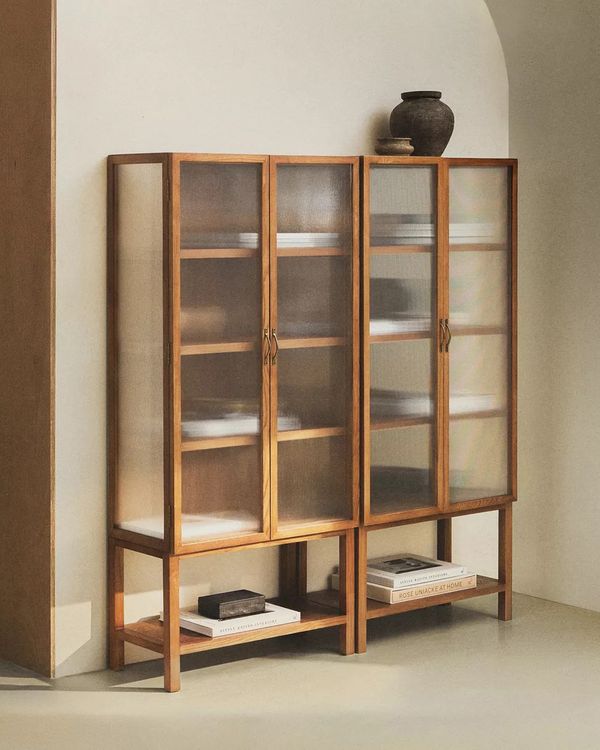
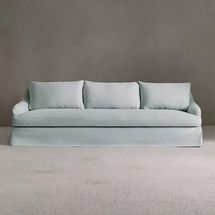
Zara Home’s furniture is also admittedly quite nice-looking, but I would never order it online unless I could see it in person first. This is where the pricing gets a little out of hand. You can find a small teak stool for $39, but on the other end of the spectrum you have a $12,000 cabinet designed by Belgian architect and designer Vincent Van Duysen. It’s made in Spain of solid oak, fir plywood, and oak veneer. Van Duysen also designed this sofa (also made in Spain and produced by Blasco with a 100 percent pinewood frame and linen upholstery), with a starting price of $7,900. This washed-linen couch from the regular Zara Home collection is not that much cheaper at $5,400 (also made in Spain but with a frame constructed from pine, beechwood, MDF, and particle board and linen-blend upholstery).
New! You can now save this product for later.
Zara Home by Vincent Van Duysen Sofa 01

New! You can now save this product for later.
Zara Home Washed Linen Couch
These pieces all look very appealing on the site, but I am perplexed as to who they’re for, especially given their steep price tags. I can understand how the sofa from the special designer collection might be more expensive. But the other sofa feels extremely expensive without the same justification. There is, of course, the U.S. markup plus tariffs to take into consideration. On the Spanish website, the Van Duysen sofa starts at 4,200 euro and the regular-collection sofa at 2,800 euro, which seems a little more reasonable. On the U.S. website, delivery costs are listed as starting around $580. For comparison’s sake, Sixpenny’s Gabriel sofa in linen, which has a similar vibe as the regular Zara Home sofa and is ten inches narrower, costs $2,700 with free delivery. (Sixpenny, an American company, manufactures in Southeast Asia.) Which is all to say, most people wouldn’t turn to Zara Home to buy a pricey sofa or other large piece of furniture. But then why is it on the U.S. site?
Still, many of the Zara Home products I looked into do seem to be made of nicer materials, and the higher overall price point, compared to Zara clothing, seems to indicate that. The women’s loungewear that I mentioned above certainly seems fancier than regular Zara’s stuff. Should we be shopping there for basics instead?
The people are, in fact, shopping at Zara Home. When I was in Paris in May, I was surprised to find that many of the bowls, plates, and mugs at our charming Marais AirBnb were from Zara Home, not Ikea. After leaving Le Bon Marché one evening, I stumbled into a Zara Home outpost right next door. It was huge and felt like a less cluttered, less oversize RH store. If it weren’t for the window branding, I wouldn’t have even known I was inside a Zara. It was about to close so I didn’t get a chance to shop, but the couch I sat on for a couple of minutes was comfortable, and the display of tableware I shuffled past while exiting to catch my Uber looked appealing.
It should also be said that regular Zara is infamous for ripping off designer fashion and mass-producing — or democratizing it, depending on your perspective — as fast fashion. (In February, Blackbird Spyplane reported that the Spanish company had posted a photo that looked almost identical to a shot of designer Evan Kinori’s studio, but it was unclear whether the image was AI-generated or real.) Zara Home has also been accused of copying small designers’ work. Over the summer, we noticed a chair on Zara Home’s website that looked almost identical to Faye Toogood’s puffy lounge chair that was being sold for a fraction of the price (it is no longer on the site). And while researching this story, I was dismayed to discover that my iron lamp may in fact be a copy of designer Rose Uniacke’s hoof table lamp (starting price: $6,264). Still, Zara Home often collaborates with designers like Van Duysen on special collections.
When I asked Zara Home’s public-relations team at DLX about the issue of copying, they deferred and said that the team in Spain would have more insight on the matter. They sent back some information about the design process, all of it pretty standard: Everything is designed in house, with the team organized by room (living, kitchen, bath); collections are “based on the latest trends, as well as timeless styles created to last”; designers travel to trade fairs and art exhibitions for inspiration.
It’s unclear, then, how we are to understand Zara Home as a concept. Maybe it’s actually very simple: as a multinational, multibillion-dollar business pushing that European lifestyle to the masses with expertly photographed and packaged goods that are inspired by the home-space Zeitgeist and sometimes other brands. It’s still a Zara after all.
In Spain, it’s not that complicated: Zara Home is everywhere. Strategist senior editor Ailbhe Malone’s Madrid-based cousin says the brand is considered a step above Ikea in terms of design, but the price is similar (Zara is naturally cheaper in its home country), and its products are perhaps just as ubiquitous. “People just think it’s part of the fabric, like, ‘Oh that’s a nice table.’ ‘Yeah, it’s from Zara.’ I don’t think anyone thinks that deeply about it,” says Malone. In the U.K., however, which is where Malone lives, Zara Home’s furniture would be considered overpriced. “Certainly, though, it’s where you’d buy your garnishes — linens, plates, tchotchkes,” she says. It makes sense to me that Zara Home should be a place to pick up some inexpensive décor, maybe even a nightgown, and leave the rest alone until Zara Home ever decides to open here.
More From The Strategist
- Hark, the Advent Calendars Arrived (Very) Early This Year
- The Best Things Strategist Editors Have Bought This Year (So Far)
- 63 Things You Should Never Buy Full Price
- The Strategist Fall 100
The Strategist is designed to surface useful, expert recommendations for things to buy across the vast e-commerce landscape. Every product is independently selected by our team of editors, whom you can read about here. We update links when possible, but note that deals can expire and all prices are subject to change.