The Only TV I’d Ever Buy
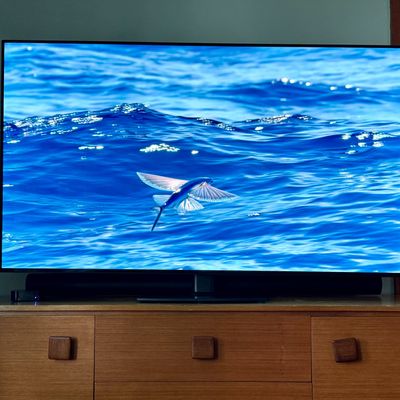
Up until recently, I went half a decade without owning a real TV. This wasn’t because I’m some kind of TV teetotaler. I just didn’t like having a big black rectangle dominate my small living room at all hours of the day, so I used a little projector instead. But having to set it up and focus it with each use was just too much of a hassle. That’s why my first major purchase after closing on my house a couple of years back was a big TV. And I knew exactly which one to get because it’s the same one that every TV reviewer I’ve ever spoken with has recommended for as long as it’s been available.
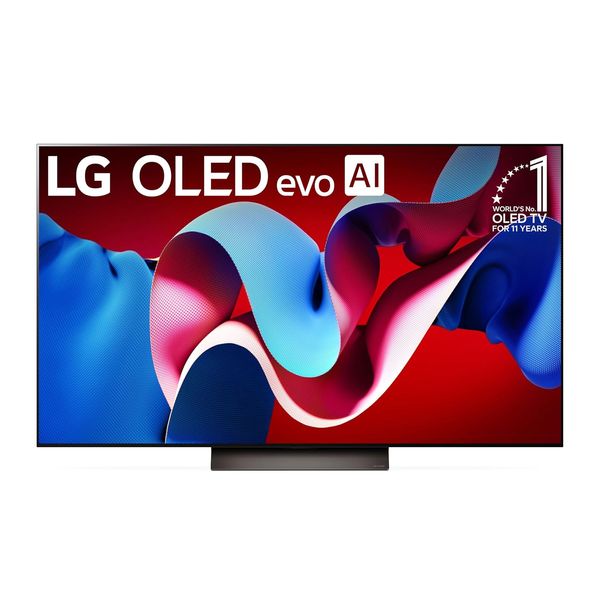
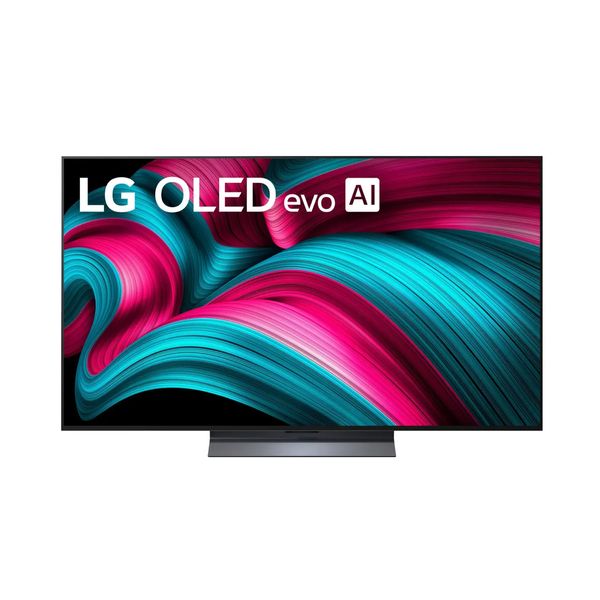
The LG C4 Evo comes from a long line of TVs featuring Organic Light Emitting Diode (OLED) screens dating back to 2012, when LG launched one of the first mass-produced sets using this technology at the staggering price of $10,300. It received universal praise from tech publications, with CNET, one of the leading TV reviewers at the time, describing it as “an utterly incredible screen” due to its precise color accuracy and unique ability to render true blacks onscreen. That wasn’t possible with the LCD technology behind most TVs sold then (and now). Over a decade later, OLED TVs are still the best-performing TVs available — and they are more affordable than ever. This is especially true in the springtime, when last year’s models go on sale for about half the cost of the latest arrivals despite offering nearly identical performance.
New! You can now save this product for later.
Why OLED is worth it
OLED displays are unique in that each individual pixel acts as its own light source and is able to dim or brighten to any intensity, including turning itself off completely. This means even the finest gradations in brightness can be rendered accurately, resulting in a lifelike image that is as adept at re-creating the subtle graininess of a classic film as it is the poppy dynamism of a modern Pixar production. While LCD technology has improved in recent years, the difference is still obvious when viewed side by side. OLED TVs produce more accurate skin tones and experience none of the artificial softening or smoothing that makes everything look like a soap opera on some LCD TVs.
LG is still the best brand
As the largest manufacturer of OLED panels for TV use, LG was for a long time the only brand that was consistently making OLED TVs. And while Samsung has reentered the market with its own line of brightness-enhanced OLED TVs, and some other brands like Sony are using LG panels to make their own highly regarded TVs, LG still offers the widest range of sizes and prices.
The LG C-series hits the sweet spot in terms of value (starting at $900), design, and size availability. Spending twice as much on a G-series does yield a more elegant design and subtle picture-quality improvements that are noticeable if you’re comparing them side by side in a dark room, but it’s a steep price increase for marginal improvements. Spending slightly less on the B-series is also an option, but downgrading means losing out on the C-series’ improved brightness (which is noticeable) and easier-to-place pedestal base. I also appreciate that the C-series is one of the few remaining higher-end TVs that still comes in smaller 42-inch and 48-inch sizes — perfect for small apartments.
Among the currently available C-series TVs, reviewers agree you won’t miss out on much by getting last year’s model to save quite a lot of money. A 65-inch C4 TV costs $1,200 less than this year’s C5 and is only marginally less bright. But if prices are comparable when you’re shopping around, I would recommend the newer model every time.
New! You can now save this product for later.
They hold up over time
I bought my 55-inch LG C1 in 2021, and to this day, guests can’t help but comment on how good the picture quality is — especially when we host movie night. When the lights go down, it really feels like you could be in a theater. While the latest EVO models are much brighter than my C1, as a nighttime TV watcher, I see no reason to upgrade. But even if I did, I would have no problems offloading my current one. LG OLED TVs I come across while browsing Facebook Marketplace and Craigslist tend to be priced surprisingly high, yet they reliably disappear within a few days.
Some earlier OLED TVs suffered from “burn-in” over time, a phenomenon where a faint outline of a static image remains on the screen even if it is no longer part of the currently displayed content. This happens because pixels operating at higher brightness levels degrade more quickly and become dimmer over time. So if there’s an unmoving, bright outline that stays in the same place over an extended period of time (such as the CNN logo on an airport TV), that group of pixels will prematurely fade relative to the rest of the display. This issue has been mitigated over time by technological improvements and “pixel cleaning,” an automatic preventative maintenance program that runs in the background while the TV is off. My C1 is going on four years with no signs of ghosting.
What size should I get?
Although I appreciate that the LG is available in smaller sizes, I still recommend getting the biggest screen that your space and budget can accommodate. While larger LCD TVs can feel overwhelmingly bright in a darkened room, OLED TVs feel gentler on the eyes, and you will almost certainly appreciate the extra space while watching movies. I got the 55-inch version so that it wouldn’t overwhelm the 60-inch-wide credenza in our living room, but if I were to do it again, I would have picked the 65-inch instead.
The only minor annoyances
If anyone from LG is reading this, please get rid of your “magic remote.” This motion-sensing design may have made sense in the era of the Nintendo Wii, but society has evolved past the need for this type of cost-increasing complexity. Speaking of which, the built-in WebOS smart TV platform is serviceable (it has all the major streaming apps) but would also benefit from a radical simplification. The good news is that you can plug in a streaming box and rarely have to use either of these features. But it would be better if they just worked in a familiar and consistent way.
Quirky interface aside, now that the latest OLED TVs can get almost as bright as comparable LCD TVs for use in brightly lit or sunny rooms, budget is the only other reason to consider anything else. While you can get a fine 55-inch LCD TV for $300 and a good one for about $700, a 55-inch C-series starts at around $1,200. While prices have gradually fallen year over year (I got my C1 for $1,600 at the end of 2021), recent political developments will likely end this trend for the foreseeable future.
More From The Strategist
- Hark, the Advent Calendars Arrived (Very) Early This Year
- The Best Things Strategist Editors Have Bought This Year (So Far)
- 63 Things You Should Never Buy Full Price
- The Strategist Fall 100
The Strategist is designed to surface useful, expert recommendations for things to buy across the vast e-commerce landscape. Every product is independently selected by our team of editors, whom you can read about here. We update links when possible, but note that deals can expire and all prices are subject to change.