The Very Best Pizza Ovens
In this article
It’s entirely possible to make a good pizza in your conventional oven. But if you’ve been putting the effort into making your own dough and you want to re-create that crispy New York–style bottom or charred Neapolitan-inspired crust at home, then there’s really only one option — you’ll need a dedicated pizza oven that can reach higher temps than a standard oven and retains enough heat to make make a round of personal pies for your family or — if you’re brave enough and have the stamina — full-size pizzas to supply a backyard party.
I was bitten by the pizza-at-home bug about seven years ago, and it quickly turned into an obsession. Since then, I’ve made thousands of pizzas in dozens of ovens, including the wood-fired Fire Within trailer that we use to run our pizza food truck (yes, I got bitten so hard I turned it into a business).
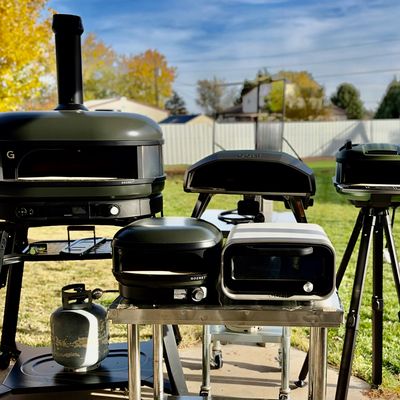
For the past month, I’ve been testing the latest and greatest pizza ovens for the aspiring pizzaiolo, putting each one through its paces (making more than 100 pizzas in the process). And truth be told, they’ve all been great. I’ve had good results from every oven included in this list, even those that didn’t quite make a top pick.
New! You can now save this product for later.
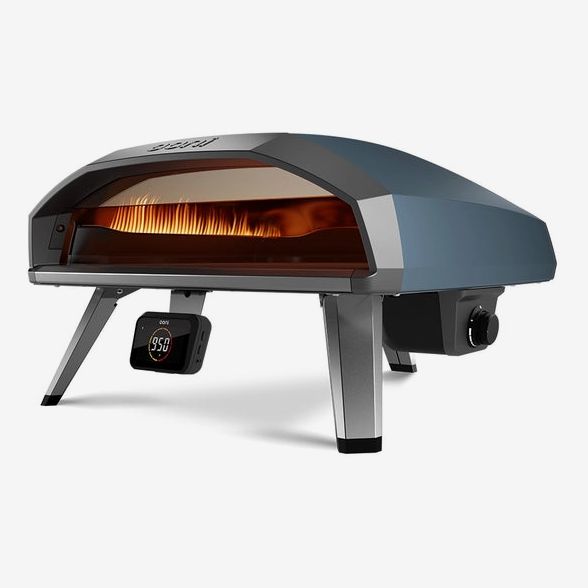
Versatile and spacious, Ooni’s Koda 2 Pro is our favorite pizza oven overall.
New! You can now save this product for later.
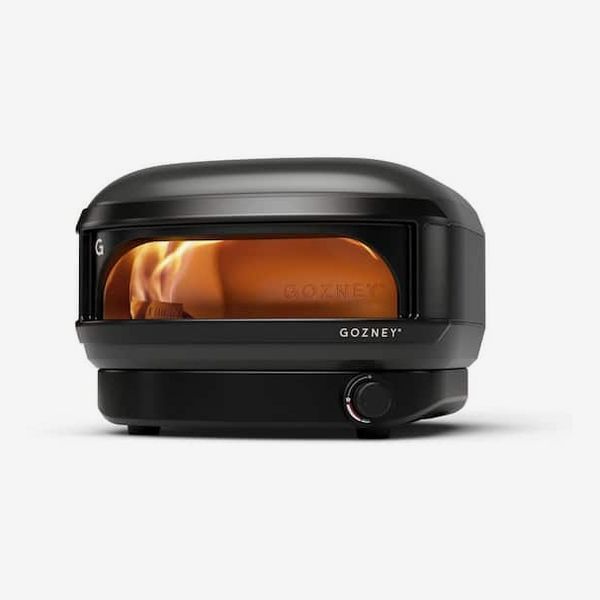
Gozney’s smaller oven is our pick for anyone looking for a great pizza oven on a budget.
New! You can now save this product for later.
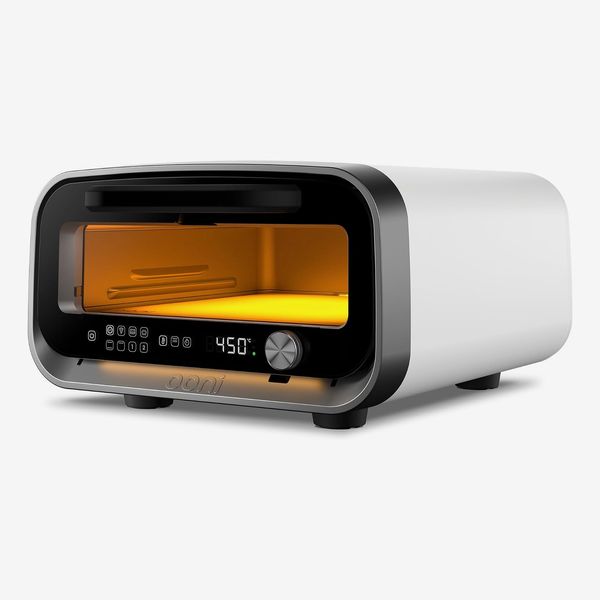
Ooni’s electric Volt 2 is the best pizza oven for your kitchen counter.
What we’re looking for
Fuel source
When it comes to shopping for a pizza oven to use at home, you’ll need to take into account what fuel type you want to use. There are three main options: gas, wood, or electric.
Gas is the most common and is more forgiving for beginners. Wood is the most nostalgic, and many would argue the smoke gives you a better-tasting crust, but it has a steeper learning curve, and managing temperature becomes the focus instead of turning a pizza. Electric ovens plug into a standard outlet and allow for cooking indoors (they’re not weatherproof, and unlike gas and wood models, aren’t meant for outdoor installation, though you can use them outdoors in a pinch).
Some ovens, like the Gozney Dome XL (Gen 2) and the Ooni Karu 2 (with a gas-burner accessory), are capable of doing both gas and wood. Just keep in mind, the majority of ovens are limited to the fuel type you select at purchase.
Cooking area
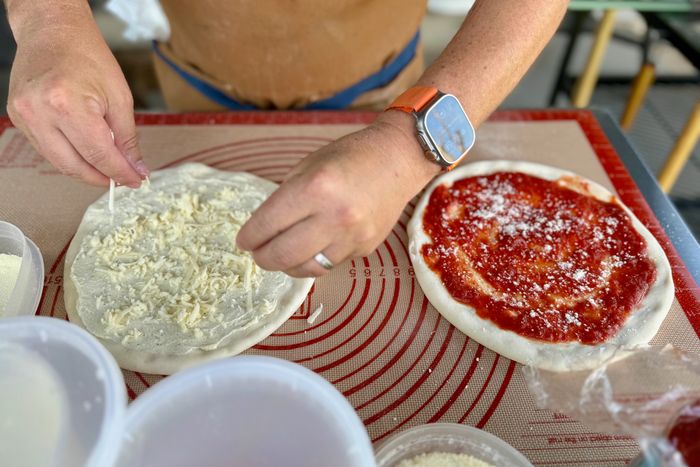
Unlike commercial pizza ovens that are designed to cook multiple pizzas at the same time, most home cooks only need space for a single 10- to 12-inch pizza.
However, as is the case with our best pizza oven overall, the Ooni Koda 2 Pro, there are several options for pizza-makers who want to cook bigger pies (up to 16 inches in this case) or more than one at a time.
Outside of cooking a pizza, I’ve frequently used various pizza ovens to roast anything from fish and steak to veggies and fajitas — which is an added bonus of a larger oven.
I’ve found that when making pizza for dinner, part of the fun is having each person shape and top their own pizza, so don’t get too hung up on size — when you’re doing multiple personal pizzas, a smaller oven can be more than enough.
But if you’re planning on hosting get-togethers or just want to make pizza as fast as possible, we suggest looking at one of the several larger oven options.
Size and portability
Along with what size pizza an oven can hold, it’s important to take the overall size and weight of the oven into account. Baking stones are heavy. Pizza ovens are often very heavy and difficult to move around, so you’ll want to consider where you’re going to keep the oven before clicking that buy button.
There are some lightweights, like Gozney’s Arc Lite, which weighs just over 25 pounds and is very easy to move around, and the designed-to-be-portable Tread, coming in at just under 30 pounds. Both electric ovens I tested are light enough to move around as needed and small enough to stay on your countertop.
But bigger ovens are a lot heavier and bulkier: The Ooni Koda 2 Pro weighs 66 pounds, and while it’s possible to move it around when needed, you’re likely going to want a dedicated space for it. Gozney’s Dome XL (Gen 2) is a staggering 161 pounds — that’s getting a permanent spot on your patio.
Temperature and thermometers
Nearly every household pizza-oven brand loves to tout how hot its ovens can get, with most claiming they can hit 950 degrees Fahrenheit. (That’s the temperature at which true Neapolitan-style pizzas are cooked.) But (as you may already know) it takes a lot of practice to cook a pizza at that high of a temperature without burning it — and having a way to assess the temperature takes some of the guesswork out of the process.
Some ovens have a temperature sensor that reads the ambient air temperature inside the oven; others have a sensor that reads the bottom of the baking stone. That means it’s going to lag behind the surface temp while the oven preheats — so while it’s a nice feature to have, it isn’t essential. Even if the oven has temperature probes, that won’t help with pizza (though some high-end models do, and those open the door to other uses, as we’ll get into below). Gozney’s Arc Lite is the only oven I tested that lacks any sort of temperature gauge. The omission is intentional and a cost-saving measure, which is fitting for a budget oven — but you’ll want to put aside cash for some kind of thermometer.
Whether your pizza oven has a built-in temperature gauge or not, I strongly recommend having a temperature gun on hand for every oven, as it’s the best way to ensure you’re launching a pizza at the temperature you want. (I’ve used more expensive models like Gozney’s and cheap ones like this; they all work.) You’ll quickly learn which temperature works best for you, your dough, and the pizza you’re making.
Some measurement features are aimed at maximizing the versatility of these ovens (they can do a lot more than pizza). On some of the Ooni and Gozney models that feature a digital temperature gauge — like the Koda 2 Pro and Dome XL (Gen 2) — you can plug a temperature probe (or two) into the gauge and it’ll display the internal temperature of a steak, for example.
Ooni’s Koda 2 Max and Koda 2 Pro come with the Ooni Connect Digital Temperature Hub. That’s a Bluetooth transmitter that you can pair with the Ooni app on your phone, allowing you to monitor the oven’s temperature, the temperature of any food probes, and set timers (these are just reminders for you, however — you can’t set the flame to turn off automatically).
The best pizza oven overall
New! You can now save this product for later.
Ooni Koda 2 Pro Outdoor Pizza Oven
Fuel type: Gas | Cooking area: 1 16-inch pizza | Stone thickness: 20 mm | Temperature gauge: Digital, food probe support, Bluetooth monitoring | Dimensions: 26.9 x 25.7 x 15.5 inches | Weight: 66 pounds
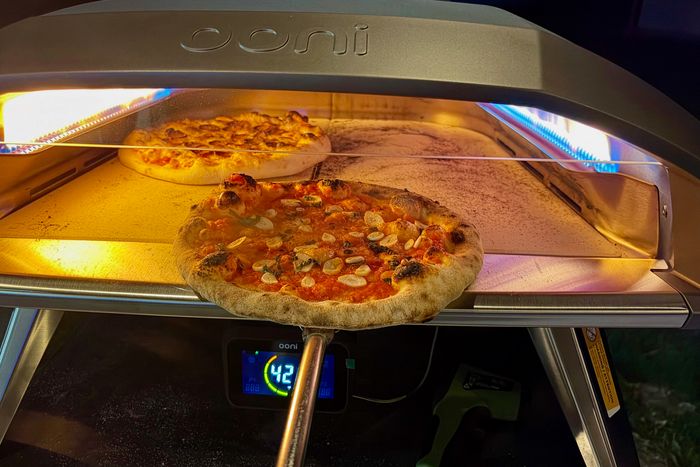
I wasn’t sure what to expect from Ooni’s Koda 2 Pro, but it surprised me almost every step along the way. Its ample cooking surface has enough space for multiple pizzas or a single 16-inch pizza, and it retains heat really well. It also has Ooni’s Connect Digital Temperature Hub with Bluetooth connectivity for remote monitoring — all for just under $800. That’s a heck of a deal.
The Koda 2 Pro is big but not overwhelming. It weighs 66 pounds, meaning that while you’re most likely going to want to leave it in one place, it’s movable without too much effort if you need to use it in a different position in your yard.
The Koda 2 Pro uses Ooni’s G2 Gas technology that tapers the flames from the base of the burner to the roof of the oven on both sides. The end result, according to Ooni, is more even heat distribution. And I concur: The heat distribution was pretty equal across the stone.
After 20 minutes of preheat time, the stone’s temperature read between 660 and 700 degrees with an infrared temperature gun. I was a bit puzzled my first couple of times using the Koda 2 Pro because the onboard digital temp gauge read 350 degrees and I couldn’t get it to go much higher than that. It wasn’t until I paired the Ooni app on my iPhone with the digital hub that the temperature reading matched what I was seeing with my temp gun.
I asked Ooni about this and was told that the hub doesn’t come from the factory linked to a specific model of oven. Part of the initial pairing process asks you to pick your model, which in turn calibrates the hub to read the correct temperature. It’s an extra step I’m not entirely sure should be needed, but it takes just a few seconds to go through. After that initial pairing, I haven’t had issues with the temp reading.
The first pizza I launched into the Koda 2 Pro came out with a bottom that was baked but lacked any sort of color. The usual 20-minute preheat I used to keep tests consistent wasn’t enough to fully saturate the stone, and in turn it simply wasn’t hot enough. The 20-mm. thick stone takes more time to heat, and I just wasn’t patient enough. Once I gave the stone more time to soak up the heat, I started seeing better results, and the Koda 2 Pro didn’t really slow down.
In the Ooni app, you’re able to see the ambient temp of the oven and start and monitor a timer, or if you have a food probe plugged in, you can remotely check on the temperature of a steak or another type of meat you’re cooking in the Koda 2 Pro. Remote monitoring isn’t necessary, but it’s a quality-of-life feature that’s nice to have, especially if you’re moving between prepping in your kitchen indoors and the oven on a back patio.
The Koda 2 Pro is hard to beat at this price, especially when you take its overall size and capabilities into account. It’s an oven I’d have no issues recommending to my closest friends and family members.
The best less-expensive pizza oven
New! You can now save this product for later.
Fuel type: Gas | Cooking area: 1 12-inch pizza | Stone thickness: 12 mm | Temperature gauge: None | Dimensions: 18.9 x 26.9 x 11.7 inches | Weight: 26.4 pounds
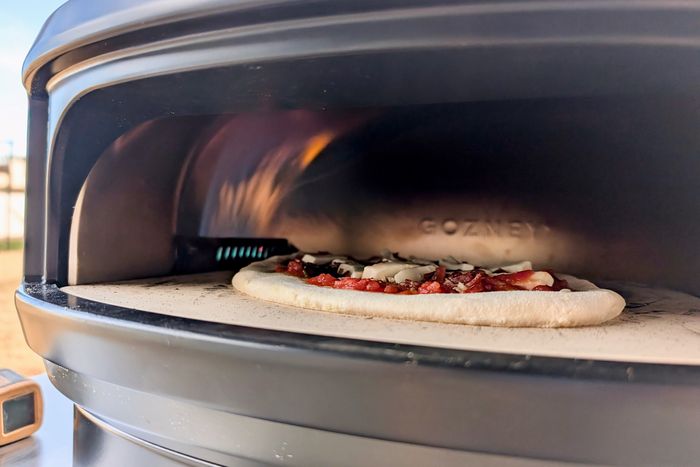
Gozney’s Arc Lite is downright cute. It’s ideal for beginners or those who don’t want to spend a lot, while its small design makes it easy to move around if you don’t have a dedicated space for a pizza oven, without giving up a lot in terms of overall functionality.
The Arc Lite looks similar to the rest of the bigger, more expensive Arc lineup. Gozney removed some features in order to hit the $399 price point, with the most notable omission being a temperature gauge of any kind. Instead of the digital display the Arc and Arc XL feature, the Arc Lite has a single dial used to ignite and control the flame inside the oven. In order to monitor the temp, you’ll want to use a handheld infrared thermometer. It’ll handle a 12-inch pizza with no issues, and you can even fit a full-size 10-by-14-inch Detroit pizza pan inside.
Preheating time is faster in a smaller oven, and that’s a selling point for the Arc Lite, with the stone reading around 750 degrees Fahrenheit at about 15 minutes. I’ve had the Arc Lite for several months, using it more than a handful of times for pizza night. The quick heat-up time is by far my favorite aspect of it. Instead of having to plan ahead and let the stone get to temp, I’m able to turn it on and just a few minutes later launch a pizza.
Granted, it does take more time between pizzas to get the stone back to temperature (the small stone doesn’t hold onto heat as well as the massive stones in bigger ovens), but during laid-back family pizza nights when the kids can’t make up their mind about what they want and I’m sneaking a slice instead of getting the next pizza ready, there’s enough time for the stone to get hot enough.
In some ways, that’s a selling point of the Arc Lite for those who are just starting out making pizza at home, where every aspect of just getting the pizza in the oven feels intimidating and overwhelming. The last thing you want to worry about at that point is burning the pizza.
At $399, the Arc Lite is easily the best budget-friendly pizza oven I’ve tried, and I’d even say it’s the best for pizza beginners too. It heats up fast, has a flame that rolls across the entire housing for even heating, and does exactly what you’d want a home pizza oven to do.
The best portable pizza oven
New! You can now save this product for later.
Fuel type: Gas | Cooking area: 1 12-inch pizza | Stone thickness: 12 mm | Temperature gauge:Analog | Dimensions: 19.1 x 16.5 x 12.6 inches | Weight: 29.7 pounds
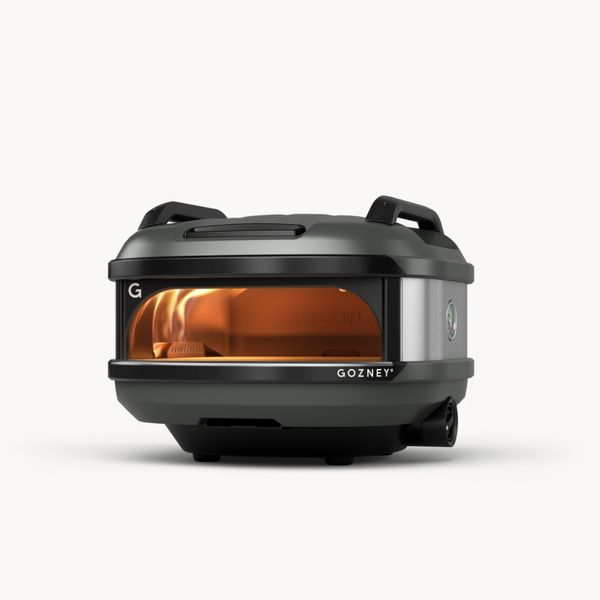
Most home pizza ovens are big, heavy, and awkward to carry (if you can carry them at all). The Gozney Tread is the exact opposite of that. It’s purposely designed to be portable and used in all sorts of scenarios, like at the park for a picnic or at a campground in the middle of nowhere. Admittedly, carrying pizza dough and all of the toppings to remote locations isn’t something I’d want to do or even suggest, but Gozney has designed the Tread as more of a mobile kitchen than a single-purpose pizza oven.
The Tread isn’t the lightest oven I tested — that honor goes to Gozney’s Arc Lite at 26.4 pounds — but at just shy of 30 pounds, it’s not a struggle to move around, and Gozney has some accessories that reinforce its portability. The Venture Stand looks and works like a photography tripod (and collapses similarly for compact storage and travel), with the Tread slotting directly onto the top with a quick-release mechanism. There’s also a Roof Rack — a prep station that sits atop the oven, with a removable cutting board, giving you a spot to place and cut pizza or stow hot pans. Finally, the Venture Bag fits the Tread and Roof Rack, giving you an easy and tidy way to carry the entire setup.
You adjust the Tread’s temperature with a dial on the right side of the housing. On the same side there’s an analog temperature gauge with color-coded markings to let you know when the oven is at the right temp. The burner is on the left side of the Tread, and like bigger Gozney ovens, it is designed to push the flame up and roll it across the top of the chamber and down the right side, evenly heating the baking stone underneath it.
As for using it to actually make pizza — it’s a fun oven to use! It’s small but can easily handle 12-inch pizzas with no issues. There’s also more than enough space for a cast-iron skillet to make practically anything you want. Heat-up time was quick; the Tread’s baking stone reached 900 degrees Fahrenheit at exactly 20 minutes. I was able to push six pizzas through in under 25 minutes, with its 12-mm. stone providing respectable heat retention. It’s nearly the same experience as the Arc Lite, which uses the same size of stone. Neither of these ovens are designed to be high-volume machines, however — the point is to take your time and have fun.
If I had gone any faster, the stone would not have had time to come up to temperature between pizzas, but it’s more than good enough for someone who is hosting a small party or making pizza for family pizza night.
If I had to nitpick anything about the Tread, it’s that, as in the Arc Lite and other smaller ovens, I found it difficult to use a turning peel to rotate a pizza during the bake — there just isn’t quite enough room to work. Instead, I had to use a standard pizza peel to remove the pie, turn it, then place it back into the oven — but that’s expected with a smaller oven. Or maybe I’m just not skilled enough to maneuver a pizza on a turning peel in confined spaces.
The Tread’s quick setup — no matter where you are — combined with its small footprint, reliable performance, and suite of accessories make it a very attractive pizza oven for those who want to take their passion for pizza on the road or camping or to a family reunion.
Best electric pizza oven
New! You can now save this product for later.
Ooni Volt 2 Electric Indoor Pizza Oven
Fuel type: Electric | Cooking area: 1 12-inch pizza | Stone thickness: 10 mm | Temperature gauge: Digital with presets | Dimensions: 21.5 x 17.4 x 10.4 inches | Weight: 38.8 pounds
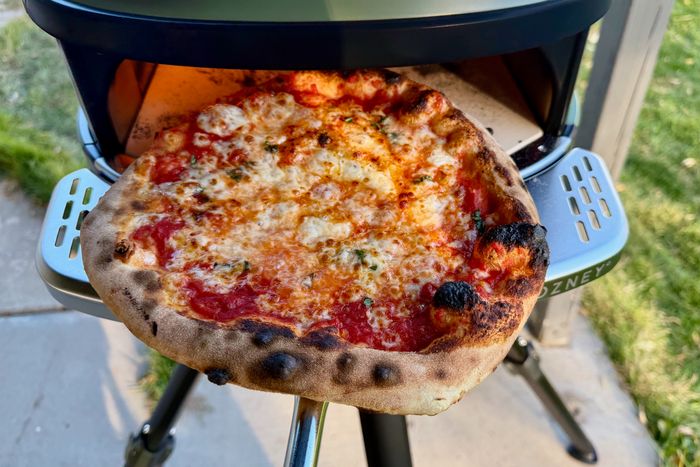
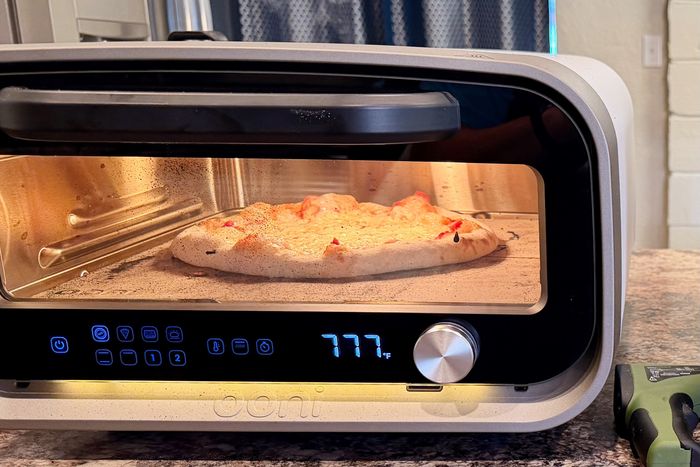
Electric ovens have a distinct advantage over gas or wood-fueled ovens: You can use them indoors. So when I was recently asked if I could cater a small office party for about ten people, I instantly said “yes” and figured it would be the perfect opportunity to put the Volt 2 to the test. For the job, I used both the original Volt and the Volt 2 to get through 12 pizzas (six in each) in just under 30 minutes.
The overall design changes between the two — the Volt 2 has a larger viewing window, even with a smaller overall footprint — were apparent and welcome. The Volt 2 is small enough to fit on a standard countertop with room to spare.
The Volt 2 heats up to its max temperature of 850 degrees Fahrenheit in about 20 minutes. Setting and adjusting the temperature is done using a single dial on the front, along with buttons for preset bake settings based on pizza style; you can also save two custom presets so you don’t have to fine-tune your settings every time you turn it on, ensuring you don’t forget what temps work for your dough. There’s even a dough-proofing mode you can use to speed up your dough at temps as low as 70 degrees. Naturally, there’s a timer feature as well.
There’s enough space inside the oven to make a 12-inch pizza directly on the stone. Or if you’d rather make a Detroit-style pizza, the 13.3-inch square cook surface is big enough for an 8-by-10 pan (or Ooni’s 13-by-10 Detroit pan). Included with the Volt 2 is an oven rack you can place atop the stone; you can then place a baking sheet full of cookies or, really, anything else you want on the rack.
I was nervous about heat retention with the Volt 2’s 10-mm.-thick stone, but the Volt 2 had no problem keeping up with a pizza every few minutes. I found that if I triggered Boost mode (which temporarily diverts power to the top heating element, in turn supercharging the baking stone underneath) as I removed a pizza, the stone was ready for the next pizza by the time I had shaped and topped it.
The Volt 2’s versatility, quick heat-up time, ease of use, compact design, and $700 price tag make it the electric pizza oven to beat.
The best pizza oven for the serious pizzaiolo
New! You can now save this product for later.
Fuel type: Gas, wood | Cooking area: 1 18-inch pizza, 2 12-inch pizzas, or 3 10-inch pizzas| Stone thickness: 30 mm | Temperature gauge: Digital with both stone and air temperature, along with food probe support | Dimensions: 27.4 x 37.2 x 39.2 inches | Weight: 161 pounds
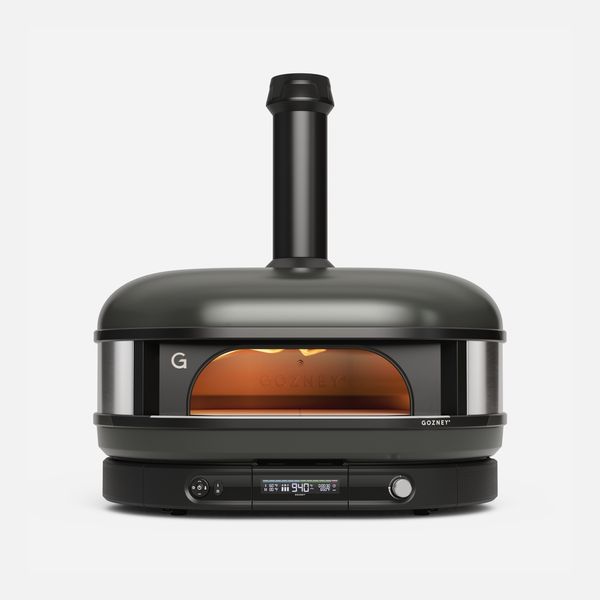
The Gozney Dome XL (Gen 2) is a beast. For starters, it ships on a pallet, which arrives via a semitruck, and it’s packed in a box that’s full of reminders that you’ll need four people to lift it. It weighs 161 pounds, measures over three feet wide by nearly 28 inches deep, and with the ventilation pipe, is almost 40 inches tall. It’s big. Oh, and it has a baking stone that’s 1.18 inches thick.
In addition to its overall size, it’s expensive. The model I tested starts at $2,800 for just the oven. A stand will run you another $500, though it is a fantastic, useful addition that makes working with and moving the oven around a breeze. You can get a cover to keep off rain and snow between uses; an oven door for baking, smoking, and slow cooking; and even a Neapolitan arch for high-heat pizza cooking. (There is a smaller and lower-priced Dome (Gen 2), with enough space for two 10-inch pizzas that starts at $2,300, if you’re not sold on quite such a large oven.)
The second-generation Dome XL is a multi-fuel oven, allowing you to use gas, wood, or charcoal based on your personal preference. I did my testing with propane gas. For those who want to use wood, for another $200, Gozney’s Wood-Fire Control Kit adds improved airflow and a rack to keep ash and coals in place.
The oven’s internal dimensions — 28.5 inches wide by 21.4 inches deep by 9.4 inches high — translate into enough cooking space for three 10-inch pizzas, which I was able to confirm with plenty of room to spare. Actually, I think with some care I could get four 10-inch pizzas inside the oven. It would be tight, but it’s certainly possible.
A single burner on the left side of the XL, which emits a flame big enough to arc up and over the entire cooking surface, evenly heats the stone below it. You can monitor the ambient air and stone temperature using the digital console (this is the only oven I’ve ever used that displays both temperatures), thanks to its dual temperature setup — one sensor under the stone, another inside the cook area The gauge also has a built-in timer and supports plugging temperature probes into it so you can monitor the cooking temp of meat.
The first time I used the Dome XL, I followed the same preheat protocol as I did with the rest of the ovens. I took my first temp reading at 20 minutes, at which time the ambient temp read 863 degrees, while the bottom of the stone registered 574 degrees. That’s too low to get the classic char of Neapolitan pizza, so I let it warm up for another five minutes, when the temps read 904 and 655 degrees, respectively.
That said, because the baking stone is so thick, it takes time for the heat to saturate it and get the entire thing to temp. Gozney recommends preheating for 40- to 45 minutes, which is how long it took for me to start to see a consistent bottom bake. I launched the first test pizza at 30 minutes, and the bottom lacked any dark spots. However, by the 50-minute mark, when I had three pizzas inside at the same time, the bottoms came out perfect.
The Dome XL is by far the most capable oven I’ve used outside of the 48-inch wood-fired oven on my pizza trailer. It takes a little longer to heat up to a reliable temp than some of its smaller competitors, but it’s going to power through as many pizzas as you can push through it in a given night.
If you’re looking for the best home pizza oven money can buy, this is it.
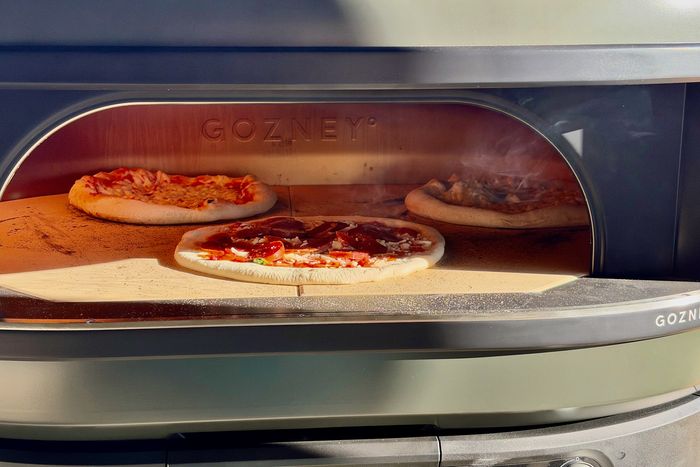
Other pizza ovens I tested
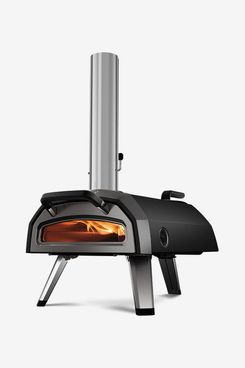
New! You can now save this product for later.
The Karu 2 uses Ooni’s iconic glass-door design from its early pizza ovens. It’s sold as a wood-fired oven first, with an optional $120 gas-burner attachment. It’s a nice oven, but I found the gas burner to be finicky and difficult to light. After multiple attempts, following Ooni’s directions to the letter, with no luck, I resorted to using a lighter.

New! You can now save this product for later.
I’ve had the Koda 2 Max since it launched and have easily made over 100 pizzas in it during that time. It heats up fast, has solid heat retention, and is big enough to bake three pizzas at once — though it’s really cramped compared to the Gozney Dome XL (Gen 2).
If you want an oven that’s big enough to crank out pizzas for a party and don’t want to splurge on the Dome XL, the $1,299 Koda 2 Max is worth considering.
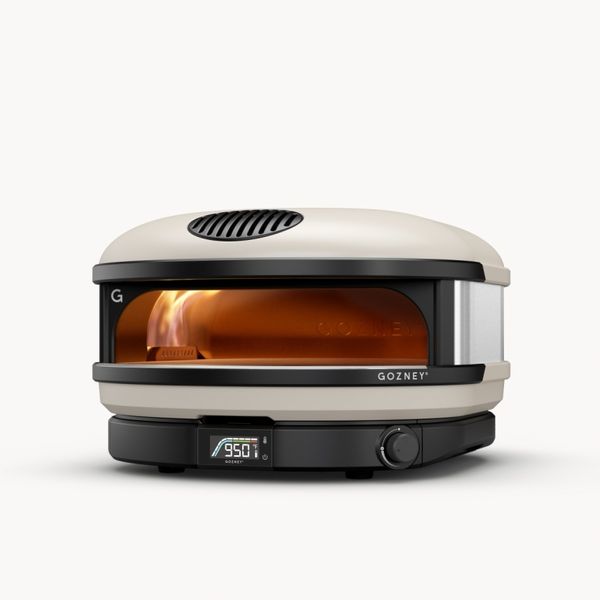
New! You can now save this product for later.
Like the Ooni Koda 2 Max, I’ve had the Arc XL since it launched and have used it to make countless pizzas. The total has to be in the hundreds. It has been my go-to and the oven I’ve recommended to friends and family without question. However, at $999, it’s hard to recommend it over Ooni’s Koda 2 Pro as the best overall pizza oven. They’re similar in size, but the Koda 2 Pro has more room inside for multiple pizzas and some extra nice-to-have features, tipping the scales ever so slightly in its favor. Not everyone agrees, however — and Strategist senior writer Michael Zhao (who’s also tested both models extensively) prefers the Arc XL.
If you prefer Gozney’s overall aesthetic and accessory package (they truly do make the best pizza stands out there), and if you can get it on sale when the prices are more equivalent, then the Arc XL will surely make you a happy pizza-maker.


New! You can now save this product for later.
I really liked this small oven. It’s portable, easy to move between counter and patio or to put away in the pantry for storage. It got to temp fast and did a good job with reheating between pizzas. I’d have no complaints about using it on a regular basis. But it’s expensive at $1,000, and a limited cooking surface with a backstop prevents you from putting anything larger in the oven. The Ooni Volt 2 is more versatile and simply a better value.
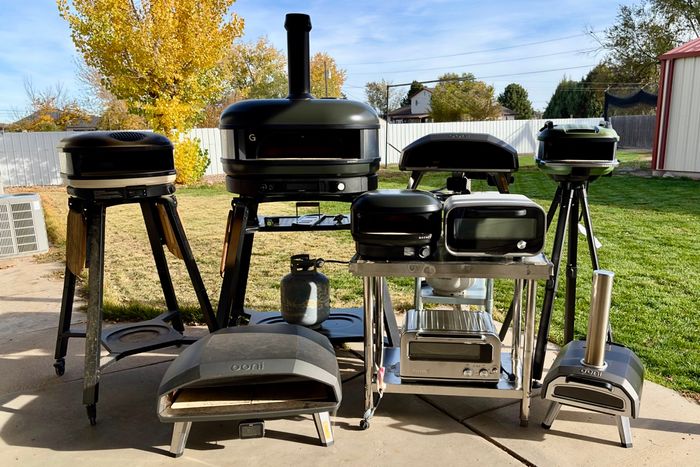
The Strategist is designed to surface the most useful, expert recommendations for things to buy across the vast e-commerce landscape. Some of our latest conquests include the best acne treatments, rolling luggage, pillows for side sleepers, natural anxiety remedies, and bath towels. We update links when possible, but note that deals can expire and all prices are subject to change.