Stir-Fried Noodles, Revived Leftovers: My Week With Muji’s Electric Grill Pot

Save this article to read it later.
Find this story in your account’s ‘Saved for Later’ section.
I don’t, for the most part, love to cook with multipurpose electric appliances. While I understand that a good rice cooker, air fryer, toaster oven, pressure cooker, and the like can bring efficiency and precision to the kitchen, I’m a pot-on-the-stovetop kind of person. I simply enjoy using basic cookware (and don’t have ample space to keep a ton of appliances around). This is to say that when my editor, Winnie Yang, flagged Muji’s new Electric Grill Pot to me — which the brand promises works for a variety of cooking techniques — I was a bit skeptical.
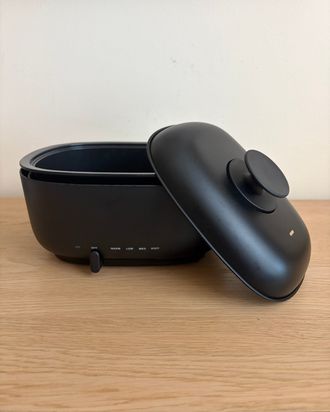
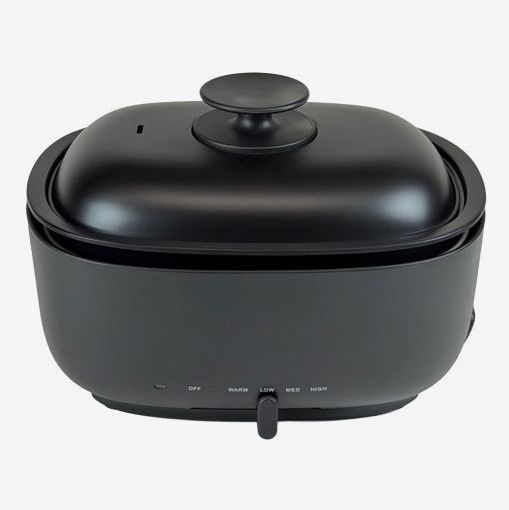
Upon arrival and unboxing, I realized just how small the unit is, clearly suited for one-person meals. It looks quite charming, a squat rectangular vessel with a heating plate taking up almost the entire inside bottom and a deep nonstick rectangular pot that fits snugly within its walls. (I do wish the interior were ceramic nonstick, but few appliances are at this point.) There’s a slightly domed lid that goes on top and a sliding mechanism to control the heat you can stop anywhere on the continuum of levels low, medium, and high. I actually appreciated the simplicity, as it seemed in a way more similar to cooking on the stove than with an appliance with a bunch of predetermined settings. Of course, there was only one way to find this out for sure. For the next seven days, I cooked with it: snacks, sides, and full-on meals, doing my best to use an array of techniques.
Day 1
First things first: I wanted to get a feel for the heat levels on this thing. The brand notes that it goes from 122 to 392 degrees Fahrenheit, but what that would actually look like in practice was a mystery to me.
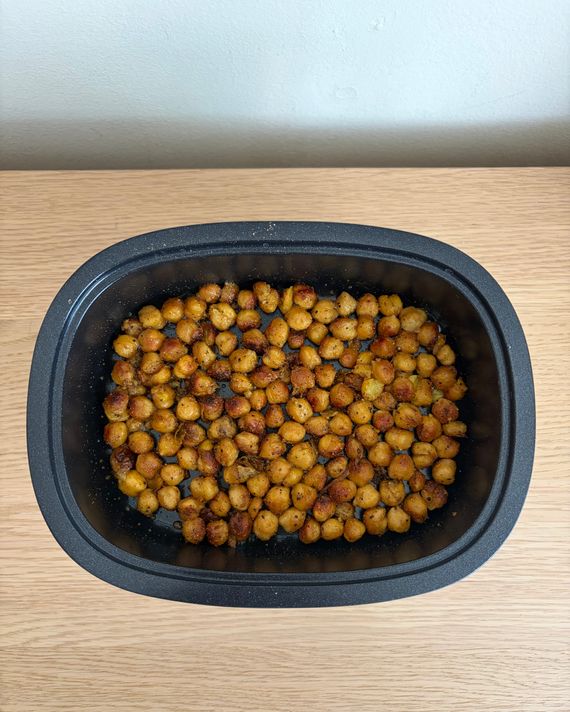
I had some leftover chickpeas from a batch I had made earlier in the week — a good starting place. I preheated the grill pot to high, just curious about how hot this thing would actually get. After less than a minute, I felt warmth emanating from the top, so I threw the chickpeas in — along with a bit of olive oil, turmeric, cumin, paprika, and salt (always a good snack) — gave them a stir with a silicone spoonula, and waited to see how they would behave. I wanted to warm them through and get a bit of color, as well as bloom the spices. Several minutes later, they were sizzling, so I shook them around again. So far, so good. But then several minutes after that, they had turned mostly quite dark, and somewhat uneven — not burnt, certainly still edible, but not perfect. My takeaway so far: The heating mechanism works very well, so in a similar scenario, I’d go a bit lower and exert a bit of patience. If I had done this in a skillet on the stove, I would have used medium or medium-high heat and let them go for longer. Lesson learned.
New! You can now save this product for later.
Day 2
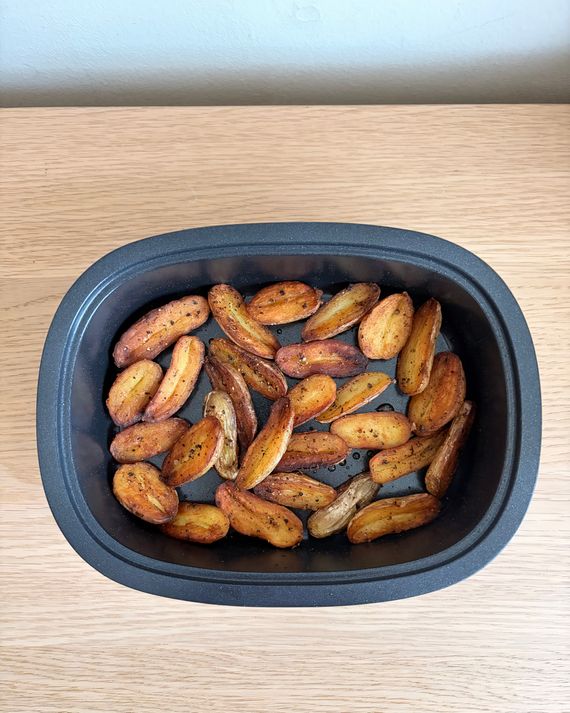
I wanted to get a better handle on a high-heat setting than I had the day before. I decided crispy potatoes would be a good test. I parboiled a handful of small ones — a technique I use any time I roast potatoes to ensure the insides are fluffy and soft without pushing the exterior to get too dark. Once cool enough to handle, I sliced them and tossed them in some olive oil, along with salt, pepper, and some dried herbs. I preheated the grill to medium this time. After about a minute, I put the potatoes in, taking care to arrange them flat-side down as much as possible. I let them sizzle away for about eight minutes (I checked after five, just in case), then flipped them. The flipping is not the easiest since it’s a small container, but I did my best to jostle them around and then reposition them with the other side down. I bet this would work especially well with wooden cooking chopsticks, though I don’t have any, and I did a somewhat clumsier job with a silicone spatula yet again (I was hesitant to use my more precise stainless tweezer tongs, for fear of scratching the nonstick coating). I let the potatoes go for another five minutes, then took them out. The result this time was perfect: extremely uniform golden-brown exteriors, perhaps even more so than I get in my oven, and in less time.
Day 3
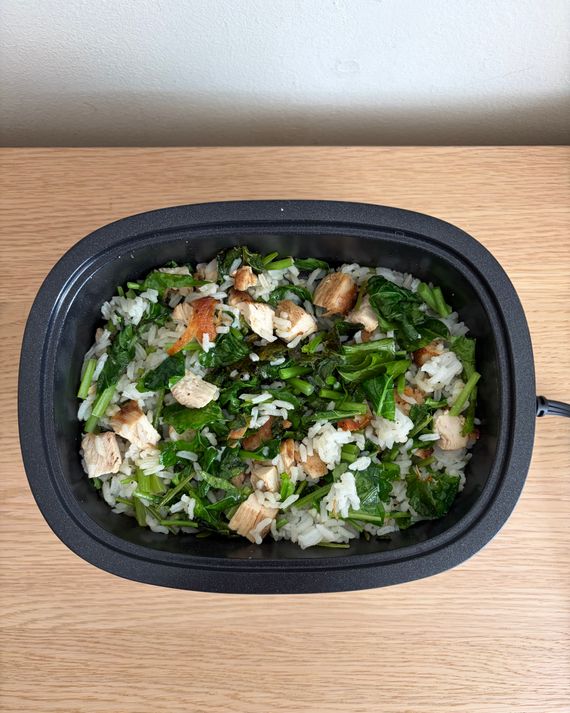
The next day I, investigated things on the lower end of the heat spectrum with some gentle cooking. I was inspired by leftovers in my fridge to make a quick, throw-it-together lunch for myself. I set the heat of the grill to medium-low, poured in a bit of olive oil, chopped up a fistful of young Chinese broccoli from the farmers’ market (the stalks were extremely thin, so I knew they’d take almost no time to turn tender), and put those pieces in. There was a mild sizzle as soon as they hit the bottom (confirmation that the heat really works,and works quickly). Then I added in some cut-up chicken, a scoop of white rice, a splash of soy sauce, and mixed everything together. I wanted the greens to wilt and the other ingredients to heat through, so I also put the lid on to create some steam and a more ovenlike environment. I stirred a couple of times over the course of five minutes. In the end, everything was evenly heated through.
Day 4
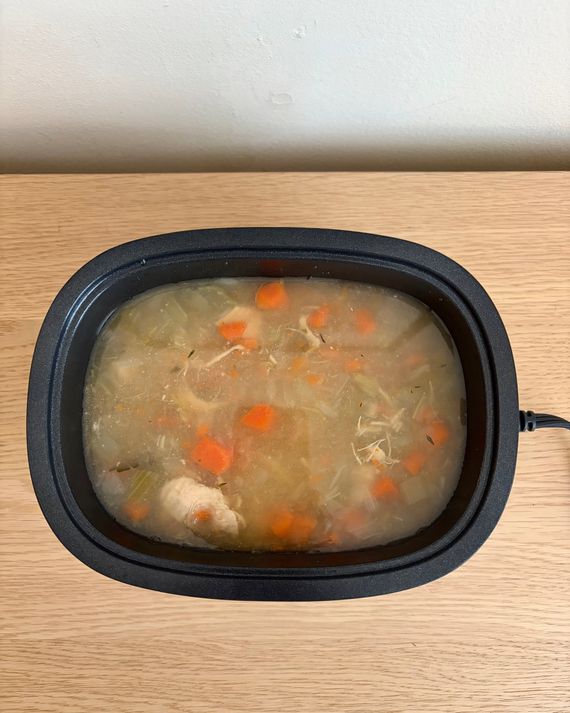
The brand advertised simmering as one of the techniques you can employ. I will say I went in skeptical with this one. I knew from the previous three days that it wasn’t the easiest thing in the world to remove the inside pot from the appliance before it has been turned off and had some time to cool down. It gets hot, and there are no handles, which means you have to scoop food out. It seemed to me that it would be difficult to remove liquid, as a standard ladle wouldn’t work well in such a small vessel. And picking up the entire thing to dump it into a bowl seemed precarious. Still, I forged ahead and simmered some defrosted chicken soup I had put in my freezer at the end of last winter, just to see. Indeed, my assumptions here proved to be accurate. I opted to ladle a bit out and then pour the rest. It spilled a bit onto the counter, and some down the inside walls, too. The whole process was clunky, and it was the most annoying to clean since I had to wipe down the inside (usually, on every other day, in fact, it was so quick to wash up). For what it’s worth, I do think the grill pot would work well as a one- or two-person hot-pot meal, plugged in the whole time — but other than that, liquids are a no-go.
Day 5
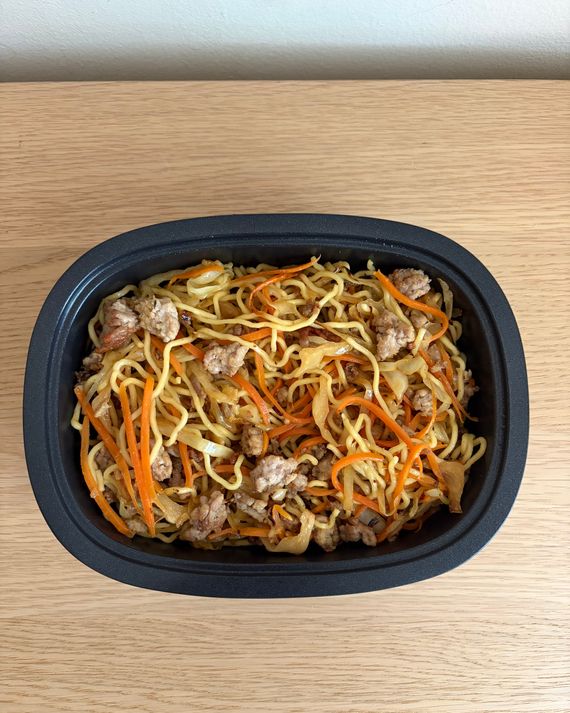
It was now time to make a full meal: stir-fried noodles. I boiled a bundle of frozen ramen on the stove (I had, of course, learned my lesson on liquids the day before) and then drained it. I set the electric grill to medium-high, added in a small amount of neutral oil, followed by ground pork, which I seasoned with salt. I used a silicone spatula to break the pork up, which was a bit harder to do than when I’m cooking in a skillet, just because the surface area is so small, but it ultimately worked well. It took about six minutes for the pork to brown and cook through, at which point I scooped it up and set it aside. From there, I turned down the heat to medium, added in some julienned carrots and thinly sliced cabbage, and let those vegetables cook for about 10 minutes, stirring a few times throughout. They softened and took on just a bit of color. While this was happening, I whisked up a quick miso sauce. For the final step, I turned the heat back up a smidge, added in the pork, dumped in the noodles, tossed everything together with the sauce, and let it all mingle and get hot for a few minutes. It was delicious.
Day 6
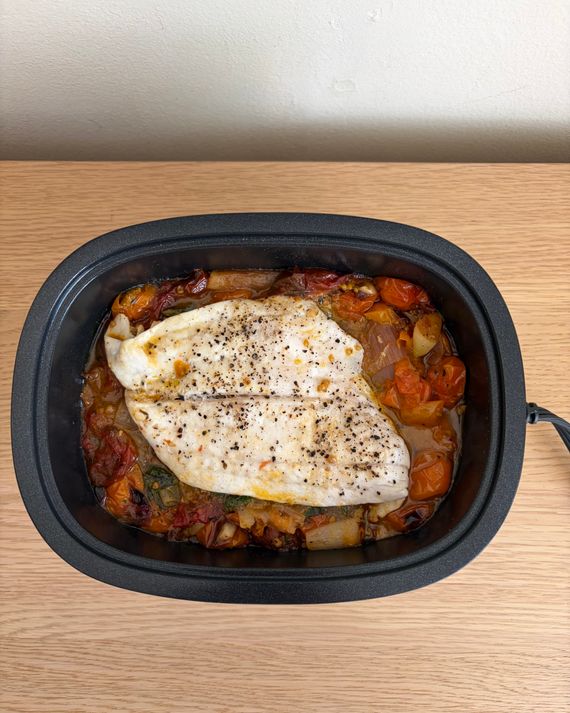
For full meal No. 2, I wanted to try a couple of techniques I hadn’t touched on the previous. Peak tomato season means tons of cherry and sungold tomatoes sitting on my counter, so I thought a stewed sauce would make sense. And I decided to poach a piece of whitefish on top. I started by setting the grill to medium-low, adding in some olive oil, shallots, and garlic cloves, along with salt. I gave those about a ten-minute head start to soften before I added in the tomatoes and put the lid on. I let everything go until the tomatoes started to pop and then collapse a bit, at which point I encouraged them along with a bit of smashing with a silicone spatula. I put the lid back on and gave it about 20 more minutes, stirring every so often. Once everything looked sufficiently soft and saucy, I lay a filet of lemon sole right on top, covered the lid again, and continued to to let everything go for about ten minutes, until the fish was cooked through. Another winner.
Day 7
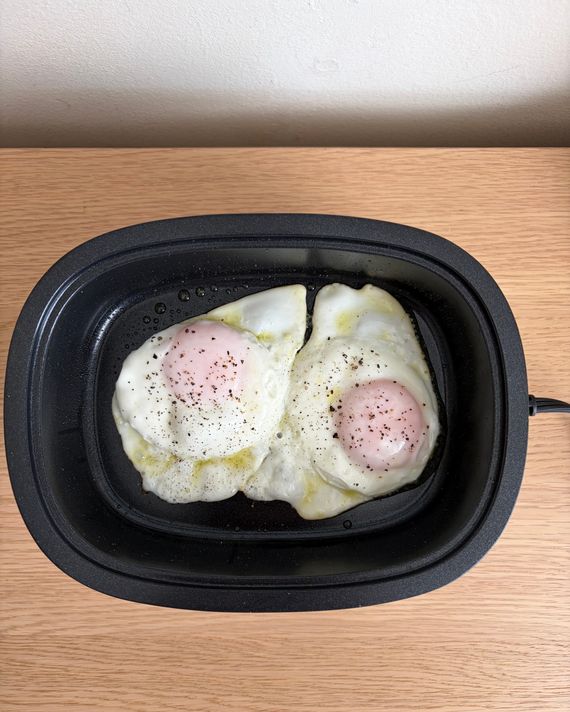
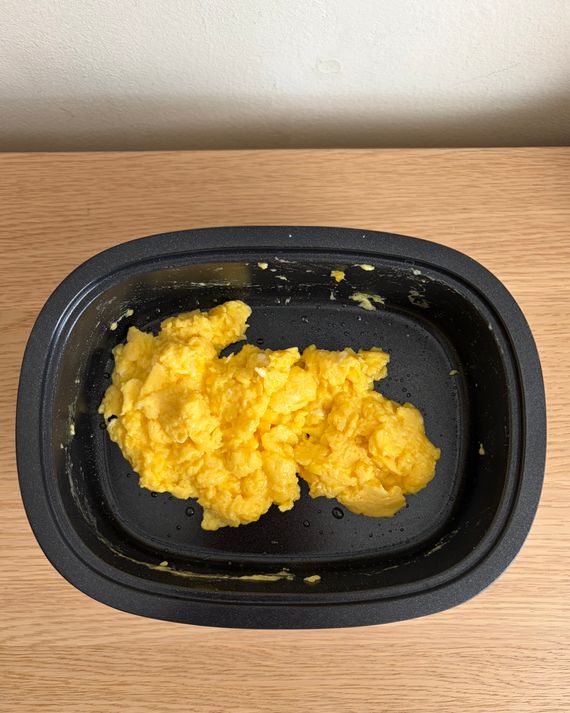
For my final day, I made breakfast. Luckily, my husband was working from home, so I got to test two variations of eggs: over easy and scrambled. The former worked perfectly: I heated the grill pot to medium, put a bit of olive oil at the bottom, cracked the eggs onto the surface, let the bottoms cook for a few minutes, nudged the heat down to medium-low, and covered with the lid for another couple of minutes. This yielded set whites and runny yolks. Next up was scrambled, which I cooked over medium-low after letting the grill preheat for a few minutes. This yielded fluffy, soft curds — just what I wanted.
Works well, but its size is limiting
After a full week of using the electric grill and just a couple of bumps along the way, I was more impressed with its performance overall than I thought I would be. Still, I was struggling a bit to figure out in exactly what situations such an appliance would make sense for the average person. While it works quite well, it’s not an exact substitute for cooking on the stove or in the oven, especially if you’re regularly feeding two or more people. Still, I think it would be handy in certain specific scenarios, like if you’re someone who lives in an RV, or if you’re a college student who wants to make quick and easy meals for themselves (I don’t know what electric-appliance-related dorm rules there are these days, but I can imagine it being useful in a communal kitchen if you don’t want to share or clean the stovetop all the time). And I bet it would be nice to have as part of a makeshift setup while doing kitchen renovations.
I also think it’s fair to note that while I personally look to limit the number of appliances in my own space due to cooking style and storage constraints, people love their air fryers, toaster ovens, and rice cookers — even though it could be argued those steam, roast, and bake the same as you could on the stove and in the oven. To that end, this little appliance might fit right in.
More multipurpose appliances
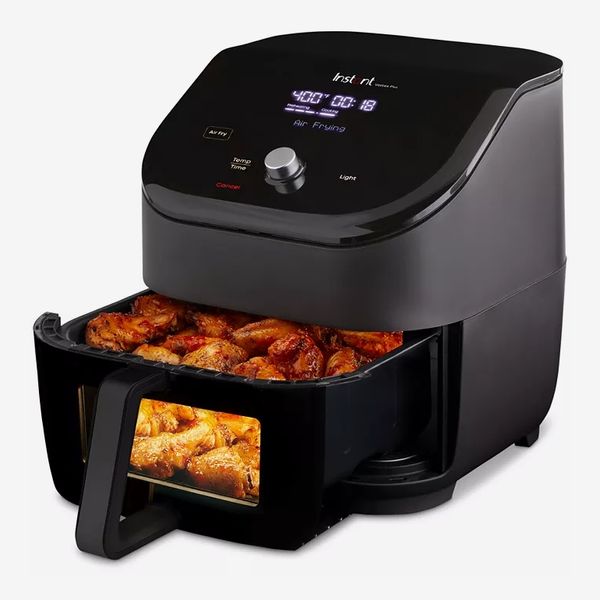
New! You can now save this product for later.
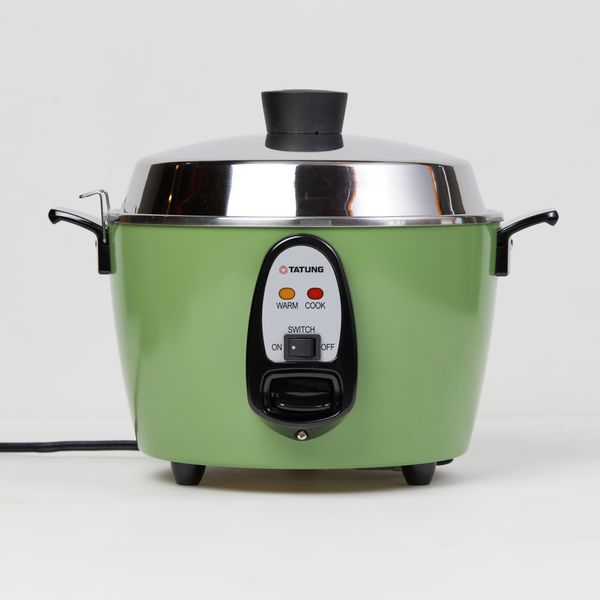
A rice cooker that steams from a separate compartment.
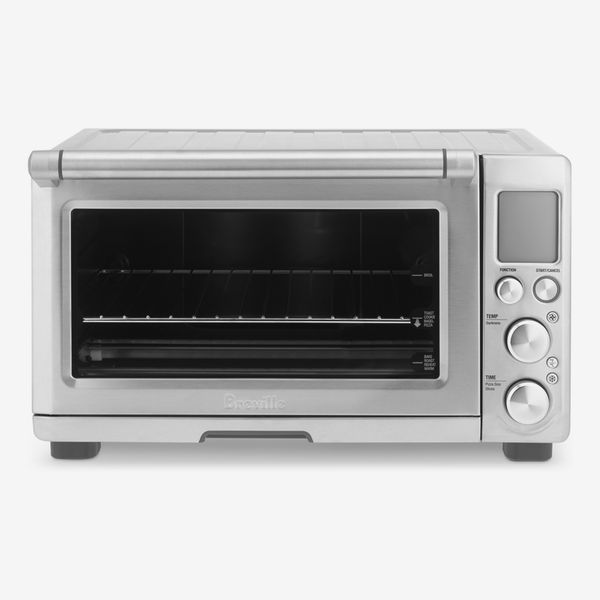
New! You can now save this product for later.
A classic and always reliable toaster oven.
More From The Strategist
- Hark, the Advent Calendars Arrived (Very) Early This Year
- The Best Things Strategist Editors Have Bought This Year (So Far)
- 63 Things You Should Never Buy Full Price
- The Strategist Fall 100
The Strategist is designed to surface useful, expert recommendations for things to buy across the vast e-commerce landscape. Every product is independently selected by our team of editors, whom you can read about here. We update links when possible, but note that deals can expire and all prices are subject to change.