The Tool That Helped Me (Finally) Finish Writing My First Novel
Save this article to read it later.
Find this story in your account’s ‘Saved for Later’ section.
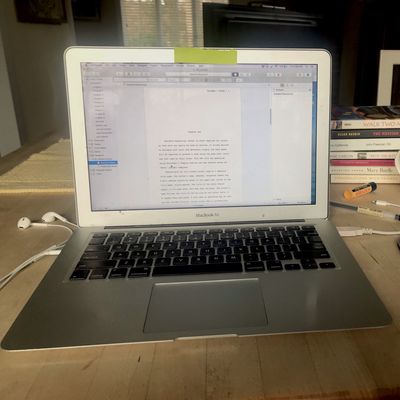
Like many freelance writers, I’ve been “working on a novel” more or less since college, though “the novel” that I’m “working on” has shifted considerably from a ‘70s-era bildungsroman to an art heist thriller to an influencer’s literary-ish saga. About a year ago, with a 272-page draft and zero clue how to tie up the ending, I decided to scrap it and start over. Again.
But roughly a week after abandoning the manuscript, I realized I didn’t actually want a new project. I just wanted a new system. Have you ever tried to cross-reference hundreds of un-outlined, un-labeled pages in Microsoft Word, a few 6000-word iOS Notes, chicken-scrawl in a Moleskine, and a Google Chrome bookmarks folder?
I needed to figure out a way to compartmentalize the sections of my manuscript, while also streamlining my research. Then I remembered the word processing software Scrivener, a perennial conversation topic in writers’ communities like Study Hall, the media worker listserv. Optimistically skipping the free trial, I paid the $50 licensing fee.
New! You can now save this product for later.
Scrivener has some famous fans: Taffy Brodesser-Akner used it while working on Fleishman is in Trouble, and Ta-Nehisi Coates came across it while looking for software to help him transition to comic-book writing. Earlier this year, Jia Tolentino tweeted an offer to buy Scrivener for writers of color or trans writers, and Daniel Jose Older shared a saga in which he accidentally deleted 500 words and went through the Scrivener Dropbox backup to find it.
Scrivener is not just for writing novels; there are several project formats to choose from, like article, cookbook, and epic poem. And while there’s no one way to use the software, it can be overwhelming. A few months ago, middle-grade author Debbie Reed Fischer tweeted, “I just started the Scrivener instructional videos and I’m not gettin’ it, folks. Please tell me I’m smart enough to figure out Scrivener.” Other authors echoed her concern in the replies. Last year, writer April Davila made it her mission to blog about a Scrivener hack every week for an entire year. By week 42, she wrote, “I can officially say: it broke me. I’m done. I can’t do any more.”
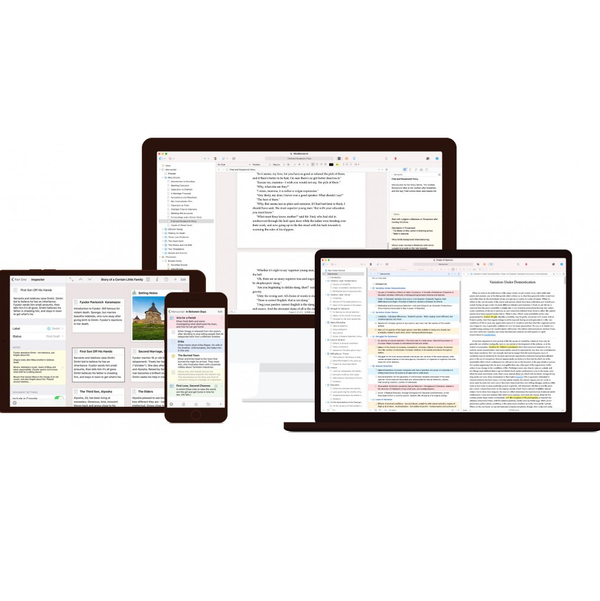
Because I’d heard about how overwhelming it could be, I skipped the tutorials altogether and developed my own system. The beauty of Scrivener lies in its three-column layout. Chapter navigation lives on the left in “the Binder,” each actual document (“the Editor”) lives in the center, and an “Inspector” tool lives on the right, holding bookmarks, image files, metadata, commentary, and footnotes. Thanks to the Binder and the Inspector, it’s possible to refer to notes, an outline, or character sketches while working directly in the text.
The Binder is essentially a collection of Word documents that each have their own “Inspector” note section on the right. By working with 20 documents that are 4,500 words each, the writing process feels more manageable. You can tell yourself, I’m tightening chapter 14 today, and it feels like a small victory when you finish. Each week, I go through my iOS Notes and sort them into the correct chapter Inspectors, so I don’t lose any ideas.
Over the summer, some friends and I started a weekly Zoom writing workshop. When one complained about her unwieldy Word doc, I recommended Scrivener. “It feels less like writing into the abyss,” she texted after downloading the trial. “Like, oh, I can work on just this specific thing and not worry about the rest of it. Do you get distracted that you can’t tell page length or anything?”
Actually, I love that Scrivener doesn’t show a page count (though there’s probably a way to change that). Instead, there’s a chapter word count at the bottom of each section, a manuscript word count on top, and a session word count so you can track how much you write every day. With these metrics, you can ballpark how long your chapters will be without trying to reach a certain number of pages, which keeps the process focused on the words themselves, and not the concept of producing a physical book.
Scrivener will not make you a better writer, but it will help you organize your thoughts and focus on the work itself, which could very well be the difference between four years of development hell and a finished manuscript in six months. Then it’s time to start revising. Again.
The Strategist is designed to surface the most useful, expert recommendations for things to buy across the vast e-commerce landscape. Some of our latest conquests include the best acne treatments, rolling luggage, pillows for side sleepers, natural anxiety remedies, and bath towels. We update links when possible, but note that deals can expire and all prices are subject to change.