The Best Computer Monitors, According to Experts
Save this article to read it later.
Find this story in your account’s‘Saved for Later’section.
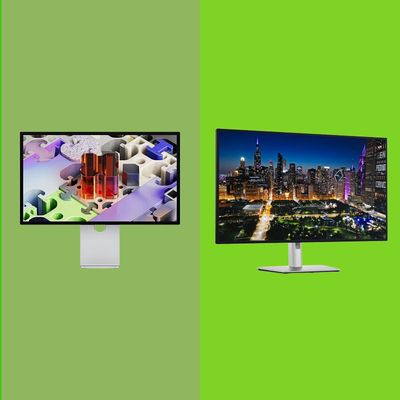
Why invest in a great computer monitor? Your computer’s display is the device you’ll engage with the most. Upgrading your monitor to something that’s bigger, better, or both is one of the best improvements you can make.
Bump up from an old 1080p display to a 4K monitor, and you’ll have more real estate on your screen to work with. More importantly, text, photos, and movies will look crisper, which makes working from home, gaming, or anything else you do at to your desk a lot easier.
In this article
Opt for a display with better panel technology, such as OLED, mini-LED, or even IPS (if you’re coming from a monitor with an antiquated TN panel), and you may find that your favorite photos and movies have more lifelike colors and eye-catching contrast and annoying issues like ghosting and limited viewing angles disappear.
If you’re a gamer, switching to a monitor that supports higher refresh rates than your current display can help you unlock smoother, more responsive gameplay in your favorite titles.
To find the best monitors for you, whatever kind of computer user you are, I spoke to experts to get their recommendations and advice and conducted way too much research of my own — backed by years of my own display testing — to help you out.
Our favorite monitors
New! You can now save this product for later.
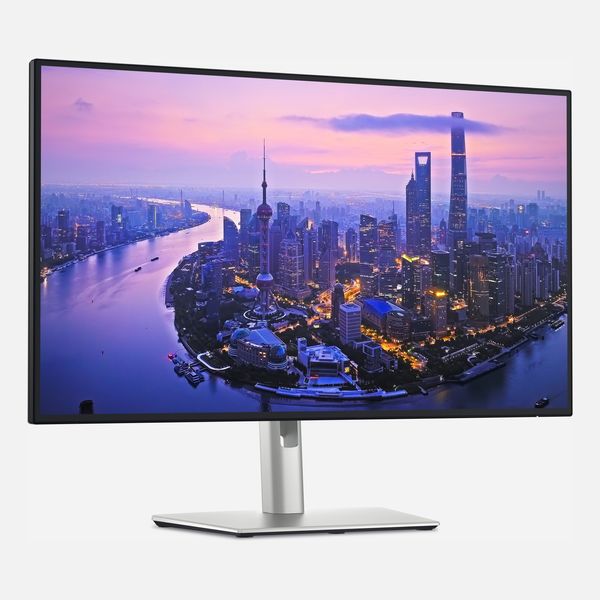
Our favorite monitor overall looks great and has all the ports and convenience features you'll need.
New! You can now save this product for later.
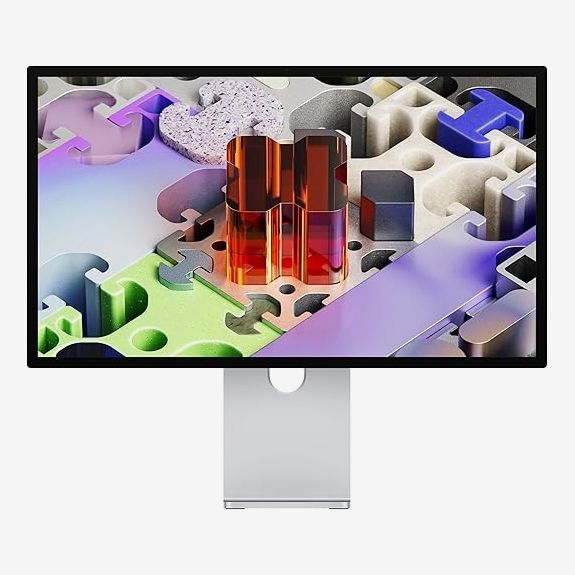
For demanding Mac users, Apple's high-end 5K monitor offers visual quality that can't be beat.
New! You can now save this product for later.
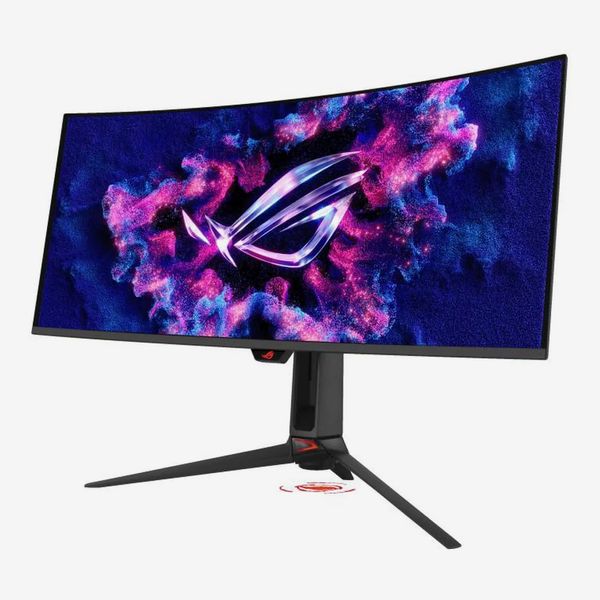
Want a more immersive experience? This ultrawide monitor offers plenty of space for work or gaming.
Whatwe’relookingfor
Size and resolution
While everyone’s personal preferences — and home-office setups — are different, “27 inches would be considered the most common size nowadays and the starting point for most people,” says Simon Baker, lead editor and owner ofTFTCentral. “But don’t be afraid to consider something larger like the increasingly common 32-inch market, or maybe an ultrawide screen in sizes from 34 inches all the way up to 49 inches.”
Even more important than size is resolution — the number of pixels that fit on the screen regardless of its dimensions. That’s loosely correlated with screen size. “Most 27-inch monitors,” says Baker, “will be 2,560 by 1,440 pixels (1440p), 32-inch monitors will be 3,840 by 2,160 pixels (4K), and something like a 34-inch ultrawide monitor will normally be 3,440 by 1,440 pixels.”
Resolution and size together form pixel density, which determines not just overall picture quality but the amount of screen real estate you realistically have to work with. That’s one reason to look for a bigger monitor if you want a very high-resolution screen: Youcanrun a 27-inch monitor at 4K resolution, and that’s great for watching movies in full-screen mode but not necessarily so much for work. While you’ll be able to open up a ton of documents and browser windows simultaneously, they may be too small to read comfortably.
If you’re a creative professional — you live in Adobe Photoshop or DaVinci Resolve, for example — don’t be afraid to think big: maximum size, maximum resolution. “Every pixel matters here,” says PCWorld executive editor Brad Chacos. “I’d ideally target 4K resolution, an IPS or OLED panel, and factory calibration with strong color accuracy certifications, like 99 percent of the sRGB space for digital and web work, and 95 percent (or more) of Adobe RGB or DCI-P3 for image editing.” Monitors designed for use with Macintoshes, which offer very high pixel densities (what Apple calls a “Retina” display, because it’s hard for the human eye to make out individual pixels), offer 5K or even 6K resolution.
But, Chacos adds, “People who simply want their iPhone concert photos can toss that out the window — just look for a monitor with strong color accuracy and a vivid IPS display. 4K would be good, but your phone video will still look good enough on lower-resolution monitors.”
Gamers, who also demand a lot from their monitors, will want to consider the capabilities of their graphics cards and may not want to opt for the highest resolution. A gorgeous 5K display might catch your eye at the store, but a cheaper graphics card may not be able to generate playable frame rates on a really big display — better to opt for lower resolution and higher performance. Check out a database likeHowManyFPSto preview what your favorite games require — and what your rig can handle.
Panel technology
Monitors use different panel types and backlighting technologies to present your picture. It might sound like alphabet soup — TN, VA, IPS, OLED, mini-LED — but these are critical to how your monitor looks and performs, with two important caveats.
IPS (in-plane switching) is the most common panel type used in today’s monitors. Though it’s an older technology, it still delivers great results. “IPS would be the best for all-around usage, providing good image quality, viewing angles, colors, and overall image,” Baker says.
You’ll increasingly find OLED (organic light-emitting diode) panels in monitors. “OLED is an excellent option for multimedia, gaming, and HDR content,” says Baker. “It surpasses the vast majority of LCD panels easily in terms of panel response times, refresh rates, motion clarity, and HDR experience.”
But a monitor that uses a newer display technology isn’t automatically going to be the best for your desk. Games, movies, and darker images on an OLED monitor can look amazing compared to an IPS display, but that same OLED display might not be the best for your workday or all-around use. OLED is “less suited to static content and general office apps,” says Baker, “as the panels typically have a nonstandard pixel layout, which leads to inferior text clarity. There’s also the increased risk of image retention and burn-in, although this area has improved significantly in the last few years with more robust panel technologies, OLED care options, and extended warranty offerings.”
Mini-LED isn’t a panel technology but a type of more precise backlighting, giving you more dramatic contrasts and incredible peak brightness levels. The darkest parts of an image (or aNosferatu-esque movie) still won’t look as good as on an OLED panel, however.
Refresh rate
For most people, a monitor with a 60Hz refresh rate — the number of times the monitor updates its picture each second — should be just fine for everyday tasks. You can bump up to a monitor that supports 120Hz or more, but you’ll want to triple-check that your connected desktop or laptop supports that refresh rate at the monitor’s native resolution. If everything works out, the higher refresh rate will give you a smoother picture, which you’ll notice all the way down to the most minute activities, like scrolling websites up and down.
“Gamers will want at least that,” Chacos says. “Though it’s hard to recommend refresh rates beyond 165Hz or maybe 240Hz unless you’re the sweatiest esports gamer around.”
Before you buy, keep in mind that you are limited by what your graphics card can do. If you’re struggling to push 120 frames per second inCyberpunk 2077at maximum quality settings, a 240Hz gaming monitor would be overkill. You also may not notice much of a difference with a super-high refresh rate if, say, you spend most of your time taking over the world in the turn-basedCivilization VII.
Adjustability, ports, and other features
Most other features you’ll find in today’s top computer monitors are more nice-to-have additions as long as they fit your budget and preferences. “Pretty much every other monitor spec or feature that I care about comes down to quality of life,” says Strategist contributor Michael Hession, formerly the head of photography and video at Wirecutter. “I value these things super highly, maybe more than most. The niceties — powerful Thunderbolt connectivity, perfect scaling with MacBooks, built-in webcam, and decent speaker — that come with Apple displays are very attractive.”
If you want to have as few cables running between your laptop and monitor as possible, you’ll want to prioritize a display with Thunderbolt or USB-PD (power delivery) ports that let you connect and supply enough wattage to keep your laptop charged with a single connection. And if you need to connect webcams, multiple computers, or mobile devices, you’ll want to look out for enough ports and switching to support those needs. In day-to-day use, features like that may matter to you more than a monitor’s default color accuracy, resolution, or refresh rate (though you shouldn’t ignore those things — basic monitor performance is important).
To that end, you’ll also want to look at reviews for any monitor you’re considering to make sure it offers modes or adjustability enough to give you decent color accuracy. Like TVs, your monitor’s various display modes can range from amazing to horrible. As long as one gives you a great picture and comfortable readability, that’s all you need.
Best monitor overall
New! You can now save this product for later.
Display:27 inches, IPS, 3,840 by 2,160 pixels |Refresh Rate:120Hz |Adjustability:Tilt, pivot, height, swivel |Ports:2x DisplayPort 1.4, 1x HDMI 2.1, 1x USB-C (upstream), 2x USB-C (downstream), 4x USB Type-A, 1x 2.5Gbps Ethernet; 1x USB Type-A and 2x USB Type-C (quick-access port) |Power Delivery:140W
Dell’s UltraSharp U2725QE ticks all the boxes, and then some, for a great, general-purpose monitor. It looks really good and gives you enough connection options that it can function as the hub of your home office.
“The U2725QE is an ‘everything and the kitchen sink’ kind of monitor,” says Sasha Muller, former senior editor atExpert Reviews. “It’s got a decent adjustable stand and loads of connectivity — up to 140W of power delivery for fast-charging compatible laptops, speedy Thunderbolt 4 connectivity, and plenty of USB ports. What’s more, the KVM switch allows you to share all that connectivity between two computers (a gaming PC and work laptop, for instance) and rapidly switch between the two. For space-starved desks, that could be the game changer.”
If your laptop supports it, Dell’s display can use Thunderbolt to feed it a wired Ethernet connection, display connection,andcharging, as well as access to any USB devices you’ve plugged into the monitor. One cable to rule them all, indeed. And the U2725QE even has a little pop-down, quick-access panel that gives you more USB type-A and type-C ports — front-facing this time, which is a boon for anyone who hates wrestling with cables behind their display.
None of that matters if the display itself doesn’t deliver, and the U2725QE does. The IPS-based display has decent color accuracy on its sRGB mode, enough that you’d be unlikely to notice a difference between it and a more accurate monitor sitting next to it. The U2725QE gets plenty bright, which is great if you find yourself battling glare in your home office. And it supports a DisplayHDR 600 mode for brighter highlights and deeper shadow details (though its meager eight local dimming zones means you might notice light bleed in darker scenes).
“I absolutely recommend it. If your primary goal is color-accurate creative work or managing a complex, multi-device workstation, the U2725QE remains a top-tier, reliable investment that justifies its price tag,” says Eli Nolan, founder ofMonitorNerds.
Best less-expensive monitor
New! You can now save this product for later.
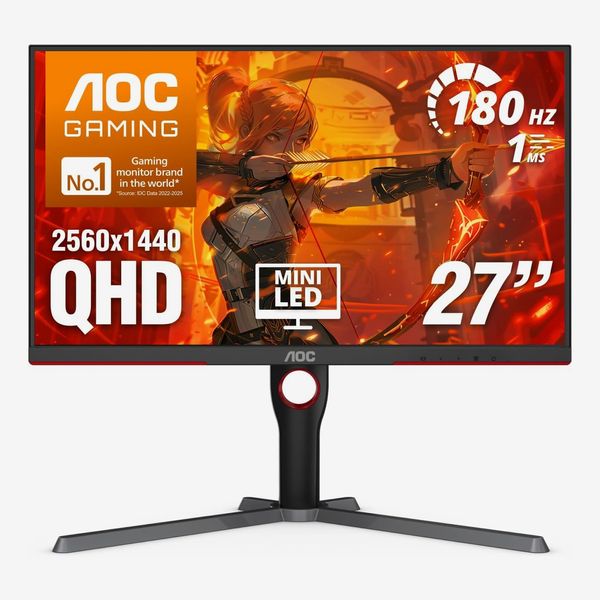
Display:27 inches, Mini-LED VA, 2,560 by 1,440 pixels |Refresh Rate:180Hz |Adjustability:Tilt, pivot, height, swivel |Ports:1x DisplayPort 1.4, 2x HDMI 2.0
Even though the Q27G3XMN istechnicallya gaming monitor, it’s not going to look out of place on your desk. Even if I’m wrong, it’s still worth considering, as the monitor does a pretty good job with all the essentialsandgives you a quality, mini-LED-backed picture at a price point that’s otherwise flooded with incredibly bad displays.
While the monitor’s 1440p resolution is a step down from 4K, this is often considered the “sweet spot” for a 27-inch display. You get a reasonable pixel density (around 108 pixels per inch) without having to mess with any scaling in your operating system to be able to read text. Gamers will be able to achieve higher frame rates at better quality settings on budget- to mid-tier systems than if you were trying to push a 4K monitor’s worth of pixels. (And the monitor’s native 180Hz refresh rate is an unexpected bonus.)
Switch to the display’s sRGB mode for the best accuracy, then sit back and enjoy the 336 local dimming zones that give AOC’s display finer control over what’s displayed on the screen. You won’t escape a little bit of light bleeding in dark scenes, but you’ll still get more vibrant contrasts than what you’d find on a typical edge-backlit IPS display.
Best 5K monitor for Mac
New! You can now save this product for later.
Display:27 inches, Mini-LED IPS, 5,120 by 2,880 pixels;Refresh Rate:120Hz;Adjustability:Tilt, height;Ports:2x Thunderbolt 5 ports, 2x USB-C ports;Power Delivery:140W
If price is no object — you don’t mind paying a tricked-out MacBook Pro’s worth of money for its connected display — the Apple Studio Display XDR is the Everest of conventional displays for Apple fans. Its native 5K resolution — 78 percent more rendered pixels than a 4K display — may ruin the rest of the monitor market for you. For photographers, content creators, indie filmmakers, or anyone working with HDR video content, it’s as good as you can get.
“I could never go back to [a 1080p resolution monitor], and I actually don’t think I would ever get a non-5K or more monitor,” Hession says. “I want perfect scaling with MacBooks, and I like lots of real estate for apps.”
The XDR also has incredibly high brightness and uses a whopping 2,304 dimming zones across the 27-inch panel, thanks to the mini-LED backlighting. The result? Incredibly precise control over light bleed, as close to the on-off pixel setup of an OLED display you’re going to find in a mini-LED monitor right now.
A less-expensive 5K monitor for Mac
New! You can now save this product for later.
The Apple Studio Display XDR has one big downside for most buyers: It isveryexpensive. If you want the extra resolution but can’t stomach that price tag, theBenQ MA270Sis a great, less-expensive alternative that gets you the same panel size and resolution for roughly one-third the cost. It’s not mini-LED, however. Rather, it’s based on an IPS panel like Apple’s “lesser” Studio Display (which is itself quite expensive) rather than the top-shelf XDR variant. You’ll find other options from LG, but we’re still waiting for more true 5K mini-LED options — and, hopefully, lower prices — to hit the market.
Best gaming monitor
New! You can now save this product for later.
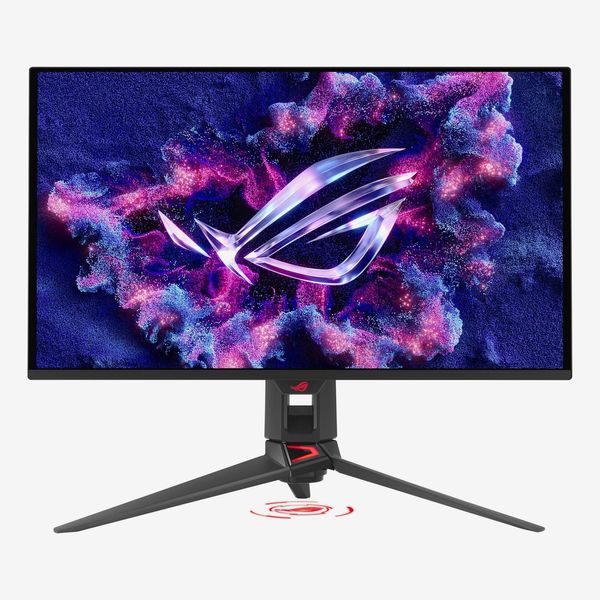
Display:27 inches, QD-OLED, 3,840 by 2,160 pixels|Refresh Rate:240Hz |Adjustability:Tilt, pivot, height, swivel |Ports:1x DisplayPort 2.1, 2x HDMI 2.1, 1x USB-C, 3x USB 3.2 Gen 1 Type-A |Power Delivery:90W
The ROG Swift PG27UCDM is one of Baker’s regular recommendations for a great 4K OLED gaming monitor. It ticks all the boxes: a large resolution on a reasonable screen size for good pixel density; excellent color and grayscale accuracy in its sRGB mode (a 1.1 Delta E for both); and no text-rendering issues, which makes the monitor practical for everyday use, too. The display supports both Nvidia’s G-Sync and AMD’s FreeSync Premium Pro — we’d expect nothing less — and has near-instantaneous response times, leading to sharp, ghosting-free gameplay.
“It offers a great combination of panel performance and a top-tier feature set that sets it apart from many other models in this size and resolution combination,” Baker says. “It’s got a massive range of OLED features, including ELMB blur-reduction modes, VRR anti-flicker settings, HDR10 and Dolby Vision support, and their latest OLED Care features, too — pretty much everything you might want.”
The display comes with a decent amount of ports for display connections and external devices, as well as support for 90 watts of power delivery, which should help you minimize cable clutter when connecting a gaming laptop to the display. If you work and game in equal measure, the PG27UCDM should give you a great experience either way — and the monitor’s big, 240Hz refresh rate will make your OS feel as buttery smooth as your MMOs.
“The Asus ROG Swift PG27UCDM is absolutely gorgeous and packed with features,” Chacos says. “The price tag feels a little steep, but it’s a fantastic monitor that nobody would be disappointed by.”
Best ultrawide monitor
New! You can now save this product for later.
Display:34 inches, QD-OLED, 3,840 by 1,440 pixels |Refresh Rate:360Hz |Adjustability:Tilt, height, swivel |Ports:1x DisplayPort 2.1, 2x HDMI 2.1, 1x USB-C, 3x USB 3.2 Gen 1 Type-A |Power Delivery:90W
If your display tastes tend toward thereasonablygigantic, Asus’ ROG Swift PG34WCDN strikes a perfect balance between size and compatibility. The simple advantage of an ultrawide like the PG34WCDN over a larger (and more square) 32-inch 4K display is that more gaming desktops and laptops will be able to achieve great frame rates at top quality settings. This display, after all, has about 33 percent fewer pixels to deal with.
While that affects the screen’s overall pixel density — still a reasonable 109 pixels per inch — at least you won’t have to scale your desktop because onscreen text is too tiny. This monitor also uses a brand-new subpixel layout that makes text look crisp and clear, an issue that has plagued some competing OLED displays.
The monitor’s out-of-the-box default settings are incredibly accurate for colors and grayscales (set the display to the DCI-P3 color space to achieve the best results). Peak HDR brightness tops out at 1,300 nits depending on what picture mode you select, which looks incredible when paired with the OLED display’s “true black” capabilities. (It almost makes me want to rewatch the overly murky final season ofGame of Thrones.)
“The PG34WCDN is an excellent new ultrawide OLED monitor and offers some very good new panel updates and improvements that set it apart from all of the previous QD-OLED ultrawide monitors that have been released in the last few years,” Baker says.
A less-expensive ultrawide monitor
New! You can now save this product for later.
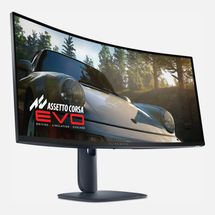
If you can’t stand the gaming-monitor look of the ROG Swift PG34WCDN or don’t want to spend quite as much, Dell’s Alienware AW3425DW is a good alternative, with similar resolution and panel technology, though with a somewhat slower refresh rate (which might not bother you if you aren’t primarily looking for a gaming display). One caveat: As of this writing, it is set to be superseded by a new model, the AW3426DW. While the current version is a solid deal (and will continue to be), if you want the latest and greatest, you might want to wait for reviews of that display before you make a big purchase.
Best 32-inch monitor
New! You can now save this product for later.
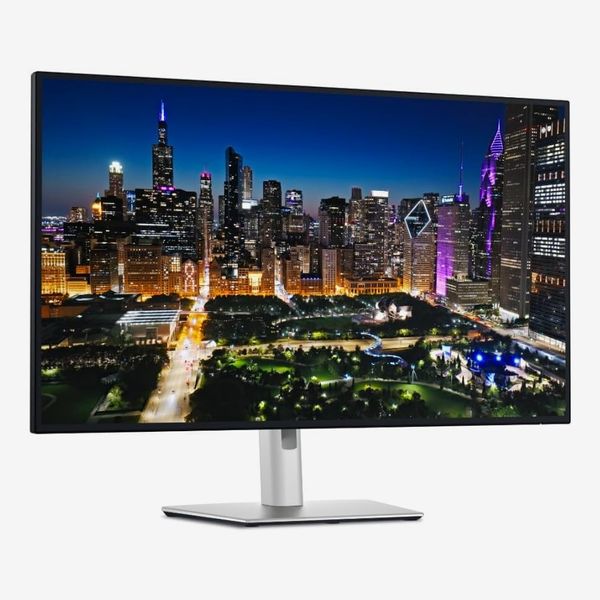
Display:32 inches, IPS, 3,840 by 2,160 pixels |Refresh Rate:120Hz |Color Gamut:99% DCI-P3, 100% sRGB |Adjustability:Tilt, pivot, height, swivel;Ports:2x DisplayPort 1.4, 1x HDMI 2.1, 1x USB-C (upstream), 2x USB-C (downstream), 4x USB Type-A, 1x 2.5Gbps Ethernet; 1x USB Type-A and 2x USB Type-C (quick-access port) |Power Delivery:140W
Take our primary monitor pick and hit it with a science-fiction-era growth ray: That’s the Dell UltraSharp U3225QE. This 32-inch display has all the same features and performance as Dell’s UltraSharp U2725QE. It’s just larger. That means you’ll lose a little pixel density by keeping the same 4K resolution on a bigger display. You’re still at roughly 138 pixels per inch, which is north of the recommended 110 for sharp, clear text in everyday use.
You’ll definitely want to make sure that this monitor fits nicely in your home-office setup. If you’re not sure, and there aren’t any 32-inch displays you can go check out to get a feel for the size, you could get crude: Cut out a piece of cardboard that’s 28 inches by 16 inches and hold that up wherever it is you use your desktop or laptop computer. If it feels outrageous, drop down to our 27-inch pick. But if you’re drawn to its size, this display will give you a great IPS picture, strong color accuracy, and plenty of productivity-boosting perks. And like its smaller sibling, it’s one of the most connection-packed displays we’ve seen in some time.
Our experts
• Simon Baker, lead editor and owner ofTFTCentral
• Brad Chacos, executive editor atPCWorld
•Michael Hession, Strategist contributor and former head of photography and video at Wirecutter
• Sasha Muller, technology journalist and former senior editor atExpert Reviews
• Eli Nolan, founder ofMonitorNerds
The Strategistis designed to surface the most useful, expert recommendations for things to buy across the vast e-commerce landscape. Some of our latest conquests include the bestacne treatments,rolling luggage,pillows for side sleepers,natural anxiety remedies, andbath towels. We update links when possible, but note that deals can expire and all prices are subject to change.