The Best Patio Umbrellas, According to Designers
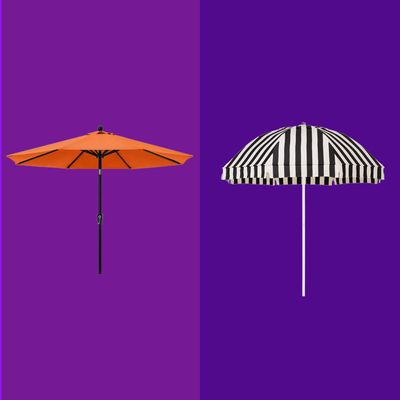
Whether it’s outsmarting the shifting sun, outfitting a larger table or patio-furniture set, or checking for built-in UPF, there are many features to consider before you purchase a new patio umbrella — often it’s just an afterthought.
In this article
“People spend weeks choosing outdoor furniture and then grab an umbrella in five minutes. It’s usually the biggest thing in the garden and gets the least thought,” says Samantha-Jane Agbontaen, interior designer and founder of London-based House Designer.
From critical technical elements like base weight and pole materials to design features like shape and fabric, we checked in with designers and landscape specialists to help you find a top-rated umbrella no matter what your needs.
Our top picks
New! You can now save this product for later.
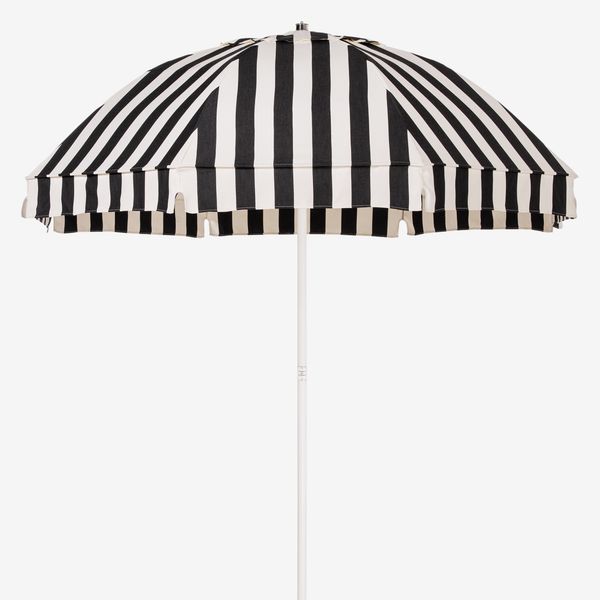
This classic, vintage-styled, well-built market umbrella is our favorite patio umbrella overall.
New! You can now save this product for later.
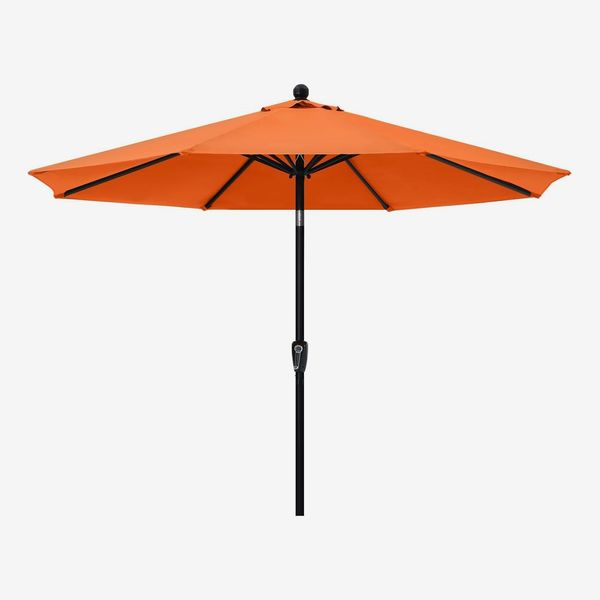
A good-looking, high quality umbrella for a fraction of the price of the competition.
New! You can now save this product for later.
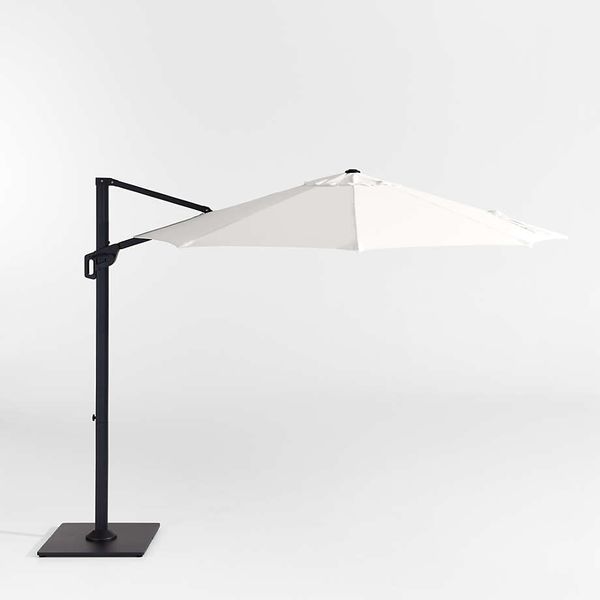
For shade wherever you want it, pick this sturdy, attractive, and protective cantilever umbrella.
What we’re looking for
Sizing and ease of placement
While many buyers default to the standard nine-footer, which fits into the center hole on most four-to-six-person outdoor dining tables, simply buying an umbrella to match the footprint of your furniture can be a shortsighted decision. And with so many designs out there — from traditional market umbrellas meant to be used with a table, to space-saving half-umbrellas, to cantilever umbrellas that can shade almost any outdoor area — the choice is limitless.
Most of our experts agree that the most important guideline for correctly sizing your umbrella is making sure it extends at least two feet past the area you want to shade. Ignore this advice, and there’s a good chance you’ll be sitting in full sun by 3 p.m. “Many residential homeowners, when purchasing outdoor awnings, overlook changes in the sun’s angle during the afternoon,” says Kanika Bakshi Khurana, principal interior designer and founder of Kanika Design.
Damien Harrison, principal of New York City landscape-design studio Harrison Green, likes to position umbrellas beside a dining table for greater flexibility and unobstructed sight lines. “Placing two appropriately sized umbrellas on either side of the table, rather than one in the center, also makes them easier to reposition or remove altogether with minimal fuss,” he says.
Market umbrella or cantilever umbrella?
You’ll find two types of patio umbrellas: Market umbrellas have a central pole (sometimes you’ll see them referred to as “center-pole” umbrellas). These are the traditional umbrellas you’re accustomed to and can be used stand-alone or mounted over a patio table using the center hole.
Cantilever umbrellas use an offset design, hanging the canopy from a pole mounted to one side. They can be larger and are more versatile (you can use them over a table, but they can also be positioned to block the sun from almost any angle and can provide shade poolside, over a chaise lounge, or anywhere on your patio), but they require more robust hardware to suspend the weight of the mount, and are typically more expensive.
Canopy materials and colors
Your patio umbrella’s canopy needs to be built to last. Because it’s consistently exposed to the elements, which can promote fading and mildew, all of our experts suggest solution-dyed acrylic. “Cheap polyester goes chalky and flat after a single season, and the dark colors are the first to give. Fabric quality is everything here,” Hallie Malitsky, founder of Hallie Rose Design, says. “Look for UPF 50+ and a fade warranty of five years or longer. If a brand will not guarantee its own color, that tells you something.”
“We define solution-dyed acrylic as the performance gold standard for outdoor fabrics,” adds Khorana. “Its pigments penetrate the core of fibers rather than merely adhering to their surfaces, granting it greater resistance to sun fading and mold growth than conventional polyester and olefin fabrics.”
As for picking a color, Agbontaen likens it to choosing a sofa. “Go for neutral canopies, think stone, cream, olive, charcoal. A bright or striped canopy dominates the space and every view of the garden. The umbrella shouldn’t be the loudest thing out there. You want it to blend, not shout.”
Pole and position
When it comes to the pole, there are three types to choose from: aluminum, fiberglass, and wood. How you decide largely depends on the size of your umbrella, your wind exposure, and your commitment to aesthetics.
Kevin Lenhart, landscape architect and design director at Yardzen, finds that fiberglass may bend better than other post materials, but is generally less attractive than aluminum or wood. “A common and winning approach is to use aluminum for the umbrella post and fiberglass for the canopy ribs. This combines a sturdy support with flexibility in the canopy, where it is needed most,” he says.
In addition, Malitsky advises staying away from poles under 1.5 inches in diameter on a full-size umbrella because it will be too flimsy. “Quality poles run 1.5 to two inches, and a two-piece pole with a wobbly joint is never going to hold like a single-piece pole will,” she says.
Another thing to consider is whether you want a center pole, which fits into your table, or a cantilever that stands beside your furniture and can cover more space — maybe even shade an entire outdoor-patio area. “Cantilever umbrellas cost more, but they’re much better at staying out of the way of things,” Lenhart says.
Ace the base
It should be no surprise that the size of the umbrella will dictate the size of the base, and Lenhart thinks it makes sense to buy something heavier than you might need rather than deal with performance issues. “I don’t follow a particular ratio, but generally advise: 50 pounds for eight feet; 70 pounds for nine feet; 90 to 100 pounds for ten feet, and 120 to 150 pounds for 11 feet.”
An easier rule to remember is ten pounds of base per foot of canopy for a freestanding umbrella, according to Malitsky. “If the base looks proportional to the umbrella, it’s probably too light. A good base looks slightly absurd,” she says. ““I always choose a solid base over one you fill, because fillable bases are almost always plastic, which doesn’t exactly scream quality. It’s the outdoor equivalent of a Rubbermaid bin as a nightstand. Think about the materials you use inside your home. The same rules apply outside.”
The best market umbrella
New! You can now save this product for later.
With a classic, vintage look and premium materials like a stainless-steel frame, an aluminum pole, and teak accents, this gorgeous table umbrella is as stunning as it is solid. “A classic market umbrella centered over a table reads timeless and elegant and Business & Pleasure Co. gets the balance right,” says Malitsky, who clocks this umbrella as her top pick. “There are ample colors and trim options, so it works with almost any style, and their Pleasuretex canopy technology will hold its color through many summers of sun. It has that nostalgic coastal European look for a Slim Aarons-meets-the-modern-day ease and is designed to withstand all weather conditions.”
The best less-expensive market umbrella
New! You can now save this product for later.
You’ll get ample quality for price from ABCCanopy with this simple, nine-foot patio umbrella. It’s Khurana’s budget choice because it comes in 15 colors, uses a sturdy, steel frame, and features an easy-to-use crank and push mechanism to open and close it. At this price point, expect some fading of its polyester fabric over time, but users like how thick the canopy feels and that it dries quickly.
The best cantilever umbrella
New! You can now save this product for later.
Lenhart believes that because good outdoor spaces rely heavily on things like clear paths, uninterrupted sightlines and an absence of barriers, a cantilever umbrella is well worth the investment. “A big post coming down through a dining table is a drag, getting in the way of dishes and blocking views across the table. For chaise longues, a center-pole umbrella is less of an issue, but even then, it can fail to shade your whole body unless you lift and reposition it,” he says. “This particular model ticks all the boxes: It is attractive, has top of the line sun and mildew resistance, and has a vented canopy for better performance in strong winds.”
The best patio umbrella for small spaces
New! You can now save this product for later.
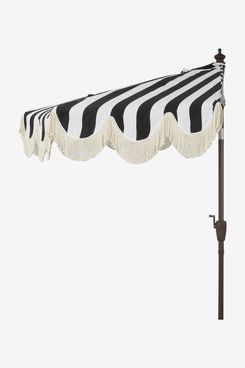
Built for tighter spaces where a full umbrella just won’t do, including balconies or just near sliding doors or windows, this half-moon umbrella fits the bill. “On a small terrace or patio, a round umbrella parks a pole and a base right where you’ll need to walk,” says Malitsky. “The Arlmont & Co. umbrella pushes flush against the wall and gives you the same shade with half the footprint.” Plus the stylish scallop-and-fringe edge reads more East Hampton deck than backyard.
The best patio umbrella for windy areas
New! You can now save this product for later.
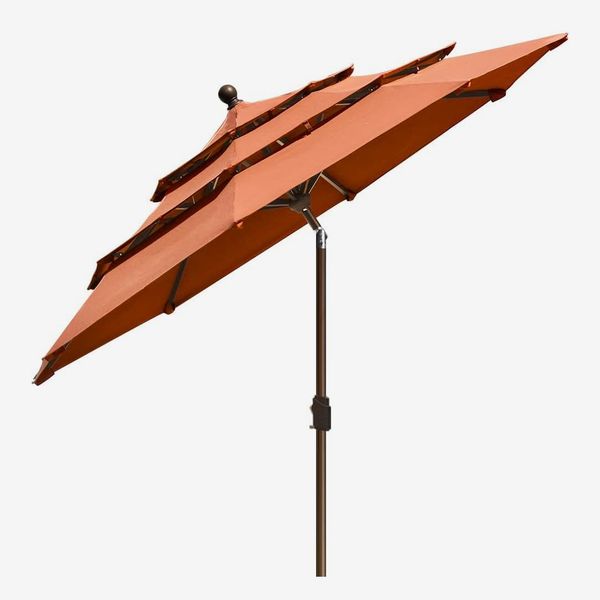
EliteShade USA 3-Tier Market Patio Umbrella - 9 foot
“For high-wind areas, look for umbrellas with double-vented canopies, marine-grade fiberglass ribs (which flex rather than snap), and heavy-duty aluminum frames. The goal is to combine structural resilience with excellent airflow, preventing the canopy from catching the wind like a sail,” says Harrison. Abgontaen particularly likes this EliteShade umbrella because “it is built exactly this way” and, in addition to its vented canopy design, it includes 50+ UPV protection for sun as well as wind.
A fashion-forward market umbrella
New! You can now save this product for later.
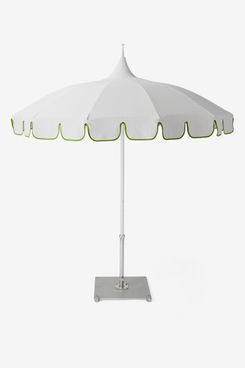
Sometimes you just want something that looks great, and in that case, Agbontaen suggests sticking with a plain neutral Sunbrella canopy in stone, olive or charcoal and letting the design speak for itself. “If you want personality, Serena & Lily’s scalloped two-tone is the one I’d allow because the shape does the decorative work and the palette stays soft,” she says.
The best luxury patio umbrella
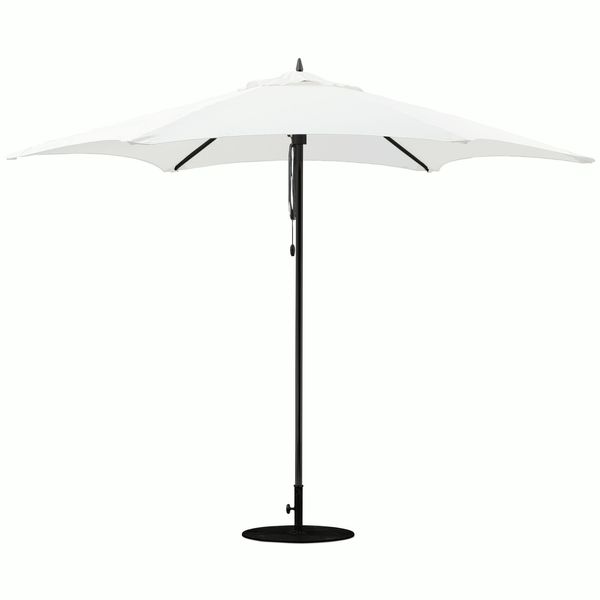
New! You can now save this product for later.
Green calls the build-your-own brolly brand Tuuci “the Rolls-Royce of umbrellas with all the bells and whistles” and with personalized configurations you’ll customize, from the shape and color of your canopy to the finishes of the pole, and everything in between, this is not for the umbrella novice. Agbontaen agrees, noting “the founder came out of yacht rigging and it shows: marine-grade fittings, parts you can replace rather than a whole umbrella you throw away. It’s the difference between buying shade and buying a piece of architecture.” If you’re looking for a statement piece that will last through all the elements, this is a splurge you won’t regret.
Our experts
• Samantha-Jane Agbontaen, interior designer and founder of London-based House Designer
• Damien Harrison, principal of New York–based landscape-design studio Harrison Green
• Kanika Bakshi Khurana, principal interior designer and founder of Kanika Design
• Kevin Lenhart, landscape architect and design director and at Yardzen
• Hallie Malitsky, founder of Hallie Rose Design
More From The Strategist
- Hark, the Advent Calendars Arrived (Very) Early This Year
- The Best Things Strategist Editors Have Bought This Year (So Far)
- 63 Things You Should Never Buy Full Price
- The Strategist Fall 100
The Strategist is designed to surface useful, expert recommendations for things to buy across the vast e-commerce landscape. Every product is independently selected by our team of editors, whom you can read about here. We update links when possible, but note that deals can expire and all prices are subject to change.