These (Almost) Screenless Cameras Will Keep You Off Your Phone

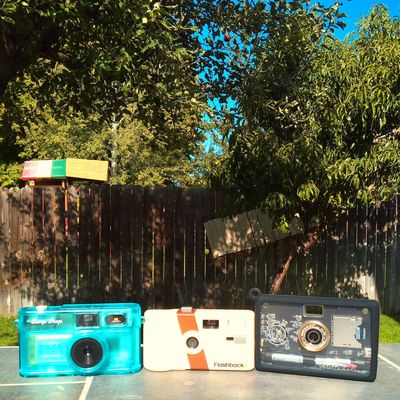
I’ve never quite been able to ditch my smartphone for the doomscroll-free life. No matter how many apps I delete (and I depend on a lot of them to test products for the Strategist), I still find myself picking up my phone anyway. I noticed I frequently use my phone to take a picture, then get distracted with checking my notifications and doing a quick tap-through of my friends’ Stories. Could the camera be the problem? Then I heard from three friends about the Camp Snap and remembered this piece by Strategist editor Winnie Yang about the a nearly screenless camera, which is meant to let you focus on getting the shot and moving on. And its plastic shell perfectly captures the nostalgic feel of old disposable film cameras from the ’90s.
But the Camp Snap isn’t the only screen-free camera you can get. There’s also the Flashback and Paper Shoot, both of which take entirely different approaches to replicating the feel of an old-school camera. I spent two weeks trying all three — outdoors and around town, as well as with family during get-togethers — to see which took the best pictures and would be most likely to keep me off my phone. Here’s what I found.
An instant, (almost) screenless camera
New! You can now save this product for later.
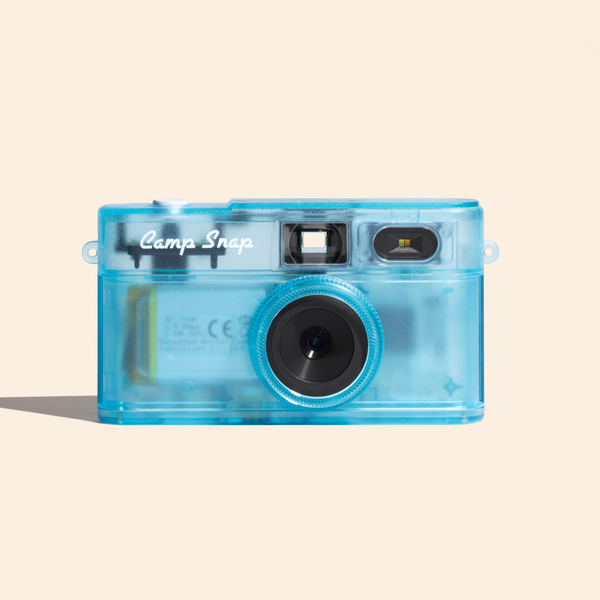
Camp Snap 2
If you’ve spent any time on Instagram over the last few months, you’ve probably seen an ad or two for the Camp Snap. Beyond its charming, vintage design, it feels and works just like an old point-and-shoot camera. The plastic is lightweight but doesn’t feel cheap, and its simple configuration makes it easy to use right out of the box — even my 3-year-old nephew got the hang of it within minutes. There’s an on/off switch (also used for turning on the flash), a button to toggle through filters, and a shutter button. The Camp Snap does actually have a tiny screen, though it doesn’t let you preview your shots. It instead shows you how many photos you’ve snapped; it can store up to 2,000 on the preinstalled microSD card.
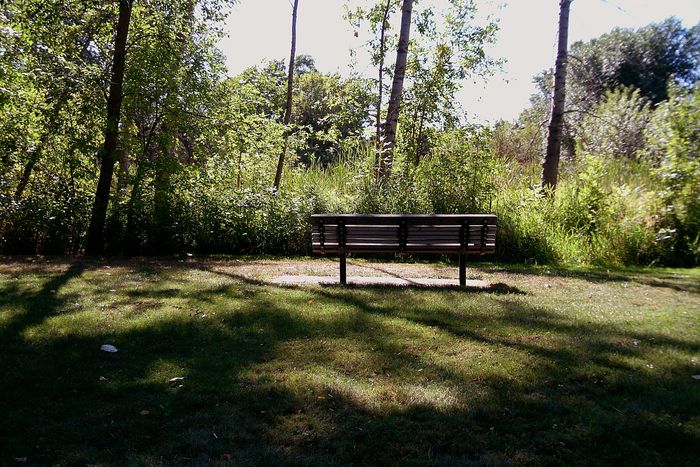
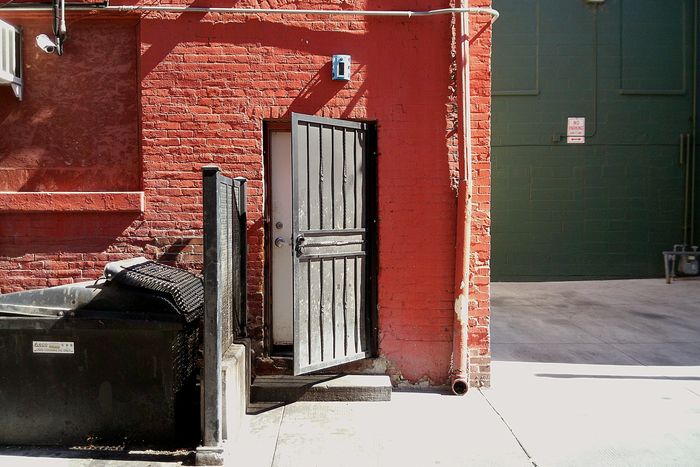
As for photos, the Camp Snap evokes the same spark of nostalgia you’d get from using an actual vintage camera. It comes with six filters (three “vintage” filters that make the images seem faded, analog, black-and-white, and standard), and you can install more from one of a couple Camp Snap communities. Images aren’t as crisp as those you’d get on an iPhone, but they aren’t meant to be. The filters provide enough charm to distract from the camera’s quirks: Brightly lit areas sometimes get washed out, and there’s some shutter lag so it isn’t great at capturing motion. That’s a fair trade-off for the peace of mind that comes with clicking the shutter and dropping the camera back in your pocket. If you want better photos and a retro experience, the Flashback and Paper Shoot cameras take cleaner images but at the cost of some complexity.
If you plan on letting your kids use this camera, there’s a lock feature that prevents them from fiddling with the filter settings. To toggle the filter lock, simply press down on the filter button for ten seconds. With the lock enabled, they can still take as many pictures as the camera can store but won’t run the risk of accidentally taking all their photos in black-and-white. There’s also a screw that keeps the microSD-card slot protected from child interference, though if you’re keeping this for personal use, you can remove it; the compartment will stay closed.
For not much more, Camp Snap sells the CS-PRO, which has double the megapixels of the 2 (16 compared to eight), though it’s not a universal upgrade. Its pictures are notably clearer and better suited for posting on social media or viewing on large displays. That aside, though, it comes with two fewer filters preinstalled, and owing to its more detailed images, it doesn’t quite replicate the film look as well as the Snap 2’s lens. It’s also thicker and wider, making it harder to fit in a pants or jacket pocket.
A more refined but more complicated screenless camera
New! You can now save this product for later.
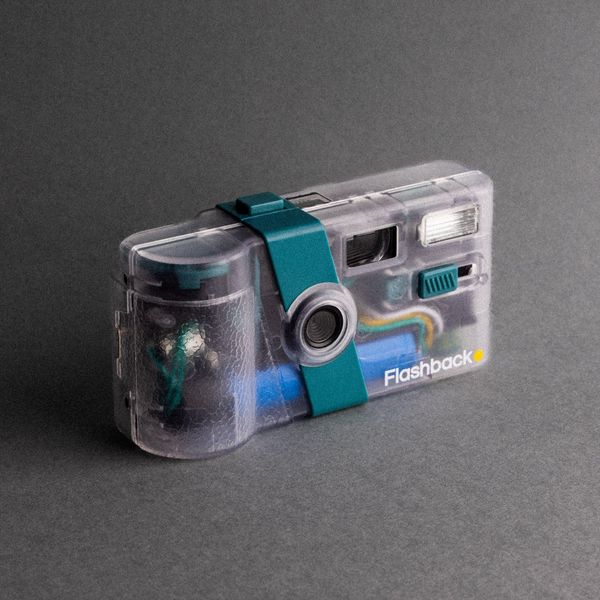
If you really want to lean into the retro experience of using an old film camera rather than just replicating the look, the Flashback ONE35 V2 may be for you. While the Camp Snap works more or less like a regular camera, that’s not the case with the Flashback. Instead, you get 27 images per “roll” of film (there’s a tiny screen to show you how many you have left), after which you have to unload them to a “photo lab” inside Flashback’s app. Once you’re done with that, you have to wait 24 hours for the photos to “develop” before you can see them. For those who want immediate access to their photos, it can feel frustrating waiting for that notification the following day, and there’s a mode that disables the wait, but I prefer to keep it on and lean into the ’90s-style delay. The pictures are so good it’s worth the wait.
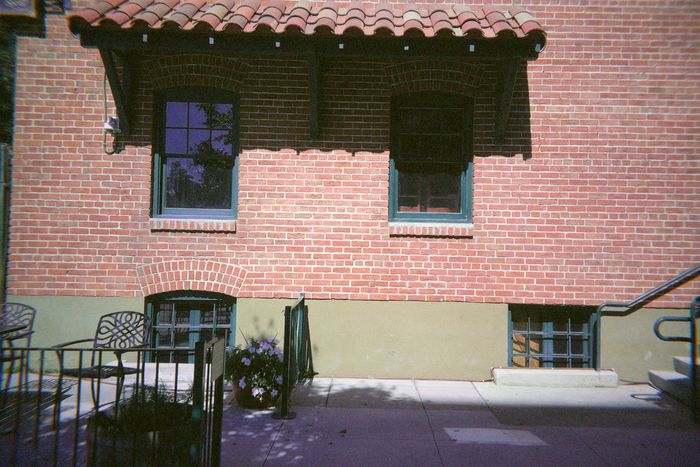
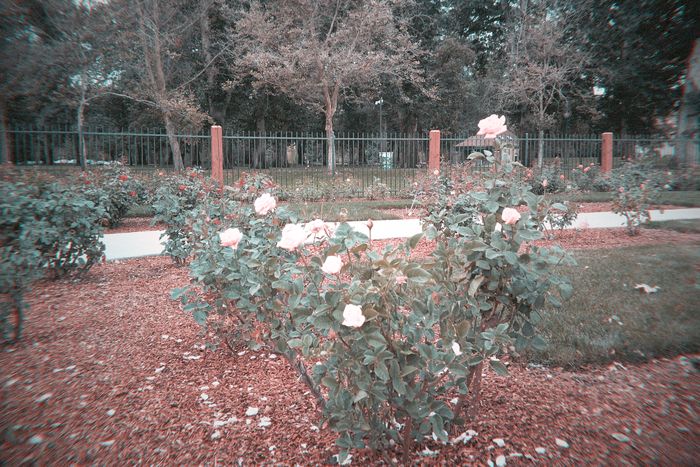
Compared to my Camp Snap photos, the shots I took with the Flashback were better exposed, had more detail, and captured subjects in motion, like my particularly fast niece, more clearly (at least in well-lit scenarios). In bright light, nothing gets overexposed, and the filters truly do make the images feel like they came straight off a roll of film. You’ll need to use the flash in low light, but it doesn’t make photos look washed out. To add to the retro vibe of the Flashback, there’s a rotary dial that you have to turn every time you want to take a picture, just like an old disposable camera. That means you won’t be able to take photos instantly like on a phone — and there’s no burst mode for taking multiple shots in rapid succession like an old film camera — but it brings more intention to the process.
In addition to taking better photos than the Camp Snap, the Flashback’s hardware is nicer to touch. Its plastic is thicker and feels more durable, and the shutter button has a more satisfying click. I have one gripe, though: The viewfinder doesn’t accurately reflect the crop and framing of the actual lens, so it’s better to just point and shoot. That’s sort of the point, though; no need to fixate on getting things just right.
A truly screenless camera for tinkerers
New! You can now save this product for later.
Paper Shoot Camera
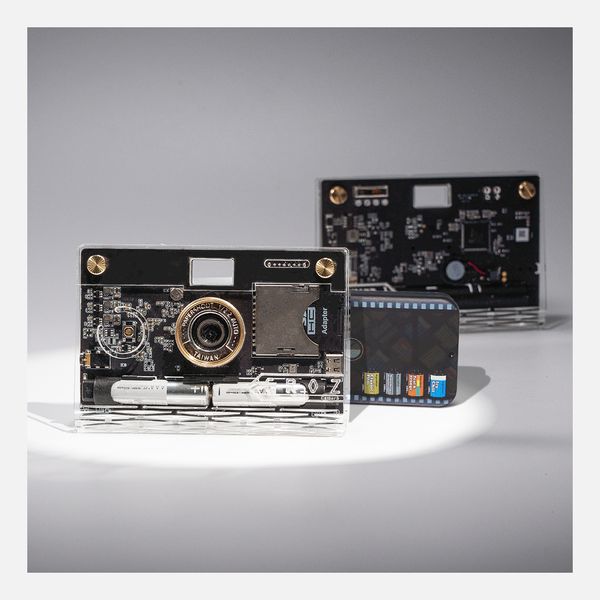
Unlike the Flashback and Camp Snap, the Paper Shoot lets you customize the look and feel of the camera itself. When you purchase the Paper Shoot, you can choose from a select number of shells to hold the camera’s main components. Because all of the Paper Shoot’s components are on a single circuit board, the shells are quite thin, making the camera easy to keep in a pocket or small bag. You can easily swap the camera’s innards between cases based on how you’re feeling on a given day. I prefer the LEGO-like Bricks case, but there are also transparent and faux-leather cases, as well as a particularly chic one with a brass frame around the edges and several paper (technically “stone paper” made from biodegradable limestone) options with different designs. It can be tricky to get everything in place the first time, but it’s absolutely worth it: Every case looks and feels excellent.
The photos look equally nice. You get four filters to choose from, all toggled from the switch on the back of the camera: black-and-white, standard, sepia, and blue tone. All of them produce a filmlike photo that sparks joy every time, at least when you get the shot. The only large drawback to the Paper Shoot is that there’s no flash in the base camera kit, nor is one available right now as an accessory. So it doesn’t work as well in low-light settings as the Camp Snap or Flashback. Among the several add-ons Paper Shoot sells is a ring light that attaches to the camera’s lens; this gives you the ability to take portraits in low light (or pump them up in good light) but won’t let you capture motion in dim conditions like a flash.
That aside, I only have a few complaints about the Paper Shoot, primarily that it runs on AAA batteries rather than a rechargeable one like the Camp Snap or Flashback. Additionally, the lag between hitting the shutter button — located on the front of the camera rather than the top — and snapping the photo is longer than on the Camp Snap or Flashback, making it less viable for action shots. Again, though, this camera is about the limitations and staying in the moment; it’s not meant for sports photography.

More From The Strategist
- Hark, the Advent Calendars Arrived (Very) Early This Year
- The Best Things Strategist Editors Have Bought This Year (So Far)
- 63 Things You Should Never Buy Full Price
- The Strategist Fall 100
The Strategist is designed to surface useful, expert recommendations for things to buy across the vast e-commerce landscape. Every product is independently selected by our team of editors, whom you can read about here. We update links when possible, but note that deals can expire and all prices are subject to change.