Do DHT Shampoos Actually Work for Hair Loss?

Shampoos that claim to be “DHT-blocking” promise a simple solution: Wash your hair and slow or even stop hair loss. But can a rinse-off product really influence a hormone-driven process happening deep in the scalp?
To find out, I spoke to a dermatologist, a trichologist, and a cosmetic chemist. They all agree on the biology of hair loss and how DHT blockers work. But when it comes to shampoos as a hair-loss treatment, the answer is more complex.
First, what is DHT — and why does it matter for hair loss?
Short for dihydrotestosterone, DHT is an androgen hormone formed when testosterone is converted by the enzyme 5-alpha-reductase. While DHT plays an important role in sexual development, it’s also the main hormone behind androgenetic hair loss — the most common cause of hereditary male- and female-pattern thinning.
“DHT binds to androgen receptors in hair follicles, triggering follicle miniaturization — the gradual shrinkage of the follicle that leads to thinner, shorter, weaker hair over time,” says Shab Caspara, trichologist and founder of Caspara Studio in New York City. It also shortens the growth (anagen) phase and lengthens the resting (telogen) phase, she adds. Sensitivity to DHT is largely genetic. In men, it often shows up as a receding hairline or thinning at the crown. In women, hair loss tends to be more diffuse — like a widening part or thinning at the crown — and can become more noticeable after menopause, when estrogen drops and androgen activity is stronger.
So what are DHT blockers — and do they work in a shampoo?
DHT blockers aren’t one specific ingredient but a group of compounds that interfere with different steps in the DHT-hair-loss pathway. Most target the enzyme 5-alpha-reductase, while others work by reducing inflammation around the follicle or supporting the hair’s growth phase so strands appear fuller and shed less.
“Saw palmetto is the most commonly studied and marketed ‘natural’ DHT blocker,” says Dr. Kseniya Kobets, director of cosmetic dermatology at Montefiore Einstein Advanced Care in New York City. “It works by inhibiting the 5-alpha-reductase.” Pumpkin-seed oil has similar anti-androgen properties in oral studies, though evidence for topical shampoos is limited.
One ingredient Kobets calls “more compelling than natural DHT blockers” is ketoconazole, an anti-fungal often used in dandruff treatments. It’s also anti-androgen and anti-inflammatory. “Some studies show improved hair density with 2 percent ketoconazole shampoo in androgenetic alopecia,” she says. Other ingredients often included in DHT-blocking products are caffeine, rosemary oil, melatonin, and procyanidins. These are less about blocking DHT directly and more about supporting follicle function. “The goal is to stimulate the scalp, support the growth phase, and restore amino acids that make up the hair follicle,” says cosmetic chemist Rhonda M. Davis.
But do they work in shampoo?
“In theory, yes, but realistically only modestly,” says Kobets. “Shampoos are rinse-off products with limited contact time, which makes sustained 5-alpha-reductase inhibition difficult compared to oral medications or leave-on topicals.”
Caspara is even more cautious. “Shampoos are primarily made of cleansing agents, and any active ingredients are usually present in very small amounts,” she says. “They’re also rinsed off within minutes, which doesn’t allow enough contact time to significantly affect follicle activity.” That said, not all ingredients are created equal. Ketoconazole can help reduce scalp inflammation in addition to being an anti-fungal, which may indirectly decrease shedding, especially in people with active dandruff. “I often frame it less as a direct DHT blocker and more as a scalp-optimizing adjunct, especially helpful in patients with seborrheic dermatitis, oily scalp, or scalp inflammation,” says Kobets.
However, it can be drying to the scalp and hair. “Unless someone truly has a fungal infection, there’s little reason to use it long-term,” says Caspara. “In most cases, people are better served by clarifying products and scalp-microbiome-friendly ingredients that support long-term scalp health rather than temporarily wiping out the microbiome.”
This doesn’t mean DHT-blocking shampoos are useless. Caspara notes that ingredients often marketed as DHT-blocking may help boost circulation to the follicles or create a healthier scalp environment, even if their effect on hormones is limited. To maximize potential benefits, Davis recommends increasing contact time: “Let the shampoo sit on the scalp for five to ten minutes and then rinse.”
How do DHT shampoos fit into a broader hair-growth routine?
While these shampoos may offer some benefit, they aren’t strong enough to reverse hair loss on their own. Experts say they work best alongside proven drug therapies, like topical minoxidil or oral finasteride.
“If someone is already using these treatments, a DHT shampoo may add mild local support at the follicle or reduce inflammation,” says Kobets. Even if they aren’t directly stopping DHT, these shampoos can help keep the scalp healthy, reduce breakage, and make hair appear thicker. Think of them as supporting players in a larger hair-growth routine rather than the main act.
DHT-blocking shampoos to try
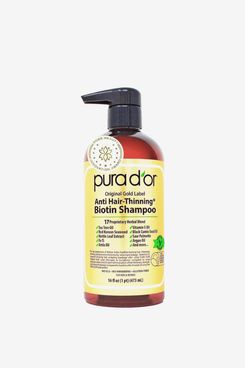
New! You can now save this product for later.
This best-selling shampoo contains over 17 known DHT blockers, including saw palmetto, pumpkin-seed oil, and green tea. It also has black-cumin-seed oil, rosemary oil, and tea-tree oil for a healthy scalp plus argan oil to moisturize and protect delicate hair.
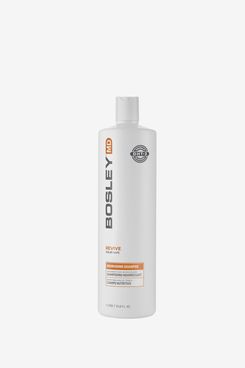
New! You can now save this product for later.
The sulfate-free shampoo claims to remove DHT buildup with a mix of saw palmetto and pumpkin-seed oil along with rosemary and panthenol to reduce inflammation and thicken the hair you do have.
New! You can now save this product for later.
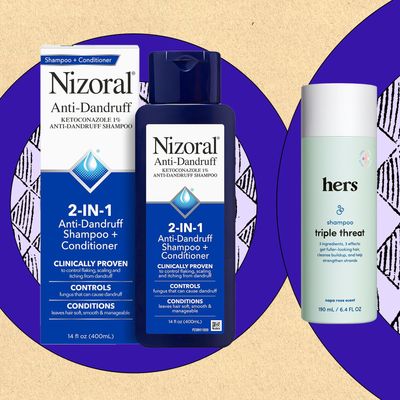
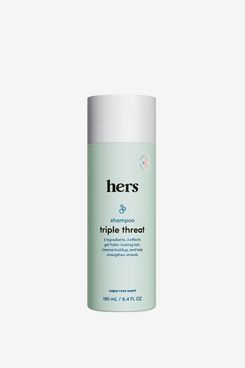
Hers Triple Threat Shampoo
The women’s telehealth platform says this shampoo contains the trifecta for thinning hair: saw palmetto, pumpkin-seed oil, and biotin.
New! You can now save this product for later.
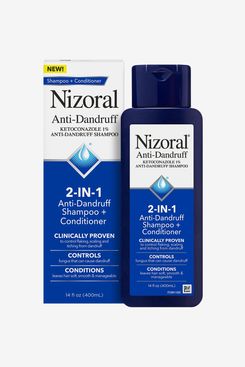
The anti-dandruff shampoo contains one percent ketoconazole, an anti-fungal that blocks DHT and calms scalp inflammation, plus conditioner to offset dryness. The 2 percent version cited in studies is available with a prescription.
More From The Strategist
- Hark, the Advent Calendars Arrived (Very) Early This Year
- The Best Things Strategist Editors Have Bought This Year (So Far)
- 63 Things You Should Never Buy Full Price
- The Strategist Fall 100
The Strategist is designed to surface useful, expert recommendations for things to buy across the vast e-commerce landscape. Every product is independently selected by our team of editors, whom you can read about here. We update links when possible, but note that deals can expire and all prices are subject to change.