What’s the Difference Between Away and Rimowa Suitcases?

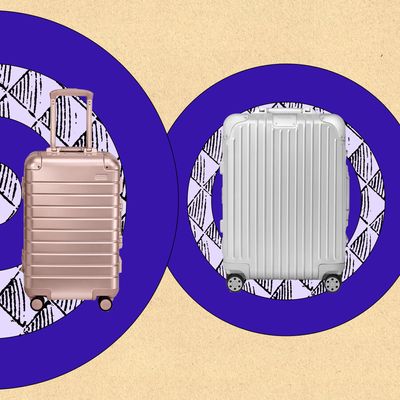
I know why you clicked on this article, and it’s because you want to roll up to the Delta lounge with a Rimowa. And I get it. But when Away suitcases offer a lifetime guarantee for less than half the money, what aside from clout makes a $1,000-plus carry-on worth buying?
Below, I’ve summarized the main differences between midrange suitcases (think brands like Away, Aer, Monos, July, Samsonite, and Travelpro) and high-end ones (think brands like Rimowa, Tumi, Briggs & Riley, Globetrotter, and Carl Friedrik). Frugal travelers might also want to consult my guide to the differences between $100 and $300 suitcases.
Rimowa and Tumi have superior customer service
Any $300-plus suitcase should come with a guarantee that its parts will be repaired or replaced for at least five years. Our best overall carry-on from Away comes with a robust lifetime warranty, and the brand is known for providing ongoing customer service after purchase.
Luxury brands like Rimowa and Tumi offer good warranties on their suitcases too: lifetime and five-year, respectively. What sets them apart from brands like Away is a network of in-person international customer service locations. Both Rimowa and Tumi allow you to bring a broken suitcase to their brick-and-mortar locations for onsite repair and replacement. Away, meanwhile, only processes warranties online.
I posed as a thousandaire at my local Tumi store in Soho and was treated to impeccable customer service; the employee there extensively detailed how their repair program works (repairs are reasonably priced once the five-year warranty has expired, and free before then) and assured me that the brand intends its customers to buy their suitcases for life. It even has authorized third-party repair facilities around the globe. Rimowa offers a similar level of service, and the “lifetime” wording of its warranty is comforting. Both brands rely on product serial numbers rather than original receipts.
New! You can now save this product for later.
If you travel a lot, the ability to repair or replace a broken suitcase while abroad or interstate is worth considering. But not all luxury luggage brands offer these services. Less-established start-ups like Carl Friedrik are still online only. And Americans buying a suitcase from a luxury European brand like Globetrotter might have less access to customer service at home.
It lacks brick-and-mortar locations abroad, but Briggs & Riley’s ultradurable $600-plus suitcases (beloved by several well-traveled Strategist staffers) come with a lifetime guarantee that’s paired with tried-and-true online customer support; you can also order your own inexpensive replacement parts and repair kits from the brand’s website.
New! You can now save this product for later.
And Rimowas have slightly smoother wheels
Most carry-on suitcases in the $300 to $900 range are equipped with Japanese Hinomoto wheels. When upgrading from an Amazon suitcase to an Away one, for example, these silent and sturdy spinners are the first thing you’ll notice. Hinomotos glide miraculously across smooth surfaces, but can also take a bashing on cobblestones.
Rimowa’s $900-plus wheels are unique to the brand, and they are a tad more silent and smooth. I think. There’s not a huge difference, but when I nudge an Away and Rimowa along side by side, the latter usually travels slightly farther. It feels like they’re maybe slightly more load-bearing. Rimowa wheels also have holes around their circumference to allow dust and debris to escape rather than clog up.
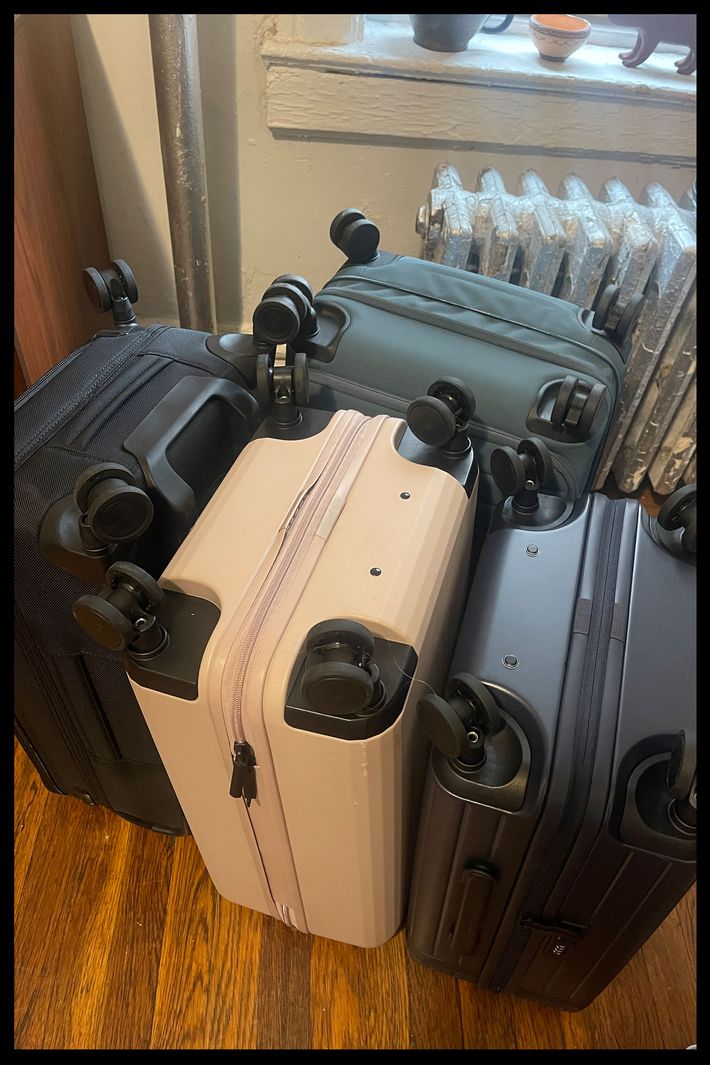
Tumi’s wheels perform about the same as Rimowa’s ones, although they’re a little smaller and more recessed. This makes the brand’s suitcases more nimble to navigate around with, and they fit more easily into small X-ray trays (like those tiny ones you get in Europe) and overhead bins. Recessed wheels will also fare better when tossed around by baggage handlers, being at less risk of snapping off.
Tumis have less-wobbly handles
There’s frankly no such thing as a non-wobbly suitcase handle, but most brands in the $300+ range get close. Away, Travelpro, Briggs & Riley, Carl Friedrik, July, Monos, and Aer all have the same copycat plastic and metal handles that click satisfyingly into place. Without logos, I’d struggle to differentiate them.
Tall people will appreciate that Rimowa’s suitcase handles can be locked at whatever height, whereas the above brands tend to have two to four pre-set lengths. Rimowa’s handle is also significantly chunkier compared to other brands, although for my small hands that’s actually a disadvantage. Tumi’s are the most solid yetelegant-looking handles that I’ve tested.
And Rimowas are the most indestructible
In theory, luxury suitcases should boast better materials and workmanship than midrange ones. I generally find this to be true, but brands like Away, Aer, and July still make supersolid polycarbonate cases that you can feel confident saying good-bye to baggage claim. Surprisingly, Carl Friedrik’s expensive polycarbonate cases are actually a little thinner and flimsier than July and Away’s cheaper ones, although polycarbonate of any density is still very difficult to puncture.
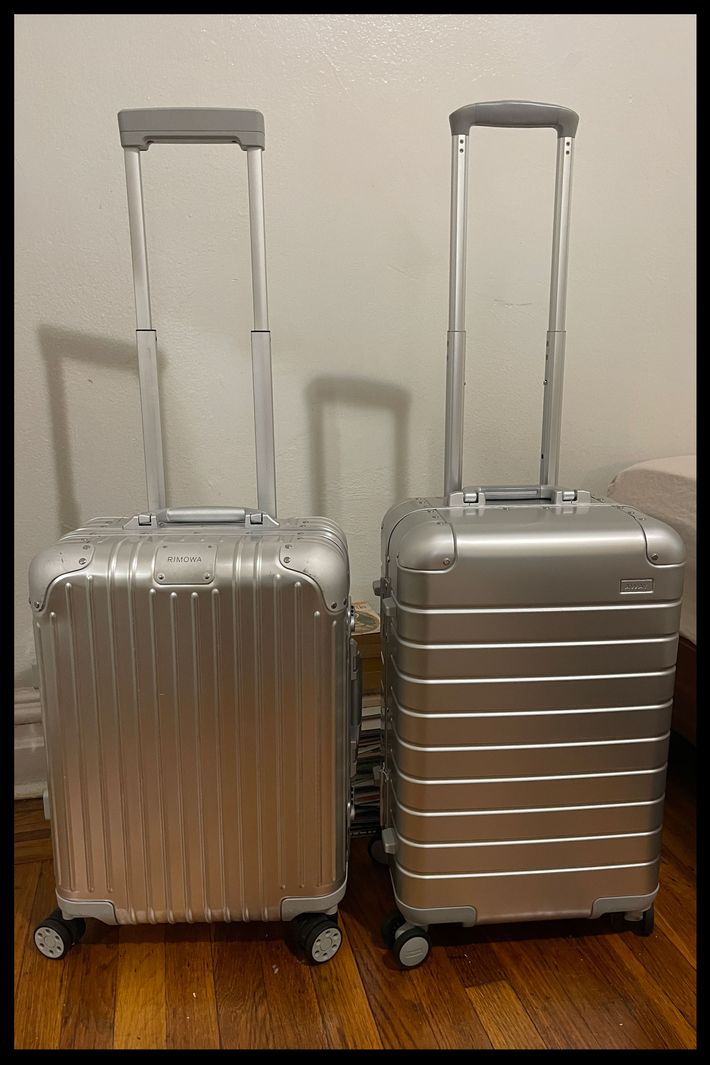
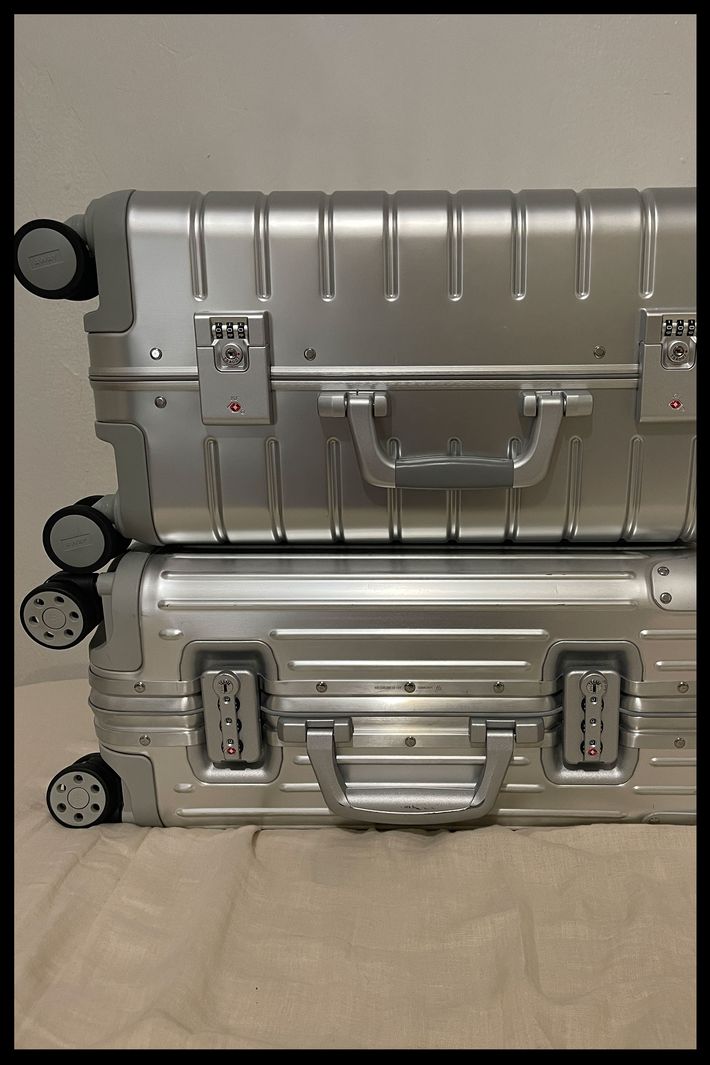
While their metal shells are about the same thickness (and will similarly acquire a patina of dents and scratches over time), Away and Rimowa’s aluminum carry-ons actually look rather different to one another when placed side by side. The Away case has vertical ridges, and Rimowa has horizontal ones. Both are zipper-less, but Away’s larger buckles click open and shut by pressing a central button, whereas Rimowa’s smaller buckles have a two-step spring mechanism that’s triggered from underneath. The Away buckles are much less fiddly, but Rimowa’s seem to give a bit more leeway when overstuffing the case.
When it comes to soft suitcases, which are generally much more durable (and easy to repair) than hard ones at any price point, there’s a small but noticeable quality difference between midrange and high-end suitcases. Tumi and Briggs & Riley cases are made from thick ballistic nylon that’s reinforced with plastic bumpers and ridges that help protect what’s inside. But Away and Travelpro’s nylon suitcases are also highly durable and protective, if slightly less elevated-looking.
As I wrote in my comparison of $100 and $300 suitcases, carry-ons lead much longer and easier lives than checked ones, which experience untold airport handling horrors after you wave good-bye at the conveyor belt. So if you’ve got extra money to spend and usually check a bag, a luxury suitcase made from more solid materials might be worth the splurge.
Another workmanship note: Some Rimowa-heads will tell you that the German brand’s suitcases, which are no longer manufactured there, have decreased in quality (while simultaneously increasing in price) since it was acquired by LVMH in 2016. Rimowa actually only started offering a lifetime warranty in 2022, so I’m not sure this theory holds up. The logo definitely looks less cool than it used to, though.
And yet, the Away has the best interior organization
While I don’t judge anyone for buying a suitcase because it looks nice on the outside, interior layout is a more crucial consideration for frequent travelers — especially those who take a lot of short trips.
There are plenty of good options in the $300-to-$1,000 range. A Briggs & Riley soft suitcase can fit lots of stuff while keeping it crease free by deploying a system of straps, garment sleeves, and zippers. Aer’s has a handy magnetic compression-strap system. And Away’s unusually roomy suitcases feature an internal divider to keep things neat.
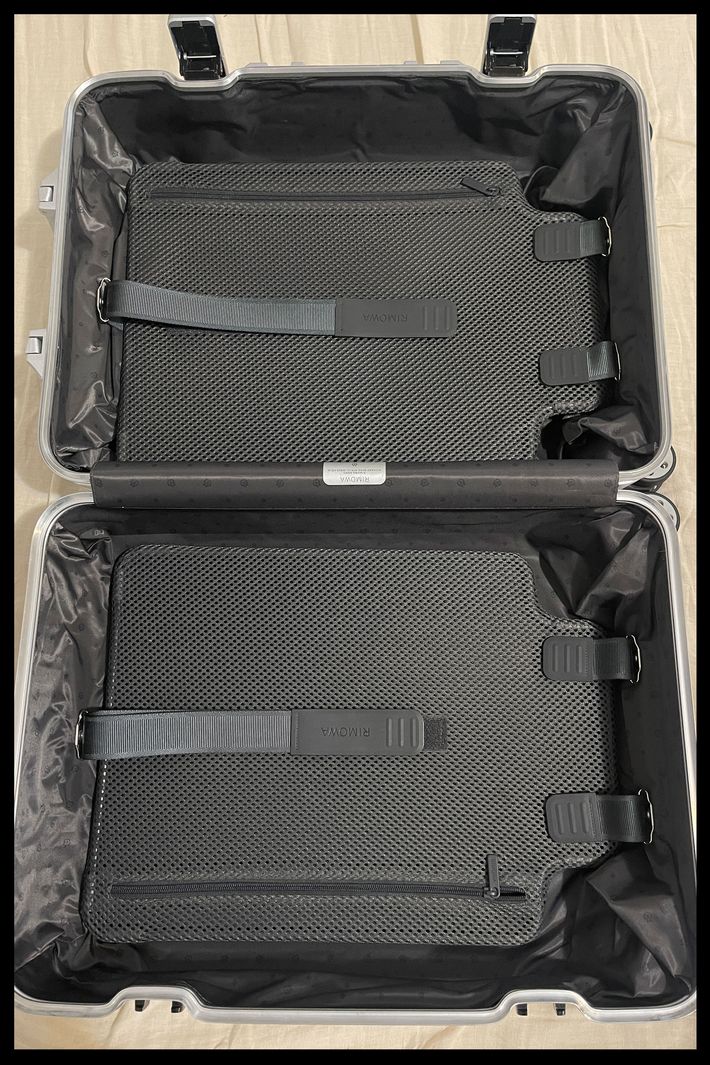
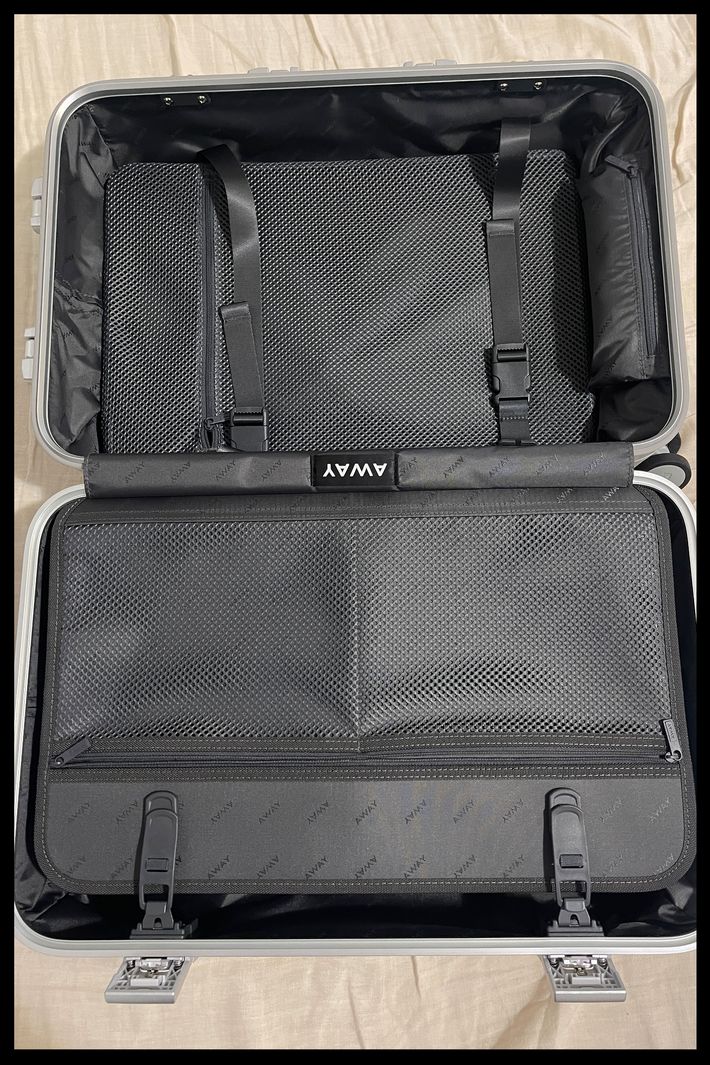
Luxury $900-plus suitcases honestly don’t improve much on these internal packing systems. Rimowa’s clamshell layout uses two mesh dividers to separate items; it’s actually less sophisticated than Away’s. Tumi’s suitcases do offer better features for business travelers, as they’re designed to integrate with optional garment hangers to keep suits and dresses smooth.
Extra organizational features may be overkill for light packers. If you just want to quickly dump your folded clothes into your carry-on and head to the airport, a simpler suitcase may be all you need. Rimowa’s bare-bones interior will work nicely … and so will those of many cheap Amazon brands.
Our favorite luxury suitcases
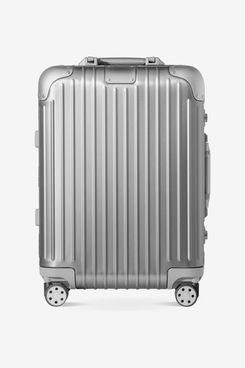
New! You can now save this product for later.
We like the brand’s (slightly) cheaper and more lightweight polycarbonate carry-on, too.
New! You can now save this product for later.
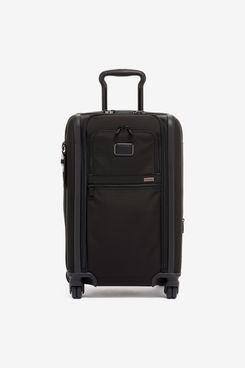
Tumi’s clever carry-on can be opened as a clamshell to reveal two compartments but also unzips on top for quicker access to what’s inside.
New! You can now save this product for later.
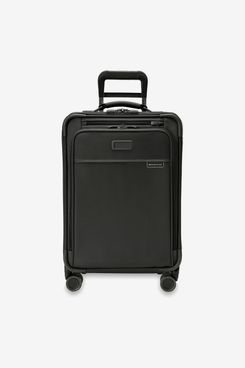
Strategist senior editor Winnie Yang recently told me that she’s been using one of her Briggs & Riley suitcases for 14 years.
Our favorite midrange suitcases
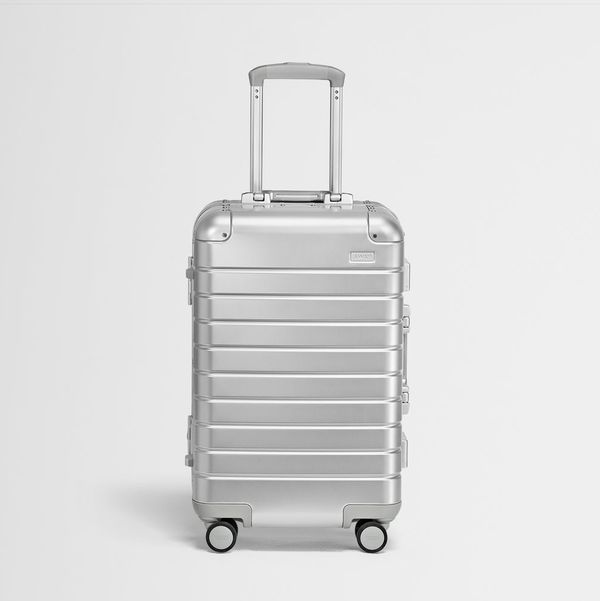
New! You can now save this product for later.
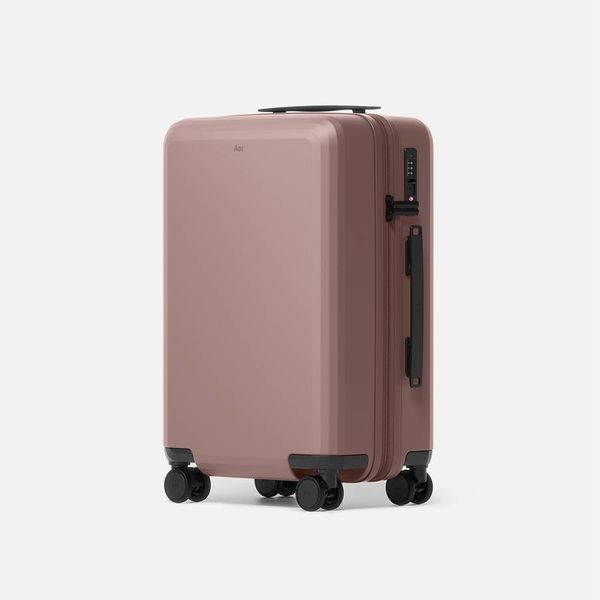
New! You can now save this product for later.
Aer Carry-On Max
Aer’s carry-on looks sleek and has a one-button brake system that keeps the suitcase from rolling away.
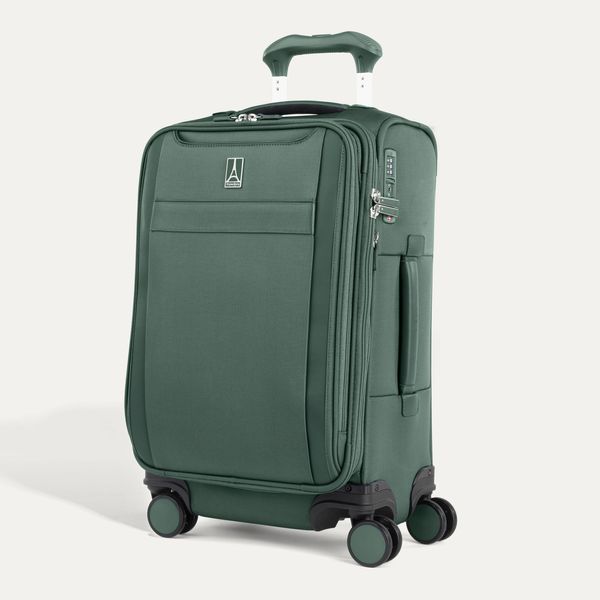
New! You can now save this product for later.
This Travelpro comes with a limited lifetime warranty, and the brand’s Trusted Companion Promise also covers the cost of repairs for damage caused by an airline in the first three years of ownership.
More From The Strategist
- Hark, the Advent Calendars Arrived (Very) Early This Year
- The Best Things Strategist Editors Have Bought This Year (So Far)
- 63 Things You Should Never Buy Full Price
- The Strategist Fall 100
The Strategist is designed to surface useful, expert recommendations for things to buy across the vast e-commerce landscape. Every product is independently selected by our team of editors, whom you can read about here. We update links when possible, but note that deals can expire and all prices are subject to change.