The iPhone Air Is the Phone I Didn’t Know I Needed
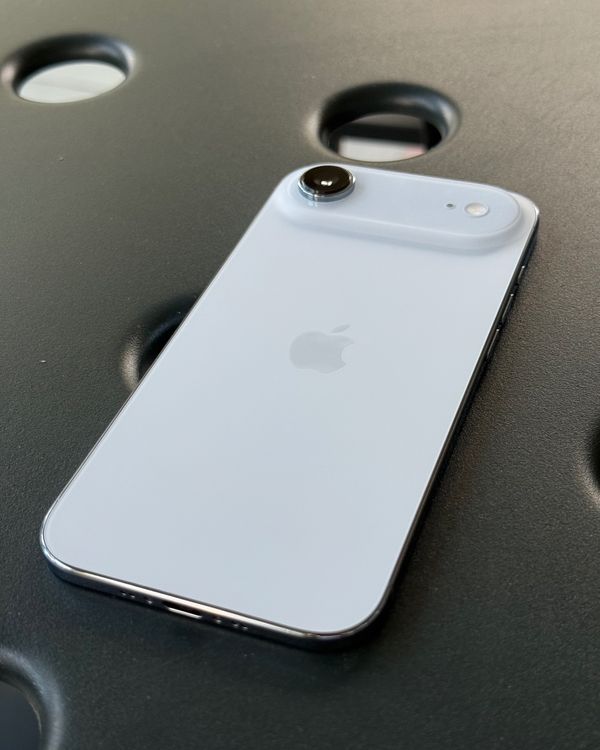
After Apple’s most recent big announcement a couple of weeks ago, I had no intention of upgrading from my trusty iPhone 16 Pro, and if I did — as someone who takes a lot of photos for work and pleasure — I would’ve chosen the 17 Pro with its bigger, better cameras. But two weeks of testing the just-released iPhone Air has me reconsidering my priorities. While I’ve yet to encounter a subject that the Air’s single rear camera couldn’t capture, the reduced wrist strain after extended scrolling sessions is very noticeable. Our phones already do so much these days; perhaps it’s worth sacrificing a little performance for improved comfort.
New! You can now save this product for later.
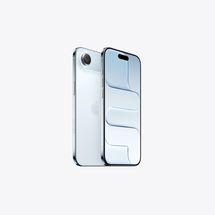
Apple iPhone Air (unlocked)
It’s thinner and larger, but more pocketable
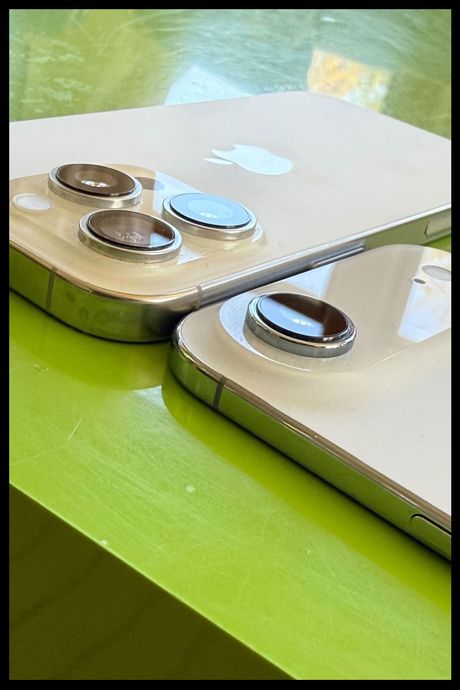
The most significant difference between the Air and its contemporaries is its thinness — it’s a wispy 5.6 mm thick across most of its body. Despite being physically larger than my 16 Pro, it slips more easily and comfortably into tight pants pockets. Weighing 165 grams, it’s 34 grams lighter than my iPhone 16 Pro — about the same as three AAA batteries. But I don’t want to overstate the significance here. When I passed the Air around the office, my colleagues were slightly bemused, not wowed. At its thickest point (where the camera juts out of the part of the body that houses all the processors and other chips), the Air is still 9.5 mm thick, which is in line with other recent iPhones. And the slightly thicker iPhone 17 is only 12 grams heavier.

I was concerned that the Air’s larger screen would prove to be irresistible during a time when I’m trying to use my phone less, but in practice, it’s just made typing and reading a bit easier. My bigger issue with the big screen has nothing to do with the phone itself, but the fact that iOS 26 moved many functions — like search or the sharing menu — into a nested icon at the very bottom of the screen in Safari (and other apps). This “chin” portion is tricky to access one-handed because the phone is so top-heavy, but I was able to make it work with some practice.
It has fewer but better cameras
I thought that the lack of additional cameras would be a bigger tripping point, but overall, I’m finding that having fewer choices has actually been a bit of a relief. Instead of fussing around with settings, I simply grab the shot that’s available — much like how a point-and-shoot camera can be more fun to use than a DSLR. It helps that the Air’s singular 48-megapixel “Fusion” camera is quite good. Its results in lower light are more detailed and less noisy than what my iPhone 16 Pro can achieve under similar conditions. The Air lacks a separate telephoto lens, but its 2x digital-telephoto results don’t look noticeably less detailed than the dedicated telephoto camera’s results on my Pro. Obviously, the Air’s 2x digital zoom doesn’t get as close to its subject as the Pro’s 5x lens, but it’s also not as grainy in low light thanks to the extra light captured by the Air’s bigger sensor.


Some people will miss being able to take distorted photos with an ultrawide lens, even if I personally did not. However, the absence of the extra camera means the Air can’t shoot macro photos. This made it more challenging to shoot close-ups of various products for my job. However, I was able to approximate the effect by using the digital telephoto from a slightly farther distance and cropping as needed. It’s also worth noting that, unlike Apple’s cheaper single-camera iPhone 16e — which can only capture portrait mode on human faces — the Air’s powerful A19 Pro processor allows it to photograph nonhuman subjects using portrait mode.


The Air’s brand-new front-facing 18-megapixel camera (which is standard across all new iPhones) is also a nice improvement. The higher resolution looks better, but the option to use a much wider angle is the greater and more noticeable benefit. You no longer need to find the tallest friend with the longest arm to be able to capture everyone in a group selfie. It’s smart enough to widen the frame in real time as more faces enter the picture and can even track your own face to keep it centered and properly oriented during a video call. You can also manually widen the frame to capture more of the scenery behind you in selfies or videos. The fact that it’s square-shaped also means you can FaceTime or video conference with someone on a computer without showing up as an awkwardly tall rectangle with too much torso showing.
The battery and speaker are smaller
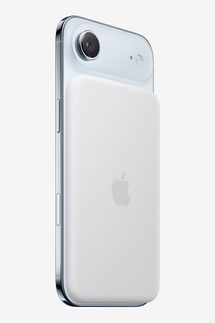
The Air’s shorter battery life may prove to be an issue for some. However, if your average daily screen time is about four hours or less, you should have no problem getting through the day with capacity to spare. Apple claims it’ll get 27 hours of video playback compared to 30 hours for the iPhone 17 and 39 hours for the 17 Pro. In practice, I find it no more limiting than my iPhone 16 Pro’s year-old battery. If it becomes a recurring problem for you, Apple sells a 6.5-mm.-thin MagSafe battery that extends its battery life by 60 percent for $99. (Anker also makes a similar, cheaper MagSafe battery that’s 8.6 mm deep but holds more juice.)

New! You can now save this product for later.
People who listen to music or podcasts without headphones may find that the Air’s lack of a second speaker is too quiet for their liking. Personally, I have no sympathy for this complaint, especially if we’re sharing a public space while this is happening.
Is it worth it?
Whether all this is worth an extra $200 over the regular iPhone 17 is hard to say. It doesn’t do anything better than the cheaper phone, other than be light and thin. But if you buy your phone on a payment plan through Apple or your carrier, that works out to about $8 more a month over the course of a 24-month contract — a small price to pay for tech-thumb relief.
More From The Strategist
- Hark, the Advent Calendars Arrived (Very) Early This Year
- The Best Things Strategist Editors Have Bought This Year (So Far)
- 63 Things You Should Never Buy Full Price
- The Strategist Fall 100
The Strategist is designed to surface useful, expert recommendations for things to buy across the vast e-commerce landscape. Every product is independently selected by our team of editors, whom you can read about here. We update links when possible, but note that deals can expire and all prices are subject to change.