Dr. Shereene Idriss Teaches Us How to Fade Dark Spots (For Good)
Save this article to read it later.
Find this story in your account’s ‘Saved for Later’ section.

Whether it’s talking through some odd new ingredient we’ve spotted or hashing out the current status of blush, Strategist beauty writers and editors make some of our best discoveries as a team. It all works so well that we decided to loop some of our favorite beauty experts into the conversation, too. In this new roundtable series, we’ll be talking to the doctors, aestheticians, nail artists, and hair stylists we trust the most about their favorite products and best beauty advice. For this edition, Strategist senior editor Crystal Martin and Strategist beauty writer Dominique Pariso chatted with Dr. Shereene Idriss, board-certified dermatologist and the founder of Idriss Dermatology and Dr. Idriss Skincare about the skin condition that drives a lot of us crazy: pigmentation. Below, we discuss her favorite drugstore product to heal a damaged skin barrier, how to fade dark spots for good, and “redness blindness.”
Crystal Martin, senior editor: So, let’s begin with pigmentation.Can you tell us the things that people are doing every day that may exacerbate any pigment issues they’re having?
Dr. Shereene Idriss, board-certified dermatologist and the founder of Idriss Dermatology in New York City: Number one is people not protecting their skin by not wearing sunscreen. Because the damage that we see in our later 20s, 30s, 40s, is from before we’re even 20. It’s accumulating. You’re 22, you’re invincible, you’re on top of the world, you’re hot, you’re sitting out in the sun and you don’t care. Or they’re not using enough sunscreen. “They think, oh, I have SPF in my foundation. I have enough.” It’s not enough. The best thing you could do if you’re young to really get a step ahead is really start protecting your skin at a young age.
Number two is picking. Everyone is guilty of this. We’re all going to have breakouts. We’re all going to get pimples. But if you pick, you’re going to make that pigment worse over time. Especially when you’re more melanated, it lingers longer and it leaves a longer mark and it can be more permanent.
CM: I’m not a picker, but are there things that people can do to prevent picking?
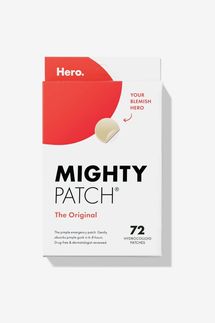
SI: Keep your fingernails short. Especially if you have OCD tendencies. Keep a fidget spinner in your pocket so that you’re keeping your hands busy and you’re not playing with your face. And while a hydrocolloid patch is not necessarily going to treat that sort of pimple, having it physically covered with a barrier will minimize you causing trauma to your skin. So if you do touch your face, you’ll feel the patch, and you won’t be able to pick. So those are three very simple things: short nails, fidget spinners, hydrocolloid patch.
New! You can now save this product for later.
Dominique Pariso, writer: Got it.
SI: Andnumber three is trying to simplify and pigeonhole ingredients like they’re the best miracle thing. Like Vitamin C: You’re not going to make a dent in pigmentation with just vitamin C. And so people think, “But I’m using vitamin C. I don’t understand. I’m doing all the things.” And they think they’re doing all this effort and work and really sticking to it, but they’re not getting any gains from it.
I’ve been seeing patients for more than a decade now. I see 80 to 100 patients a week. It’s so interesting to see trends. Back in 2016, 2017 it was all Botox, Botox, Botox. And I feel now people are more aware that they also want to work on their skin quality. It’s not so much just getting rid of lines. And I’m happy that that shift is happening because that line alone is not what’s aging you. The first sign of aging is freckles. Freckles are really a sign of sun damage. They’re maybe cute, but it’s evidence of your DNA getting damaged.They can disappear when you’re younger, but as you get older, they appear faster and then they linger longer. Have you noticed?
CM: I don’t have freckles.
SI: You have freckles.
CM: [Laughs] I thought those were acne scars.
SI: No, it’s not just acne scars. It’s sun damage.
CM: Learning something new every day.
SI: As you age, it’s not the lines and wrinkles that do you in. It’s the tone of your skin. And that’s something you can really make a difference in with the right products. You’re never going to re-volumize with a moisturizer. You’re never going to resurface your skin completely to buffed perfection. You’re just not. You’re going to need a laser at some point. But can you really make a difference in your skin tone by reducing brown spots or redness? Yes, with the right products. And I’m not going to use a laser if you’re not on the right skincare routine.
DP: It’s a similar conundrum with acne patients, right? Because you’re just going to keep creating pigmentation if you keep having active acne. You need to clear the skin first before you can tackle pigmentation.
SI: Exactly.
CM: I’m a little confused how you can tell the difference between a brown spot and an acne scar?
SI: A brown spot is more diffuse and widespread. It’s usually more of a patch of discoloration. An acne scar is more of a defined mark.
CM: How can people tell?
SI: The problem is when you’re younger, you don’t notice it. It’s only as you get into your 40s and they really start to appear across the face will you notice. And it creates optical illusions of pulling down. It creates shadowing.
DP: Can you also tell based on their location on the face?
SI: 100%. Brown spots are often on the high points of the face. Does that make sense now?
CM: It does, yes.
SI: Evening skin tone will give you the best bang for your buck. And let’s say a patient gets as far as they can with skincare over the counter. Then I might boost it with a prescription, like hydroquinone. But you can’t be on it forever. You have to take breaks. So once we get them to a better baseline then maybe we add in either an over-the-counter retinol or tretinoin. Then maybe we laser.
DP: Hydroquinone has gotten a bad rap.
SI: Yes. You should be using it under supervision, because you can’t be using it long term. So it’s good it got taken off over the counter. I personally like to give hydroquinone in pads instead of the tube. I only give 60 pads at a time. So I can control exactly how much patients are using and for how long.
CM: When we’re talking about world of lasers, what do you usually recommend? If someone comes in, and let’s say they are dealing with discoloration, possibly they have melanin in their skin I think people who have melanin in skin could be a little laser gun shy. What do you tell them or what do you recommend?
SI: First and foremost, find someone who’s qualified that you trust. Start conservative. Maybe you’ll need to do an extra treatment but that will benefit you in the long run. You don’t want to end up with hyperpigmentation because you went too strong. And also prepping your skin is key. You don’t just go ahead and laser your face without your skin being prepped and trained.
CM: When you say train your skin with skincare before the laser, what do you mean by that?
SI: You want the pigment in your skin to already be suppressed with the products you’re using. You don’t want your pigment to be reactive, because then if I put a little bit of heat from the laser, it can get worse. It’s like going for a dental cleaning, but you don’t brush your teeth every day. The products are brushing your teeth every day. The dental cleaning is the laser. Because the problem with brown spots is that they last forever. They’re always there. You’re suppressing them. You’re not erasing. So you have to be on the right at-home routine forever.
CM: Can you explain that a bit more?
SI: A sun damaged spot is DNA damage. So you’ll never erase it perfectly. Scars? You can maybe erase because they’re hyperpigmentation that you just have to kind of work your way through and get rid of it. But not sun-damaged spots. There’s always going to be pigment there that can get re-ignited because that DNA is damaged. For example, it can get triggered if you sit in the sun. If you use a laser.
CM: Got it. Okay. Can we talk about redness? Redness feels like more of a mystery to me.
SI: It is. Redness can be caused by all kinds of things: rosacea, an inflamed skin barrier, irritation, seborrheic dermatitis, psoriasis, lupus. If it’s due to a medical condition, you’re never going to fully treat it over the counter skincare. But treating an inflamed skin barrier and irritations is the easiest.
You want to really reinforce a healthy skin barrier to make sure that your skin is not going to be so reactive and inflamed. And make sure you’re not adding anything that could be potentially irritating, like fragrance. People need to be convinced they have redness, too. They don’t see it. They accept redness as part of their complexion.
DP: Redness blindness.
SI: I love it. Redness blindness is a good one. I may use that.
DP: You can have it. [Laughs]
CM: Barrier repair. Can you talk through that a little bit? There’s so many products. There’s so much chatter about it. What are the basics? And how do you know that you need to repair your barrier?
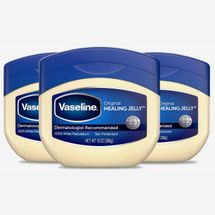
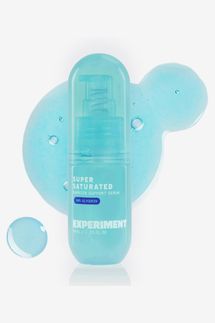
SI: An inflamed skin barrier usually feels a little tight. It stings, there’s a little bit of an irritation. You’re going to have obviously dry patches, flakiness. When that happens you want to just reinforce healing with the most basic things. Vaseline. That will allow the skin to heal, calm any inflammation. It’s CPR for the skin. Then we can give the IV fluids by adding the ceramides, which is the glue that holds the skin cells together. You can put peptides that help to hold onto hydration. I prefer glycerin over hyaluronic acid because glycerin is potentially less inflammatory. So you can add glycerin into the mix. And then you can slowly start to build from there.
New! You can now save this product for later.
Vaseline Petroleum Jelly Original
New! You can now save this product for later.
DP: So can you tell us a little bit about your line?
SI: My Major Fade line is designed to purely target discoloration. Let me explain to you the pigment pathway. Melanin is made from a melanocyte. With this line you’re blocking the melanin production from within the melanocyte. You’re turning off the melanocyte internally. That’s the actual physiology of this line.
DP: And can you tell us more about each of the products?
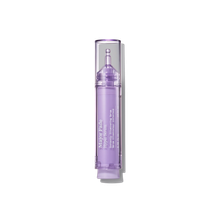
SI: There are three products. The Hyper Serum is the powerhouse. It’s like over-the-counter hydroquinone. It has arbutin, licorice root, niacinamide, and kojic acid. It gives an instant illuminating effect, too. I use this twice a day, four clicks on my face. It comes with a refill cartridge. This way it’s not exposed to air or light, and it stays at the highest concentration.
New! You can now save this product for later.
DP: Tell me about this moisturizer.
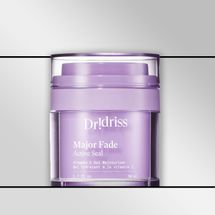
SI: This is my vitamin-C moisturizer, but it’s not just vitamin C. It also has 4-butylresorcinol, which is another active that fades discoloration, as well as ceramides and peptides to help with your skin barrier and to lock in your hydration. It’s a light gel moisturizer, so it’s not going to be heavy and thick. Use this one twice a day.
New! You can now save this product for later.
DP: And then the last product is a mask.
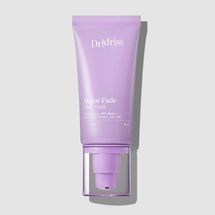
SI: It’s a 15% glycolic acid mask with lactic acid and tranexamic acid. The reason I did it is so you can put it where you want and let it sit for however long you want. I would use this two to three times a week. Maybe four times in the winter. Melanated skin can use it, too. It’s a misconception that you can’t use glycolic acid. You just have to make sure that you’re protecting against the sun every day.
New! You can now save this product for later.
This whole line is designed so people can get empowered to help themselves when it comes to pigment. The number one thing that people can really control and change in their skin is their skin tone’s unevenness. And that can make a huge difference for people. I tell patients, “Focus on skincare for eight weeks and really stick to it. Be militant and then come back and let’s see if you still want the laser.”
More From The Strategist
- Hark, the Advent Calendars Arrived (Very) Early This Year
- The Best Things Strategist Editors Have Bought This Year (So Far)
- 63 Things You Should Never Buy Full Price
- The Strategist Fall 100
The Strategist is designed to surface useful, expert recommendations for things to buy across the vast e-commerce landscape. Every product is independently selected by our team of editors, whom you can read about here. We update links when possible, but note that deals can expire and all prices are subject to change.