So Is the $200 Typhur Meat Thermometer Worth It?
Save this article to read it later.
Find this story in your account’s ‘Saved for Later’ section.
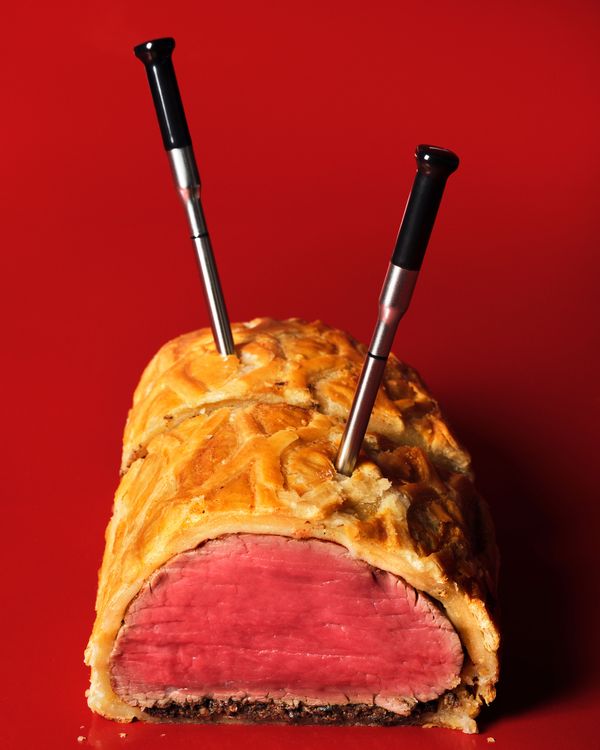
You’ve probably seen those chef tricks on TV or YouTube — pressing the outside of a steak to guess its doneness. But knowing is always better than prodding. Whether it’s a steak, roast, or a whole bird, a leave-in thermometer takes all the guesswork out. And while there are plenty of instant-read options worth owning, if you’d rather cook proteins to an exact temperature without hovering over the oven, smoker, or grill, a leave-in wireless probe can deliver better food with less stress and allow you deal with other tasks while you wait for a notification. After testing the latest models, the Typhur Sync Gold — available in two- or four-probe kits — is the best combination of user experience, value, and smart features.
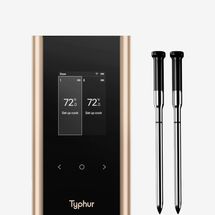
New! You can now save this product for later.
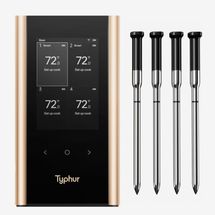
New! You can now save this product for later.
The Typhur Sync Gold Series is versatile and easy to use
The Typhur is the easiest probe to set up. It’s basically a thermometer with a dock, and all you have to do is keep the two parts relatively near each other. It works flawlessly whether you’re on a Wi-Fi network or not. You can use it with or without your smartphone — other wireless-probe options, from ThermoWorks, Combustion, and Meater, all require a device or purchasing a gauge to get the same functionality.
These probes work in nearly any cooking situation you’ll face: in a skillet, in an oven or air fryer, on the grill, in a smoker, spinning in a rotisserie, or sealed in a sous vide bag. The Gold probe is nearly six inches long and features five sensors in the shaft along with one on the end that stays outside the food, monitoring ambient temperature. The shaft’s sensors pinpoint and display the lowest temperature inside your food on both the base and its smartphone app. The internal sensors track temperatures from 32 to 221 degrees Fahrenheit, though some probes on the market will read down to 14. Still, the Typhur’s range is enough for most cooking tasks — you’ll likely never need to track anything hotter than about 165 degrees for poultry (it’s handy to toss the probe into the refrigerator and confirm it’s humming along at 40 or below). The ambient sensor is any probe’s weakest spot since it’s exposed to extreme heat, whether in an oven, skillet, or grill. Typhur’s ambient sensor withstands up to 932 degrees, so it can handle high-heat grilling over charcoal.
It has the best connectivity of all the comparable thermometers
Wireless thermometers all work the same way: Probes send data to a base station, and your phone works as a display and control. The main difference is how the probes talk to the base. Older models — and some current ones, like Meater — use Bluetooth, which often drops signals over long distances or when sending signals through the thick metal walls of a smoker or Dutch oven. The Typhur, like most modern wireless probes, uses a stronger sub-GHz radio frequency (915 MHz to be exact), letting the base stay connected to probes from more than 100 feet away, though thick house walls can still cut down the range.
The Typhur stands out because its base has a display, so you don’t need your phone for basic monitoring when you’re nearby. The base can connect to your phone in two ways, which unlocks all the app’s utility. Locally, connect to the base via Bluetooth (a frequency your smartphone understands), when you’re not on a familiar network — like at a park or tailgate. Or monitor the cooking from anywhere by syncing the base to your network, and accessing it through Wi-Fi, when you’re home, or over cellular, when you’re wondering what the current temperature is while shopping for side dishes. Since the distance between the probes and base can be 100 feet or more, you can place the base inside your home’s Wi-Fi and still monitor probes working in a grill in the yard. Typhur says you’ll get up to 3,000 feet of range between the probes and the base with a clear line of sight and about 700 feet when you start going through the walls of a house or other obstacles.
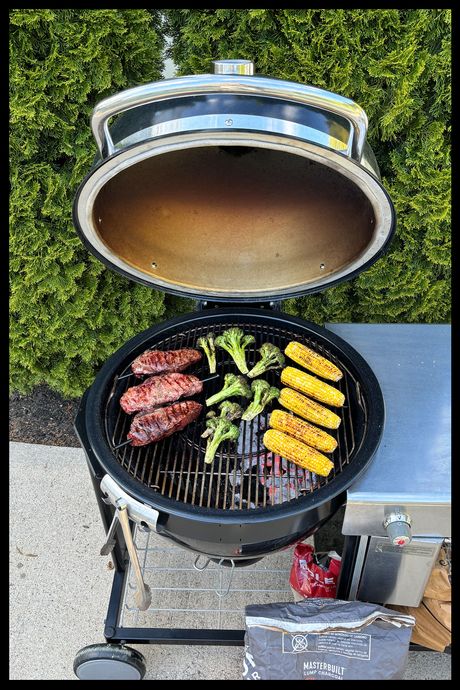
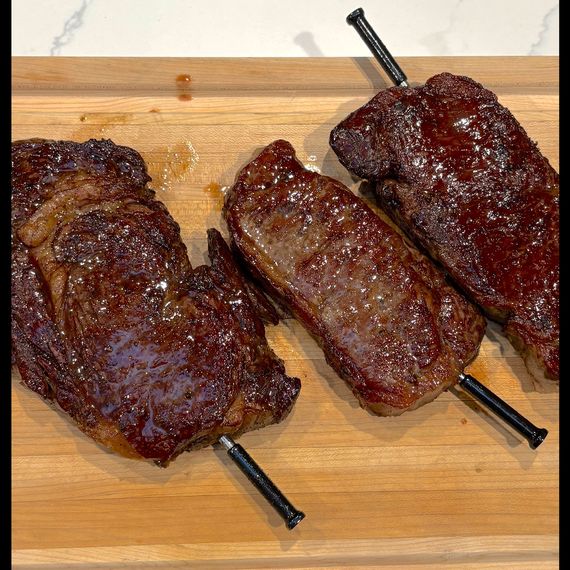
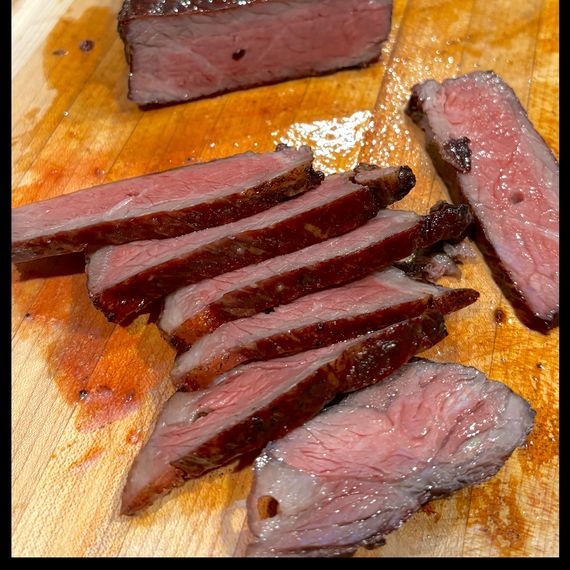
… And some other clever features, too
Most modern wireless probes are accurate, heat-resistant, and connect reliably, but the Typhur stands out for how easy it is to use. Just slide a probe out of the dock, and the two immediately pair, showing you the room temperature. I prefer to set the probe’s temperature before inserting it into the food so I can see the readout change as I push in, and it reduces the risk of contaminating my phone or the display with “meat hands.” If you like more detail, you can also chart readings from each sensor throughout the cook — handy for barbecue fans smoking a brisket for 15 hours or data nerds. As smart as this probe is, Typhur’s designers also nailed the basics: The probes are numbered on the end, which correlate to slots in the dock. This makes it easy to identify probes and, in the app, can change the name so Probe 1 becomes “Amy’s steak” or “Chicken dark meat.” With other probe systems you have to use colored silicone rings, or buy metal identification tags, to distinguish the probes.
Cooking happens in two modes: manual and smart. In manual mode, you set the target temperature and Typhur alerts you when it’s reached, plus gives an estimated countdown based on the current cooking conditions. I used this a lot when reverse-searing a steak, where you want the meat to stop about 10 degrees below your final temperature before finishing it on high heat in a cast-iron pan or grill. Smart mode offers a little more hand-holding: You set the final temperature, and Typhur alerts you twice — first when to pull the food early to account for carryover cooking (great for larger cuts like chicken or turkey) and again when the rested temperature is ready to eat.
The Typhur does have a couple of limitations
While the Typhur is a great tool for cooking meat, it’s not the only thermometer you’ll need. It isn’t an instant read, so if you want to quickly check the temperature of a chicken breast, it won’t give results as fast as a tool designed for that purpose. Like other modern leave-in probes, the Typhur requires a minimum insertion depth to protect the sensors inside from the intense heat. For this model, the minimum insertion depth is roughly 2 ¾ inches, which means it may not be suitable for smaller foods — for example, a narrow filet mignon or small pork chop.
Is the Typhur Sync Gold Series worth it?
If you often cook thick cuts of meat — steaks, chops, roasts, or fish — the Typhur can help you hit the perfect temperature and avoid overcooking an expensive cut. If you’re already happy with a wired leave-in thermometer and don’t need wireless features, you could probably skip it. That said, the predictive timing feature is a real bonus, especially for barbecue and big roasts, when knowing exactly when the meal will be ready is always a challenge. The design is intuitive and handsome, which makes the kit a good gift for someone who likes to cook.
More From The Strategist
- Hark, the Advent Calendars Arrived (Very) Early This Year
- The Best Things Strategist Editors Have Bought This Year (So Far)
- 63 Things You Should Never Buy Full Price
- The Strategist Fall 100
The Strategist is designed to surface useful, expert recommendations for things to buy across the vast e-commerce landscape. Every product is independently selected by our team of editors, whom you can read about here. We update links when possible, but note that deals can expire and all prices are subject to change.