What Is NAD+ (and Can It Really Reverse Aging and Cure Jet Lag)?
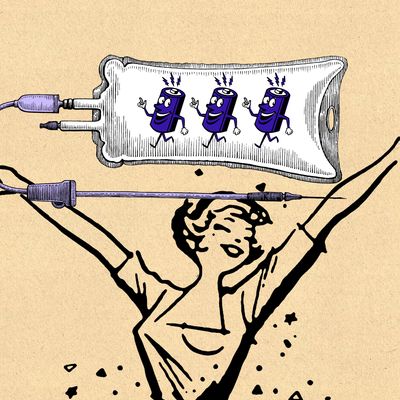
These days, I can barely get through a dinner without someone telling me they were just hooked up to an NAD+ IV drip (I live in L.A.). The buzzy supplement comes in a few different forms, all of which claim to increase your energy and endurance, zap brain fog, boost immunity, offset jet lag, and more. Celebrities like Hailey Bieber, Kendall Jenner, and Gwyneth Paltrow have embraced it for its so-called antiaging effects; earlier this year, an NAD+ supplement made Chelsea Handler’s list of things she can’t live without. A friend’s mother is even getting NAD+ transfusions to potentially help with her Alzheimer’s.
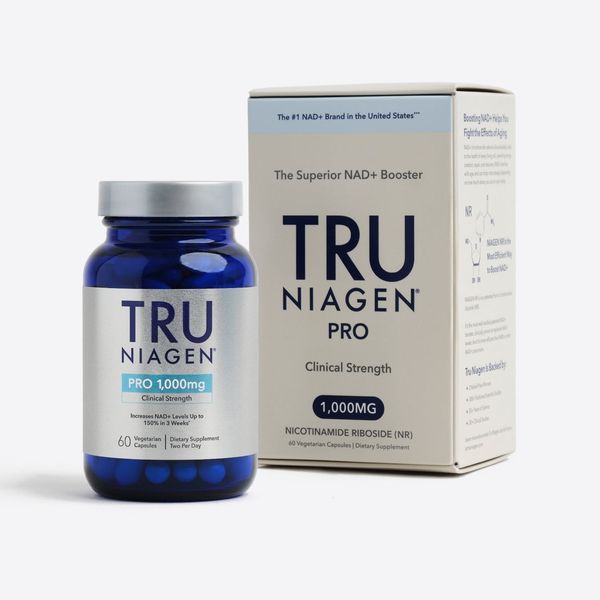
Intrigued, I did what anyone else would do: I tried supplementing with NAD+ myself. I started with a heavy-duty dose of 1,000 MG per day in the form of two Tru Niagen Pro NAD+ capsules. (The company’s NAD+ supplements are some of the most clinically well-researched I could find.) I started taking them a few days before a short trip to Paris in an effort to keep jet lag at bay and was shocked to experience the fastest transatlantic travel recovery I’ve ever had. Not only that, but initially, I had the kind of energy that stopped me from reaching for a second matcha at 2 p.m., and the mom-of-a-toddler brain fog I find myself prone to was almost nonexistent.
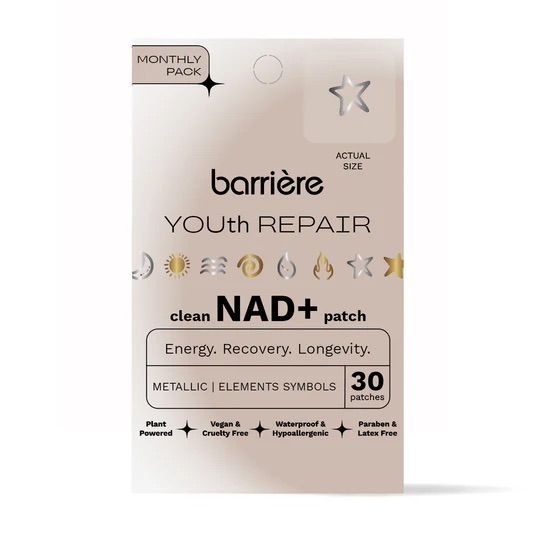
I supplemented with NAD+ consistently for two months, alternating between taking the Tru Niagen capsules and wearing transdermal NAD+ patches from the vitamin-patch brand Barrière, which launched the product in June. While my 2 p.m. matcha craving eventually returned, my experience with NAD+ was largely positive — and because of that, I needed to know more. Can this purported holy-grail supplement really be that holy? Here’s what the science says.
What is NAD+ and how does it work?
NAD+ is a form of nicotinamide adenine dinucleotide, an essential co-enzyme that exists both in the body and in nature. Often compared to a biological battery of sorts, it’s kind of a big deal in that every one of our cells uses NAD+ for energy metabolism. According to Dr. Eric Verdin, CEO of the Buck Institute for Research on Aging, it works by stocking and transferring the energy we produce through digestion, which allows various cellular processes to take place. And Dr. Jessica Cho, an internal-medicine physician who’s treated patients with NAD+ for years, says the molecule is “smart” in that it readily responds to whatever your cellular needs are.
As we age, we lose our God-given supply of NAD+ owing to inflammation and oxidative stress. But major organs like the heart, brain, skin, and kidneys “need a lot of mitochondria to do their job and are heavily NAD dependent,” says Dr. Andrew Shao, the SVP of Global Regulatory & Scientific Affairs for Niagen Bioscience. A family of proteins called Sirtuins, which play a role in fighting inflammation and repairing tissue, also require NAD+ to function. So to Dr. Cho, a desire to replenish your NAD+ is “common sense.”
How do you supplement with NAD+?
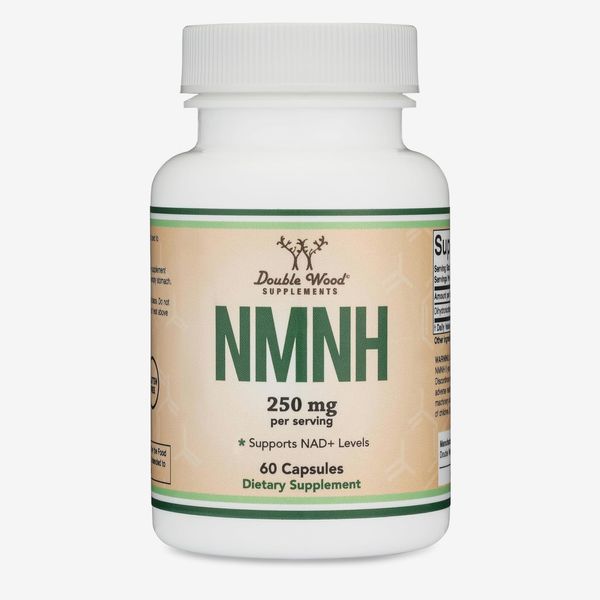
The cheapest way to increase NAD+ in your body is through intermittent fasting and moderate exercise, which Dr. Shao says can facilitate NAD+ production, at least in small amounts. According to Dr. Verdin, high-quality oral supplements containing NAD+ precursors like NR (nicotinamide riboside) and NMN (nicotinamide mononucleotide) — the building blocks of NAD+ that allow the body to make more — are the most effective and the most well-researched. Though he also told me that the B vitamin, niacin, while not as “sophisticated” as NR or NMN, is another precursor the body readily absorbs that “you can buy for less than ten cents a pill at CVS.”
Many celebrities have touted IV infusions or NAD+ injections, which are by far the trendiest ways to supplement. These contain actual NAD+, not a precursor, but they are more controversial; some physicians, including Dr. Verdin, lament that because NAD+ only exists in our cells, “it’s not something that circulates in your blood or that you can absorb.” They will also cost you the most: A single prick will run you between $70 and $700, depending on the dosage. (The cost of oral supplements is typically around $2 per day.) Additionally, when NAD+ is administered through an IV, “people who are sensitive can have inflammatory reactions to it,” explains Dr. Sogol Ash, Barrière’s wellness advisor. According to Dr. Cho, patients may also experience flushing, cramping, heart palpitations, malaise, and what she calls “excitability.” While Dr. Cho says these reactions are not dangerous, they can be “very intense, like being on a roller coaster.”
Finally, there’s currently a flood of topical NAD+ products hitting the market. In addition to the Barrière patches I tried (which are marketed as “Youth Repair” and designed to support “cellular energy, mental clarity, and healthy aging), several skin-care companies are starting to add NAD+ precursors to their formulations. Aramore, for example, was co-founded by a researcher at the Harvard Stem Cell Institute and has developed a whole line of products focused on boosting NAD+. And Strategist writer Arielle Avilla recently tested an essence with NAD+ peptides (though it wasn’t her favorite out of the nine essences she tried). Several other brands are planning to launch new NAD+ skin-care products later in 2025. However, it should be noted that independent research on the efficacy of topical applications is slim.
Scientific evidence that NAD+ actually works is scarce at best
To date, NAD+ research in humans has mostly been limited to small clinical trials determining the safety and efficacy of oral supplementation. However, there is “compelling preliminary evidence in animal models that at least some aging-associated problems can be mitigated by supplementing or reestablishing more normal NAD levels” by way of precursors, says Dr. Verdin. Of particular note, preclinical models have shown that increasing NAD+ may be protective against Alzheimer’s disease, though no studies have been done among that population.
Still, “certainly we think it’s beneficial for brain health,” Dr Shao says, citing a small study of Parkinson’s-disease patients that showed NAD+ supplementation led to a reduction in neuro-inflammation, increased brain NAD levels, and marginally improved overall symptoms. A larger study with over 400 participants is currently in process in Norway.
One of the biggest holes in the research, however, is that there are no scientific studies that show how supplementing with NAD+ might affect you long term. Dr. Verdin specifically raised this concern to me because in his own personal experimentation with NAD+ supplementation, he noticed a rise in his levels of homocysteine, an amino acid that can increase your risk of heart attacks if it gets too high. When he stopped taking it, his numbers returned to normal. So just like with any other headline-making health craze, if you’d like to try supplementing with NAD+ yourself, it’s best to err on the side of caution and work with a physician who can track how it affects you on a biochemical level.
If you want to try NAD+
More From The Strategist
- Hark, the Advent Calendars Arrived (Very) Early This Year
- The Best Things Strategist Editors Have Bought This Year (So Far)
- 63 Things You Should Never Buy Full Price
- The Strategist Fall 100
The Strategist is designed to surface useful, expert recommendations for things to buy across the vast e-commerce landscape. Every product is independently selected by our team of editors, whom you can read about here. We update links when possible, but note that deals can expire and all prices are subject to change.