How Chef Edward Lee Built a Fully Plastic-Free Restaurant
Welcome to Plastic-Free Kitchen Week on the Strategist, where we’ve been obsessively researching and testing plastic alternatives — for everything from appliances to cleaning supplies to cookware. For more, head to our Plastic-Free Kitchen Week hub.
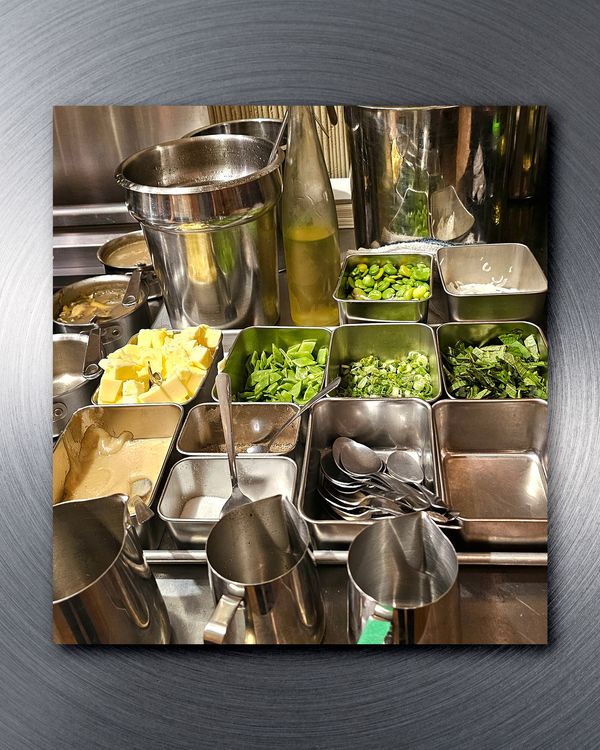
Chef Edward Lee’s latest venture is Shia, a restaurant in Washington, D.C. It’s a fully functioning Korean fine-dining establishment — but with a plastic-free kitchen. Begun with the backing of his nonprofit, the Lee Initiative, the project is a year old and meant to last five in total — a sort of experiment in which Lee and his team are test-driving products to replace the plastic ones commonly found in professional kitchens.
There’s the obvious stuff, like Cambro and deli containers and plastic wrap. But there are also items you likely wouldn’t think about: trash bags, for example, and the Sharpies used for labeling. They’re recording every single swap and noting the pros and cons (they’ve already published a full report on how it’s going). “The reliance on plastic has grown more and more as each year goes by,” Lee says. “It’s easy, it’s cheap, it’s disposable. I understand that we need plastics in the world — but how much of that is essential, and how much is just laziness?”
He knows that this is a complicated endeavor. To start, creating a truly 100 percent plastic-free restaurant kitchen is straight-up impossible. There are plastic parts in appliances you simply can’t avoid — both big ones like refrigerators and small ones like blenders. There’s also the issue of cost. If this wasn’t a short-term, nonprofit-backed project, it might be unsustainable to go all in, since investing in many of these replacements, especially at once, adds up.
Still, it’s worthwhile. If some bigger entity with more money and resources comes along and replicates this on a bigger scale, great. If other restaurants get inspired to make even 10, 20, or 30 percent of these changes in their own kitchens, even better. “It’s a big movement that we’re trying to inspire,” Lee says.
And then he wants this mentality to percolate into home kitchens, too: “The ultimate trickle-down effect — and that’ll be another paper that we write — is how much of this on the commercial side can actually translate to the home consumer. And actually, it’s a lot.”
Here are the items Lee’s found the most success with so far.
New! You can now save this product for later.
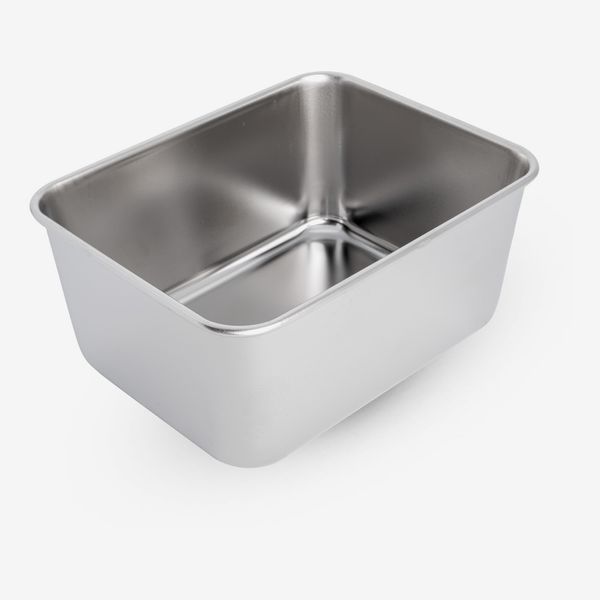
“Every restaurant has hundreds of deli containers in their pantry because you store everything from your vinaigrettes to your little garnishes. It’s part of your kitchen mise en place at the beginning of the night, when you need all your ingredients at your fingertips.
“So instead, we’re using these. They’re very sleek and they’re elegant, but they’re cheap. They’re durable and easy to clean. They’re stackable, which is really important, so they don’t take up a lot of space. If you’re entertaining at home, and having to cook a dinner party, use these containers to hold your little garnishes. You can make your sauces, and chop your parsley, and put them in there. They’ll help you think like a chef, even if you’re at home.”
New! You can now save this product for later.
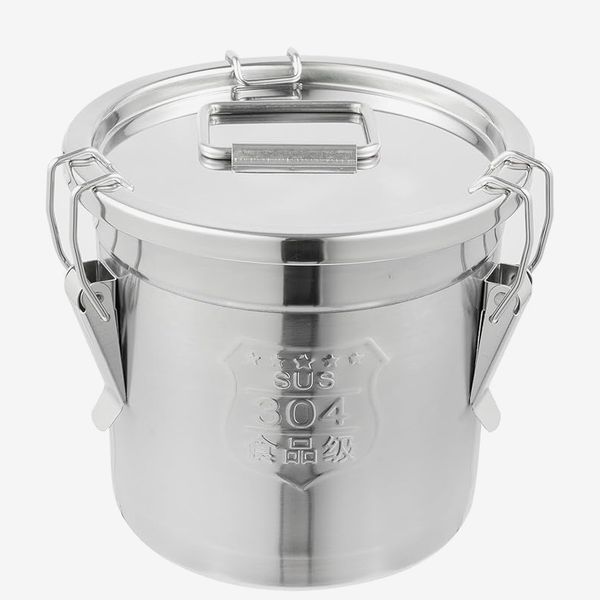
“These are stainless-steel containers with lids, and they’re great. It’s the same thing: They’re lightweight and easy to clean. But what’s nice is that they come in large sizes. So when you do your pantry at home, you can put your cereal, your pasta, your bulk items in there, and they store great because it’s a tight-fitting lid.
“One of the problems when you go plastic-free is a tight-fitting lid will often have a rubber gasket around it so that it seals tight. Without that, you really don’t get an airtight seal. With a lot of other models we tried, air would seep in or out, or water would seep in or out, or it just wouldn’t be tight. Or after one or two washings, it would warp. This is the best one we found.”
New! You can now save this product for later.
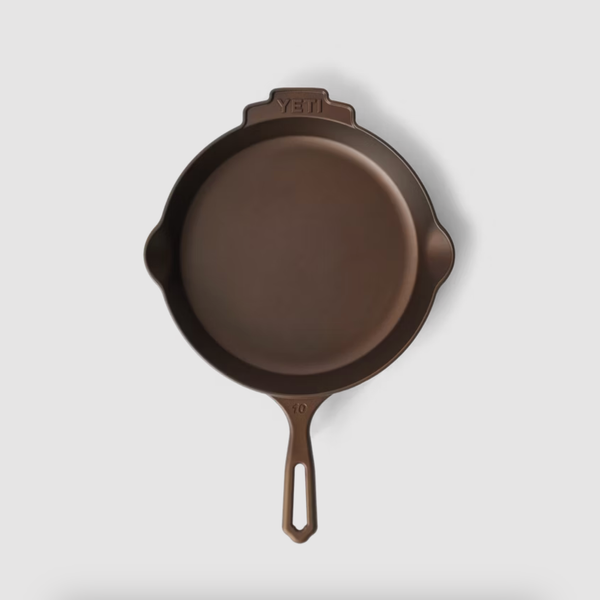
Yeti Cast Iron Skillet
“I always snoop in people’s drawers when I go into someone’s home, and almost everyone I know has some kind of a nonstick pan at home. Nonstick is great for the first ten times you use it, and on that 11th time, when you scrub it with your brush, or use your spatula trying to dig for that egg that got stuck — now you’re releasing all that plastic into your food.
“Cast iron is an incredible swap for nonstick. A stainless-steel pan is very smooth, so same thing: You’re eventually going to scratch it. And once you scratch it, food is going to stick more. But cast iron already has an uneven surface. You just need to learn how to cook on a cast iron, 99 percent of which is don’t try to scrape your food. Like with fish: If you let the fish just go till it browns on a cast iron, it will naturally lift off. The water will evaporate, the caramelization happens, and it lifts up, easy as pie. The Yeti is versatile and lighter than most other cast-iron pans that are so heavy they hurt your wrist.
“Plus, it’ll last forever. One of the things that we talk about at the restaurant with my staff is, why did we get rid of plastic? One part of it’s obviously to save the environment. The other part of it is this idea that I don’t want to live in a disposable culture anymore, where we buy something for cheap, we use it until it breaks down, we throw it away, and we buy another one.
New! You can now save this product for later.
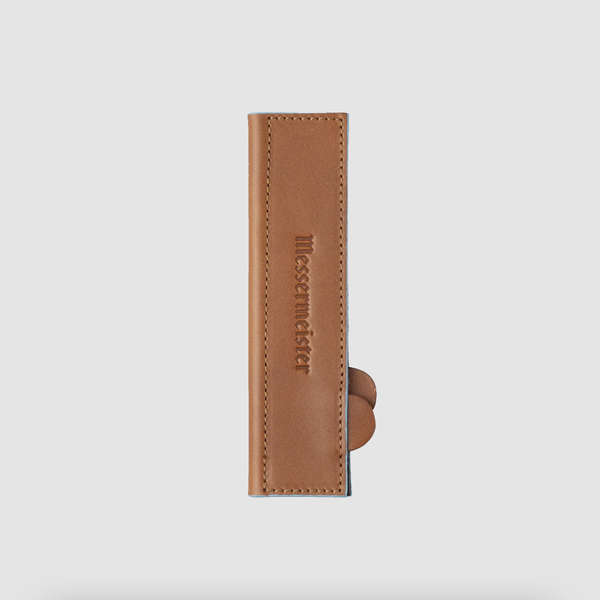
“This is a little bit of a luxury item, but it’s beautiful. A lot of people will use wooden holders for their knives, which is great, but if you’re going to keep a knife in a drawer, use a leather guard. So many are plastic, but this one’s not.”
New! You can now save this product for later.
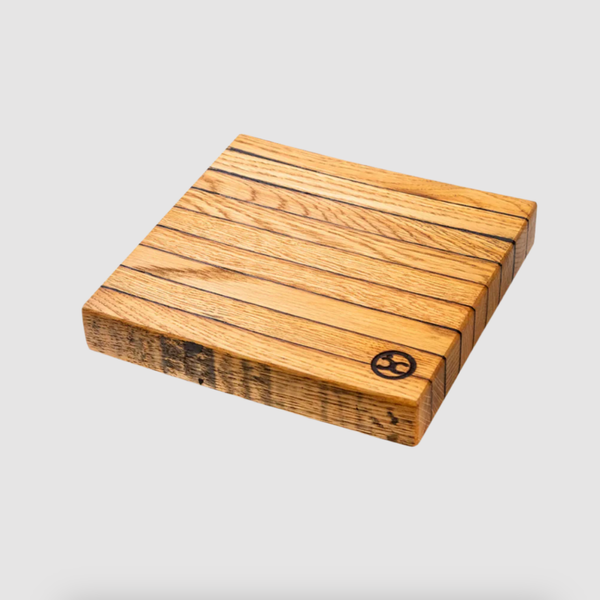
“I really want people to stop using plastic cutting boards. We’re going to have a bigger paper just devoted to cutting boards because it’s such a huge category. Honestly, you can spend $400 on a cutting board and you can spend $20, and there’s everything in between. A lot of cutting boards are glued together versus being one piece of wood, and that’s the big expense. If you get a cutting board that’s a single piece of wood, it’s like buying a piece of furniture, it’s really expensive.
“Every cutting board is going to have its expiration date. That’s just the reality of it. If you use it a lot, it will warp, and eventually snap and break. So I try to look for cutting boards that are already repurposed, like this one made from Kentucky bourbon-barrel staves. It’s a mid-price point, and it’s all oak, which is a really durable wood.”
New! You can now save this product for later.
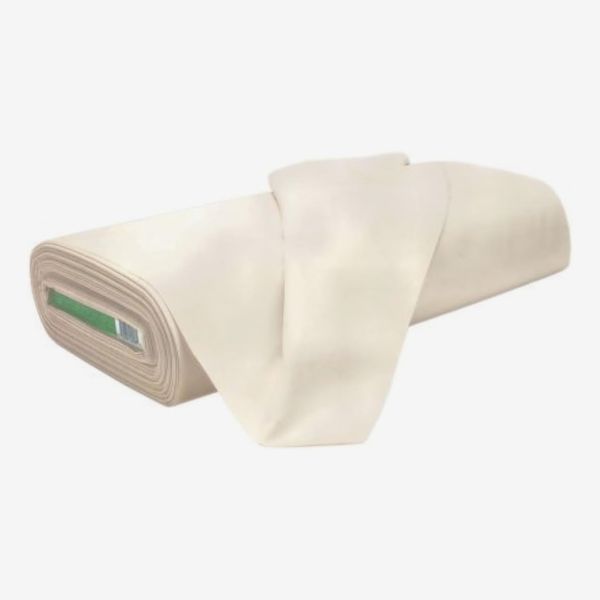
“Whenever we tell people about our project, the first question we always get is, what do you do for cling wrap? My first answer is always, there’s a lot of things that you’re covering that you actually don’t need to. The world has told you that you have to cover your fruit and you have to cover your fish and you have to cover your meat, but I never do. And I’ve never poisoned anyone.
“But if you do need to wrap, muslin is great. It’s lightweight, it’s supercheap, and you can buy it in huge rolls and cut out whatever shape you need. You can rinse them and then reuse them, or if they get really stained, just throw them in your hamper and wash them with your laundry. They last a while.
“The other nice thing is that it’s breathable. Conventional wisdom is that cling wrap keeps bad germs away from food. But actually by, let’s say, covering a piece of meat in plastic wrap, there’s plenty of germs inside, so you’re creating an environment where they’re going to multiply much faster because it’s not dry. And if you do want to keep moisture in, we just take the muslin, we get it really moist, and then we put it on top of whatever we’re doing. So for example, if you had half an avocado, I would wet the muslin, then wrap the avocado, then put it back in the fridge. And that wet muslin will keep it moist for a longer time.”
New! You can now save this product for later.
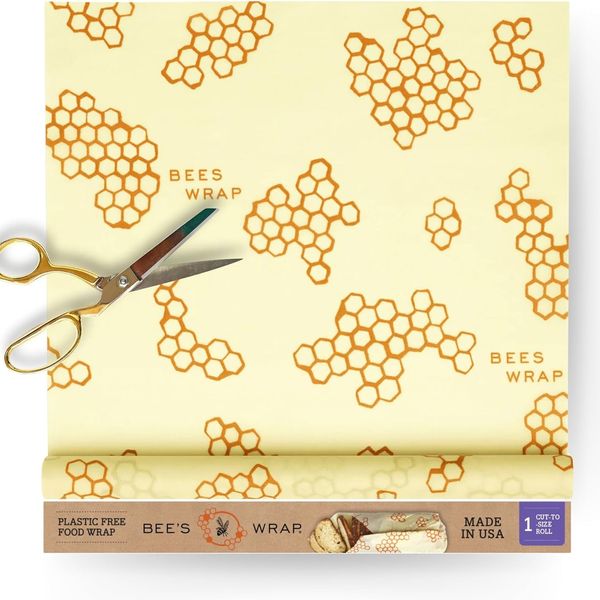
“Beeswax is another alternative to cling wrap. It’s a little bit easier to mold — like it will stay in the shape of whatever you’re wrapping.”
New! You can now save this product for later.
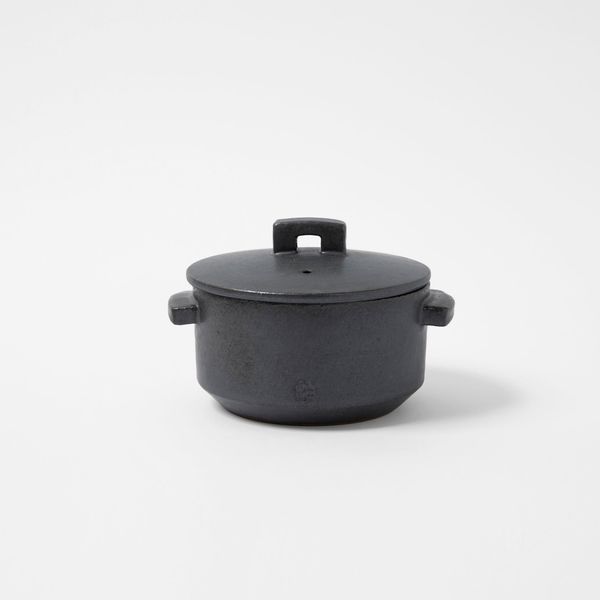
“I make rice in this at home. It’s beautiful. Once you learn how to make rice in a pot, you’ll realize it tastes very different from rice in a rice maker. A rice maker is convenient, but it creates evenly textured rice. With this, you get all these slightly different textures, which to me is delicious, and you get that crispy rice on the bottom. It is something that you bring out to the dinner table, and I keep mine on my stovetop. I look at it, and it kind of reminds me of the reason why I’m doing all this. In trying to be kinder to the environment, you’re actually creating a more beautiful environment for yourself.”
[Editor’s note: All sizes except the Seoyiteul 160, which is about eight-by-five inches, are currently sold out, but you can sign up to be notified when they come back in stock.]
New! You can now save this product for later.
Airnex Natural Kitchen Sponge
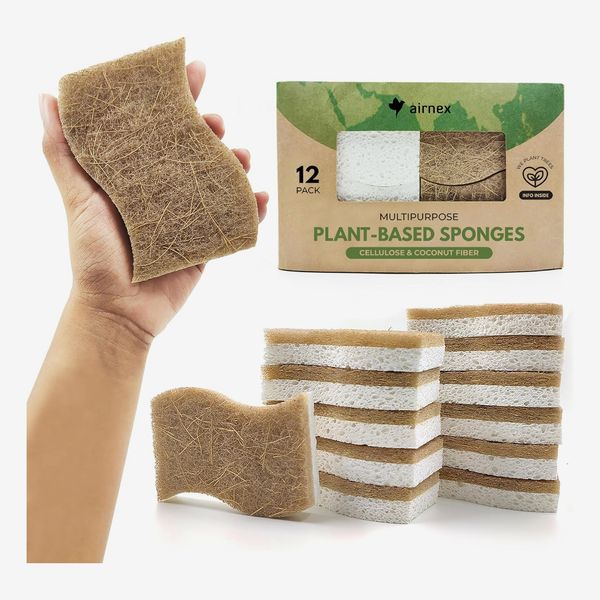
“Most people don’t realize how sponges are made. They hold germs. And it’s one of the items that you just don’t think about because it’s just there, it’s part of the dishwashing, it’s dirty, you don’t think about it — but it’s a really important part. Most people go through quite a few sponges in an average year.
“What I love about these is not only are they plastic-free, but they’re repurposed. If you go to the Caribbean or Southeast Asia, there’s a huge problem with coconut rinds because every time we drink coconut water — which all of a sudden we love to drink coconut water here, too — it’s a lot of coconuts that are being grown, and there’s nothing to do with the coconut rinds. And so this is a great way to reuse those. And they work great.”
New! You can now save this product for later.
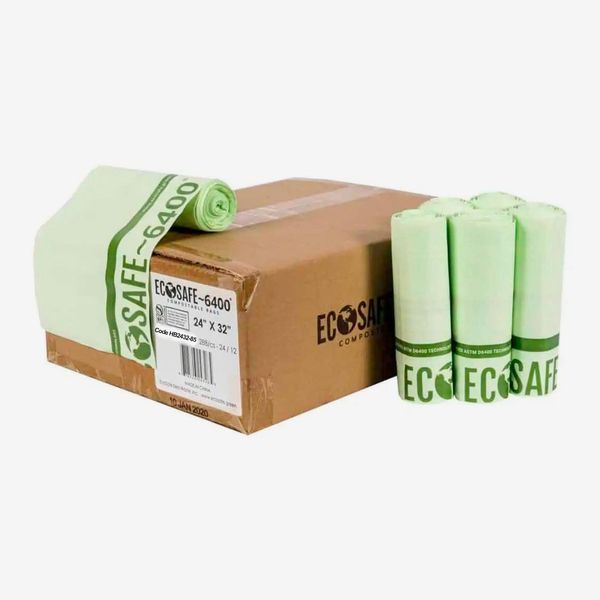
“There’s a ton of biodegradable trash bags on the market. All of them suck. This is the one that sucks the least. And the reason they suck is because they don’t stretch. You have to take out the trash more frequently. You can’t load it up with 100 pounds of trash, which restaurants do. Now, in the home kitchen, that’s actually fine. There’s no difference.”
New! You can now save this product for later.
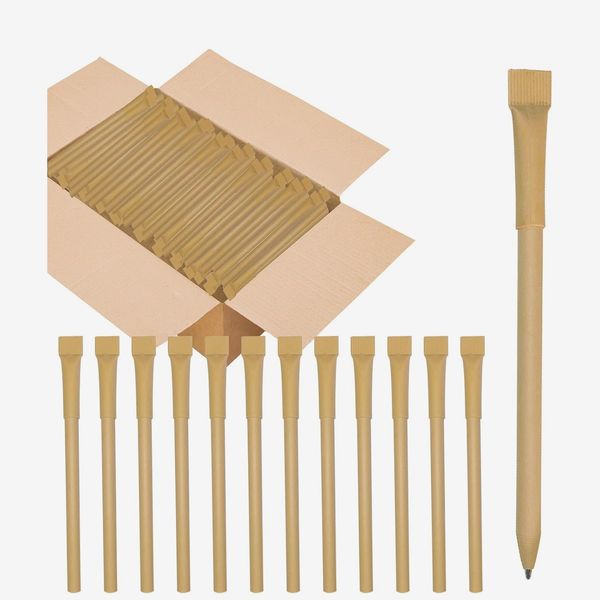
Lyforx Kraft Paper Barrel Writing Pens
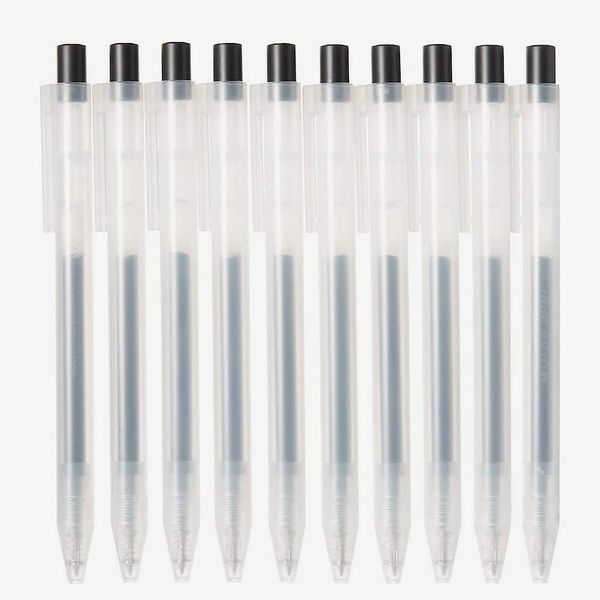
“We tried to use every pen possible to replace Sharpies, and then my GM just recently found these. They’re lightweight, and they’re cheap so you can buy them by the dozens, which is what we did. They’re biodegradable but you wouldn’t even notice that it’s anything other than a regular pen.”
More From This Series
- Replace This With That: An Exhaustive List of Plastic-Free Kitchen Swaps
- I Found the Best Plastic-Free Coffee Brewers, Including a Drip Machine
- Still Looking to Ditch that Plastic Spatula? We Have Plenty of Alternatives.
- All the Best Non-Plastic Tableware and Utensils for Kids
The Strategist is designed to surface useful, expert recommendations for things to buy across the vast e-commerce landscape. Every product is independently selected by our team of editors, whom you can read about here. We update links when possible, but note that deals can expire and all prices are subject to change.