I Tried the Newest High-Tech Bed-Cooling System, Orion Sleep

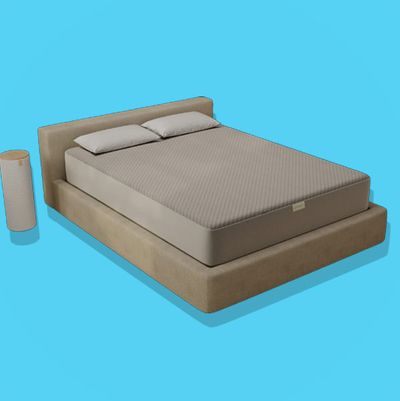
Temperature-regulating sleep systems — usually advertised for their cooling capabilities — are a growing product category. Since I first started testing them a couple of years ago, I’ve tried most of the big names, the best known of which is the Eight Sleep Pod. But a newcomer, Orion Sleep, launched at the end of 2025 as a pretty direct competitor. I’ve been sleeping on it for nearly three months to see how it compares.
New! You can now save this product for later.
Orion Sleep System
Setup took about 30 minutes
Much like the Eight Sleep, the Orion is a mattress-pad-like cover that sits over your mattress but under your sheets and connects to a water-filled unit that you plug in next to your bed. Orion’s app guided me, step by step, through putting the cover on my mattress, attaching the hose and cords, and adding water to the control unit. The setup process was very similar to the Eight Sleep and took about 30 minutes total.

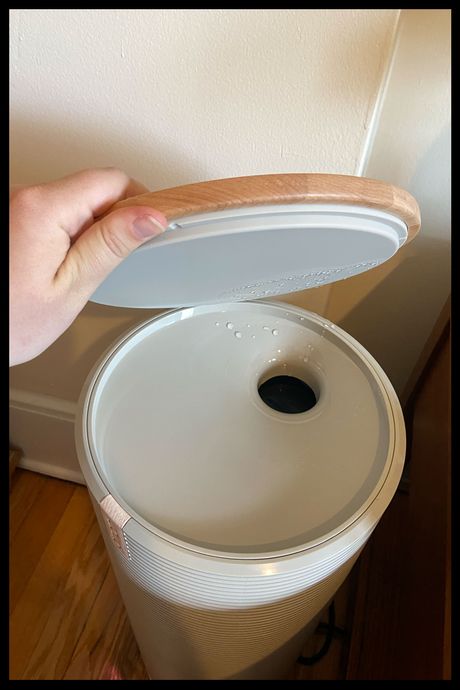
The control unit is nice-looking but kind of huge
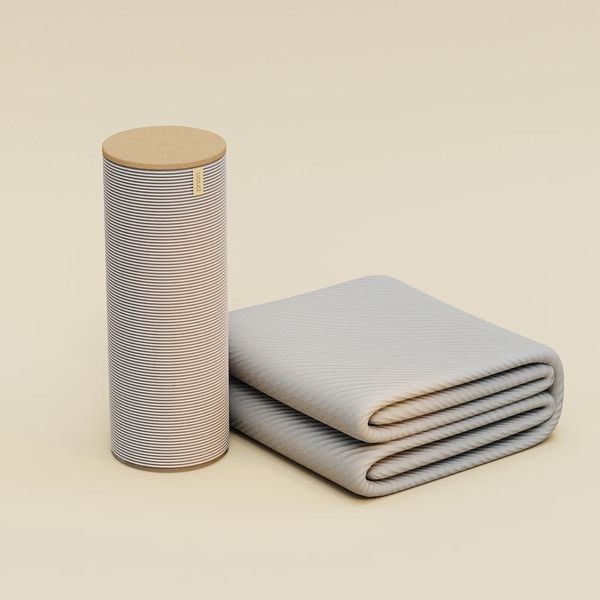
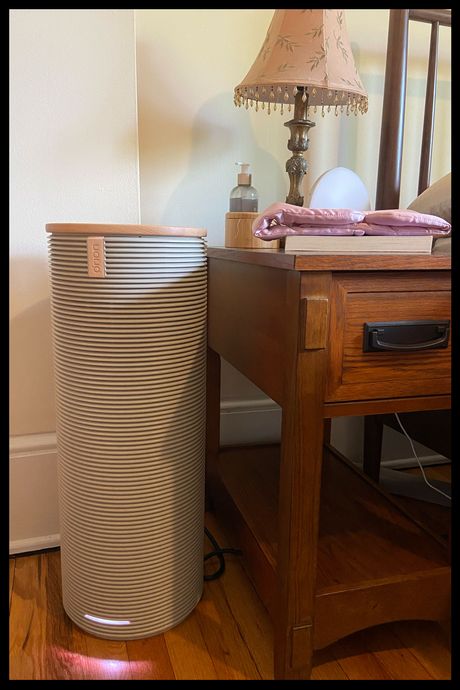
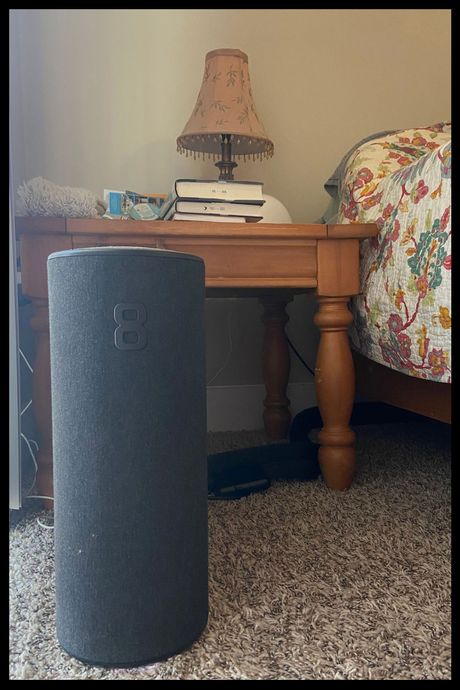
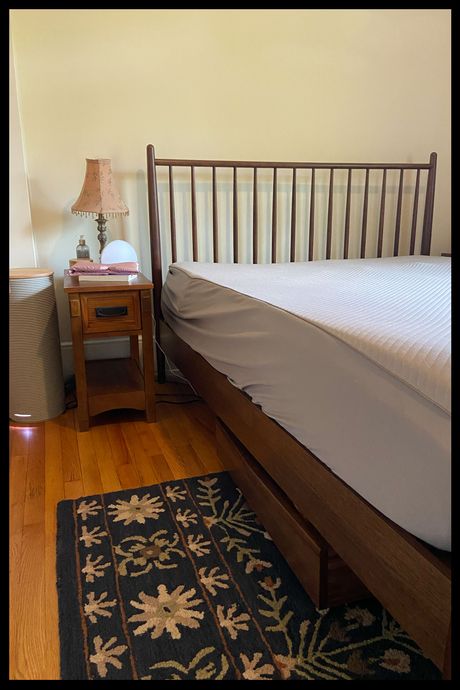
The Orion’s water-filled control tower is a tall gray cylinder with a bamboo wood-look top. If I didn’t know what it was, I would think it was a high-end air purifier. It’s much larger overall than its Eight Sleep counterpart, the Hub, which could fit under my bedside table. But the control tower is also narrower, so it has a smaller footprint. I also think the control tower looks much sleeker than the Hub, a black box that resembles a desktop computer. One slightly annoying detail, though, is the bright light at the bottom of the tower. You’ll probably want to cover that up.
I have mixed feelings as to which overall look and footprint I prefer. If either one had to be visible in my bedroom, the Orion’s control tower is definitely more aesthetically pleasing. But the Eight Sleep’s Hub is easier to tuck out of sight.
Orion offers an add-on sleep test to help you optimize your sleep
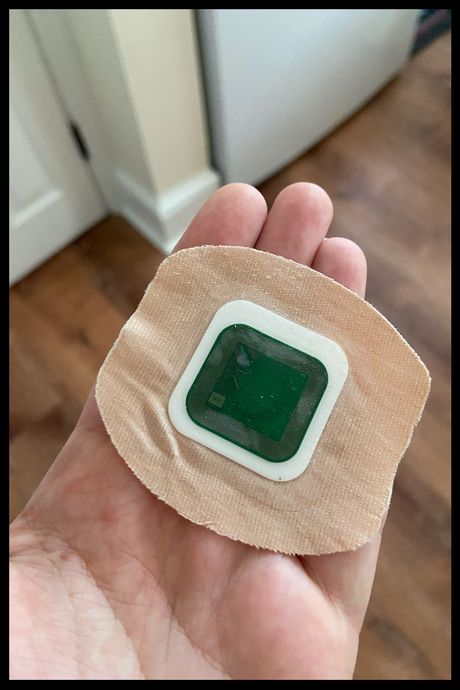
One step in the Orion process that is not available with other cooling sleep systems is an optional sleep test. The test costs an extra $100 and requires you to attach a patch to your torso, under your arm, and to wear it overnight while you sleep. The patch has some kind of detector in it, which apparently monitors your sleep temperature, how long you sleep for, and sleep interruptions. You’ll receive the results before your Orion arrives, so that the company can preprogram it to best suit your needs, based on your test results.
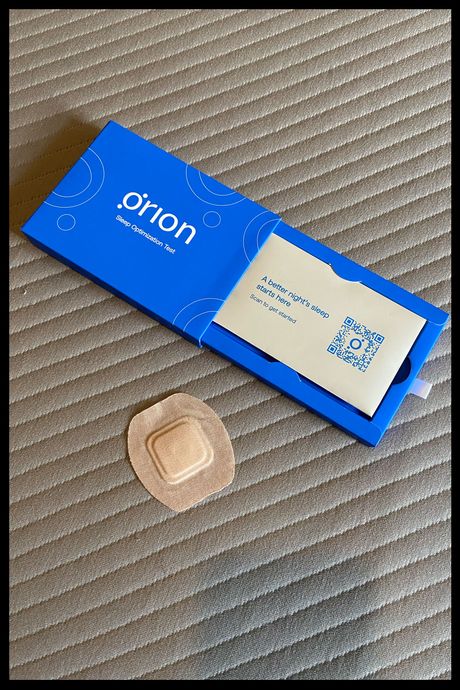
I did the sleep test at the end of March and received a PDF report with my test results. I also had the option discuss my results with a “sleep advisor” from the brand, which I tried to do, but the app glitched and said my scheduled meeting was over before I was able to join. I probably could have tried again but decided to just review the report’s data myself.
I learned that during my sleep test, I had slept for seven hours and 34 minutes, falling asleep at 11:28 p.m. and waking up at 7:02 a.m. My average temperature range was between 93 and 99 degrees Fahrenheit. And my sleep was interrupted six times throughout the night (my kittens were in a particularly sleep-disrupting era around this time). All together, these data points earned me a C+ sleep score. The report also compared my body temperature to an “ideal” range of temperature fluctuations, gave the time stamps for exactly when my sleep was interrupted, and included some information about why disrupted sleep isn’t good for you. A lot of it was general information about ideal sleep temperature and a pitch for how Orion can help you achieve it.
The app is easy to use
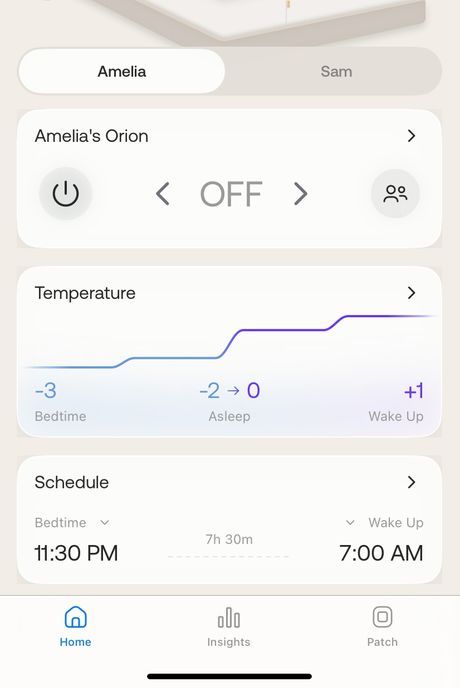
Orion’s app is sleek and well designed, similar to Eight Sleep’s app. You can set your temperature by clicking arrows to increase or decrease your temperature on a ten-point scale. According to Orion’s website, the lowest temperature the device can cool to is 50 degrees Fahrenheit, and the highest it can warm to is 115 degrees Fahrenheit (the Eight Sleep has a similar range, from 55 to 110 degrees Fahrenheit).
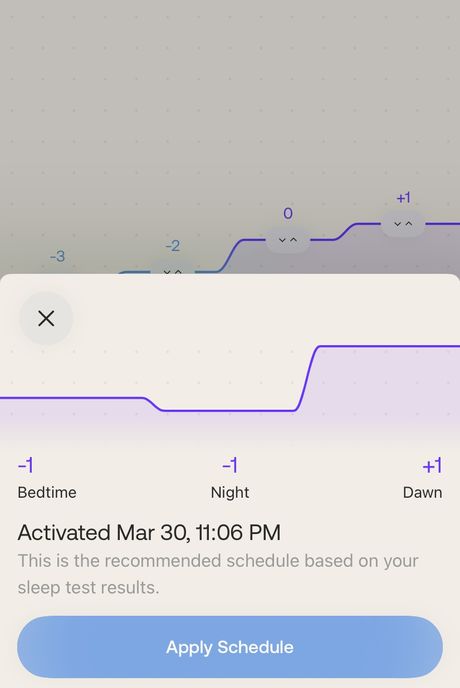
Beyond simply choosing a temperature at the moment, you can program the temperature settings to align with your usual sleep routine. You can set your bedtime and wake time along with your preferred temperature to fall asleep at, and the Orion will automatically heat or cool to that temperature at your bedtime. The system is designed to responsively adjust the temperature throughout the night to achieve the optimal temperatures for you, though you can also manually control the settings to program the temperatures to change (or to not change) overnight. If you did the sleep test, the Orion will use the data from it to create an ideal temperature schedule for you, but you aren’t beholden to that schedule if you do want to alter it. Additionally, as with the Eight Sleep’s app, if you share the bed with a partner, you can each download the app separately to control your side of the bed independently.
And the temperature regulation is effective
Since I’ve been sleeping with the Orion, I’ve been very pleased with how effective its temperature controls are. I started testing it at the beginning of spring, when there were still some chillier nights on which I opted to put the heat on (usually to the +1 or +2 settings). Once the weather started getting warmer, I’ve began using the cooling features — particularly in the first half of May, when my husband and I had not yet set up our window AC unit. Even without any air conditioning, cranking my Orion down to -4 or -5 could keep me pretty cool at night. Now, with air conditioning, I’ve usually been setting it around -2 or -3, which has been nice but not too cold.
There is also a sleep-tracker function, but it costs extra
The app also provides some sleep tracking. Every morning, it gives you a numerical sleep score for the night before. As I’m writing this, my score for the previous night was 85, which Orion says is “good.” The tracking section of the app goes into more detail about how many hours I slept (eight hours and 49 minutes) and how many of those were deep sleep (one hour and seven minutes). It also tells me how much time I was “restless” overnight (six minutes and 13 seconds), as well as my heart rate and breath rate (63 per minute and 15 per minute, respectively). This data is all gathered by sensors in the mattress pad. As I said when I reviewed the Eight Sleep, I don’t care much about sleep tracking, but if you do want some tracking capabilities, I see the value in combining that with temperature control so you don’t have to invest in multiple types of devices.
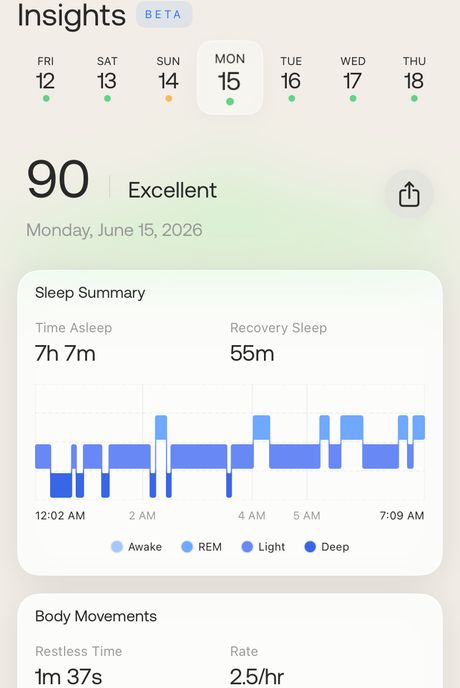
As with the Eight Sleep’s tracking system, accessing your Orion data requires a paid subscription to Orion Intelligence at the cost of $21 a month, or $250 a year. Eight Sleep’s Autopilot subscription is around the same price. It was $17 per month when I first reviewed the Eight Sleep in 2024; the company has since introduced a tiered pricing plan in which $17 per month is the cheapest option, though there are also $25-per-month and $33-per-month options.
One big difference between the Orion and the Eight Sleep is that Orion does not require you to purchase a subscription to Orion Intelligence at any point. Eight Sleep, meanwhile, requires you to pay for a subscription for at least a year before you can cancel and use your Eight Sleep Pod without it.
Overall, the Orion is a more basic — and less expensive — alternative to the Eight Sleep
After spending a couple months with the Orion sleep system, I feel pretty confident calling it a more budget-friendly version of the Eight Sleep. That’s exactly how the company is billing itself too — it even has direct comparisons to Eight Sleep on its website. No doubt, neither of these products is cheap by any means. But the Orion costs $2,295 for a queen size with no subscription ever required, while the Eight Sleep starts at $2,999 for a queen size before the cost of the subscription that you have to buy for at least one year. The base Eight Sleep membership is cheaper than the Orion’s, so if you want the membership, the math may work out for you eventually. But for someone like myself who doesn’t care about tracking, I’d go with the Orion.
The Orion doesn’t offer all the features the Eight Sleep does, like vibrational alarms and snore detection. And since I first reviewed Eight Sleep’s Pod 4, the company has added even more features and options to its latest model, the Pod 5, such as speakers, an optional adjustable base that can mitigate snoring, and a temperature-control blanket and pillow cover. Of course, all of those extras will incur additional costs. I haven’t personally tried the Pod 5 (a colleague is testing it, and we’ll publish findings soon); its bells and whistles may be fantastic and worth paying for to some people. But for those who simply want effective temperature control with a sleek system at a slightly more affordable price, the Orion beats the Eight Sleep for me.
New! You can now save this product for later.
Orion Sleep System
(Also worth noting: Chilipad is another brand that makes a less-expensive version of this type of product. It’s called the Dock Pro and costs $2,499 for a queen size with no subscriptions. I tested it in my original survey of cooling bed systems and found it to be just as effective for cooling as the Eight Sleep, sans several fancy features. However, Chilipad just launched a new model, the Chilipad 2.0, which is more expensive than the system I tested; I am planning to test the new version soon.)
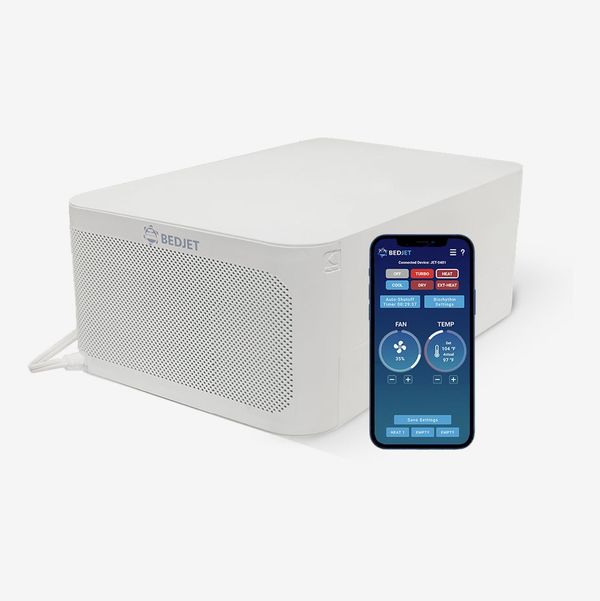
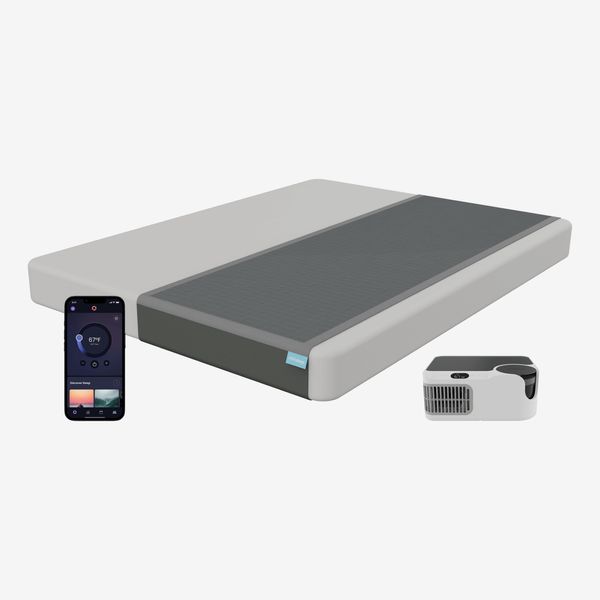
More temperature-control sleep systems

More From The Strategist
- Hark, the Advent Calendars Arrived (Very) Early This Year
- The Best Things Strategist Editors Have Bought This Year (So Far)
- 63 Things You Should Never Buy Full Price
- The Strategist Fall 100
The Strategist is designed to surface useful, expert recommendations for things to buy across the vast e-commerce landscape. Every product is independently selected by our team of editors, whom you can read about here. We update links when possible, but note that deals can expire and all prices are subject to change.