We Designed the Hobonichi Techo
“It’s like a park for children where you have space to just play around and have fun with it each day.”

Save this article to read it later.
Find this story in your account’s ‘Saved for Later’ section.
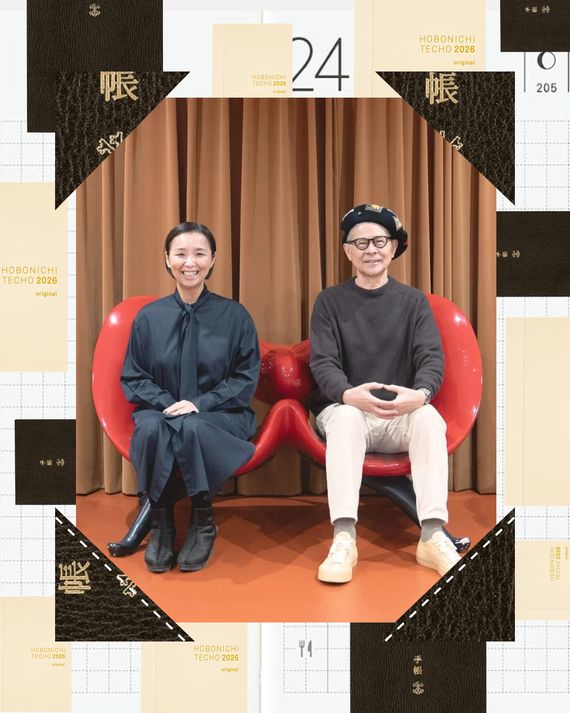
The Hobonichi Techo planner was the first thing I bought myself when I got hired at the Strategist eight years ago, and I have faithfully bought a new one every year since. Originally designed in 2001, as the brainchild of Japanese polymath Shigesato Itoi, editor-in-chief of the website Hobonichi. Itoi had also worked as a prolific copywriter and video-game designer and is the famous voice behind Tatsuo Kusakabe in Hayao Miyazaki’s My Neighbor Totoro. The “life book” became immensely popular in Japan thanks to its one-page-per-day design. Eleven years later, in 2012, Itoi collaborated with Sonya Park, the creative director of the lifestyle brand Arts&Science, to create the English version we now all know and love. We first wrote about the Hobonichi Techo in 2017, when New York Magazine deputy editor Alexis Swerdloff detailed her adoration for these “perfect little planners.” I’ve crowned it our Best in Class planner five years running.
So, in honor of the 25th anniversary of the Hobonichi Techo, I sat down with Itoi and Ayako Koizumi, president and COO of Hobonichi, to discuss everything from the Tomoe River paper to how exactly the quotes at the bottom of each page get picked.
This conversation was conducted through a translator and has been edited and condensed for length and clarity.
What was the inspiration behind the design originally? How did you come up with the idea for the Techo?
Shigesato Itoi: We wanted to make something we wanted to use ourselves. When we started Hobonichi, we wanted to create something that we could all share. Like a baseball team with their uniforms. For us, that happened to be the Techo.
You’ve lived a lot of lives — game designer, actor, writer. Can you talk to me a little bit about your background and how that led you to designing the Techo?
S.I.: For a long time, I worked as a freelance copywriter. Working in freelance meant that I had to organize my day-to-day by myself. So that desire to have a better way to plan led to the creation of the Techo.
Back then, a lot of office workers wore the same suits, used the same lockers. They used everything that was provided for them by their company. It was lacking in freedom and the option for you to actually choose something for yourself. That was lacking in the industry and in Japan as a whole. I wanted to give people more freedom to choose something for themselves and the freedom to use it the way they wanted.
Is that freedom of the page design what makes the Hobonichi Techo different from all the other planners out there, in your eyes?
S.I.: The biggest difference between the Hobonichi Techo and everything else is that there’s a page per day. So you have 365 pages for 365 days. And it’s not technically a schedule or a planner. It’s like a park for children where you have space to just play around and have fun with it each day.
The grid as a kind of playground for your thoughts is a beautiful image. Can you say more about what made you choose it when you first started designing?
S.I.: Most planners have a page design that is easy for you to write in. But what I wanted to create was a design that could hold all the various communication styles you might have. Not just words but all these different ways for expressing yourself. So it had to be also easy to draw in: graphs, tables, even floor plans for your house.
And then we made minor developments to the grid itself over the years. The size used to be a lot smaller, but then we expanded it a bit and we made adjustments so that now it is also easy for everyone to write in as well as draw.
You released the English version in 2012. What was important to get right when you were adapting it for this wider audience?
S.I.: As a Japanese company wanting to create an English version of the Techo, we could have created the design based on what we think is international. So the most important part was that we had someone who we could talk to who already knew what was accepted in the international market. So we collaborated with Sonya Park, who’s the founder of the brand Arts&Science, and she created the designs for the Hobonichi Techo that were accepted in the international market.
But we still took pride in the fact that this was something that we created in Japan. It was made in Japan. So we created a lot of those bonus pages at the back of the book that had elements of Japanese culture within them. We wanted to create a planner that would make people happy if they ever visited Japan. They’d think, Oh, I’m glad I had this planner with me when I visited Japan.
The Hobonichi Techo has gone through many versions over its 25-year history. When you think back to the first design versus the current design, what are some similarities and differences?
S.I.: The current Techo and the first-ever Techo are actually really similar. When we first started to create the Techo, what was important was the concept. For it to be a page per day with the grid design and the 24-hour timeline. We were working really hard to make those concepts happen in one book. And that concept was what kept Techo running when we first brought it out to the world.
And as the years went on, we made changes after hearing user feedback. So in a way, the Techo has evolved into something that is more user-friendly. But when you look back at it to what we now have today, they are very similar in concept.
You mention taking user feedback very seriously. Can you tell me more about how that plays into your process?
S.I.: Actually, one of the most important, fundamental parts of user feedback are the voices that say, “Please don’t change this aspect of the Techo.” That’s really valuable for us.
And another thing is that when we implement changes, they might not even be visible at first glance. One of the most famous changes that we made was to the grid. There’s a vertical line that goes through, and there’s a horizontal line. Those intersections used to be random, but we changed that. So now each intersection is the same. That might seem like a really minor change, one that you might not even notice when you casually glance at your Techo, but those are the things that make the Techo. The design has to be really easy on your eyes. And what we try to do is make those subtle changes before someone notices it and gradually change the Techo into something that’s more usable.
So a lot of user feedback is about keeping certain elements the same. But was there ever a time when user feedback directly inspired a change?
S.I.: Some of our users said that the A6-size Techo was too heavy to carry around and that putting it in a bag would make their shoulders hurt too much. They were like, “Please make it lighter.” So, what we did was create a Techo that’s twice the size. Something bigger and heavier to make the A6 Techo feel lighter in comparison. And that actually ended up being the Hobonichi Techo Cousin.
And after that, we did create the Weeks, which is the vertical planner that’s a lot lighter and easy to carry around and is designed to be used for business settings.
For me, the Techo is quite light. I think it’s one of the lightest planners out there, to be honest. And part of that I believe is because of the paper. I was wondering if you could talk to me a little bit about how it was selected.
Ayako Koizumi: As we said, when we first created the Techo one of the fundamental aspects was that it has to be a page per day, which meant that the book would be at least 365 pages thick, which would make it very heavy. If we were to use normal printing paper, it would be three times the size of what it is now. So what we used as a reference was actually the paper used in dictionaries.
So we contacted the Tomoegawa paper company, who introduced us to the Tomoe River paper. It’s very thin but still very sturdy and durable, because it’s something that you flick through every day. The paper at the time was not used widely in a lot of products. The challenge was while we wanted something like dictionary paper, you don’t actually write in dictionaries, right? So the Tomoe River paper made for planners was made to be really smooth to write on.
Something I always kind of marvel at year over year is how durable the cover is. Can you talk a little bit about how you selected the cover?
A.K.: I looked at the bindings used in other notebooks. It’s like backing tape that’s on the spine. They have to be really sturdy because you open them up and they have to not break. So for the Planner, I thought, What if we extended the backing tape to cover the whole book? So no matter how many times you throw it in your bag, it’s going to be sturdy and it’s not going to break.
How do you pick the quotes?
S.I.: What might not be common knowledge for our American customers is that Hobonichi isn’t actually a planner company. We are a media company that creates a daily magazine online. So we publish every day, which makes the amount of content that we can choose from quite expansive. So when it’s time to select the quotes, the crew members at Hobonichi read through all of our content from the year and pick out some candidates for quotes. One editor goes through all the candidates and reads through them and picks out something that might be funny, or it might be interesting, or it might be useful in a way. And then he prints them out on actual paper, and he spreads them out on a floor, and he chooses which quotes go on each day.
I know that Hobonichi has a philosophy of the “Happy nothing special day.” Can you talk a little bit more about what that means to you and the brand at large?
S.I.: As much as this is about the happy nothing special day, it’s also about the happy special nothing people. What’s most important is people. Our customers are what we take the most pride in. That’s the backbone to this quote that we use really often.
Obviously, the 25-year anniversary is a huge milestone that invites reflection on the past. But I want to ask if there is anything you want to do in the future with Hobonichi Techo? Any dreams in particular you’d like to see happen if the sky was the limit?
A.K.: A big dream is to have Hobonichi New York. We currently have our physical shop here in Tokyo and Kyoto, as well, but we wish to create a place like that in New York. To be a place where we can meet with users in New York and around the world.
How do each of you use your Hobonichi Techo?
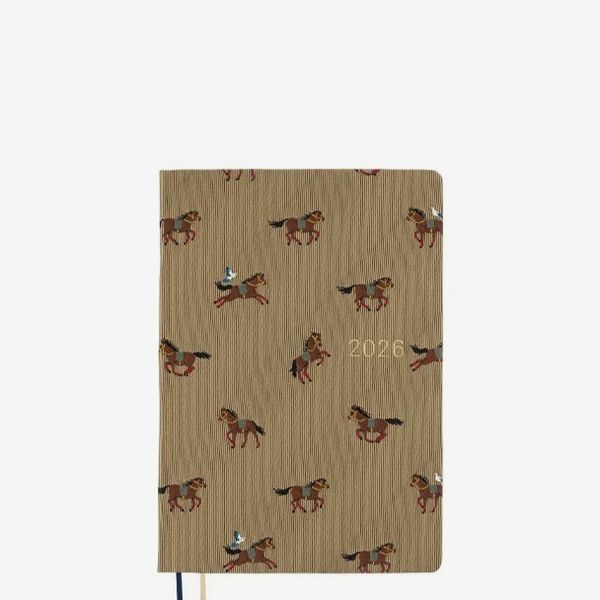
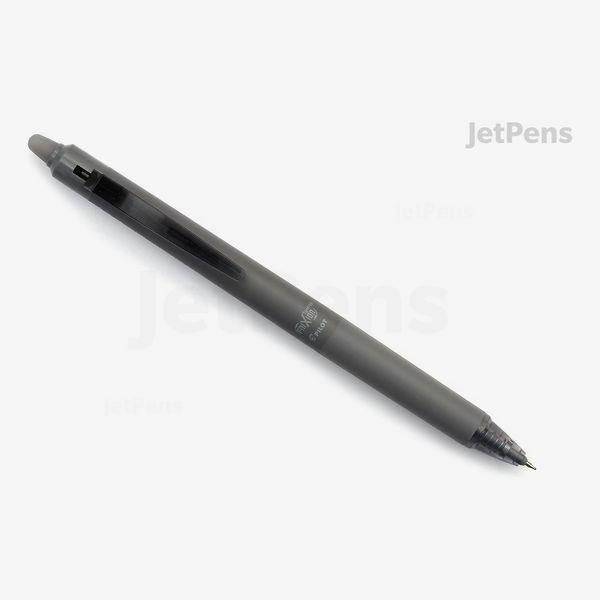
A.K.: I use my Techo as a place to quickly jot down notes and memos. Having a place to write gives me ease of mind. I sometimes don’t write exactly on that day. I might write memos that go for two or three pages. I like to use it quite freely. I keep everything in our Drawer Pouch–stickers, my Pilot Frixion Erasable Pens, and even lucky charms as well. It opens accordion style, and I throw everything inside and I know I have everything I need.
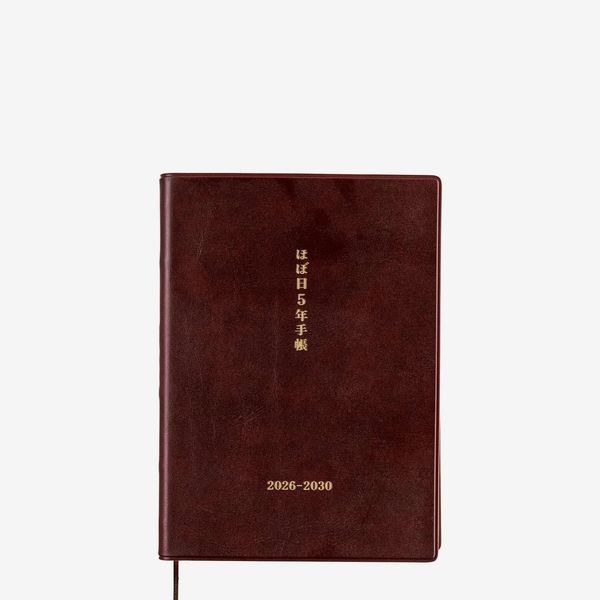
S.I.: My Techo changes slightly every year. Currently, I’m using that A6 size mainly as a diary. So at the end of the day, I’ll reflect back and write down what happened and my thoughts. I also use a five-year Techo, as well, where I’ll write a more simple breakdown of what I did that day. And it’s fun to look back on what I did that day last year, because I might be doing something very similar on the same day.
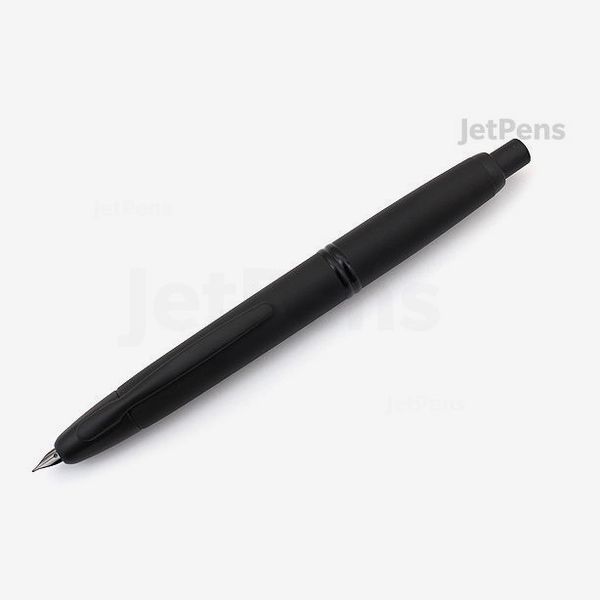
Shigesato Itoi’s planner setup
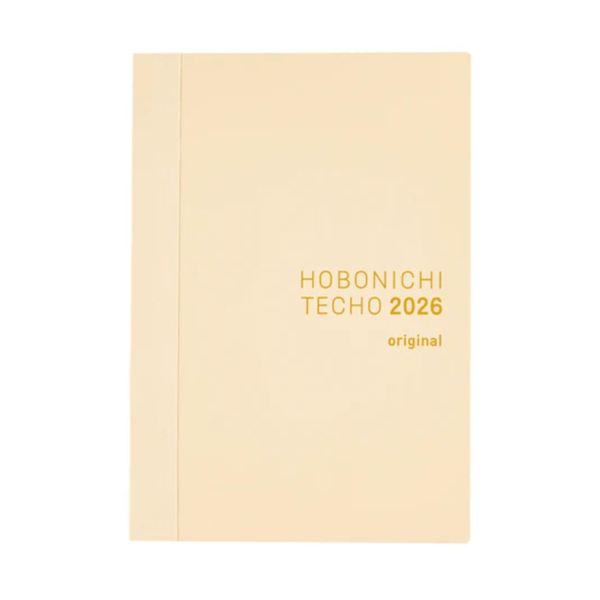
Ayako Koizumi’s planner setup
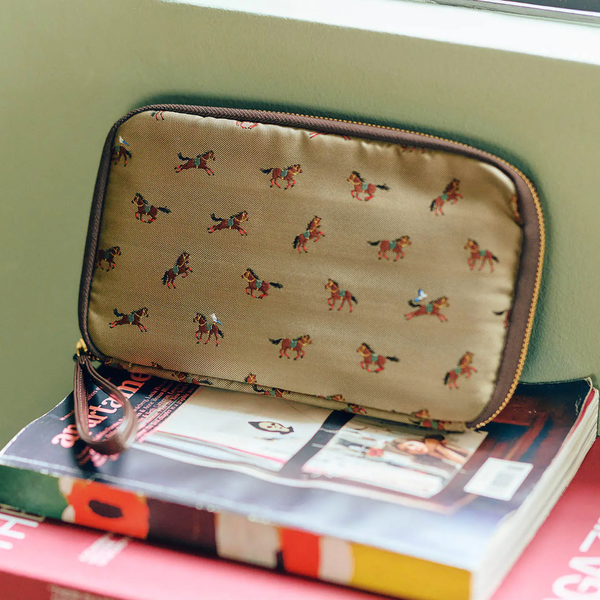
[Editor’s note: The drawer pouch is currently out of stock.]
More From The Strategist
- Hark, the Advent Calendars Arrived (Very) Early This Year
- The Best Things Strategist Editors Have Bought This Year (So Far)
- 63 Things You Should Never Buy Full Price
- The Strategist Fall 100
The Strategist is designed to surface useful, expert recommendations for things to buy across the vast e-commerce landscape. Every product is independently selected by our team of editors, whom you can read about here. We update links when possible, but note that deals can expire and all prices are subject to change.