Finally, a Digital Picture Frame With an E-ink Screen


My love for e-ink gadgets is no secret. They’re not as harsh to look at as bright, backlit OLED or LCD displays and have a unique newspaper-like look. But outside of e-readers, a few minimalist phones, and some digital notebooks, e-ink isn’t nearly as prevalent as other types of displays.
I was thrilled, then, to find out that Aura, maker of many digital picture frames with LCD screens, had a new e-ink frame — its first. I’ve been a fan of Aura’s digital picture frames since I first started testing them for theStrategist in 2022. Its frames have an understated look that could fit in nearly any room, and the accompanying app is packed with features that make it easy for anyone to upload photos and share them with other family members and their frames. The Aura Ink ditches the usual LCD display common to all digital frames for a screen that looks more like an actual photo in a frame. I can’t stop looking at it.

New! You can now save this product for later.
Aura Ink
E-ink is more than just a party trick …
The Ink’s display isn’t flashy like an OLED or LCD screen, but its more paperlike look gives images more texture — like a matte photo print — and helps the frame blend in on a wall. It feels almost analog compared to the bright, illuminated displays of other frames. With good external lighting, pictures of my niece and nephew were detailed enough to show their rosy cheeks.
Good as it looks, e-ink isn’t just a stylistic change. Because these screens use so much less energy than other types of displays, the Ink can run off a rechargeable battery rather than needing to constantly be plugged in. Aura says the frame should last about three months on a single charge.
Perhaps it’s the gadget tester in me — I spend a lot of time making room on my power strips for new products — but I love that I can move this frame around without needing to make sure its cord can reach an outlet. Less tech-laden folks may be more appreciative of the fact that this means you can mount this frame anywhere on the wall without a dangling cable.
… but it can be limiting
E-ink displays have some drawbacks. They can’t refresh images nearly as quickly as LCD and OLED screens, nor can they get as bright. So instead of the slideshow effect you get with frames like the Mason or Carver, which can rotate pictures on a minute-by-minute basis if you so choose, you can only set the Ink to change images up to 12 times per day. There’s a button on the top of the frame that lets you do this on demand, but I recommend keeping this to a minimum. Every time the Ink swaps photos, the screen flashes in rapid succession, slowly adding components of the image. It takes about 20 seconds, and can be quite jarring: I’ve seen my niece’s eyes, fully white, flashing back at me far too many times.
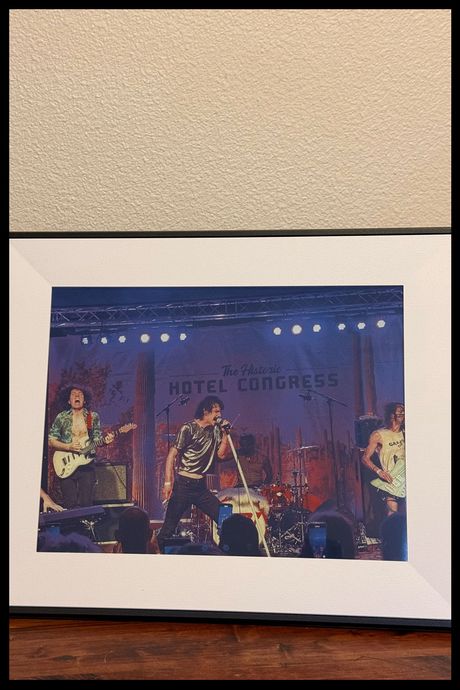
That may be frustrating for those who like to see as many photos of loved ones as possible, but I’ve come to enjoy the slower nature of the Ink. With other frames, I’m constantly getting new photos of my niece and nephew — my sister is a diligent uploader — and I sometimes feel like I don’t get enough time to appreciate each one. In my week of testing the Ink, its slower pace makes each photo feel more special, like a postcard from a loved one. I’ve since changed my other frames to update twice a day rather than multiple times per hour.
Less up for debate is the noticeably dim front light. Backlit frames like the Mason work just as well in low-light settings as they do bright rooms, but e-ink screens need a bit more assistance as they’re lit from the front, letting the light bleed over the display instead of blaring directly into your eyes. My retinas are appreciative, but that makes it harder to see details at night. In dimly lit rooms, dark hair in pictures blends into the background, making it harder to see where a head ends and the wall begins.
It’s expensive for a picture frame
Before the Ink — priced at $499 — Aura’s most expensive frame cost $300. That’s a significant jump and a tough sell for a frame that performs the same core function as the much cheaper Mason or Aura. Even so, the unique look of the Ink is a welcome change in a category that hasn’t seen much innovation in the past several years. For now, you’re probably better off with one of the company’s cheaper frames, but I also can’t imagine having buyer’s remorse once you’ve seen the Ink on your countertop.
More From The Strategist
- Hark, the Advent Calendars Arrived (Very) Early This Year
- The Best Things Strategist Editors Have Bought This Year (So Far)
- 63 Things You Should Never Buy Full Price
- The Strategist Fall 100
The Strategist is designed to surface useful, expert recommendations for things to buy across the vast e-commerce landscape. Every product is independently selected by our team of editors, whom you can read about here. We update links when possible, but note that deals can expire and all prices are subject to change.