Does Anyone Actually Need a Box Spring Anymore?

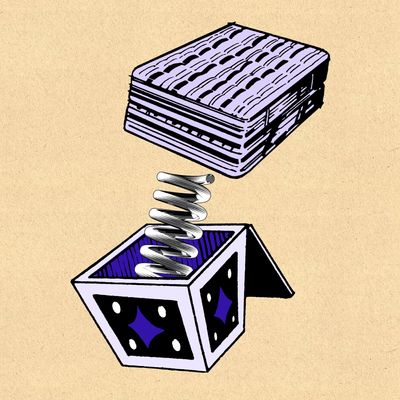
If you’re a millennial or older, you likely grew up with a “traditional mattress set”: an innerspring mattress sitting on top of a box spring that looked almost like a second mattress (just without the padding on top, and with a wood frame and more springs inside). But if you take a peek in most people’s bedrooms these days, you’ll likely find a different set-up. Shifts in the manufacturing and design of both mattresses and bed frames over the past 20 years have made traditional box springs largely obsolete, as platform and slatted beds have increasingly become the norm in the United States (though they’ve long been common in other countries).
Essentially, older steel bed rails and a lot of frame designs used to require a box spring because they didn’t have enough of a support structure to hold a mattress on their own. Today, that support structure is usually built into bed frames from the get-go. And if you do happen to need additional support for your mattress, it likely won’t be a box spring, but a mattress foundation.
Today, most “box springs” don’t have any springs at all
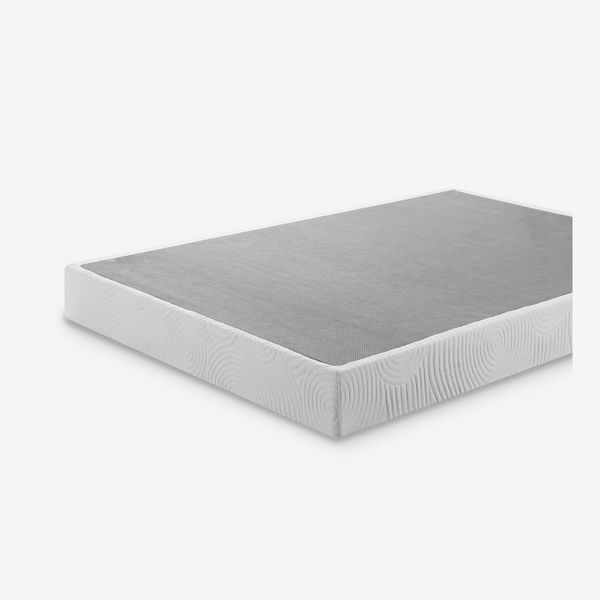
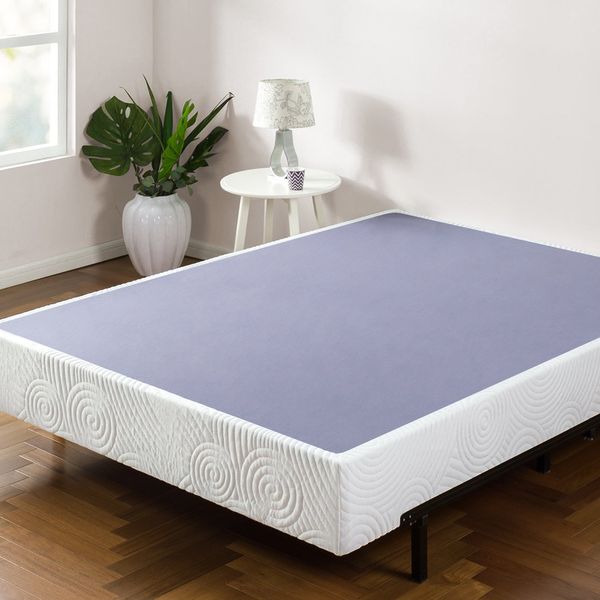
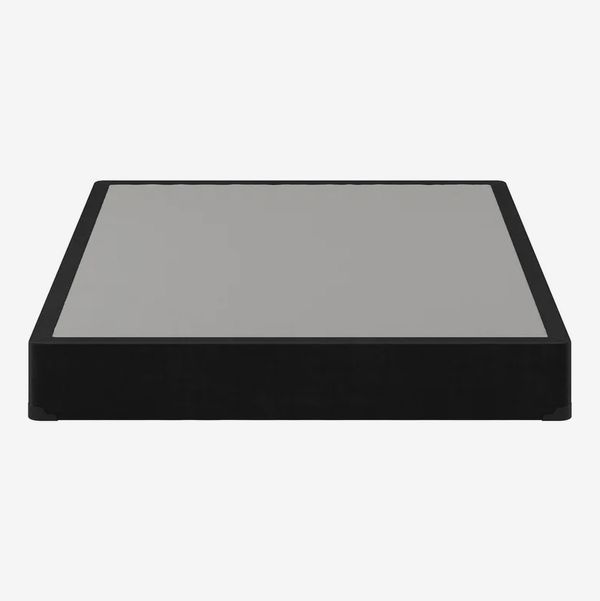
The modern mattress foundation — the hollow, box-spring-esque structure that now dominates what market remains for a standalone product you can buy to raise or support your mattress — has been on the rise since the early 2000s, according to Aaron Masterson, founder of Local Furniture Outlet. (I went to actual brick-and-mortar furniture and mattress stores to report this story, because veteran mattress salespeople tend to be the only ones who know much about this particular product category these days.) A mattress foundation typically has the rigid frame-like structure of a box spring, made from either metal or wood, but with slats to rest the mattress on and no actual springs inside.This switch is largely traceable tothe adoption of pocketed coils over interlocking coils in most mattresses and the boom in flat-pack furniture.
Pocketed coils are a type of barrel-shaped mattress spring, which are individually wrapped in fabric and don’t interlock with one another. Though they were invented back in 1899 and mass-produced for Simmons mattresses by 1925, pocketed coils only overtook interlocking coils in the past decade or so, as hybrid mattresses (which almost always use pocketed coils) were introduced to the market. And the rise of pocketed coils was something of a death knell for the old-school box spring.
That’s because traditional innerspring mattresses were made with interlocking coil systems (also known as Bonnell coils), which required a flexible support system, says John Schindler, sales manager at Garner Appliance & Mattress in Garner, North Carolina. Hence, the use of box springs, which could flex with the mattress. But that flexible base is actually detrimental to a mattress with pocketed coils, Schindler says. Because pocketed coils themselves are much more flexible than interlocking ones, mattresses can “over-conform” if they are on an equally flexible base, meaning they will lose their ability to properly support the sleeper over time. So the rigid metal and wood mattress foundations you’ll now find at most mattress stores (whether online or IRL) are actually the best way to ensure the longevity of a mattress with pocketed coils.
Similarly, many memory-foam mattress manufacturers recommend against using traditional box springs, to prevent the mattresses from deforming on surface that’s too flexible to offer consistent support. Instead they typically suggest the use of a rigid base, like a platform bed or mattress foundation.
Mattress foundations are a no-brainer replacement for box springs
Though it kicked off in the 2000s, by the mid-2010s the bed-in-a-box revolution — compressing and rolling mattresses to ship them in a surprisingly compact box — was fully underway. And if the mattress can be compressed into a box, it only makes sense to do the same with the foundation. By 2007, manufacturer Leggett & Platt was already working on a design for a folding box spring, to ship and sell through e-commerce websites. The desire to make box springs easier to transport coincided with sweeping shifts in mattress construction: bed-in-a-box designs are primarily all-foam or pocketed coil hybrids, which both need a more rigid base than a traditional box spring.
More rigidly supportive mattress foundations also happen to be much cheaper to produce than old-school box springs — they really only use wood or metal for the frame of the foundation, give or take a fabric cover. Many foundations are also designed to be flat packed and be assembled by the consumer at home. Essentially, the mattress foundations is a win-win for the mattress industry: the rigid designs are better for modern mattresses and the product is cheaper to make and ship.
But does anyone actually need a mattress foundation ora box spring?
Ultimately, if you have a platform bed or any style of bed frame with slats, you almost certainly don’t need a box spring or a mattress foundation. You can use either one to add some height to your bed, but you’ll only truly need one if you have a bed frame that can’t support a mattress on its own. While you can still buy steel rail-style bed frames that do require a foundation, it’s more likely to be an issue if you have an older or vintage bed frame, as most modern frames are designed with slats or a platform.
If you do end up buying a mattress foundation, keep in mind that the more slats it has and the less space there is between each slat, the better the support it will provide for your mattress. The materials a foundation is made of also matter — Masterson says most consumers should be fine with a wood foundation, but recommends that larger people go for a steel foundation, as it will provide more support.
Some mattress foundations we like

The Strategist is designed to surface useful, expert recommendations for things to buy across the vast e-commerce landscape. Every product is independently selected by our team of editors, whom you can read about here. We update links when possible, but note that deals can expire and all prices are subject to change.