Everything You Need for a Japanese-Style Onsen Bath at Home

Save this article to read it later.
Find this story in your account’s ‘Saved for Later’ section.

Even if you don’t consider yourself a bath person, or are turned off by the idea of sitting in a tub of your own grime, you still might be charmed by the ritual of visiting a Japanese hot spring, or onsen. “The bath culture in this country is really ingrained,” explains Colin Fukai, global marketing chief at Nishimuraya Honkan, a traditional-style hotel with an onsen located in Kinosaki, Japan — a town about two hours outside of Kyoto that’s known for its wealth of natural hot springs. “It’s a ritual. It’s for comfort. It’s for pleasure,” he says, and the goal of these soaking sessions isn’t to clean yourself, but to relax. “When you’re sitting in the hot spring and floating in there, it takes the stress off your body,” Fukai continues. He adds, “That is, I think, the big reason why Japanese people like to have their bath at the end of the day, rather than at the beginning.”
So whether you want to re-create the Japanese hot-spring experience, or you just want to learn how to take better baths, here are some of the things that will help you relax like you’re at an onsen without flying halfway around the world.
New! You can now save this product for later.
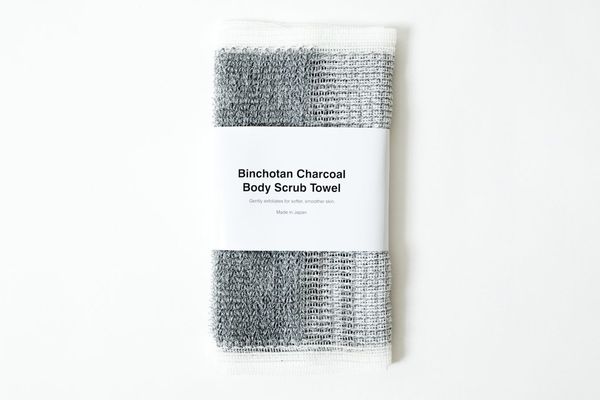
If you were to visit an onsen, the first thing you would do before you could even think about getting into the communal hot spring is take a shower. “As much as possible, try to do it like Japanese people do it. Clean yourself off before you actually enjoy the bath itself,” Fukai advises. The reason is strictly hygienic. “If you’re sitting in a bath and also scrubbing and trying to get clean, the bathwater itself will get dirty, which is quite natural, because you’re cleaning off,” says Fukai. “But I don’t think many people want to sit there for a very long time in dirty bathwater.” You can replicate this step of the onsen experience at home by showering before you fill up the tub — and if you’re looking to get a deep scrub in, like with this charcoal-infused washcloth recommended by writer Kurt Soller, while you shower would be the time to do it, not while you’re sitting in the bath.
New! You can now save this product for later.
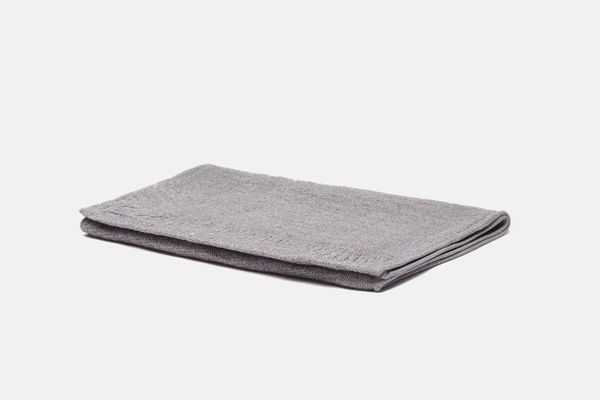
A good hand towel does double duty in the onsen, and it doesn’t necessarily have to be one that exfoliates. Really, it doesn’t have to be all that fancy at all. At the hot springs in Nishimuraya, for instance, “the towels themselves are somewhat utilitarian and are thinner than your typical, plush bath towel,” says Fukai, adding that these lighter-weight cotton towels are typical of most onsens. The lighter material means that it’s useful both for cleaning your body and for lightly drying off.
You can also bring this hand towel into the hot spring itself to help with modesty. Though you should never try to wrap it around your body fully, “you can sort of carry it strategically to block,” Fukai explains. Just be sure to rinse it of all soap and ensure that it never actually goes into the shared soaking bath. Again, you’re not scrubbing in the hot spring, just sitting. A more practical at-home use for this hand towel would be folding it up to use as a neck pillow while you sit in the tub.
New! You can now save this product for later.
Once you’ve taken your shower and rinsed off all the soap and grime, it’s time to fill that tub and get soaking. “The two things that Japanese people look to for a hot spring are the heat and what minerals are actually in the onsen water,” says Fukai — and he’s not joking around about the heat. “In Kinosaki, the average temperature of the hot spring is about 42 degrees Celsius, which is about 107, 108 degrees Fahrenheit.”
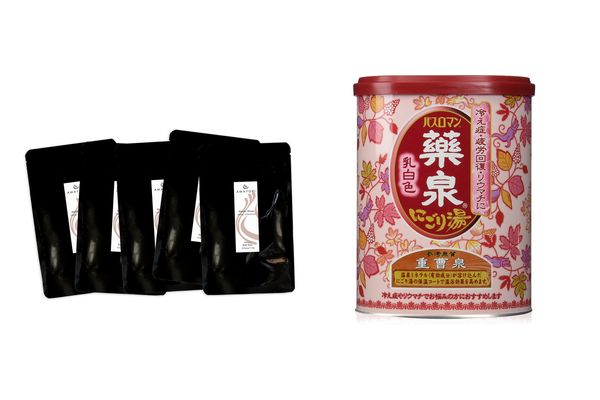
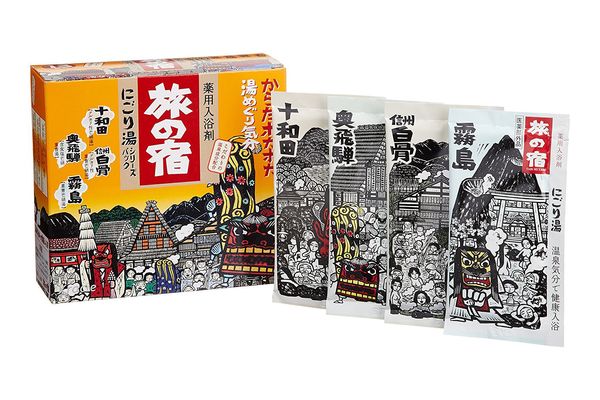
You probably won’t need anything fancy to get the water in your own bathtub scalding hot (even if it doesn’t reach Jacuzzi-like temperatures), but you will need some help to get the minerals. This is where onsen bath salts come into play, and according to Fukai, it’s not uncommon to find packets of these in Japanese households. Fukai’s wife keeps a stack of them in their bathroom. “We have those little packets of salt, and every now and then, we’ll use them, just if the mood strikes.” The offerings range from luxe, like this $50 option from Amayori that’s made with Himalayan salt and fragranced with the essence of a Japanese cypress tree, to more affordable, like these Yakusen bath salts that are meant to emulate the water in onsens with mud baths.
New! You can now save this product for later.
New! You can now save this product for later.
If you don’t want to commit to any one type of onsen bath salt, you could try a sampler set of “milky” bath salts that give the water a fragrance and a semi-opaque minerality.

New! You can now save this product for later.
Once you’re soaking, there’s really not much to do but sit. “I usually recommend — because they are hot, 10 to 15 minutes in one bath is kind of a good max time to set. After those 10 or 15 minutes,” suggests Fukai, “you want to get up out of the bath or move to another bath or just relax a little bit.” But really, you can get out whenever you feel like you’ve gotten your fill. And on your way out, give yourself a final splash of the spring water using a bucket. “Most hot springs in Japan will have a bunch of those, just stacked up in the hot spring for the guests to use,” often made of wood, says Fukai. “In most homes, it’s typically a plastic version of it, a little cheaper,” but for the same function.
New! You can now save this product for later.
New! You can now save this product for later.
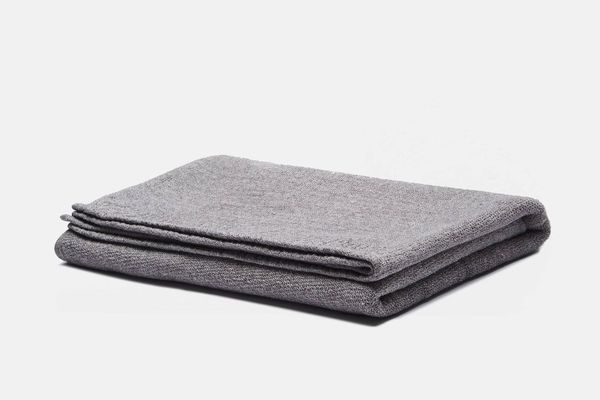
Once you’re out of the soaking tub, all that’s left is to dry off with a large bath towel, ideally made of the same lightweight cotton as the hand towel you were using, to best soak up the excess water.
The Strategist is designed to surface the most useful, expert recommendations for things to buy across the vast e-commerce landscape. Some of our latest conquests include the best bathroom accessories, bathtub caddy, bath towels, toilet fresheners, toilet plunger, and toilet accessory. We update links when possible, but note that deals can expire and all prices are subject to change.
Every editorial product is independently selected. If you buy something through our links, New York may earn an affiliate commission.