The Midea U Was Better Than Every Other AC We Tried. Then it Got Recalled
[Editor’s note: Midea issued a recall for its U Shaped air-conditioner on June 5, 2025, owing to pooled water possibly leading to mold growth. If you own a Midea U unit, you should check whether your model number is on the list of recalled units, and if it is, you can follow the instructions on the recall page to repair or get a refund for your unit. I’ve also written about the process I went through to get a refund for mine.]
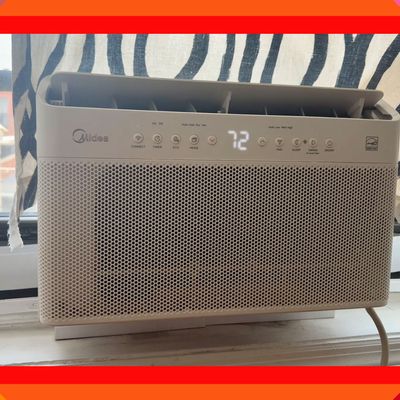
For the past several summers, relief from the hot and humid air in my Brooklyn apartment came in the form of a reliable Frigidaire window unit. Even if it was too loud to use while watching TV, it was my favorite out of all the ones I’d tried since arriving from the West Coast in 2015. However, our relationship came to an abrupt end last May when I discovered it was full of mold after a minor flood in the unfinished basement where it had been stored all winter. This turned out to be a blessing in disguise since it was the excuse I needed to upgrade to a Midea U-shaped air conditioner.
New! You can now save this product for later.
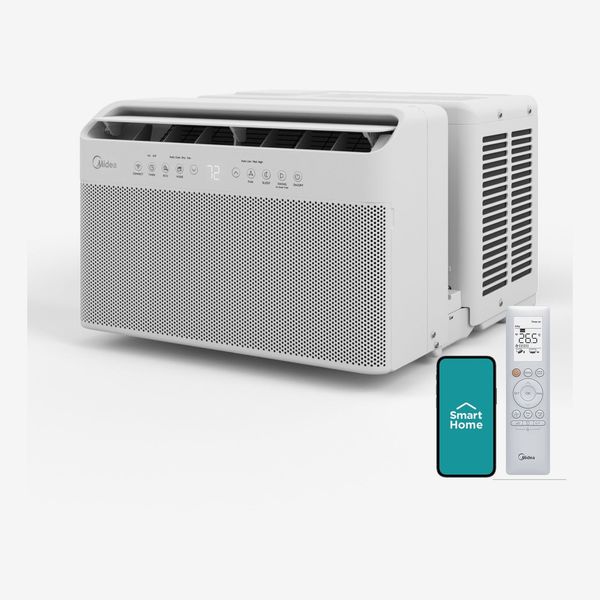
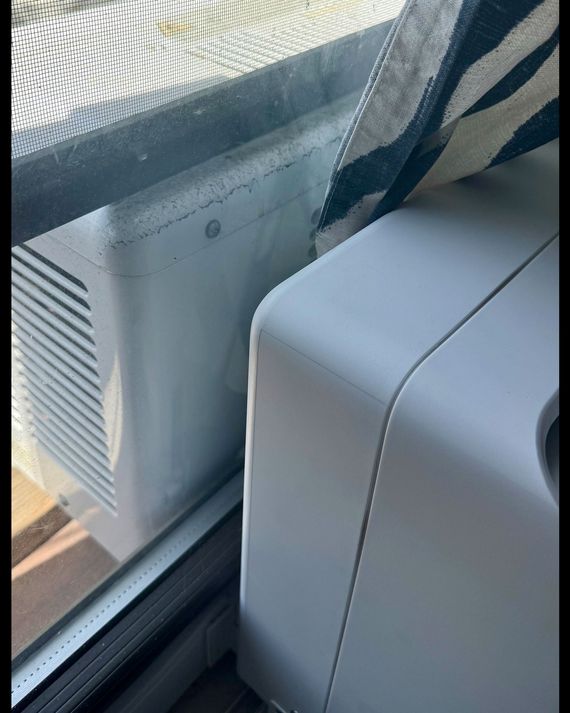
The basic brick-shaped design of the window air conditioner hasn’t changed much since its invention in 1933. From the front, the Midea U looks no different. However, its profile reveals that its thin, interior-facing control panel and blower are connected to the deeper, exterior-facing compressor by only a slender plastic strip along the bottom edge, forming its namesake U. This gap is designed to be filled by the closed sash of the window on which it is mounted, isolating the loudest, hottest part of the machine — known as the compressor — from the inside of your home, which makes it quieter and more efficient than those brick-shaped ACs.
The Midea U was the first window air conditioner to earn Energy Star’s Most Efficient certification when it was first released back in 2020 — a distinction it’s maintained every year since. The 2025 version features a new “Flash Cool” button that rapidly cools a hot space to a comfortable temperature. It also adds Matter certification, which allows it to integrate with any major smart home platform’s scheduling tools and be controlled by a voice assistant of your choice without using the Midea app.
It’s quieter than quiet
The compressor in a traditional window air conditioner maintains its target temperature by running at full tilt when it’s too hot and turning off when it’s too cold, generating a loud thunk and rattling ramp-up with each cycle. The Midea U, however, comes equipped with an inverter that allows it to modulate its compressor, running at a slower pace to maintain the target temperature after it has been reached. This is both quieter and more comfortable since it continues to dehumidify while running on a low setting.
The Midea U isn’t the only inverter-equipped window AC made available in the U.S., but its U-shaped design makes it the quietest. Even if other inverter ACs generate similar levels of noise on paper, they seem louder in practice because even an inverter compressor may shudder and rattle for several minutes when it first turns on. The Midea U hides all that noise behind a layer of insulated window glass and thick strips of rigid foam. As a result, the only sound that reaches the inside of my home is the gentle whooshing of the blower fan. It sounds more like a tower fan or air purifier than an air conditioner.
You get to keep your window
While a typical window AC relies on a closed window sash to hold it in place, Midea’s design allows for nearly full access to the window — save for the last three inches, which are occupied by the plastic connector piece and insulating foam. This lets in more natural light around the sides and means I can open the window for fresh air as needed. (I did have to remove the screen to install the Midea, so I use an adjustable screen to keep pets in and bugs out.)
This design also improves insulation during the winter months if you leave it installed, as I did, to protect from future flooding incidents. Indeed, the weather-sealing foam is so effective that the living-room window with the AC in it felt less drafty than its empty counterpart — though that might say more about the quality of my rental’s windows than it does about the foam.

The only drawback here is that the gap between the backside of the AC’s front panel and the window glass is too narrow to accommodate blinds, although a curtain fits just fine. Light-sensitive sleepers with blinds will want to keep a section of the newspaper or a piece of cardboard around to insert as needed.
Installation is simple — but unintuitive
Midea designed the U Shaped to be easier to install than a regular window air conditioner, but reviewer opinions are divided on whether the company has succeeded. I found the instructions to be clear and easy to follow. Still, I can see how the sheer quantity of different parts and steps involved in measuring and assembling the whole thing could be confusing to people accustomed to just dropping a window AC on a windowsill and closing the sash on top. Those who take pleasure in assembling Ikea furniture and Lego kits may enjoy the process, while those who prefer to jump right in without reading instructions will struggle. (If that’s you, I suggest watching this instructional video.)
It’s also easy to clean
The Midea U has an indicator light that reminds me to clean the air intake filter periodically, and it’s very easy to do so. I simply pop off the front grate with a light tug, pull out the mesh filter, and clean both in the sink with dish soap and a sponge. I rinse them with plenty of hot water before towel-drying and sliding everything back into place.
Unfortunately, if it ever develops mildew internally, there’s no way to access the blower ducts and fans for deep cleaning, but this issue isn’t unique to Midea. That said, multiple Strategist staffers (including myself) have owned these ACs through several New York summers and winters and have yet to detect any whiff of dankness.
It’s simply the best AC available
With an MSRP of $380 for the 8,000 BTU version (though it’s often available for less), the Midea U retails for about $70 more than a traditional window unit of comparable cooling capacity from a reliable brand. But when you consider that the Midea includes a support bracket (which is required by New York City law and typically sold separately for $50 to $80) and is 35 percent more energy efficient, the value is there. Other brands are beginning to introduce similar-looking designs to the U.S., but it’ll be at least a couple of years before I can be as confident in their reliability as I already am in Midea’s.
In my honest opinion, there are only three questions one should consider when deciding whether the Midea U Shaped should be their next window air conditioner: whether it fits in the intended mounting location, whether it’s powerful enough to cool the space, and whether it is available at or below its retail price. If the answer to all these questions is yes, it’s hard to imagine recommending anything else.
More From The Strategist
- Hark, the Advent Calendars Arrived (Very) Early This Year
- The Best Things Strategist Editors Have Bought This Year (So Far)
- 63 Things You Should Never Buy Full Price
- The Strategist Fall 100
The Strategist is designed to surface useful, expert recommendations for things to buy across the vast e-commerce landscape. Every product is independently selected by our team of editors, whom you can read about here. We update links when possible, but note that deals can expire and all prices are subject to change.