Our Favorite Portable Air Conditioner Is Quiet, Compact, and Easy to Install
Save this article to read it later.
Find this story in your account’s ‘Saved for Later’ section.
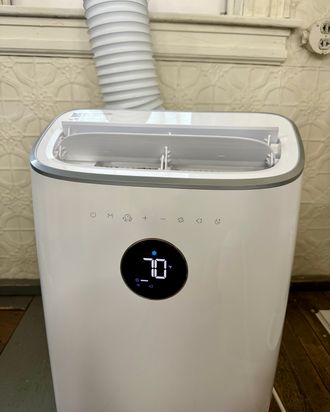
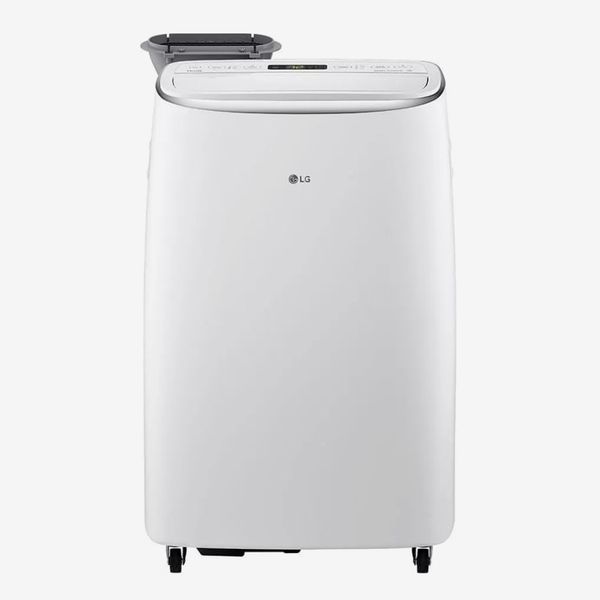
The term “portable air conditioner” is a bit of a misnomer. These things may come mounted on rolling casters, but you still need to install an exhaust pipe in a window. And at close to 80 pounds, many of them are too bulky to be moved without a bit of planning. They’re also way less energy efficient than a comparable window unit. But, as I wrote in our guide to the best portable ACs, they may be the only solution that fits in homes with horizontally hung windows, permanently installed window guards, or building regulations that prohibit window units. If that describes your space, the Dreo AC319S is an affordable, quiet, and easy-to-use option that’s a bit more portable than the rest.
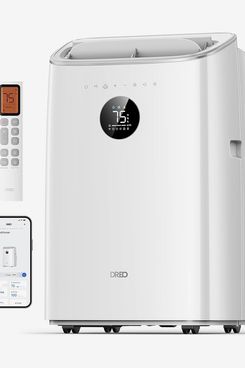
New! You can now save this product for later.
A quiet, sturdy, and relatively affordable portable AC that’s easy to install and quite compact.
What makes the Dreo AC319S so good?
The Dreo AC319S’s 6,000 BTUs of real cooling power is enough to handle rooms as large as 300 square feet — perfect for most apartment-size spaces. Measuring at a depth of just 15.16 inches, a width of 13.98 inches, and 24.8 inches high (about the size of a kitchen trash can) and weighing 57 pounds, it is 20 pounds lighter and occupies half the volume of a typical 10,000 BTU portable AC. Its presence in a room will definitely be felt, but it won’t dominate the space the way these larger units do. Between its lighter weight and tool-free installation process, it’s relatively easy to move around if you end up needing it elsewhere temporarily.
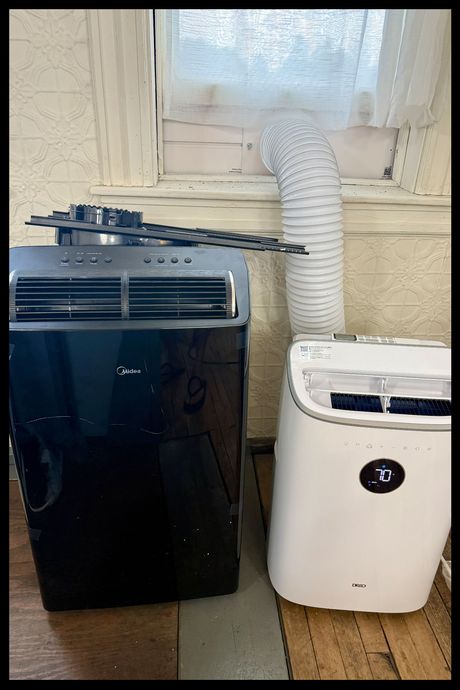
I also appreciate how quiet the Dreo is. I measured it at 60 decibels while running it on high — comparable to a similarly powerful window unit — and it goes down to a whispery 45 dB when using sleep mode, making it a great choice for bedrooms.
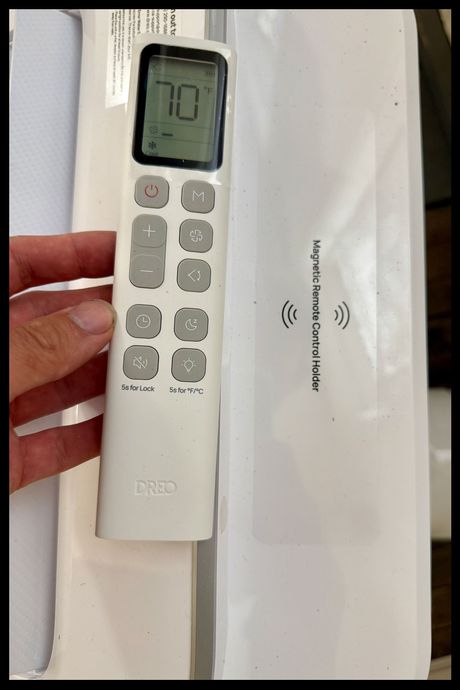
Overall, the Dreo feels like a much higher-end machine than its price would indicate because it gets the little details right. It’s made of plastics that look and feel closer to the materials used on higher-end models from LG than they do to others in the Dreo’s price range. It has an oscillating fan that moves 235 cubic feet of air per minute on its highest setting, which helps it cool a space faster than cheaper units with weaker fans. Its remote is clearly labeled and sticks conveniently on a magnetic pad on top of the unit, similar to a Dyson fan. And its dehumidification rate of 158 pints per day is also comparable to that of higher-end units. (Note that you have to install a separate drain hose and figure out a way to collect the water if you plan to use it as a dehumidifier.)
Should anything go wrong, it’s backed by a one-year warranty. User reviews suggest that Dreo’s customer support is more responsive and helpful than that of bigger brands and can be contacted through the Dreo website or in the app.
What are the downsides of the Dreo AC319S?
The Dreo’s Combined energy-efficiency rating (CEER) of 6.5 makes it one of the less efficient portable air conditioners still worth considering. According to Energy Star estimates, it’ll cost about $28 more per year to run than the more powerful Midea Duo Smart Inverter. But for many people, the Dreo’s cheaper upfront price, ease of installation, and lighter weight will be more noticeable than the Midea’s energy savings over time.
Part of the Dreo’s inefficiency can be attributed to its single-hose design. Single-hose ACs are more popular because they’re more affordable and easier to install, but they’re less efficient than dual-hose units. That’s because single-hose ACs cool a room by sucking up indoor air, blowing some of it back in as cooled air, and blowing the rest out the window as hot exhaust. This process generates a vacuum that ends up pulling some of that heat back into the room. It’s not always noticeable, but if the unit is struggling to cool your space, Dreo is unique in offering an official dual-hose conversion kit (sold separately, usually for about $80). This adds a dedicated external air-intake hose to improve efficiency by eliminating the vacuum effect. (Dreo couldn’t provide a precise estimate for how much efficiency you can expect to gain, but the Energy Star rating for a comparable dual-hose design suggests its CEER would increase by about 0.8.)
The Dreo app is totally serviceable for controlling and checking on the unit remotely as well as setting schedules and installing firmware updates. It helpfully reminds you to clean the filter every 600 hours. The app also keeps logs of usage hours, but it would be better if it also tracked power consumption. While you’re able to add support for Google Home and Amazon Alexa through the app, it’s not compatible with Siri. I would also like to see support for Matter, the increasingly common open standard for smart home controllers and accessories.
This is more of a personal nitpick than an actual problem with the machine, but Dreo’s decision to use the higher ASHRAE BTU rating in its product titles as opposed to the lower, more accurate SACC BTU rating that the Department of Energy uses is confusing to customers. When I say it has 6,000 BTUs of realcooling power, I’m referring to the SACC rating. (This article explains the differences between the two numbers in detail, but basically, SACC does a better job accounting for the fact that portable ACs emit heat into the space as they cool it.)
How do I install the Dreo AC319S?
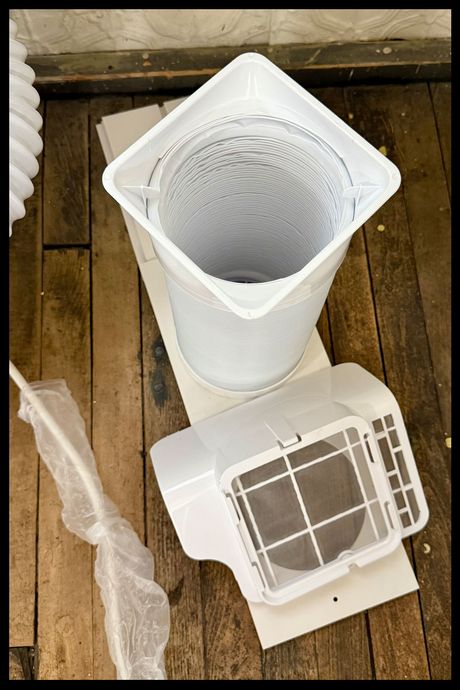
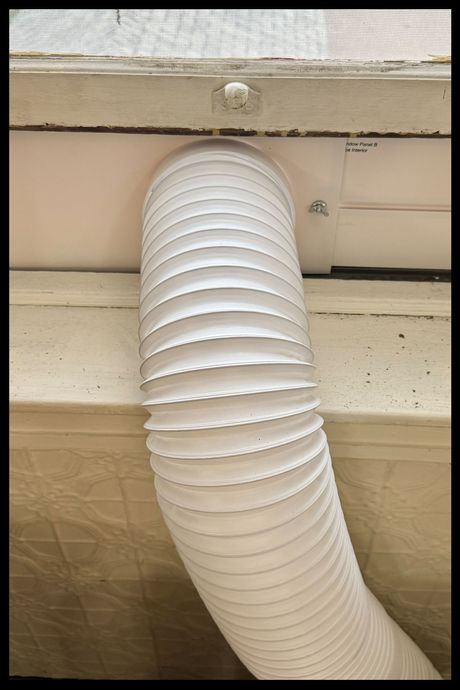
The Dreo comes with all the mounting plates and hardware needed to fit any window opening between 18 and 53 inches wide. The adjustable mounting plates have grooves that can be expanded to the correct width and locked with a wing nut, no tools required. The exhaust hose slides into a grooved panel on the back of the unit on one end and snaps into the mounting plate on the other. It also comes with adhesive foam to better seal the window opening; the foam isn’t required but is worth installing if you plan to leave the Dreo installed all summer. It comes with a paper manual, but all this information is also available in the app.
How do I clean the Dreo AC319S?
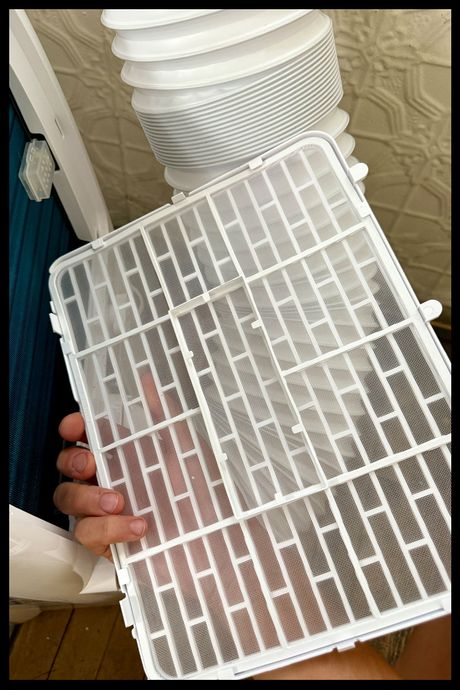
Dreo recommends cleaning the air-intake filter screen every 600 hours and the machine (or the app) will remind you when it’s time to do so. The grills on the back pop right off, and a simple rinse and wipe-down is all they need.
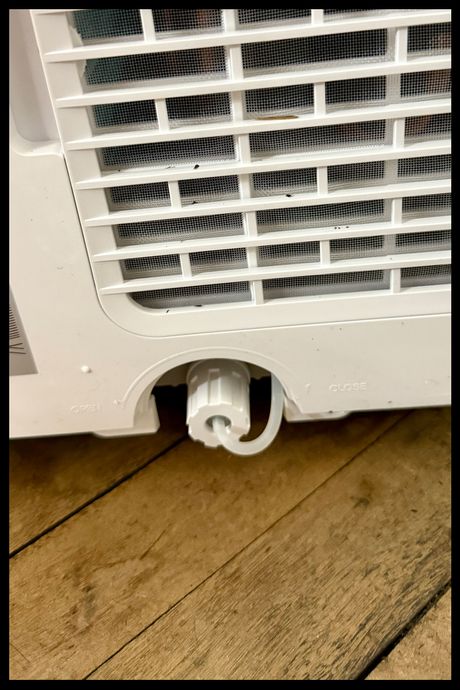
The Dreo is designed to evaporate any condensation that results from the cooling process and should not need to be drained under normal conditions. Still, it has a manual drain on the bottom if you suspect water is collecting inside during a particularly humid day — or if it’s throwing an error message. Don’t forget to place a tray below the spigot to catch any runoff before unscrewing the cap. Dreo also recommends doing this before storing the unit for the winter.
Is the Dreo AC319S Worth it?
The Dreo may not be the best performing portable AC, but its discreet design and superior usability make it easier to live with. Other portable units may be more powerful and efficient, but none can match the Dreo’s combination of true portability, user-friendliness, and overall polish. If energy efficiency is your primary concern, then a window unit is the better choice — even if that means paying someone to install it for you.
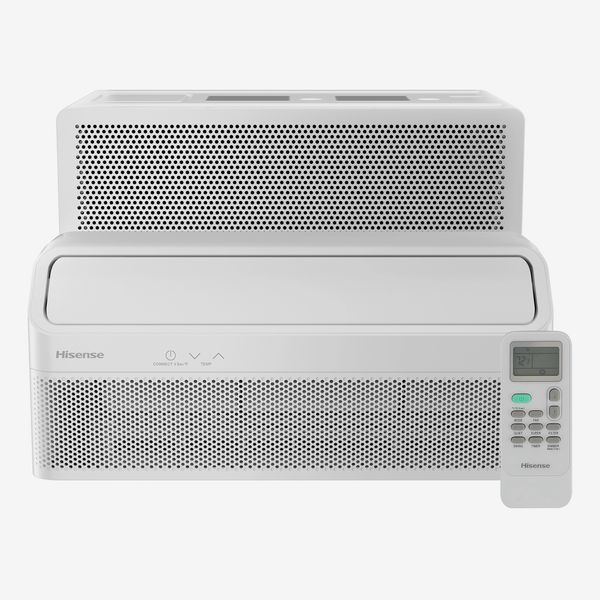
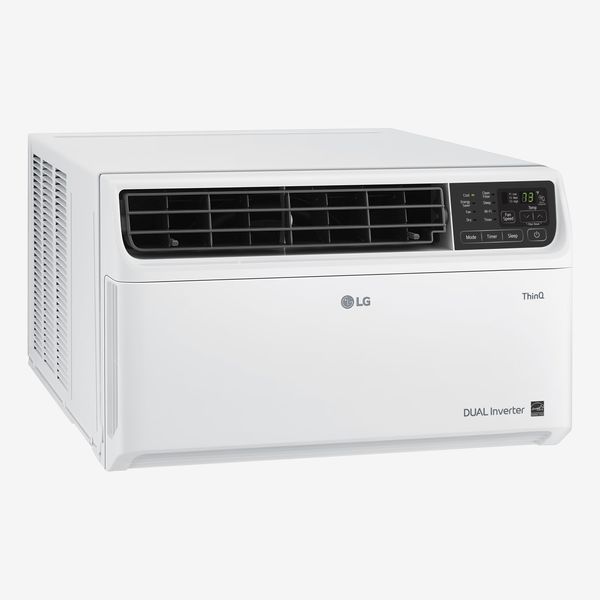
Other ACs we like
More From The Strategist
- Hark, the Advent Calendars Arrived (Very) Early This Year
- The Best Things Strategist Editors Have Bought This Year (So Far)
- 63 Things You Should Never Buy Full Price
- The Strategist Fall 100
The Strategist is designed to surface useful, expert recommendations for things to buy across the vast e-commerce landscape. Every product is independently selected by our team of editors, whom you can read about here. We update links when possible, but note that deals can expire and all prices are subject to change.