I’m Also Very Picky About My Paper

In this article
Welcome to Stationery Week on the Strategist, where we’ve been obsessively researching and testing office supplies — everything from pens, pencils, and paper to task chairs. For more, head to our Stationery Week hub.
This being Stationery Week at the Strategist, and having now written two very opinionated pen pieces, it feels only natural that I write another stationery-related op-ed. And while there are plenty of subcategories I can write about at length (scissors, glue, file folders, Japanese-made desk accessories), this time I’m all about paper.
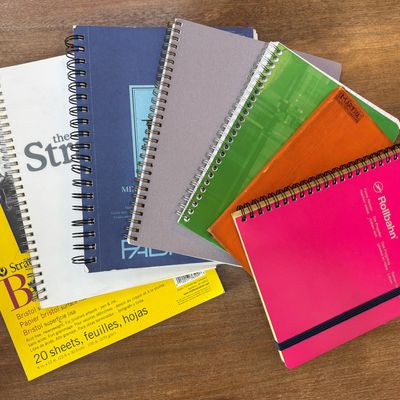
I have a very specific set of criteria and a high bar for excellence when it comes to the notebooks, art pads, and loose-leaf that I write and draw on. For notebooks, my ideal paper is thick enough that I’m able to use a variety of pens without any ghosting — the ideal weight is around 100gsm, though that can go up or down depending on the paper’s finish and composition. All-purpose loose-leaf should be at least 100gsm, since it tends to lack any special finish and the lower-weight options are just plain flimsy. And both should have a sleek texture that prevents feathering and allows for a smooth, friction-free glide for both pencils and ink. As for artwork-specific paper, I generally use mixed-media and watercolor pads, and thick (at least 160gsm) paper is a given for both, but I generally err on the thinner side for sketches and tests, and up my gsm when I’m working on something more purposeful (since it also generally means upping the cost, too). The texture (sleek and smooth or slightly toothy) depends on the kind of media I’m using.
There’s plenty of excellent paper out there that meets my strict requirements (our 2019 roundup of 100 notebooks has many great options), but my preferred lineup is very tightly curated for a few reasons. First is cost: Notebooks can be pricey, and I do have better things to spend my money on. I will buy more expensive pads if they have some special feature (unmatched paper quality, unique design details, undeniable aesthetic appeal) that can’t be found elsewhere, but I’m generally looking for the best possible ratio of high quality to low cost — and the majority of my picks reflect that. Second is size: Paper has a footprint, especially if you like having a variety of it on hand at all times. My shelf space is limited, so I need to rein it in.
As with my favorite pens, my list of favorite paper is entirely subjective. The quality of the products, however, is not. I will never buy paper based on budget alone — if it’s not up to my high standards, it’s a nonstarter — and I can guarantee that everything below is objectively excellent.
For writing
My favorite notebook for writing overall

New! You can now save this product for later.
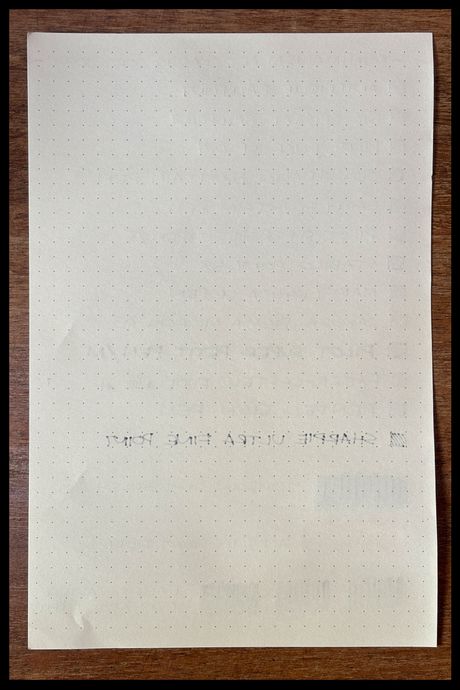
When it comes to notebooks, I always opt for a dotted grid whenever possible because it feels simultaneously structured and opened-ended: I can make sure my writing stays in a straight line, easily outline uniform squares if I’m making a list, and doodle or draw without the distraction of a heavy solid grid or straight lines. And AHGXG’s dot-grid notebooks are the platonic ideal of what I’m looking for.
The paper itself is acid-free, very smooth, and nicely thick at 100gsm — there’s zero ghosting with the vast majority of my favorite pens, and the few heavier varieties (most of which are best for art rather than writing) are only truly visible if you hold the sheet up to the light (which you probably won’t). Best of all, my preferred style — which has 80 A5-size (5.7-by-8.3 inches) pages, with a very sturdy wire-bound spine and rigid, semi-translucent front and back plastic covers — is an absolute steal at just $17 for a three-pack, far less than what you might expect to pay for even a single notebook of similar quality. The brand also offers lined- and graph-paper options, alternate sizes, and hard-and soft-cover varieties to choose from, all of which are very reasonably priced.


My previous favorite notebook (that’s still a great option)

New! You can now save this product for later.
Until I discovered AHGXG notebooks, I used these pretty exclusively. I was initially drawn to the price point — about half the price of a comparable Moleskine — as well as the colorful covers (there are soft and hard options) that turned out to be incredibly high quality. (Note: I’ve purchased all my Minimalism Art notebooks from Amazon, and the color options have dipped dramatically in recent years. For a bigger and better variety, head to the brand’s website.)
The notebooks themselves are sewn-bound and, after just a bit of breaking in, lay completely flat when open. The soft covers, which I prefer, have acid-free, 100gsm paper (the hard covers’ are 120gsm), though I do find it just a touch thinner and rougher than AXGXG’s supposedly identical-weight pages. Still, they’re absolutely lovely to write on, allowing for a smooth, sleek line regardless of what I’m writing with. Most of the time, I use pencils and standard writing pens in this notebook, but there’s also very minimal ghosting even when my more art-specific pens come into play, and all but my heaviest markers (a Sharpie Ultra Fine Point is, as always, the most problematic) still allow for writing on the other side of the page. Colored markers (I use Tombow Dual Brush pens a lot) and acrylic paint pens also make a near-negligible dent.

The notebook I’ve used the longest
New! You can now save this product for later.
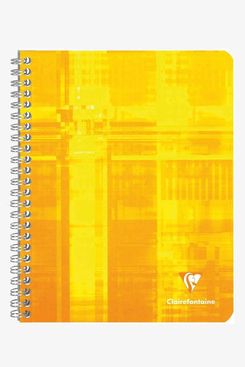
Clairefontaine cahiers are basically the fancy (and French) versions of your standard Mead — higher quality (and price point) but ultimately your basic school notebook. But, unlike anything Mead makes, Clairefontaines feel incomparably elegant and just plain cool. Whether they know it or not, people who use them are part of a singular IYKYK club, at least as far as I’m concerned.
There are a few reasons for this: To start, the paper is premium. Each 90gsm page has an ultrasmooth satin finish that eliminates ink feathering and bleed-through and does a great job of preventing ghosting from pretty much everything except Sharpies. Even my color-saturated markers and paint pens barely show through. The glossy notebook covers are also very nice—they’re printed with the brand’s abstract plaid pattern and come in the same bright, saturated colors you’d find in a pack of classic Crayola markers. I also love the logo. And they’re very well made, with either a sturdy, ring-bound spine (pictured here) that resists bending or a stitched, cloth-covered binding that easily lays flat when open.
But it’s the nostalgia factor that I find most compelling. I first discovered these notebooks in high school, when I became close friends with a very elegant classmate who used them exclusively. So I started using them exclusively, and I suddenly felt as if I’d joined some special secret society. I continued to use them throughout college and really stocked up while living in France during my junior year. And while I don’t use them nearly as regularly these days, the mere sight of one takes me right back to ninth grade and that feeling of discovering something truly remarkable.


A pricier notebook that won me over with aesthetic appeal


New! You can now save this product for later.
The most compelling part of a Rollbahn is its aesthetic appeal: the sparse, functional beauty of its sans serif logo; the vintage airline theme (rollbahn is German for “taxiway,” and the German phrases on the cover translate to things like “The propellers are spinning” and “Traveling means living”) and overall Euro vibe, even though the company behind the brand, Delfonics, is based in Japan; the contrasting-color covers (my current one is bright pink); and the yellowed pages. And while the 70gsm paper, though incredibly smooth and sleek, isn’t quite as thick as I’d like it to be, and the regular price is comparatively higher than what I’d prefer to pay (I always try to buy them on sale), the combined effect makes these notebooks an absolute pleasure to write in.
As for writing on the pages, all of my pens glide smoothly and the ghosting is minimal for the most part, though I think a pencil or ballpoint pen are the best to use. I also stay away from Sharpies and other types of markers, which is an easy ask, since these aren’t meant for artwork — though if I do use a page for drawing, I can always rip it out and (if it’s any good) stash it in one of the plastic sleeves in back. Yet another feature I love.


A notebook that won me over with amazing design details

New! You can now save this product for later.
Appointed The Notebook
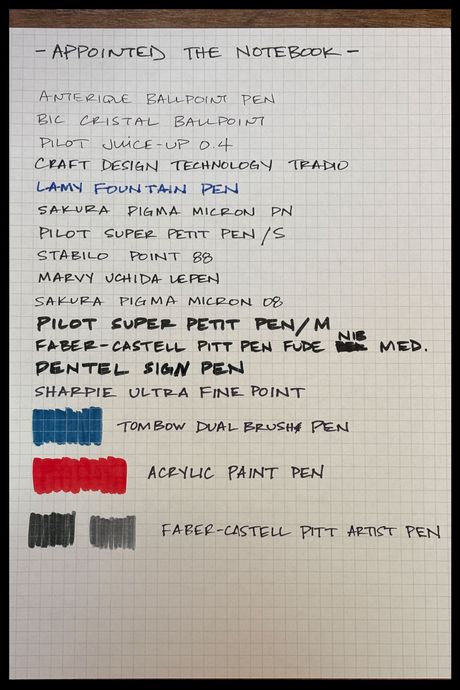
Appointed’s The Notebook is a recent addition to my lineup, and I was admittedly very reluctant to test it out in the first place. At $24, it’s at least double what I’d normally spend, so stocking up and rebuying regularly would be out of the question, no matter how much I liked it. And while the linen feel is a lovely and elevated touch, it’s also practically begging for me to ruin it with a series of coffee stains. Still, the brand’s notebooks and planners have been praised by various Strategist staffers and contributors for a while now, and I have used Appointed planners in the past and liked them very much, so I felt compelled to test one out. Fortunately (or otherwise — time will tell), I have not been disappointed. The paper has the slightest bit of texture but an overall satiny feel that prevents feathering or bleeding, and an approximately 105gsm weight that prevents ghosting from the majority of my pens. At 7.5-by-9.5 inches, it’s slightly larger than the A5 notebooks I typically go for, and it feels quite substantial and sturdy in hand, though it’s by no means too big. In other words, it’s definitely a quality book.
Yet its biggest selling points are, in my opinion, the little details: Each page is gridded on one side and blank on the other, which I’d never seen before but now recognize as the ideal design for an equal parts thorough notetaker and compulsive doodler like me. The pages are also perforated, meaning no jagged edges or little leftover paper crumbs when I inevitably tear one out. And most cleverly of all, each one has the word Date printed lightly and vertically in the lower left-hand margin, which essentially transforms the entire thing into a minimalist planner when you orient it horizontally. It’s entirely unexpected and also totally brilliant.

For art
My favorite art pad for everything except paint

New! You can now save this product for later.
Bristol is basically a really, really nice multimedia art paper. There are different levels of quality and thickness, but in general it’s sturdy, thick, and comes in two surfaces qualities: vellum, which has a toothy texture and is generally considered better for dry media (pencils, charcoal, pastels) and creates a softer look, and smooth, which has a sleek surface more suited to pen and ink and allows for sharper, more defined lines. I use vellum on occasion (it’s especially good for quick watercolor tests when I’m not ready to break out my actual, and much pricier, watercolor paper). But because I play around mostly with pen and ink, and because I prefer a sleek paper surface in general, I typically go for the smooth — and the Strathmore 300 Series in particular. It’s 270gsm (the thickness of a very fancy business card), perfectly soft and matte, tears cleanly from the tape-bound pad, and, perhaps most important, is very nicely priced at around $10 to $15 for a 20-page pad (though you can often find it on sale for about half that). There are even sturdier Bristol boards out there (Strathmore’s 400 and archival quality 500 Series boards, for example), but for my day-to-day art-making, I’ll be sticking with my 300 for the long haul.


My favorite art pad for serious drawing and casual sketching

New! You can now save this product for later.
In addition to the Bristol pad above, Strathmore also makes some very reliable and affordable mixed-media pads, as do similarly tiered brands like Canson and Blick Studio. But I’ve gotten into the habit of using these Fabriano pads for general artistic use and I have no plans to stop. The paper is 110lb/160gsm, which is more than thick enough to handle any pen or marker I throw at it with absolutely zero ghosting, bleeding, or buckling. It’s ring-bound with a strong perforated edge that still allows for a clean tear. I also love the very manageable and portable 7-by-10-inch size, which is big enough for more complete illustrations but also small enough for doodles and random sketches.


A beautiful pad that I save for my nicest sketches

New! You can now save this product for later.
This is a more recent discovery that’s also definitely on the pricier side, but the pad itself is just so lovely that I can’t leave it out. I’m also not entirely sure how to categorize it, since Short Hand (where I bought it) says it’s for writing, but I personally find it too beautiful to waste on any text short of a heartfelt, hand-calligraphed letter or something else dramatic and artistic, hence the “for art” category.
It’s also here because, although the paper is definitely on the thin side (100gsm, though it has a less-slick, more porous texture that makes it feel even thinner), it actually can take the majority of my art-specific pens with little to no ghosting. While I refuse to waste precious pages on random doodles, I have no problem using them for more purposeful pencil and ink sketches. And regardless of how much (or little) I use it, just seeing the beautiful pale pink cover and Grotesk logo font on my shelf feels like a breath of fresh, refined air.


My favorite pad specifically for watercolors

New! You can now save this product for later.
I’m more of a pencil and ink girl now, but watercolors used to be my primary medium, and Arches is my go-to watercolor paper. It’s 100 percent cotton, which makes it strong, absorbent, long lasting, and durable enough to withstand wet-on-wet painting — i.e., you can pre-wet the paper, layer color washes, and play around with really fun blending and bleeding techniques without having the paper buckle or break down. And while there are other high-end brands that use 100 percent cotton (lower-quality options tend to use more affordable cellulose pulp blends), Arches also uses a cylinder mold-making process that creates a more even sheet, plus a proprietary sizing that adds even more strength and absorbability. In other words, it’s pretty special.
The all-cotton composition and fancy manufacturing means it’s also not cheap (this pad breaks down to about $2 per sheet, and the price just goes up from there), so I don’t use it casually — I’ll do sketches and tests on something like this Canson, which I feel much better about trying things out and making mistakes on. But when I am ready for the real thing, Arches is about as good as it gets.


For everything else
The high-quality loose-leaf I rely on for everything else

New! You can now save this product for later.
When I just need some scratch paper, when my daughter asks for something to draw on, and/or when all else fails, this is what I reach for. If you’re looking for some all-purpose loose-leaf or printer paper, there are plenty of more affordable options out there, but they’re thinner and tend to be much rougher. This one is nicely thick (120gsm), very sleek, and feels incredibly smooth to write on with pens, pencils, markers, and whatever else you might take to it. (It holds up really well against glue and glitter, too.) The cheaper stuff is totally fine for things like making quick shopping lists, printing mailing labels, or anything else you know is going to get tossed out pretty immediately. But sometimes my mindless sketching turns into a piece I actually want to keep working on, or my daughter paints a picture that deserves more than just a quick stint on the fridge. When that happens, I’m reminded why I shell out for the higher-quality stuff, and I never regret it.

More From Stationery Week
- Welcome to Stationery Week
- Buying a Printer Will Save You Money
- All the On-Sale Pens, Notebooks, and Office Goods From Stationery Week
- Sarah McNally Pledges to Use This Fountain Pen for the Rest of Her Life
The Strategist is designed to surface useful, expert recommendations for things to buy across the vast e-commerce landscape. Every product is independently selected by our team of editors, whom you can read about here. We update links when possible, but note that deals can expire and all prices are subject to change.