When Did We All Become Eye-Drops Dependent?
Save this article to read it later.
Find this story in your account’s‘Saved for Later’section.
Comment
I first reached for the bottle more than two decades ago, around the time I began to hear my own blinks and my eyes started to feel like they’d been dabbed with cotton balls. My optometrist didn’t offer much explanation for these symptoms. Instead, he suggested I squirt a few drops of over-the-counter artificial tears into my eyes if they bothered me and sent me on my way. Ever since, I’ve been plucking a tiny plastic bottle out ofmy bag, on average, five times a day.
My distress fluctuates with the seasons. In the winter, thanks to the dry indoor heat, it feels like my eyelids are scraping against my eyeballs and my vision can be blurry. As soon as the heat goes off and spring arrives, the onslaught of pollen leaves my eyes with a persistent watery film that routinely smudges mywaterproof mascara. A strong wind or dusty shelf can ruin my day. Sometimes, I rip out my contacts when my eyes become insufferable.
Over the years, I have frequently roamed the eye-care aisle and bought nearly every kind of drop on offer —Blink,Systane,Refresh,Visine,Walgreens generic. None has solved the problem, but when applied every couple of hours, most allow me to blink through my discomfort.
I assumed I was somewhat alone in this level of eye-drops dependency until about 18 months ago when there was alarge-scale eye-drops recall. Suddenly, lots of people I knew (like my co-workers) and many I didn’t (like everyone on X) seemed to be in a panic about their eyeballs, wondering if they had exposed them to recalled drops that could lead to eye infections that could in turn lead to vision loss or blindness. Not long after, I noticed a PSA for dry eye had joined the ad rotation of one of my favorite podcasts.
It seemed chronic eye discomfort had become as common as agonizing over what to make for dinner. How did we get here? Are eye drops helping or somehow making the problem worse? And can my eyeballs be saved? I set out to find answers.
What’s actually causing all the dry eyes?
To get to the root of what seems like a dry-eye epidemic, I calledDr. Christopher Starr, an ophthalmologist at Weill Cornell Medicine–NewYork-Presbyterian who specializes in the condition. He said patients and doctors haven’t been taking it seriously enough.
He also explained that the problem with prolific eye drop usage really is “it doesn’t treat the underlying disease. It just treats the symptom briefly.” This can ultimately delay a proper diagnosis of a problem that feels like dry eye but could actually be allergies or an anatomical abnormality. The collection of diseases and other eye problems that fall under the “dry eye” umbrella is vast, complicated, and misunderstood — and many of the issues it encompasses are becoming more prevalent.
If you felt like the pandemic pushed your dry-eye symptoms over the edge, you’re onto something, said Starr. A knock-on effect of that period was increased screen time that hasn’t really abated, which is causing digital eye strain. While I had always worried about the impact ofblue light, the bigger issue with the screens is that when we’re looking at them, we blink less frequently, leading to drier eyes, Starr said.
Pollution, hormonal changes, age, and allergies play a role in dry eyes. Preservatives and toxins inmakeupand skin care can irritate eyes too. Contact-lens use can make eyes dry, and dry eyes are a side effect of LASIK surgery, which, somewhat ironically, many patients undergo to rid themselves of contacts or glasses.
Then there are the various conditions and disease-driven causes of dry eyes, which range from anatomical changes and nerve issues to inflammation and meibomian-gland dysfunction (that’s when the oil-producing glands located along the inner edge of the eyelids get clogged) to blepharitis, an inflammation of the eyelids. Eye drops won’t do anything to treat these problems, but they can make the symptoms more tolerable, which could delay the impetus to seek the right care.
“You can’t see me right now, but I keep putting up these air quotes when I say ‘dry eye’ because these things are called ‘dry eye,’ but they’re really not dry eye and dry-eye treatments don’t necessarily help,” Starr explained over the phone. “You might feel like,My eyes are gritty, sandy red, or my vision fluctuates.These are common symptoms of a lot of surface issues that are sometimes dry eye but, a lot of times, other things. And a lot of the time, it’s a lot of things all at once.”
The best way to find out what’s going on with your eyes is to see a specialist, Starr said. But for many, there’s one big problem with that approach: Health insurance won’t cover the doctor’s treatment plan.
A Possible Breakthrough
I found lots of extreme eye-drops users who struggled with health insurance coverage on Reddit, but that wasn’t the only topic up for discussion. The people on/r/Dryeyes/are a chatty bunch. They’ve tried every over-the-counter eye drop and then some. There are posts abouthypochlorous-acid spray(which can inhibit the growth of bacteria on the eyelids),steam goggles(which prevent moisture loss by locking your eyes in a warm, moist environment ), and a new kind of eye drop that contains Manuka honey, purported to soothe and moisturize dry, irritated eyes. “Are GLP-1s making dry eyes worse?” One poster asked. “Maybe” seems to be the collective response.
For many in the forum, dry eyes are more than an inconvenience. Some have had to change careers or have missed school due to symptoms. Depression and anxiety come up a lot. A few redditors said they have been dismissed by friends, bosses, and even doctors. Others said they think they’re more informed than their doctors; at appointments,theysuggest treatments, not the other way around.
Through this forum, I connected with a 25-year-old from New Jersey named Nick Sypniewski who started using eye drops in childhood. His condition got much worse after he took an office job and spent the day in front of multiple computer screens. Then, thanks to a promotion, he was moved to a desk under an air vent, where the constant draft made his eyes uncomfortable and red. Despite a concoction of eye drops, “you would swear I was smoking pot at my desk by looking at me,” he told me. He even triedLumify, the redness-relief drops TikTokers swear by.
His ophthalmologist suggested warm compression and prescribed antibiotics and drops for inflammation, but Sypniewski didn’t see improvement. At a follow-up appointment, he noticed a poster for an in-office treatment calledOptiLight. This intense-light treatment can help release buildup that clogs the meibomian glands. His doctor wasn’t sure the procedure would work and said it wouldn’t be covered by insurance. Sypniewski decided to cough up a couple grand for it anyway. “I was desperate,” he told me. He’s glad he did.
It’s been only a month, but “I haven’t used eye drops at all,” he said. “I can’t even tell you the last time in my life when I didn’t have to worry about leaving the house. It was always a thing — keys, phone, eye drops was my routine.” That sounded familiar.
Is OptiLight the breakthrough in dry-eye care we’ve all been waiting for? I asked Starr. He told me it depends. He uses intense-light treatment on patients with specific types of blepharitis or meibomian-gland dysfunction and said re-treatment rates for those patients vary.
When I spoke to Aidan Moore, the executive director of theDry Eye Foundation, he told me “success” for patients more often looks like a combination of over-the-counter and doctor-prescribed medications and treatments, like intense-light. A lot of times, these solutions still involve eye drops. Many patients use drops to “address the symptoms while the doctor is addressing the disease,” Moore said.
He also connected me to Amanda Mott, a 47-year-old who has dealt with dry eyes for more than half her life. She told me she has tried every type of eye drop and a number of procedures. In fact, she’s so knowledgeable on dry eye that her ophthalmologist in Wisconsin often asks Mott for her opinion when new drops come to market.
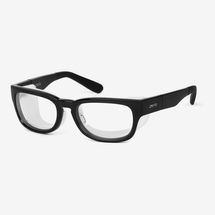
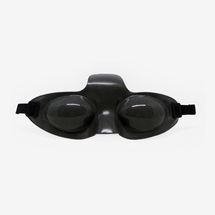
“To be honest, to this day, I haven’t found anything that is great. I kind of cobbled together a bunch of different treatments I found over the years that help,” Mott said. Her current protocol includes a generic of the prescription drop Restasis, wearingZiena Kai eyeglassesthat have a special eyecup to retain moisture during the day, and,at night, sleeping in EyeEco Eyeseals moisture-sealing goggles.
New! You can now save this product for later.
New! You can now save this product for later.
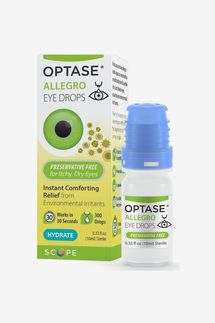
But Mott still uses eye drops. In fact, she called me back a few minutes after we hung up when she remembered the name of an eye drop I might find useful:Optase Allegro. These drops, she told me, are one of the few preservative-freeallergydrops on the market.
New! You can now save this product for later.
Starr had warned me that preservatives can be harmful when used repeatedly, calling out benzalkonium chloride especially. He also warned against vasoconstrictors — the best known is Visine — which reduce flow in the eyes’ blood vessels but can reduce tear production and damage the eye surface, causing a “vicious cycle of temporary relief,” he said, that worsens when you reach for the drops again.
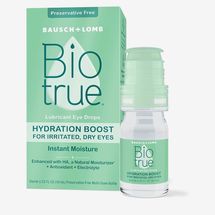
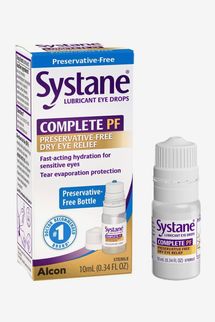
Moore is even more anti-preservative, and talking to him, I realized many of the eye drops in my medicine cabinet — and on the market — are laden with them. Moore suggested I try a preservative-free, contacts-safe option. Bausch + Lomb and Systane bothmake eye drops that fit the bill.
New! You can now save this product for later.
New! You can now save this product for later.
Suddenly, My Eyes Feel Better
For me, the preservative-free, contacts-safe drops Moore recommended turned out to be an embarrassingly obvious solution. When I use them, I don’t get that burning, stinging sensation I had grown accustomed to with other eye drops. And most days, I need to apply these new drops just once.
The Optase Allegro allergy drops Mott suggested are now part of my daily regimen too — I use them 15 minutes before putting in my contacts. I knew I had allergies, but before reporting this story, I had never paused to consider that the dry eye they caused should be treated differently than, say, screen-related dry eye.
I also found relief beyond the eye-drops bottle. Throughout the day, I take actual screen breaks, which no longer means switching from my laptop to scroll Instagram on my phone. I try to follow the 20, 20, 20 rule. Every 20 minutes, I take a break and look at an object that’s 20 feet away or further for 20 seconds or more. Starr likes to add a fourth 20 to that rule: Close your eyes “to alleviate some of the dry eye that is so common with digital eye strain and staring at computers.”
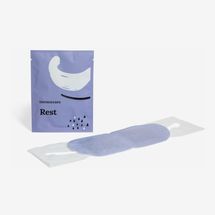
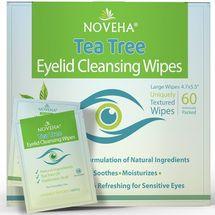
As I was reporting this story, DTC eye-care start-ups overtook my Instagram feed, and I was influenced to buyindividual heated masks from Cornea Care. They are terribly expensive, but after a long day in front of a screen, they feel amazing on my eyes. “Heating those glands helps to keep their secretions more liquid and less viscous, allowing them to flow more easily out of the glands and into the tears,” Starr told me when I followed up with him after a month or so of heated-eye-mask use. And I’ve introduced thesetea-tree-oil eyelid wipesfor removing makeup.
New! You can now save this product for later.
New! You can now save this product for later.
In short, rather than getting rid of my eye drops, I’ve entangled myself even further in the eye-care industry. But my eyes feel better — and for the first time in ages, I can leave my house without that little bottle.
More From The Strategist
- The Strategist Fall 100
- The Best Things Strategist Editors Have Bought This Year (So Far)
- The Strategist Summer 100
- I Replaced My Tretinoin With This $30 Retinal Cream
The Strategistis designed to surface useful, expert recommendations for things to buy across the vast e-commerce landscape. Every product is independently selected by our team of editors, whom you can read abouthere. We update links when possible, but note that deals can expire and all prices are subject to change.