I Invented the Dyson Cordless Stick Vacuum
“Getting angry is actually quite a good way to start.”
Save this article to read it later.
Find this story in your account’s ‘Saved for Later’ section.

When I was finally granted an interview with Sir James Dyson to talk about the invention of the cordless stick vacuum, I was worried that he wouldn’t have much to tell me beyond basic talking points. After all, by the time the DC44 stick vacuum arrived on store shelves in 2011, his company had been around for 20 years and employed nearly 4,000 people. Surely he had more pressing demands on his time than dealing with the nitty-gritty details of vacuum design. But whatever doubts I carried with me into the room were instantly dispelled as soon as our conversation began.
From the start, Sir Dyson spoke in detail and at length about the intricacies of cordless-vacuum design with the charming fluency of an emeritus professor pontificating on their field of study at a dinner party. Partway through our time together, I asked him just how involved he still was in the product-development process at the company that still bears his name. “Oh, heavily involved in it, yes,” he said. “That’s what I do. The CEO runs the business so my son and I can be involved in the research, engineering, and design of every product we make.”
This conversation has been edited for length and clarity.
I’ve read that you were “inspired” to invent a bagless vacuum cleaner by your disappointment in the way that even high-end vacuums became less powerful as their bags filled up. Was there a similar anti-muse that led you to invent the cordless vacuum?
New ways of doing things often occur when something goes wrong, and you get annoyed. Getting angry is actually quite a good way to start. In this case, the driving force behind the cordless stick was the frequent failure of vacuum hoses. We were actually the first to put a hose on an upright vacuum cleaner in 1993. This made it easier to clean above-floor surfaces, such as upholstery or curtains. But the hose had to be stretchy and flexible, so it was made of PVC, which is not a nice material. It was easy to tread on, and they have so many wear points that would develop holes, leading to suction loss. So that got us thinking about a vacuum design that could still clean above-floor surfaces without a hose.
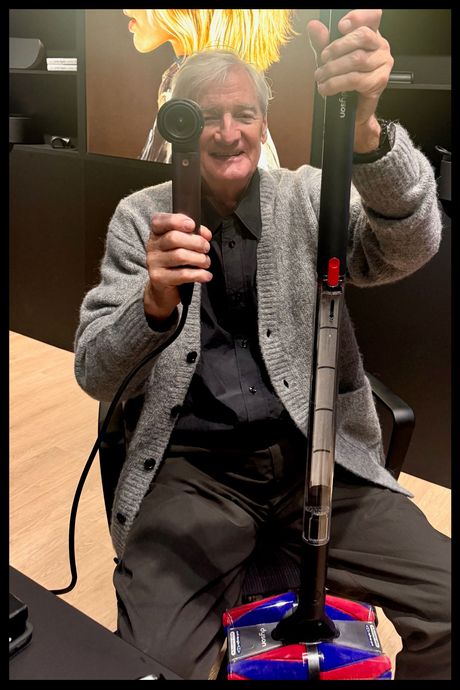
This led us to flip the typical upright vacuum design, which has the motor on the floor so you don’t have to lug it around. We put the motor in your hand and connected it to the floor-cleaning head using an aluminum tube. It’s reverse thinking, but it made sense once you used it. It’s highly maneuverable and moves easily from side to side. You could remove the floor head and use the tube to reach higher places. Or remove it entirely and do the car. It’s every type of vacuum in one.
This was slightly difficult to explain at first, because it didn’t look like any vacuum anyone had seen before, nor did it look very powerful. So the reaction to this new design wasn’t good. But we persevered, because we thought it was the future of vacuum cleaners. Maybe we were bad salesmen, but it took a long time for people to get used to it. And now 90 percent of the world’s vacuum cleaners look like this.
What led you to believe this should be the future of vacuums?
I remember someone saying, “Well, you can’t clean much with a battery-powered vacuum cleaner.” So I decided to try it in our very big office. I managed to clean half the office in six minutes, just going around. And that surprised me, because I must have had the perception that everybody else did, that you can’t clean the house in under 20 minutes. Well, actually, you can.
When did you first realize that it was possible to create such an unconventional design?
It was the invention of lithium-ion batteries that made this all possible. The nickel-cadmium batteries used in Dustbusters were just not good enough in terms of power and capacity. But lithium-ion batteries were very expensive, so it was quite a bold move to put six or seven lithium-ion cells in a single vacuum cleaner. We needed 20 times the power of a mobile phone in one of these vacuums, which meant 20 times the expense.
Were there any other significant challenges that your team encountered during development?
The motors available at the time just weren’t good enough. We used to buy our motors from suppliers, but they were big, slow, and heavy — and they weren’t improving. We knew in principle that the faster a motor could spin, the smaller it could be, and the more electrically efficient it would become. So the question was, how do you go fast? So we had to develop a new type of electric motor.
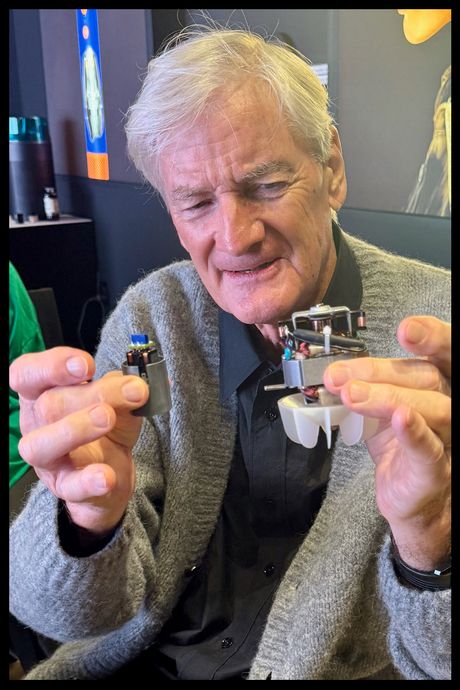
Our first high-speed motor was about the size of a tennis ball. This is only possible because it is a digital motor. If you look at an old-fashioned electric motor, you’ll see that it has these brushes surrounding a copper part called a commutator. Each time the brushes make contact with the commutator, it’s like flipping a switch, which generates an electrical impulse, causing it to rotate. But we didn’t do that here. We did the switching with a microchip, which allows us to do it something like 6,000 times a second. So instead of spinning at 15,000 RPM, it goes up to 120,000 RPM. And it never wears out.
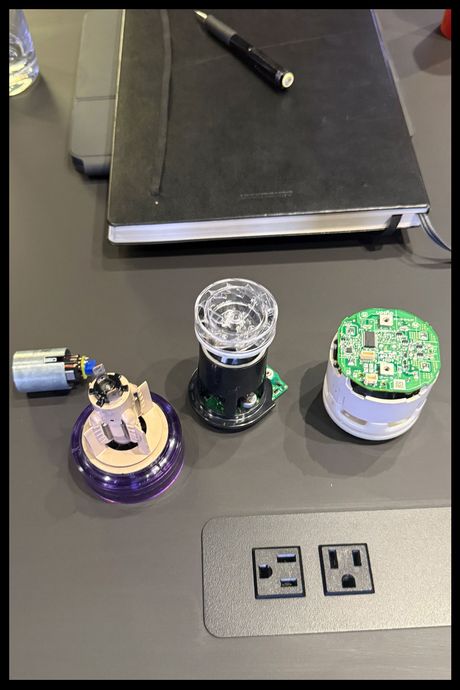
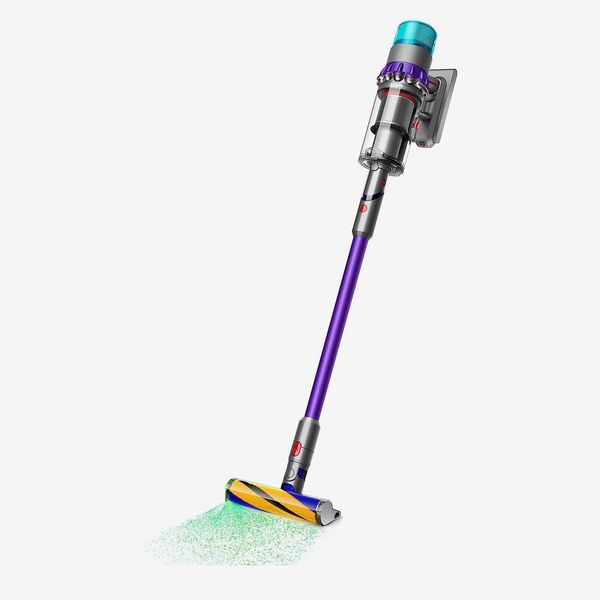
That was our first motor. And on the next generation, we were able to make it even lighter and twice as powerful. And now we have this camera-film-size motor that spins at 150,000 RPM. When it’s paired with a large impeller in the Gen5Detect vacuum, it can generate up to 315 air watts of suction. There are very few vacuum cleaners of any sort capable of generating that much suction.
Is that the same motor that’s used in the Airwrap and Supersonic hair dryer as well?
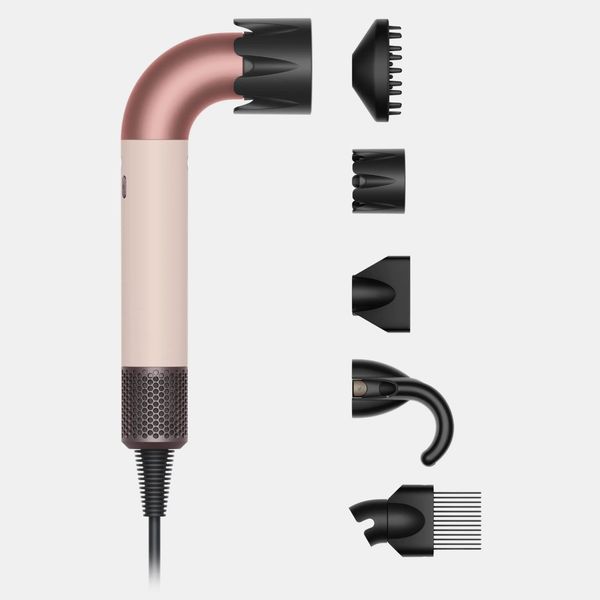
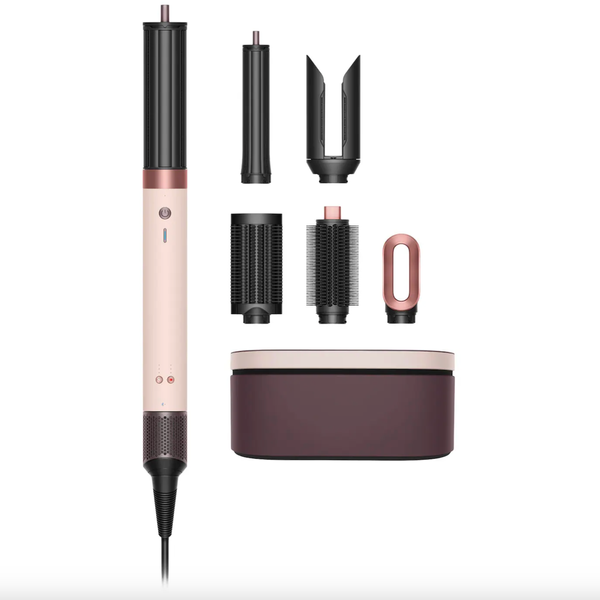
Yeah, exactly. Being forced to make a very small, very fast motor is what got us into hair dryers. And everybody said, “Oh, you know, people in beauty are not interested in motors.” But we made them interested in motors because it’s the small motor that stops it from damaging your hair. A regular hair dryer is just a crude fan blowing over a heated coil. When you push it toward your head, it restricts the airflow, making it much hotter, which damages your hair and scalp. Ours blows so fast that it produces high-pressure air, so airflow isn’t restricted as it gets closer, and you don’t get heat damage as a result.
You’re best known for your accomplishments as an engineer, but you were never formally educated as one. How does your background in the arts inform your approach to more technical work?
I originally studied classics at school — Latin, Greek, and ancient history. And then I went to art school in London, where I discovered architecture. So I started doing that, and I was taught by a very famous structural engineer who worked with Norman Foster and Richard Rogers. And he inspired me into engineering. Through that, I met the chairman of an engineering company who asked me to design a high-speed landing craft, although I was only a student. And that’s what got me into engineering.
In my experience, there’s no such thing as brilliance where you say, I’ve got the solution, then you build a prototype, and it works perfectly. That just doesn’t happen. Well, at least it’s never happened to me. The whole point of empirical development is that you make a single change at a time and observe the effects of that change until you find something that works. I didn’t have to be a highly knowledgable engineer to do that sort of work, so long as I learned from my mistakes.
In a way, because I was naïve, I was prepared to try anything, even if it was obtuse, and it looked as though it would fail. And that’s quite an interesting practice that we follow to this day. You often start with the wrong thing, which any expert will tell you is sure to fail. But because experts never try it, they miss out on the opportunity to learn about something much more interesting: Why doesn’t it work?
Dyson products we like that use the same motor
More From The Strategist
- Hark, the Advent Calendars Arrived (Very) Early This Year
- The Best Things Strategist Editors Have Bought This Year (So Far)
- 63 Things You Should Never Buy Full Price
- The Strategist Fall 100
The Strategist is designed to surface useful, expert recommendations for things to buy across the vast e-commerce landscape. Every product is independently selected by our team of editors, whom you can read about here. We update links when possible, but note that deals can expire and all prices are subject to change.