How I Stopped Mouth Breathing and Finally Got Some Sleep
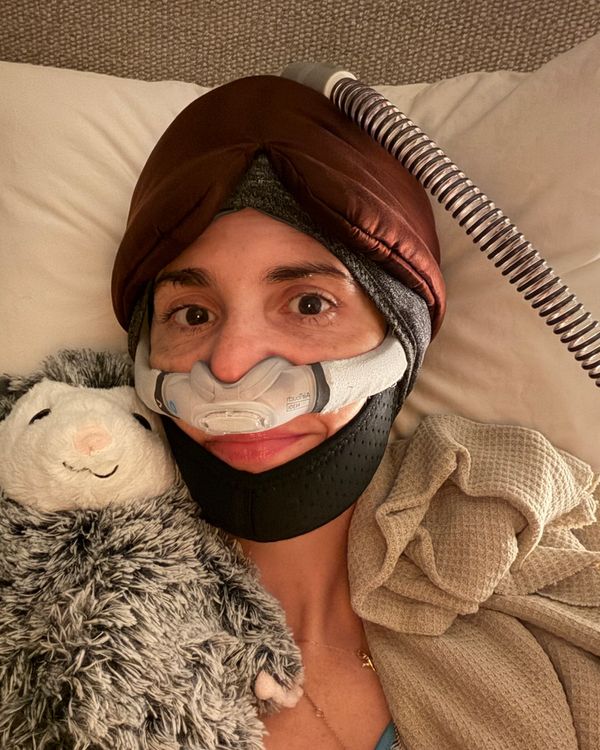
We asked author and podcaster Kate Spencer — whose most recent book, All’s Fair in Love and Pickleball, came out last summer — to tell us every last detail about her hard-won sleep routine and all the products she uses to combat a range of sleep struggles, from learning to use a CPAP machine to waking up every night at 3 a.m. while going through perimenopause.
I have an anxiety disorder, OCD, and ADHD, so sleep has always been where the anxiety manifests. When I was not treated and I was in a real spiral, I wouldn’t sleep. Especially in my early 20s, I would be up all night having a low-grade anxiety attack. So sleep has always been really challenging. Now I’m in my mid-40s and experiencing perimenopause, which is certainly affecting my sleep. And I think that has also been enhanced by my relationship to my phone, which is not healthy and something I struggle with. I was also diagnosed with sleep apnea a year ago.
I started sleeping on my back, and you’re more prone to snoring on your back. My snoring really picked up, and I was waking my husband up throughout the night. I would also have this experience of coming to and gasping for air. I would wake up tired, with headaches, all the time. But it’s so easy to ignore that. I think we have, as a society, and in America specifically, made not sleeping an acceptable narrative for so many people. Whether it’s people who have to work multiple jobs or just the fact that, culturally, we don’t put an emphasis on rest.
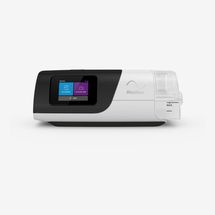
Finally, I saw a sleep doctor and did an at-home sleep test. I had a kit sent to me that tracks how many episodes of not breathing you have. I registered as having mild to regular sleep apnea, and I was prescribed a CPAP machine. It’s covered by my insurance, which is a whole other thing — I’m very fortunate, because they’re expensive. That required me going to a CPAP company here in Los Angeles and getting fitted. And a lot of trial and error; they’re not the easiest things to adjust to.
I love talking about the CPAP because it has been so helpful. I was so thrilled when Amy Poehler and Jack Black were talking about their CPAP machines on Good Hang. It felt very validating. Now that I have one, and I travel and I see other people carrying their CPAPs, I’ve started to realize how many other people are using them.
New! You can now save this product for later.
The first couple of months, I really hated it. I had a whole mask that covered my nose and my mouth, because I am also a mouth breather and it made my mouth dry. That made it hard to be consistent with the CPAP. I started researching what other people did, because in order to qualify for the insurance coverage, you have to show that you’re using the CPAP for a certain number of hours. I finally figured out there was a version with just a nose piece, because I was having such a hard time with the mouth piece. I also learned that there are straps that people put over their heads to keep their mouth shut. So I talked to my doctor about it and we went back to the CPAP company and changed my prescription.
My CPAP is pretty tiny and it comes in a carrying case — it’s like a briefcase. Travel is easy because medical devices do not count as a carry-on or a personal item. I can bring it on a plane, and everyone from TSA to flight attendants are all so used to people coming on with these things.
The one thing that I have to think about when traveling is that you need distilled water because it’s almost like a tiny humidifier. Last year, I flew to New York and I was able to get distilled water at the grocery store two blocks from where we were staying. But recently, I brought my own distilled water with me on a family vacation, because that was easier given the location. And they were very nice at the airport. They had to take it out and scan it, a little extra step.
Now this is what my routine looks like: First I have to fill my CPAP machine with distilled water. I have a basket next to my bed with all my things, so I get that out. The first step is a Blissy hair bonnet. Then a chinstrap to keep my mouth closed, then the CPAP face mask. If I’m using my sleep headphones, I’ll put those on, then an eye mask. Then I have to plug the tubing into my CPAP, which is at the top of my head. And then I get snuggled in under the covers. And, hopefully, I’m not staring at my phone. Hopefully, I’m reading a paper book with my little book light and falling asleep that way.
Here’s everything in Kate’s bedtime basket …
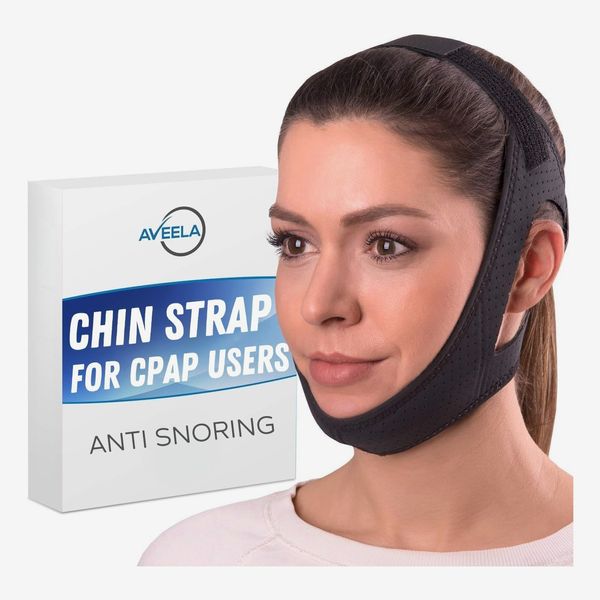
The chinstrap she uses to prevent mouth breathing
New! You can now save this product for later.
Once I got the chinstrap, it all clicked. I was able to sleep so much better with the CPAP machine. The strap is almost like training wheels: I can still open my mouth if I need to, but it’s a reminder to keep my mouth closed.
Because I breathe through my mouth at night, I tried mouth tape in the past. I know that’s very trendy for a variety of reasons, but I don’t love it — as someone who was gasping for air, I actually think it was important to be able to open my mouth.
Now I wouldn’t want to sleep without the CPAP and the chinstrap. I don’t snore anymore, which is good for my partner. But also it’s keeping the episodes of not breathing down. It’s my understanding that it’s not great for our brain health to be having those moments of gasping for air and not getting oxygen. Also, I feel a lot less tired.
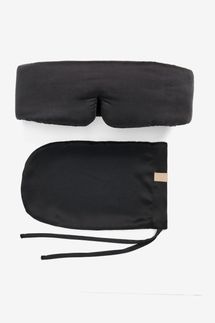
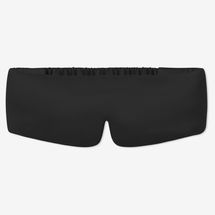
The eye mask she loves so much she bought two versions
New! You can now save this product for later.
New! You can now save this product for later.
I’ve used these for about six years. I have the weighted one and I have the non-weighted one. They’re machine washable. They feel really comfortable. They’re not claustrophobic. And now, because when I go to bed, I have to strap on the chinstrap and put on the CPAP, the eye mask has to fit over all those things. It’s a bit of an operation. I have friends who love the Nod Pod, which is a different kind of weighted eye mask. I have one, but it doesn’t work as well for me. I love the weighted Lunya one because it straps over your head. It’s not loose.
Finding a sleep mask, it’s like finding the right running sneakers if you’re training for a half-marathon. Everybody prefers a different thing. I realize I sound slightly unhinged, but, you know, hyperfixating and obsessive research is how I spend a lot of my time.
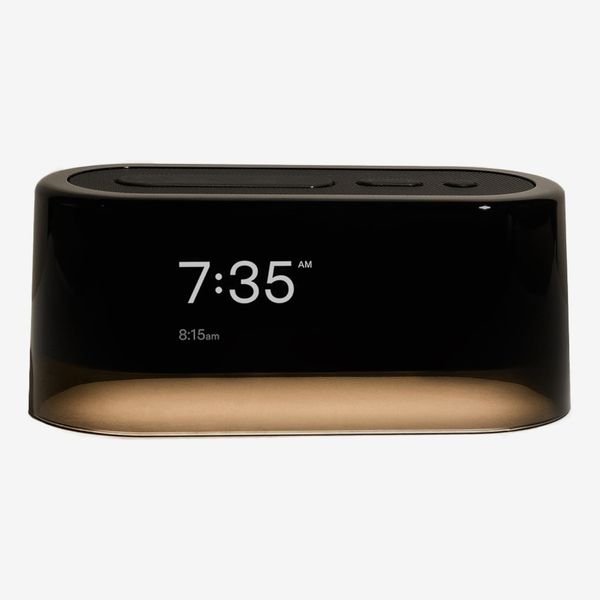
An alarm clock with her preferred brown noise
New! You can now save this product for later.
I have the Loftie alarm clock. I like it as an alarm clock. I don’t use it for meditations or setting a nighttime routine. I have tried all the smart clocks that people love, like Hatch. I know people love them, but I’ve never really vibed with them. But the Loftie is easy to use. It fits on my tiny bedside table and has a very good brown noise. And I really love the sound of brown noise. So that’s what I have stuck with.
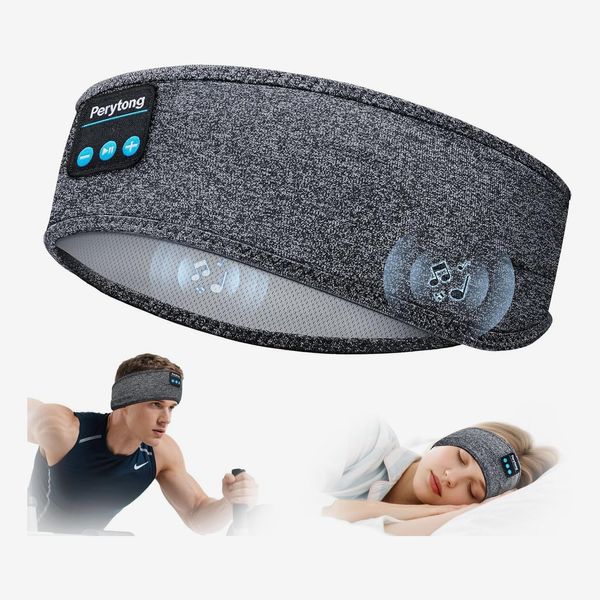
The sleep headphones she uses to listen to meditations
New! You can now save this product for later.
I also have those headphones that are just a strap, like a headband. They are great if you like listening to sleep stories. I actually purchased them for a camping trip because I need very specific brown noise — I’ve become an extremely high-maintenance sleeper. I didn’t know how I was going to sleep for two nights without the sound of brown noise in my ears. So I bought this freaking headband thing and brought a portable phone battery pack, just so I could hear the specific sound.
This is where the whole process is really embarrassingly specific. I don’t use the headband every night. When I’m at home, that brown noise from the Loftie is on every night. But if I want to listen to a sleep meditation, that is when I will use the headband. Before I got it, I was using AirPods that stuck into my ears, but they’re so uncomfortable. I like this headband because you can fall asleep with it on and then you don’t wake up an hour later, like pulling things out of your ears.
Also, if you share a sleep space with somebody who has their own, different routine, it’s not going to work to just play audio out loud. So if I really need help falling asleep and want to listen to some sort of meditation, that is when I will use the headphones. Or sometimes I wake up in the middle of the night with insomnia and need something to help me fall back asleep, and that’s when they’re also very handy. Or when I’m camping with friends.
Her go-to apps for meditations and sleep stories
New! You can now save this product for later.
New! You can now save this product for later.
Chani Nicholas, who is an astrologer, has some very good free sleep meditations on her app. I also have a Calm subscription. It was a longtime advertiser on my podcast, and now I still pay for a subscription because I really like it. There is a narrator on there who does sleep stories, this British man, Chiké Okonkwo, who I’m obsessed with. His sleep stories are my absolute favorite. I will seek them out specifically.
The wrist brace she sleeps in to soothe “texting thumb”
New! You can now save this product for later.
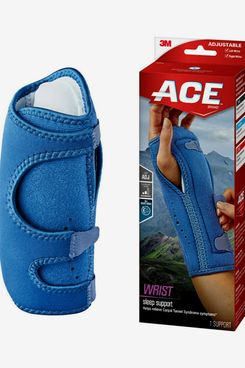
I also sleep with a wrist brace because I have carpal tunnel. If I wake up early, I often wake up my husband because I’m Velcro-ing so many things off my body. It is really quite a scene. I watch these “shedding” videos of sorority girls at the University of Alabama, and they’re taking out these curls. I also have a shedding routine in the morning, but it’s like a CPAP, the wrist brace, the chinstrap, my two disgusting retainers.
I was working with my physical therapist, trying to figure out what would help my thumb. I think what I actually have is texting thumb or gaming thumb. I also use KT tape to tape my hand, which I like more than the braces, but this one is specifically for sleep and it does help.
The heatable stuffy (and baby blanket) she snuggles with
New! You can now save this product for later.
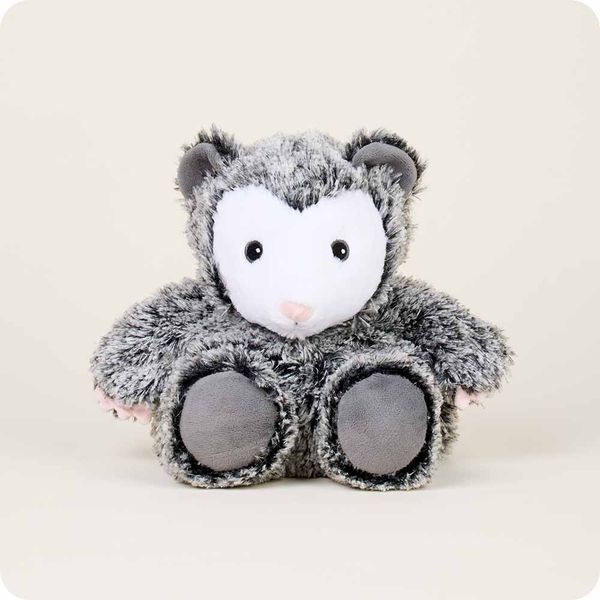
Warmies Opossum
Warmies randomly came into our life via a family friend who is also a parent with two daughters. I got one for each of my daughters, and they loved them. And then I did a gift exchange with my close group of college girlfriends. Our theme was coziness, so I got one for my friend who I had chosen, and she was like,“I love this thing!” My mom is even going to buy one because she loved it. And I was like, These Warmies are perfect. Why don’t I have one? I keep getting them for everyone else. So I bought myself one, and it’s so soothing.
In the winter, I heat the Warmie up at night and then get into bed with it. There’s something very calming about having a little warm blob. My dog also is kind of my little warm blob, but it’s just the coziest thing. I also sleep with a baby blanket that I’ve had since I was born, and I’ve somehow managed to not lose it for 46 and a half years. So I have the Warmie, I have my baby blanket kind of around my head … oh my God, I also have a leg pillow, a half-roll that goes under my legs to help with back pain. It feels excessive, but it works for me.
I do think the world of long-term sleep blankets or sleep stuffed animals is fascinating. For a long time, I was too embarrassed to share that I slept with a baby blanket. It’s a secret culture that’s not always explored. But honestly, I would be devastated if anything happened to it. I was telling somebody that I still sleep with my baby blanket, and they told me they had had a stuffed animal like that, but they stopped sleeping with it because a person they were dating poked fun at it and they felt self-conscious. We had this conversation, and they texted me later and were like, “I’m sleeping with my stuffed animal for the first time in years and it feels so wonderful.” I feel like there’s this expectation that we’re supposed to grow out of our soothing habits. And I don’t think we have to. Pick it up and see how it feels again to give it a cuddle at night.
The magnesium supplement that’s helping her through perimenopause
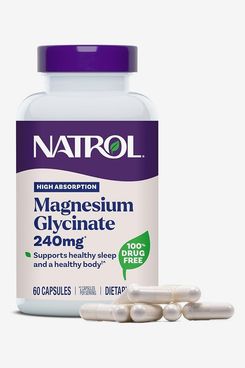
New! You can now save this product for later.
I take magnesium glycinate to try to help me sleep. Perimenopause is a real beast for sleep. I wake up at 3 or 4 a.m. on the dot almost every night, and it’s hard to fall back asleep. I think the most important thing is that magnesium glycinate specifically helps with sleep, as opposed to magnesium citrate, which is more for, to put it bluntly, helping you poop.
The notebook she journals in before bed
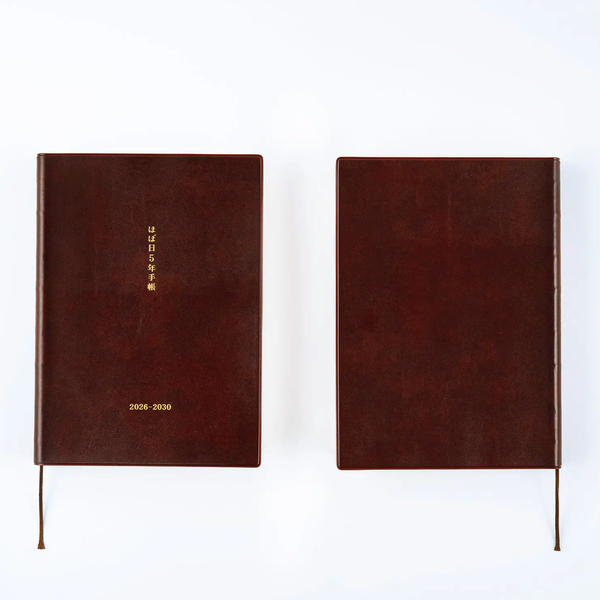
New! You can now save this product for later.
Before bed for the last four years, I have written in a line-a-day journal and then in a gratitude journal. That’s a practice I have actually been consistent with. I really look forward to it, so once I’m kind of all “suited up,” I’ll do that. I recently switched my system over to the Hobonichi Techno Five Year in A5 size. My line-a-day journal was falling apart, and I had completed five gratitude journals and wanted to try to combine them both into one notebook. So I write my daily gratitude for the day on the blank page next to the dated diary page in the Hobonichi. (Also since I am this person, I also need to share my favorite pen: the Muji Gel Ink Ballpoint Cap Type Pen.)
I think having rituals that you note the end of a day with are really helpful. And as much as I wish my ritual was to plug my phone in to charge in the kitchen at 8 o’clock at night, I’m not that person and I don’t try to pressure myself into being that person. When I do, I fail. And then I feel bad about myself. So I am trying to meet myself where I am and celebrate the wins. And I really do love that moment of reflecting on my day and trying to pull out things that I really feel grateful for. That’s just like a nice way to end things before going to the sleep phase.
More From The Strategist
- The Best Things Strategist Editors Have Bought This Year (So Far)
- Hark, the Advent Calendars Arrived (Very) Early This Year
- 63 Things You Should Never Buy Full Price
- The Strategist Fall 100
The Strategist is designed to surface useful, expert recommendations for things to buy across the vast e-commerce landscape. Every product is independently selected by our team of editors, whom you can read about here. We update links when possible, but note that deals can expire and all prices are subject to change.