Why Is Areaware Closing?


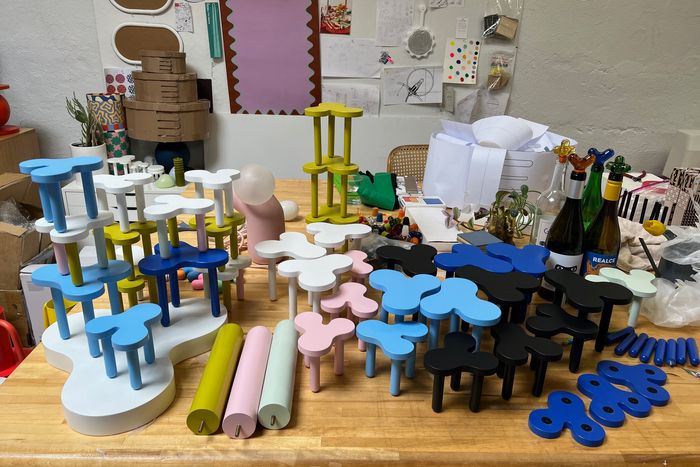
Designer Sophie Collé had been selling furniture for about four months when she got a call from Areaware. The production company wanted to license a design that had blown up online: a three-legged plant stand with a blobby trefoil top shaped like a bean undergoing mitosis. “I didn’t feel ready to move forward with a partnership right away,” Collé says. It was the height of the COVID-19 pandemic; she was still building everything in her parents’ backyard in Maryland. About a hundred stools and stands later, she got back in touch and the Splat table launched the following year, when Collé was 24. “Working with such an established company when I was so young was a huge ego boost,” she says. It led to commissions, press, a collaboration with the MoMA Design Store. The income gave her space to experiment with new projects, a rare luxury amid the “hustle-and-grind mentality,” as she puts it, of running a small design company.
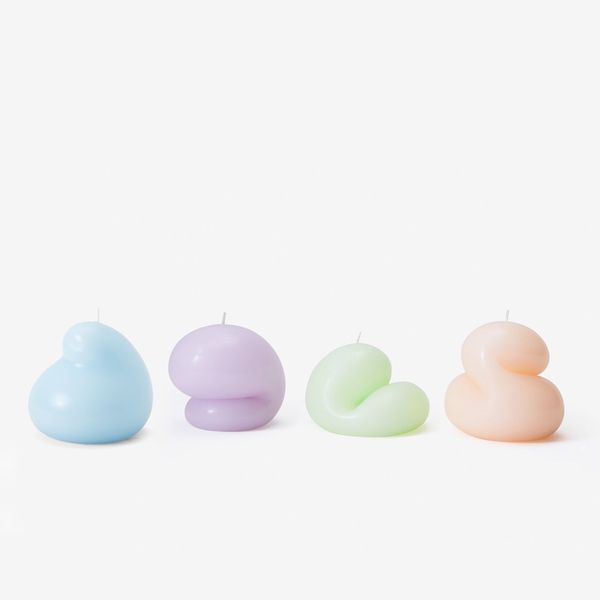
Last week, Areaware announced it would be winding down operations over the next two months, the latest in a series of bad news in the home and design industry. The company was launched in 2005 by Lisa Yashon and Noel Wiggins, former classmates at Brown University, on a model more common in Italy than the U.S.: working with designers to license small housewares and produce them at a commercial scale. Over the years, it launched thousands of products, which were generally puckish, conceptual, and affordable. Many Areaware items have become classics in their genres — see the Cubebot, an anthropomorphic puzzle toy — and more recent works cohered to the late 2010s Zeitgeist of preternaturally smooth, soft-edged objets (Chen Chen & Kai Williams’s stacked porcelain planter, Talbot & Yoon’s blobby Goober candle) and Memphis-inspired patterns in friendly brights and pastels (Dusen Dusen home goods).
Co-founder Wiggins compares the company to a group show or record label, a forum for putting out work from a wide range of artists. That structure set it apart — Areaware’s catalogue is reliably weirder and more surprising than similarly sized home-goods companies — but it also proved uniquely vulnerable to Trump-era tariffs, the biggest factor in its closure. Compared to a designer making one-offs in their studio, Areaware does mass production. But for a factory, its orders are small — in the thousands, not enough to keep the lights on year-round. So Areaware found partners across China, Southeast Asia, India, and North America willing to “slot them in,” as Wiggins puts it, in between bigger clients.
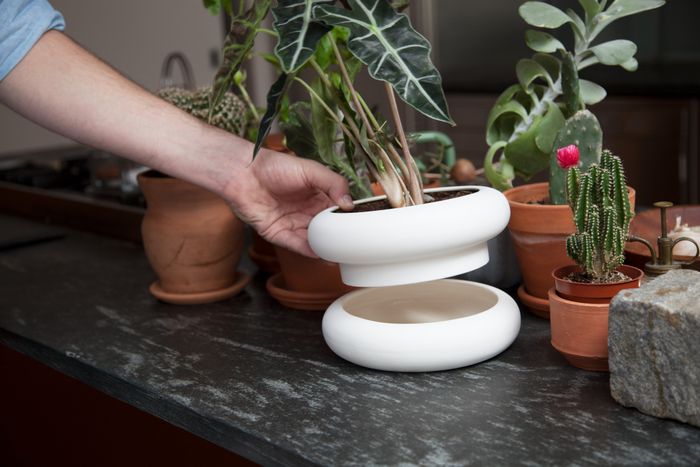
For example, Chen Chen & Kai Williams’s stacking planters are made at a porcelain factory in China whose bread-and-butter work is producing Hallmark figurines; the fiddliest task involved is painting the eyes on ceramic Barbies. For the factory’s owner, an art-school grad named Robert, developing the planters for Areaware was a welcome change of pace. “He was always trying to have a pet project on the side,” says Lisa Cheng Smith, Areaware’s former chief design officer and the owner of Yun Hai, a Taiwanese grocery in Brooklyn. “Our partners were trying to make things interesting and do interesting work.”
Multiply that process for every item in Areaware’s catalogue and you get a wide network of manufacturers down to work with unusual designs; add tariffs that vary from week to week, country to country, and the network falls apart. “A lot of what we built over the years was relationships with factories all over the world,” Wiggins says. “When the tariffs came, what was already a fragile business model just collapsed.” He estimates that tariffs would more than double prices, but even if customers were willing to pay more it might not be enough: They looked into shifting production to factories in Vermont and Ukraine, but Areaware’s order sizes were too small.
In some ways, Areaware’s presence in the American home-goods industry was miraculous to begin with. “For so many companies, the design is there in support of the business,” Cheng Smith says. “Like, We have to design this to hit this revenue target. Areaware’s not like that. It was like, We’re able to distribute products, so who are we going to represent?” Unlike Food52 or Ssense, it operated without taking on debt or aggressively chasing growth; the focus was simply on making things.
It’s unclear what, if anything, will take its place, what else might fill the role Areaware played in Collé’s career: a first big break and a reliable stream of income to cushion the financial instability of creative work. “In some ways, there’s more freedom now to get a great idea made and promoted,” Wiggins says. You can strike out on your own, find a manufacturer online, market it on social media. “What’s trickier is the sense of community.”
Items from the Areaware sale

More From The Strategist
- Hark, the Advent Calendars Arrived (Very) Early This Year
- The Best Things Strategist Editors Have Bought This Year (So Far)
- 63 Things You Should Never Buy Full Price
- The Strategist Fall 100
The Strategist is designed to surface useful, expert recommendations for things to buy across the vast e-commerce landscape. Every product is independently selected by our team of editors, whom you can read about here. We update links when possible, but note that deals can expire and all prices are subject to change.