Does Your Body Weight Affect What Kind of Mattress You Need?

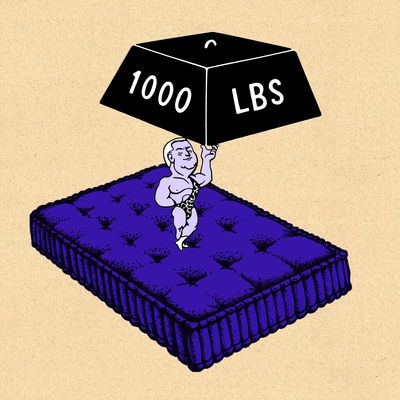
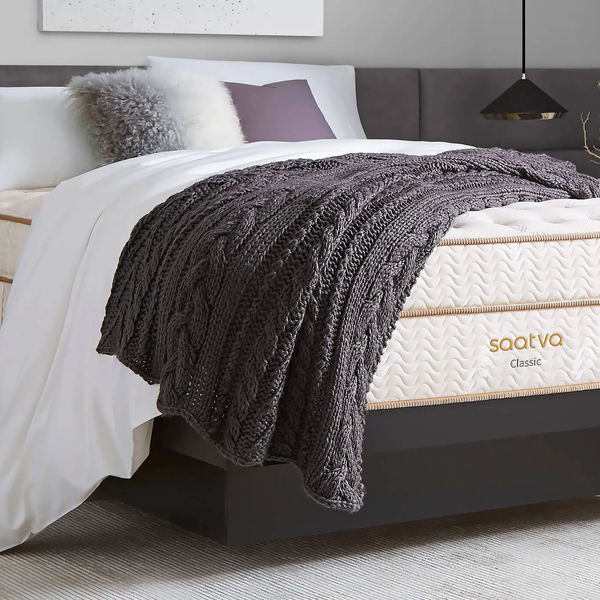
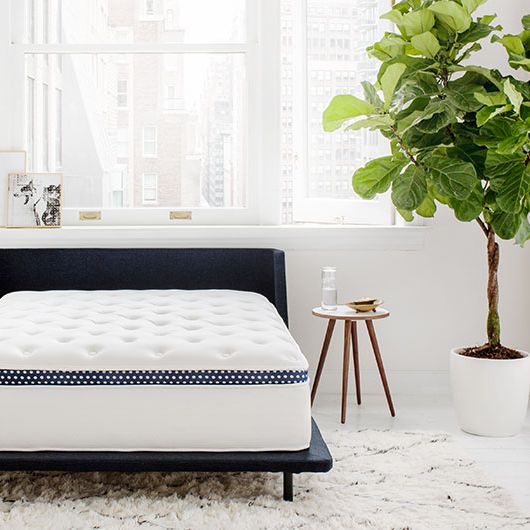
Over the past decade, more and more brands have started selling mattresses they say are specifically designed for heavy people or plus-size people. The concept can likely be traced to the launch of Big Fig — a mattress brand that caters explicitly to heavier customers — in 2016. But now you’ll find similar options at Saatva (the Saatva HD, “for bigger bodies”), WinkBeds (which offers a “plus” firmness for heavier people), Nolah (the Evolution Comfort+), and Helix (multiple models “designed specifically for Plus Size and Big & Tall sleepers”), as well as at Titan by Brooklyn Bedding, a brand with similar marketing to Big Fig. And even among companies that don’t market specific mattresses to heavier people, it’s common to see weight used as a factor in “mattress matching” quizzes in the same way as factors like your preferred sleeping position or whether you share the bed with a partner.
The basic idea is that the heavier a person is, the more support they need. Intuitively, this feels true to me, but I wanted to find out exactly what the deal is with body weight and mattresses. Are plus-size mattresses meeting a real need, or is classifying sleepers by how much they weigh just another way to market a mattress?
Your weight can affect how well your mattress supports you
I asked three physical therapists whether someone’s weight can impact how comfortable and supportive a mattress feels, and all three said “yes” — with some caveats.
Robert Nithman, program director of physical therapy education at Elon University, explained that no matter how much you weigh, choosing the right mattress comes down to getting an appropriate level of pressure relief and support. Our spines are supposed to be mostly straight, with natural curves at the neck and lower back; a properly supportive mattress will help keep your spine in a “neutral” position that maintains those curves. Without that support, you’ll be at risk for pain and a higher likelihood of injury over time.
Because more weight will compress the materials of a mattress more, heavier people will sink in more deeply than lighter people, says Karena Wu, physical therapist and owner of ActiveCare Physical Therapy. That can make it harder for people at higher weights to find a mattress that’s supportive enough to keep their spine in alignment.
Craig Hensley, associate professor of physical therapy and human movement sciences at Northwestern University, warned me that as far as he knows, there has never been a randomized controlled trial or cohort study to research whether heavier people sleep better or more comfortably on a specific type of bed. So any information we do have about which mattresses might be better or worse for heavy people — from professional mattress reviewers, consumer reviews, and so on — is anecdotal. However, it stands to reason that if a person is sinking into their mattress enough that their spine is out of alignment, they aren’t being properly supported.
Historically, mattresses haven’t been designed with “heavy” people in mind
“In the plus-size community, we are constantly talking about what is going to be the most accessible, the most sturdy, and the most comfortable thing for us to put our body on,” says Corissa Enneking, who runs the blog Fat Girl Flow. And Jeff Brown, the president of Big Fig, told me there wasn’t much incentive in the mattress industry, historically, to serve the plus-size demographic. According to Brown, there may have more incentive not to; because heavier people tend to see their mattress sag quicker than lighter people, due to compression of the material, they will often end up replacing their mattress every two to three years instead of seven to ten and spending more money in the long run. Big Fig’s parent company saw an opportunity to make more durable mattresses for heavier people and launched Big Fig. Many brands have followed their lead since.
Enneking started reviewing “plus-size” mattresses after a negative experience purchasing a mattress. At the time, she was working as a furniture salesperson, which included selling mattresses, so she thought she was well informed about what kind of mattress would support her as a plus-size person. After spending about $5,000 on what she assumed would be a supportive mattress, only to have it sag within a few months, she started looking for other options. Now she has reviewed a variety of mattresses for heavy people for her blog, from Big Fig, WinkBeds, Helix, and others, and told me that while all of them have pros and cons, as a category she generally finds them more supportive and long lasting. “On these newer mattresses, the springs are heavier gauged, they’re closer together, they have more coils around the edges, and that stuff makes everything just feel like you’re able to get in a position that actually works for your body,” Enneking says.
But no single mattress is best for heavy people — and who counts as “heavy” isn’t clear
Many mattress companies and reviewers use a weight between 200 and 300 pounds as the starting point for who they consider to be “heavy,” but there is no official standard. For example, Saatva says its HD mattress is designed for people who weigh 300 pounds or more, though it can support sleepers up to 500 pounds; WinkBeds says their WinkBed Plus is designed for people over 250 pounds. Other companies emphasize how much weight they’ve tested a mattress to support. Nolah says its Evolution Comfort+ mattress can hold up to 1,000 pounds; Big Fig says its Classic mattress can hold up to 1,100 pounds.
Broadly speaking, heavier people will need a firmer mattress than lighter people to counteract sinkage. And because a mattress that feels extremely firm to a lighter person may feel more like a standard firmness to a heavier person, it’s common for mattresses designed for heavy people to feel firmer than average. Still, Nithman and Hensley both emphasized that it isn’t as simple as choosing an ultrafirm mattress for someone with a higher body weight, because differences in body proportions, medical conditions, and preferred sleep positions can play a role in how any given mattress functions for a specific person.
For example, if someone has a wider chest or hips and sleeps on their side, that wider part of their body will make contact with the mattress first. They’ll need a mattress with enough give to let those parts of their body sink in, but enough support to keep their spine in alignment. Enneking also cautions against assuming that you need a bed as hard as a board just because you are heavier. “Maybe firm is supportive if you sleep specifically on your back. But if you’re a side sleeper, something overly firm can really hurt your hips,” she says, “The terms firmness and support shouldn’t be used interchangeably.” She advises shopping with companies that offer multiple firmnesses and guarantees that you can return or exchange for a different style if a mattress isn’t working well for you.
Look for quality materials, a sturdy base, and extra support (no matter what the marketing says)
What really makes a good mattress for heavy people comes down to the quality of the materials and how they are put together, says Brown. A key component in any modern mattress is the foam. A mattress made with low-density foams will be more likely to compress and degrade over time. Higher-density foams, which have more pounds of material per cubic foot, will be more durable for all kinds of sleepers — heavier people included — in the long term.
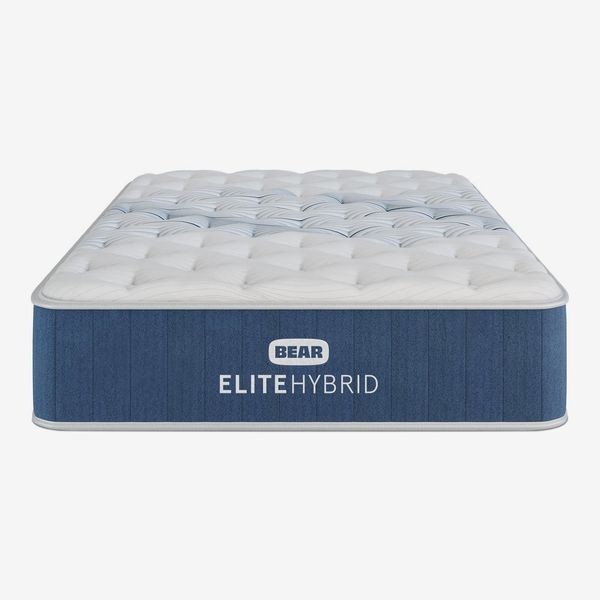
The other key component is springs. Almost every mattress marketed toward heavy people uses steel coils (i.e., these mattresses are innerspring or hybrid models, not all-foam models), because steel coils are very, very strong. Pocketed coils, which are now common in mattress design, allow manufacturers to strategically place coils for optimal support; Brown recommends a high coil count, using coils made from quality steel, which he says is important for getting the structure right.
The height or thickness of the mattress matters less. Brown cautions that it’s easy to stack up layers and layers of cheap materials to make a thick, impressive-looking mattress. But over time, a thinner bed made with quality materials can outperform a thicker one made with cheaper materials.
Other features that heavier people may appreciate in a mattress include reinforced edges and zoned support. Enneking says reinforced edges are one of the major improvements she has noticed in mattresses designed for heavy people: By using a border of either stronger coils or higher-density foam, mattress manufacturers can add reinforcement along the edge of a mattress to prevent it from giving way when you roll toward or sit on the edge of the bed. Zoned support means designing a mattress to be more supportive in specific areas; usually the middle of the mattress is reinforced with higher-gauge coils or foam to support the midsection, which is the heaviest part of the body.
Finally, don’t forget an equally supportive bed frame: “What you put your mattress on is critical, because you can use a thinner mattress if you’ve got a really good foundation or platform,” Brown says. “If you put pressure down and the mattress goes down because of a bad foundation, you’re just exacerbating the issue.” If you have a slatted bed frame, the slats should be no more than 2.5 inches apart, and you should check for any weight limits — you want something that can support the weight of your mattress, plus the weight of all the people (and pets) who will be sleeping on it.
Supportive mattresses we like
New! You can now save this product for later.

New! You can now save this product for later.
New! You can now save this product for later.
More From The Strategist
- Hark, the Advent Calendars Arrived (Very) Early This Year
- The Best Things Strategist Editors Have Bought This Year (So Far)
- 63 Things You Should Never Buy Full Price
- The Strategist Fall 100
The Strategist is designed to surface useful, expert recommendations for things to buy across the vast e-commerce landscape. Every product is independently selected by our team of editors, whom you can read about here. We update links when possible, but note that deals can expire and all prices are subject to change.