Acclaimed Chefs and Amateur Grillers Swear by This ‘Mind-Blowing’ Charcoal
Save this article to read it later.
Find this story in your account’s ‘Saved for Later’ section.
I’m not what you would call an experienced griller. The last time I tried to host a backyard barbecue, I spent nearly three hours trying to coax fire out of the allegedly easy-light briquettes, and the night ended with oven-baked meat that my friends still make fun of me for years later. Recently, my 8-year-old daughter reminded me of that epic failure when, at noon, she asked if I could grill some chicken for dinner, as if she knew it would take me the rest of the day to get something on the table. “With all the hassle,” I thought, “why does anyone cook anything over charcoal?”
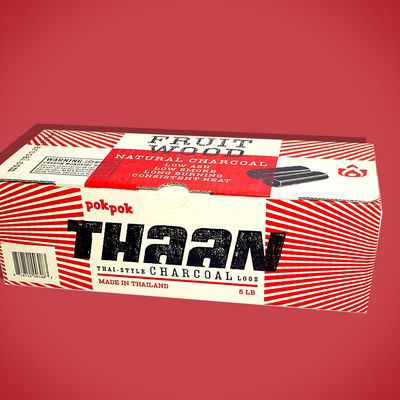
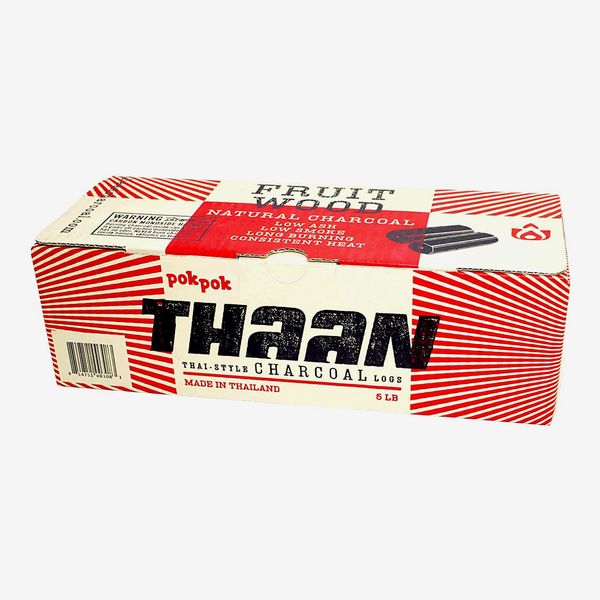
A few weeks later, I got my answer at the Philadelphia-based Laser Wolf, one of best new restaurants in America, according to GQ, and the newest from the team behind the James Beard Award–winning Zahav. (My visit to Laser Wolf, which opened this past February, was before the pandemic forced it to close for dining service.) Inspired by an Israeli skewer house, the restaurant has a menu of salatim, or vegetable salads, and skewers of meat, fish, and vegetables cooked over fiery coals in an open kitchen. The chicken I ate there, which was marinated in guava, was the most tender, wildly delicious poultry I’ve ever tasted. Our server told me that taste is a direct result of the charcoal they use, and I later learned that charcoal — a stackable, binchotan-style log called Thaan — was only chosen after Laser Wolf executive chef Andrew Henshaw (a Zahav alum) deemed it superior to nearly a dozen other charcoals he tested before the restaurant opened.
In talking with Henshaw about his charcoal-testing process, he told me that he methodically lit each contender to observe its temperature, how quickly each was ready to start cooking, and how long each lasted. He also noted how much ash each left behind, which is a sign of a charcoal’s purity. “The more ashes, the more by-product,” he says. His final experiment: cooking a single, salted chicken thigh over each contender. Tastewise, Thaan emerged a clear winner. “We were astonished,” Henshaw told me. “It blew our minds.” Charcoal can sometimes overpower meat with smoky flavor, but the Thaan, he adds, imparted just the right amount of smokiness while “also giving the chicken an umami taste — slightly sweet and savory.”
New! You can now save this product for later.
Taste isn’t the only reason Henshaw chose Thaan. The charcoal is also the perfect size and shape, with a thin tunnel through the center of each narrow brick that allows for airflow, which in turn allows the bricks to burn evenly. This design also makes Thaan great for grilling in smaller spaces because, with just one thin tunnel through the bricks, they are denser and have fewer random air pockets that can cause sparks and high flames. Thaan is more sustainable, too, because it’s made with wood from rambutan fruit trees, which are a renewable resource. I should note that Thaan, while new to me, isn’t new — the charcoal was created a few years ago by chef and restaurateur Andy Ricker, who developed it as a sustainable alternative to a Japanese-style binchotan charcoal he was using after learning the production of that charcoal was depleting a Malaysian mangrove swamp.
After tasting Laser Wolf’s glorious chicken (and dry-aged ribeye and harissa-glazed, Tunisian-style tuna — all of which are grilled over Thaan), I realized it might be time to give grilling another go. Henshaw even gave me a tip: Start with an easy-light briquette like Royal Oak, and then layer the Thaan on top. It took about 25 minutes for the small pile of Royal Oak briquettes I torched to start evenly burning; when they were, I stacked a layer of Thaan on top of them. All told, about an hour passed before the grill was ready for meat (an hour, according to Henshaw, is the perfect time to temper steak before throwing it on a grill; since I was cooking chicken, I removed it from the fridge just 20 minutes before adding it to the fire). The Thaan burned evenly while my chicken cooked quickly, and it was an exponentially easier grilling experience than any I’d had before. Plus, the chicken tasted worlds better — juicy and sweet with plenty of that rich umami flavor I remembered from eating at Laser Wolf. The irony now, of course, is that I don’t know when I’ll be able to go back for more of its food. But thanks to the charcoal I discovered there, I can light up my own grill and still (almost) taste it.
The other stuff I used to grill
New! You can now save this product for later.
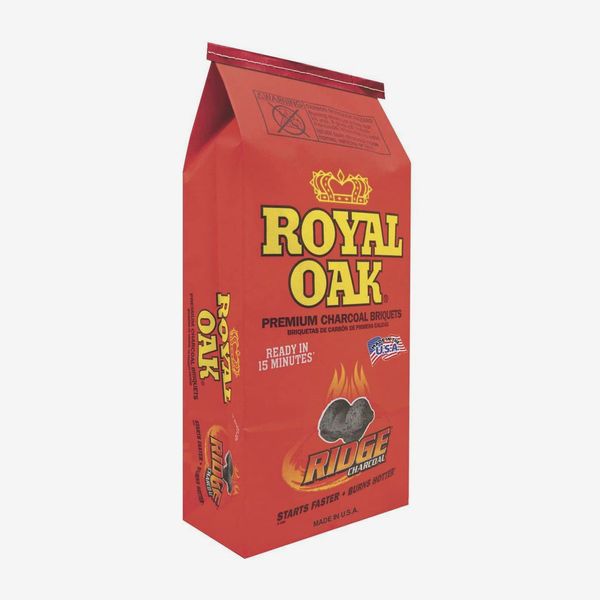
The easy-light Royal Oak briquettes Henshaw recommended. “The tag team of using a little bit of Royal Oak and Thaan makes it exponentially easier,” he says. I didn’t use a chimney starter, but the Thaan would have been much easier to light (and I wouldn’t have needed to use these briquettes) if I did.
New! You can now save this product for later.
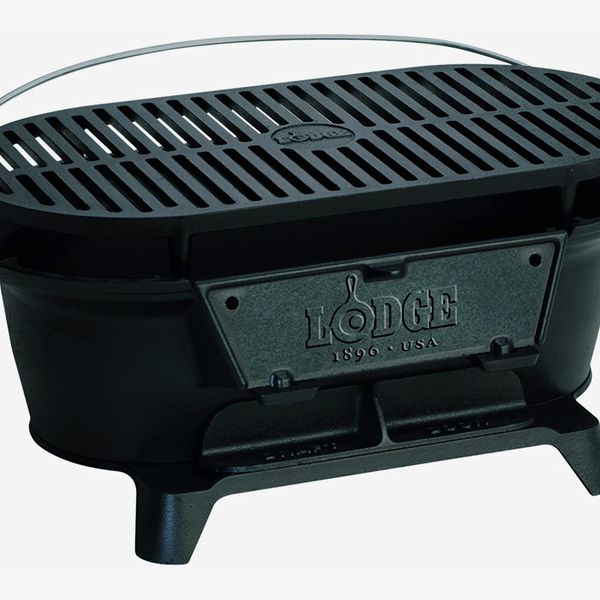
I grilled the chicken on my Lodge Cast Iron grill, which is durable enough to withstand being accidentally left outside one winter (oops) and portable enough to take to the beach. The user-friendly design includes a flip-down door that makes it easy to stack charcoal within.
The Strategist is designed to surface the most useful, expert recommendations for things to buy across the vast e-commerce landscape. Some of our latest conquests include the best acne treatments, rolling luggage, pillows for side sleepers, natural anxiety remedies, and bath towels. We update links when possible, but note that deals can expire and all prices are subject to change.