How Worried Should I Be About Fiberglass in My Mattress?


Welcome to Sleep Better Week on the Strategist, where we’re helping you find everything you need to get your best rest — from testing the most comfortable mattresses to asking nosy questions about other people’s sleep routines. For more, head to our Sleep Better Week hub.
Social-media chatter about mattresses full of off-gassing polyurethane foam, hormone-disrupting chemicals, and fire retardants has made buying a bed confusing at best and anxiety-producing at worst. And many mattress brands have jumped at the chance to capitalize on consumer fears, touting their use of “nontoxic” and organic materials at every opportunity.
But the concept of a nontoxic mattress implies that there are actively toxic mattresses out there, and I’m always wary of the suggestion that something benign is harmful — especially if it comes with a recommendation to buy a more expensive “safe” alternative. So I called up experts in toxicology, environmental science, and public health to ask whether the most commonly cited fears about mattresses are founded — the answer, as you might expect, is not a simple “yes” or “no” — and what to actually look for when you’re shopping for one.
If you’re buying foam, look for industry certifications that ensure minimal VOC exposure
Many consumer products, including mattresses made with polyurethane foam, emit volatile organic compounds. The main concern with VOCs is that they essentially “pollute” our indoor air. But mattresses are not the only culprit; nearly everything in our homes, from the couch to the paint on the walls, emits some VOCs, a process also known as off-gassing. Our bodies can handle brief exposures, says Dr. Judit Marsillach from the University of Washington School of Public Health, but there are some potential health risks to longterm exposures. Still, Marsillach was quick to point out that not all VOCs are necessarily harmful — they are simply chemicals that vaporize at room temperature. She also emphasized a key tenet in toxicology: The dose makes the poison. So while some lower-quality mattresses may continue to off-gas for months or even years, choosing one with foam that is explicitly CertiPUR-US certified will ensure that it’s made without harmful ingredients like phthalates and that it is low-VOC.
Greenguard Gold is another certification to look for; it mandates an even lower level of VOCs and meets testing requirements for VOC emissions set by the more-stringent-than-average California Department of Public Health, according to UL Solutions, the issuer of all Greenguard certifications. (Greenguard also rules out other harmful compounds, like formaldehyde.)
Of course, if you want to avoid polyurethane foam altogether, there are plenty of mattresses on the market that use latex foam (made from rubber-tree sap), as well as innerspring mattresses that may not contain any foam at all. And to lower your VOC exposure in general, Marsillach advises washing your bedding frequently to prevent VOCs from all over your home from accumulating in your sheets, opening windows to let in fresh air, and using an air purifier with a HEPA filter.
You want your mattress to have a fire barrier — but your best bet is to avoid one with fiberglass
Every mattress sold in the United States is required to pass two flammability tests — the “cigarette test” (16 C.F.R. part 1632) and the “open flame test” (16 C.F.R. part 1633). These consumer-protection regulations are intended to prevent mattresses from being engulfed in the event of a fire, giving people time to escape and helping prevent flames from spreading to other rooms. Crucially, meeting these requirements does not mean there are dangerous chemical fire retardants in your mattress.
Dr. Arlene Blum, executive director of the Green Science Policy Institute and research associate in chemistry at UC Berkeley, assured me that manufacturers don’t use chemical fire retardants in foam produced for mattresses because it’s not an effective way to meet flammability standards — the foam would have to be 50 percent fire retardant, which would not be very comfortable to sleep on. (Additionally, since 2015, chemical fire retardants have been more widely phased out of other foam production in the U.S. owing to improved flammability regulations for upholstered furniture and bans on particularly dangerous fire retardants.)
Instead, the industry standard is to use fire-resistant materials in the mattress cover or in a fire barrier underneath the cover. Mattress brands use a variety of materials in their fire barriers, from boric-acid-treated fiber to silica-embedded fiber to animal fibers like wool, alpaca, and horsehair, according to the International Sleep Association. While the majority are synthetic, Blum says none of them are concerning for use in mattresses, with fiberglass as one exception. Up until a few years ago, fiberglass was commonly used as a fire retardant in mattresses (and always fully contained within them), but many companies have phased it out owing to safety concerns in the event of accidental exposure, which can be quite dangerous.
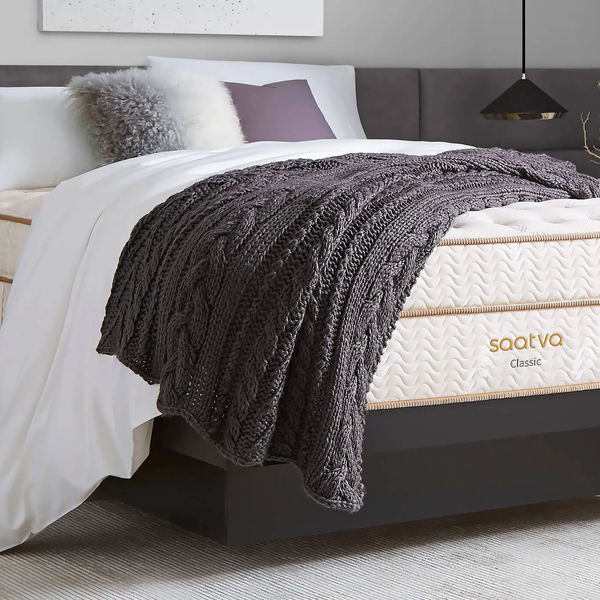
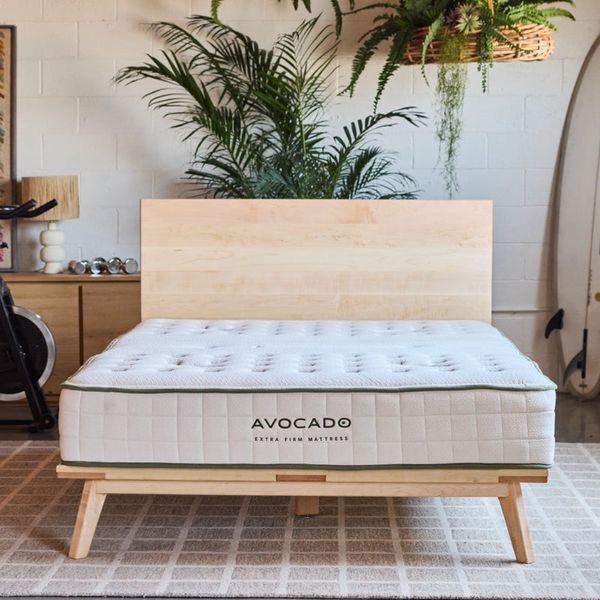
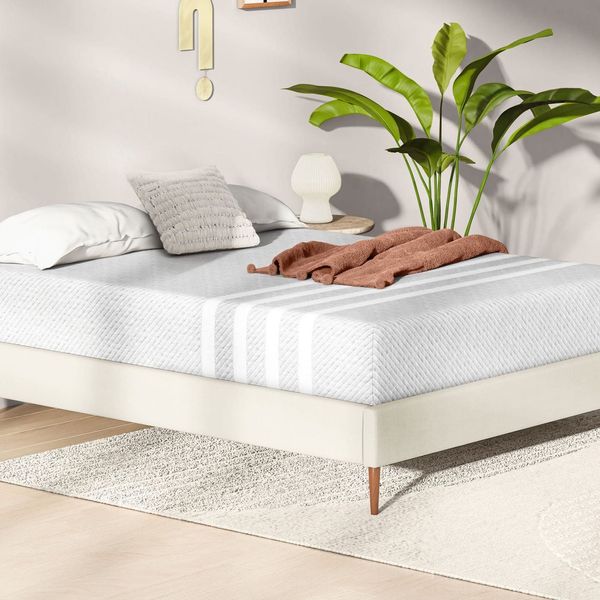
Most reputable brands now clearly state whether they use fiberglass in their mattresses. NapLab also maintains a fairly comprehensive list of which brands do and don’t use fiberglass, though I’d always recommend double-checking. It’s pretty easy to avoid if you (very reasonably) want to. And while plenty of synthetic fire barriers are considered perfectly safe, if you’d prefer a natural fire barrier, there are lots of mattresses with fire barriers made of naturally fire-resistant animal fibers, like wool.
Fiberglass-free mattresses we like
A note about waterproofing in kids’ mattresses
Some children’s mattresses have waterproofing in their covers for obvious reasons. This is particularly common in baby and toddler mattresses, where there’s a lot of reason to want it for both hygiene and convenience purposes. But some waterproof mattresses may contain harmful plasticizers, such as phthalates, which are typically used to make rigid plastics more flexible. Phthalates are known endocrine disruptors that mimic the naturally occurring hormones in our bodies; exposure can negatively affect growth, reproduction, and digestion.
Polyvinyl chloride, or PVC, is a cheap and common waterproofing material that’s made with plasticizers and one that Dr. Miriam Diamond, author of a University of Toronto study on potential hazards in children’s mattresses, advises parents make a point to avoid. Her team’s work has also indicated that plasticizers may lead to asthma in children.
There are other waterproofing materials you can look for, including thermoplastic polyurethane (TPU), which is generally considered safer than PVC because it is more flexible and doesn’t usually require plasticizers. TPU is also frequently used in waterproof mattress protectors. But if you are considering a kids’ mattress with waterproofing and the brand does not specify what material it’s using for that purpose, steer clear.
Notably, according to Arin Schultz, chief growth officer at Naturepedic, an organic-mattress brand, it is extremely challenging to make something waterproof without using any synthetic materials. (Though Naturepedic primarily uses natural materials in its mattresses, the company relies on a synthetic bioplastic derived from sugar cane to waterproof its baby mattresses.) That’s why most brands that make “natural” kids’ mattresses don’t include waterproofing at all and instead suggest using a mattress protector. You can look for a protector that is OEKO-Tex Standard 100 certified or Global Organic Textile Standard certified for additional assurance that no harmful materials are present.
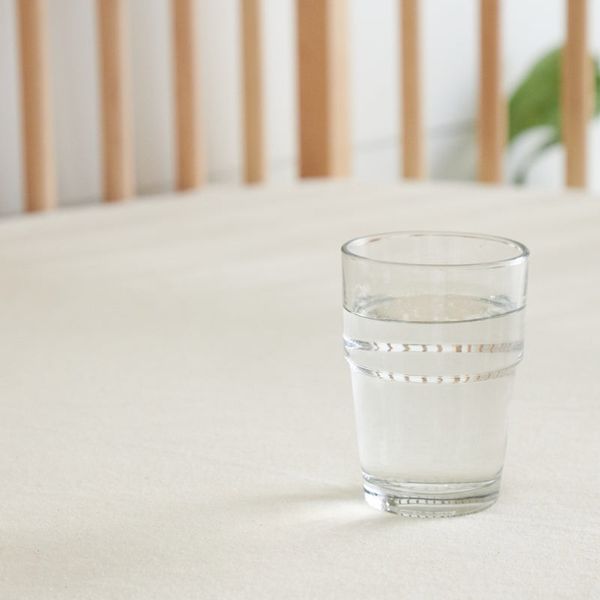
New! You can now save this product for later.
Avocado’s crib mattress protector sandwiches waterproof polyurethane between layers of certified-organic cotton. It is Greenguard Gold certified and Made Safe certified to be free of toxic materials …
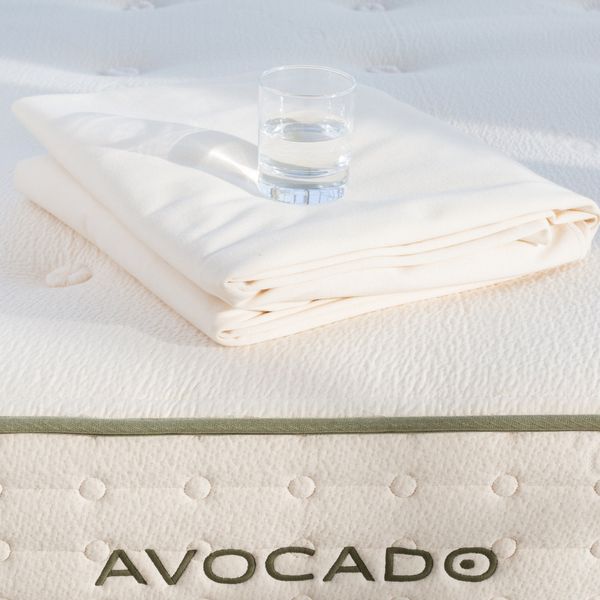
New! You can now save this product for later.
… but all of the brand’s mattress protectors are made with the same materials and have the same certifications.
The TL;DR is to not get too hung up on marketing that promises a mattress is “natural” or “nontoxic”
While many mattresses are marketed as natural, organic, or nontoxic, Marsillach says your best approach is to make sure you understand what kinds of materials are used in any mattress you may be considering (polyurethane foam, latex foam, and so on) and to buy one with strong certifications surrounding the manufacture of those materials.
Additionally, just because a mattress brand has a row of certification logos on its website doesn’t mean those certifications will address your specific concerns. Some only cover certain materials or components of a mattress — including CertiPUR-US, which is specific to foam. Good ones to look for include Greenguard Gold (which covers VOC emissions and formaldehyde, as discussed above), OEKO-Tex (which covers harmful substances in textiles), and Global Organic Textile Standard or GOTS (which certifies that textiles are organic but also tests for a range of harmful substances). Note that some other certifications may only account for a brand’s environmental or social impact, which is great but not always related to consumer health and safety. So you should learn what each one means and buy accordingly.
Marsillach also offered a final guiding principle she personally follows for mattresses and everything else: Avoid buying any consumer products that are banned in California, because the state typically has stronger regulations than the rest of the U.S.
More From Sleep Better Week
- Welcome to Sleep Better Week
- What’s the Least You Can Spend on a Good Bed? (Frame and Mattress Included.)
- If You Don’t Know What Kind of Mattress You Want, Try a Medium-Firm Hybrid
- Unisom Was the Only Thing That Helped My Pregnancy Insomnia
The Strategist is designed to surface useful, expert recommendations for things to buy across the vast e-commerce landscape. Every product is independently selected by our team of editors, whom you can read about here. We update links when possible, but note that deals can expire and all prices are subject to change.