The Summer We Gave Up Braiding Hair
Save this article to read it later.
Find this story in your account’s ‘Saved for Later’ section.

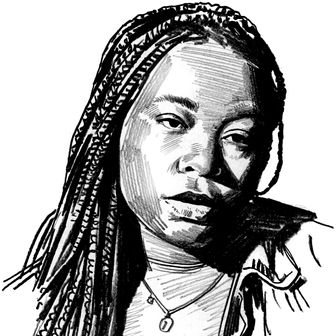
It’s braids season. That time of year when braiding shops fill with women eager to protect their hair and make styling easy as they enjoy park hangs, pool days, and vacations. Most years, a dominant style emerges. Summer 2025 was boho braids, an evolution of knotless, where curly tendrils are added to braids for a layered, dimensional look. This year, for the first time in all my summers of getting braids, it’s natural-hair cornrows. It’s a big shift given that added hair has long been the standard in braiding; it adds thickness and length and helps braids last longer. So why would a growing number of Black women start going braiding-hair free? I spent the past couple of months digging around, talking to women with cornrows, braiders, stylists, and even a trichologist to figure it all out.
First, there’s growing concern about how braiding hair is made. In February 2025, Consumer Reports released the findings from tests of ten popular synthetic-braiding-hair brands, including Sensationnel, Shake-n-Go and Sassy. All the brands came back positive for carcinogens with three testing positive for benzene, a chemical known to cause leukemia. Nine contained lead; lead exposure can lead to kidney damage, fertility complications, and neurological issues like memory loss. “Those chemicals can be absorbed into the hair follicle. It wouldn’t create effects you see immediately but later down the road,” says trichologist and texture specialist Cataanda James. The news sparked a wave of concern on social media and made the longtime complaints of braiding hair irritating scalps feel less anecdotal and more like signs that something may really be wrong. While there isn’t evidence that the irritation commonly experienced with braiding hair is directly correlated to the carcinogens, it offered new information around a phenomenon that many women experience, including James. In February 2026, Consumer Reports followed up and tested another batch of synthetic braiding hair, including “healthier” alternatives like Rebundle (made of plant fibers instead of kanekalon, an acrylic, plasticlike fiber) and still, 29 of 30 tested positive for lead. Over time, this could potentially impact health. “It’s causing many of us to rethink hair care and self-care decisions we once made without a second thought,” says Paige Lewin, founder of the Texture Talks podcast and author of How to Love Your Afro.
Braids without added synthetic hair feel like a logical next step. It seems the attitude toward the aesthetic of cornrows is changing too. At the top of this year, well before braid season, I started seeing it more frequently. Chase Infiniti wore cornrows on the red carpet at the Critics Choice Awards, with her stylist, Coree Moreno, describing them as a “sophisticated, tucked away look” that allows a Black woman to walk a red carpet “without compromising her curls.” It was a departure from Infiniti’s typical loose, curly look. From there, I kept my eyes peeled. As the months passed, I saw more cornrows in the wild and in new contexts: a neat seven braids at a brand wellness retreat, a few cornrowed heads in the club, cornrows on a girls’ trip. Up to this point, I’d seen cornrows in a few runway shows and on celebrities like Michaela Coel and Jorja Smith, but I’d yet to see it catch on more broadly among the stylish women I saw in real life. Then, in late May, fashion and beauty content creator Wadzi Zoe posted a video on Instagram and TikTok about natural braids being the “It”-girl hairstyle. The response to the video, says Zoe, was overwhelmingly positive with people saying they were planning to try the style themselves. Hairstylist Daryce Tolliver also noticed a shift. “If I have 15 clients getting their hair braided multiple times a year, seven of them have opted for braid or twist-down styles without hair,” she says. Lewin says that while she has seen cornrow styles around for years, now she’s noticing people doing this with shorter lengths. “One of my friends, broadcaster and cultural commentator, ZeZe Millz, got her Afro braided in straight-back cornrows recently and looks like an off-duty model,” says Lewin.
Stylists are also adapting their offerings to accommodate this. Two weeks ago, I saw a reel from Blackshere Beauty, a salon run by Starr Blackshere, offering an “editorial braid” service, which features natural braids finished with a signature tuck, similar to the styles Aminata Kamara sent down the runway for Dior in February 2025. I’ve even jumped on it: In May, I asked my hairstylist, Daryce, to braid my hair instead of doing my usual twist-out. When she finished, I was shocked at how elegant I felt. I’d done stitch braids in the past with braiding hair and thought without the added hair it would look less neat or sleek. Yet this was like wearing my signature slick-back but without having to restyle or manipulate my hair daily. It was a stark difference from how I felt wearing cornrows as a kid — like it was a dashed-off hairstyle designed to keep my hair relatively neat while in summer camp. This was different. I felt grown-up and chic. “Using your own hair for braids has ushered in a new level of creativity and versatility,” says Tolliver. “When there’s no added extensions, you have to braid and part according to someone’s natural density, which really customizes the style.”

When I got my cornrows, I recognized another benefit that hinted at why women are making the switch: My scalp didn’t hurt. Usually, my braids feel tight after a few days, and after a week, I start getting stress bumps and breakouts from the braiding hair. Instead, I was able to wear the style for a week and a half without any tightness or discomfort. Usually, I ignore this in favor of the style and not wanting to flush a hundred-plus dollars down the drain, but for the first time I didn’t have to compromise. All the people I spoke to who have made the shift cite a movement toward low-tension, scalp-friendly hairstyles. They have benefits beyond comfort. Braiding hair adds weight and tension to strands, which over time can lead to breakage and traction alopecia. “My hair is so worn down and thin from getting braids repeatedly,” says Maya Moore, a model and contributing editor at Marie Claire who recently started wearing cornrows.

James, the trichologist, says braiding hair can stress weak hair and make breakage worse. “If your hair is already dry, it can split the ends up the strand. Particularly if you are feeding in the hair from root to tip, it can cause breakage further up,” she says. Shaquela Myrick, a cultural strategist, is also on a healthy-hair journey and wore natural braids on a recent trip to Miami: “I thought traditional braiding hair would cut through my hair, and I didn’t want to spend on human hair to braid with because it felt like a waste for a quick style. I actually think it looks better without all the added braiding hair.” While braiding hair doesn’t inherently harm the hair, leaving a style in for too long or not properly taking care of your hair while in a style can cause breakage. If your hair is already damaged, braiding hair can add unnecessary weight and tension to brittle strands. Myrick also left her edges out and braided her hair diagonally rather than straight back, which ensures her hair isn’t being pulled in one direction.
Ayanna McNeil, founder of the creative-marketing agency Art School, has been wearing cornrows without added hair for a few years now and started getting them when she transitioned from relaxed to natural hair. For her, it’s mostly convenience and cost. Boho braids can easily run you upwards of $300, more if you use human hair. “I can get my hair done in an hour and pay $40. I don’t need an appointment,” McNeil says. This mix of cost and convenience makes natural braids increasingly attractive, especially as Black women face growing unemployment rates and inflation. It isn’t necessarily realistic to spend hundreds of dollars on a hairstyle, but there’s still a desire for hair to look done. Natural-hair braids solve this issue handily, and for the first time maybe ever, the style doesn’t feel like a compromise.
That’s exactly why I chose it again last week when I needed a break from my natural curls, and I will likely do so again soon. The style feels pulled together and unfussy, which is exactly how I want to feel in the summer — and really all year round. “There’s nothing better than going out in 90-degree weather with cornrows and nothing else. It’s so tea,” says McNeil. After experiencing this effortless feeling myself, I can’t help but agree.
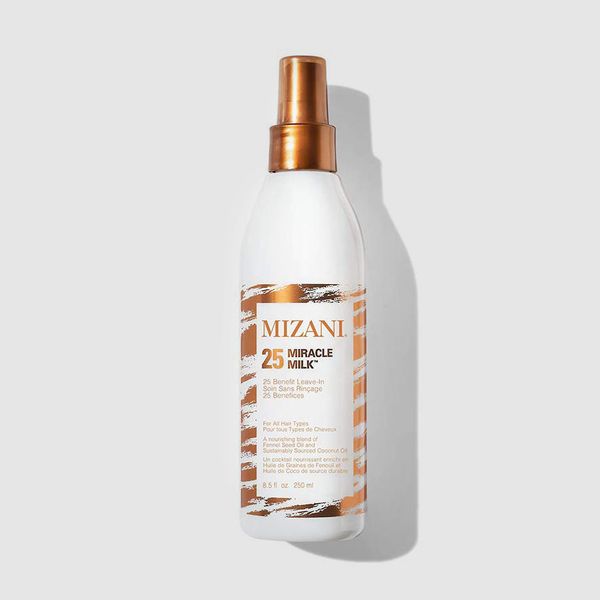
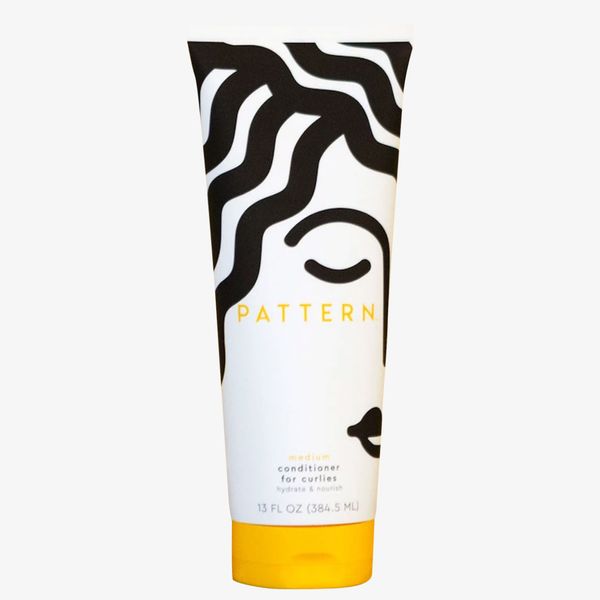
Natural-hair products we love
New! You can now save this product for later.

New! You can now save this product for later.

New! You can now save this product for later.

New! You can now save this product for later.

New! You can now save this product for later.
New! You can now save this product for later.
More From The Strategist
- Hark, the Advent Calendars Arrived (Very) Early This Year
- The Best Things Strategist Editors Have Bought This Year (So Far)
- 63 Things You Should Never Buy Full Price
- The Strategist Fall 100
The Strategist is designed to surface useful, expert recommendations for things to buy across the vast e-commerce landscape. Every product is independently selected by our team of editors, whom you can read about here. We update links when possible, but note that deals can expire and all prices are subject to change.