We Found Out Why Everyone’s Hair Is Falling Out While They’re on GLP-1s


Of all the possible side effects that come with taking a GLP-1, losing your hair is perhaps one of the scariest. The good news is this hair loss is typically temporary and will resolve over time. To find out more, I spoke with three board-certified dermatologists about how GLP-1-related hair loss occurs, ways you can prevent it, and tips for encouraging regrowth.
How do GLP-1s cause hair loss?
First things first: There isn’t currently any data to suggest that the hair loss is directly caused by the medication itself. Rather, the medication causes significant and rapid weight loss, which in turn triggers something called telogen effluvium, or TE. “Telogen effluvium is a diffuse shedding that happens when a stressor pushes hair follicles from their active growth phase (anagen) into their resting phase (telogen),” explains Dr. Ashley Magovern board-certified dermatologist and Dermstore Medical Advisory Board member. When the body is under stress, it will prioritize vital functions, adds Dr. Dendy Engelman, board-certified cosmetic dermatologist at Shafer Clinic NYC. And unfortunately, hair growth is decidedly not in that category.
This type of stress-related shedding is the same kind of hair loss that can also happen during illness, childbirth, or major surgery, explains Dr. Connie Yang, board-certified dermatologist and Dermstore Medical Advisory Board member. “Normally, only about 5 to 10 percent of scalp hairs are in telogen at any given time, so you barely notice their daily shedding,” says Magovern. “In telogen effluvium, that balance shifts dramatically. A much larger proportion of hairs prematurely enter telogen at once, which is why people see sudden, heavy shedding a few months after a trigger” — in this case, weight loss and the associated nutrient deficiencies, hormonal fluctuations, and metabolic changes that often accompany it.
How can I tell if my hair-shedding is from my GLP-1?
It comes down to both the timing of the hair loss and the pattern. Generally, the hair will begin to shed two to three months after beginning the medication or upping your dose, so it’s important to keep an eye out for the signs. You may first notice more hair coming out in the shower or on your brush or that your hair generally looks and feels thinner. And unlike other types of hair loss, where thinning occurs in specific areas like the hairline or crown, GLP-1-related hair loss will usually present as even shedding across the entire scalp. If that happens, your first step should be scheduling an appointment with your dermatologist, who can rule out any other possible causes and confirm telogen effluvium.
Is there any way to prevent the hair loss in the first place?
Since the shedding is triggered by rapid weight loss, the best way to prevent it is to opt for a low-and-slow approach as you lose weight. “This may require careful titration of your GLP-1 dosing,” explains Yang. In addition to dosing, “avoid aggressive calorie restriction, and ensure adequate daily protein intake, and correct any micronutrient deficiencies, especially iron, zinc, vitamin D, and B12,” advises Magovern. She also recommends gentle scalp-massaging or -brushing, which can improve blood flow and therefore nutrient delivery.
What are some products people can use to treat hair loss?
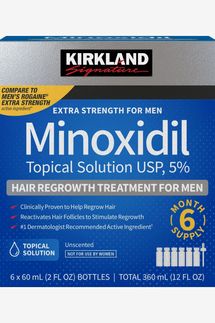
According to all three dermatologists, topical minoxidil remains the most well-studied and effective option for stimulating hair growth across many types of shedding, including telogen effluvium. Minoxidil is available over the counter and does need to be applied extremely consistently, twice a day, for best results. If you don’t want to deal with the messy application of the topical minoxidil, a dermatologist may be able to prescribe oral minoxidil instead. Though be warned: Oral minoxidil can cause some side effects, including hair growth on other areas of the body, not just the scalp.
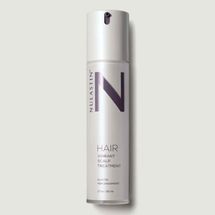
In addition to minoxidil, another over-the-counter option is Nulastin Hair Vibrant Scalp Treatment serum. “It is formulated with signal peptides that help sustain follicles in their growth phase, along with biodesigned elastin and keratin to strengthen the hair shaft and reduce shedding, and biomimetic prostaglandin to further stimulate growth,” says Yang. Magovern cautions that while it doesn’t treat the root cause of telogen effluvium, it can strengthen the follicle root system and improve density and breakage resistance during recovery, which is ideal for GLP-1 users once they enter the regrowth phase.
Are there any in-office treatments for hair loss?
According to Magovern, “in-office therapies like PRF/PRP injections, growth-factor microneedling, or medical-grade low-level laser therapy can stimulate follicles and speed up recovery.” You can also use at-home low-level-laser-therapy caps or combs as an additional supportive measure, though consistency is key. The more consistently you treat the scalp with the LLLT, the more you will stimulate the weakened follicles.
Are there any products or practices I should avoid?
As with all things beauty, you want to be careful you don’t accidentally make things worse or waste your money on products that are basically snake oil. All three of the dermatologists I interviewed suggested steering clear of biotin, a popular ingredient that is often touted as a hair-growth helper but hasn’t been shown to help with TE. The supplement can also interfere with lab work you may need to rule out underlying causes, especially when it comes to thyroid enzymes.
And while scalp-exfoliation products, or “detox scrubs,” are often marketed as a way to promote hair growth by keeping the scalp healthy and free from product buildup, overexfoliating can actually cause mechanical breakage and scalp inflammation, which makes TE worse and prolongs recovery, says Magovern. She also recommends skipping heavy, occlusive oils, like castor or coconut oil, “since they can clog follicles, exacerbate seborrheic dermatitis, and worsen shedding in vulnerable scalps — especially if not thoroughly washed out.”
Does rosemary oil help with weight-loss-related hair loss?
While heavy oils can worsen buildup, Magovern does like light, anti-inflammatory botanical oils — including rosemary, argan, tea tree, pumpkin seed, and jojoba — which she says can be used to support scalp-barrier health and circulation during the recovery phase. Her tip: Gently massage the oil into the scalp as a prewash treatment to improve circulation.
Is GLP-1-related hair loss permanent?
Luckily, no. More on that below.
If someone stays on a GLP-1 long-term, will the shedding eventually stop?
“In most cases, yes,” assures Magovern. “The shedding almost always subsides over time, even if the person stays on the GLP-1.” In fact, there is currently no evidence to suggest that GLP-1s cause any kind of permanent hair loss, even when taking the medication long-term. “Since TE is usually triggered during that first phase of rapid weight loss and metabolic stress, once weight stabilizes, calorie and protein intake normalize, and the metabolic stress resolves, the hair cycle usually resets and shedding returns to baseline,” she concludes.
So how long until the hair grows back?
Generally, once the trigger resolves, the shedding slows. “Visible recovery typically occurs over a three-to-six-month period, though it can take six to nine months for density to fully rebound because the growth cycle is slow,” Magovern notes. If you still notice shedding after a year, then it’s time to see a doctor to make sure there isn’t a different underlying cause, such as thyroid shifts or hormone imbalances, she says.
Some at-home support
New! You can now save this product for later.

New! You can now save this product for later.
New! You can now save this product for later.
More From The Strategist
- Hark, the Advent Calendars Arrived (Very) Early This Year
- The Best Things Strategist Editors Have Bought This Year (So Far)
- 63 Things You Should Never Buy Full Price
- The Strategist Fall 100
The Strategist is designed to surface useful, expert recommendations for things to buy across the vast e-commerce landscape. Every product is independently selected by our team of editors, whom you can read about here. We update links when possible, but note that deals can expire and all prices are subject to change.